The Truth About Olive Oil in Cold-Soak Meals
The allure of olive oil in cold-soak meals is undeniable: a drizzle of liquid gold promises extra calories, rich flavor, and healthy fats. But for thru-hikers who rely on no-cook meals, the decision isn’t straightforward. This article explores the real trade-offs—caloric density versus digestive distress, taste improvements versus greasy textures—so you can decide if olive oil truly belongs in your pack.
The Calorie Density Advantage — and Its Catch
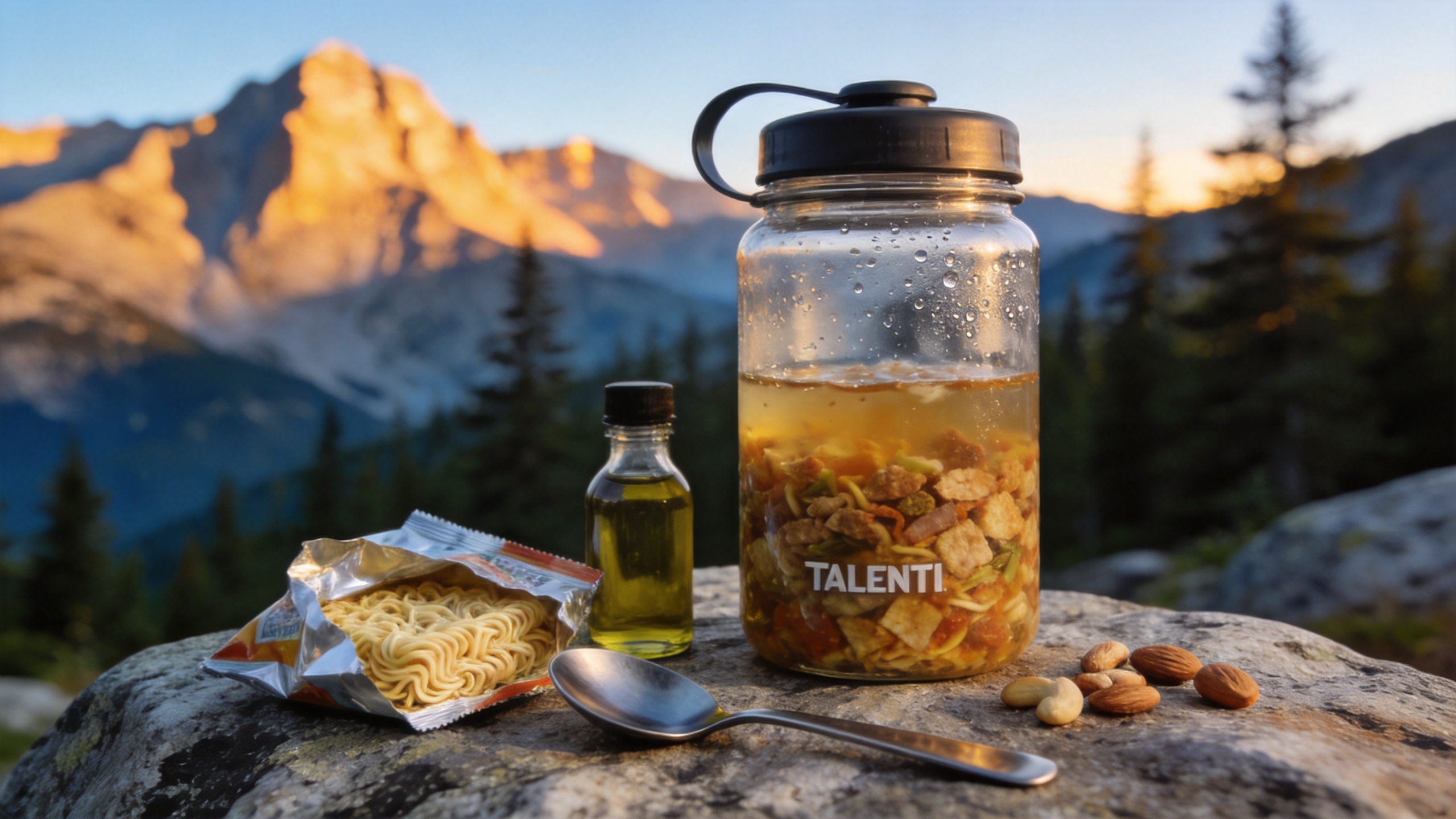
Cold-soak meals—think ramen, couscous, or instant mashed potatoes rehydrated in cold water—typically skimp on calories. A standard packet might deliver 300–400 kcal, far short of the 4,000–6,000 kcal a hard day on the trail demands. Olive oil is one of the most efficient ways to bridge that gap: a single tablespoon (14 grams) packs 120–130 calories of nearly pure fat. Two tablespoons and you’ve added 250 kcal without adding bulk or requiring cooking. For ultralight hikers counting every gram, that’s a huge win.
But there’s a catch. Fat digests slowly, and in a cold-soak context, your body has to work harder to emulsify and absorb it. If you slosh two tablespoons into a bowl of cold mush, you might feel heavy or lethargic shortly after—not ideal when you’re about to climb a pass. Furthermore, relying too heavily on oil for calories can crowd out other macronutrients. A hiker who downs 600 kcal via olive oil in a single meal is getting zero protein or carbs, which can hinder recovery and energy regulation. The sweet spot lies in using oil as a supplement, not a meal base.
How Olive Oil Transforms Flavor and Texture
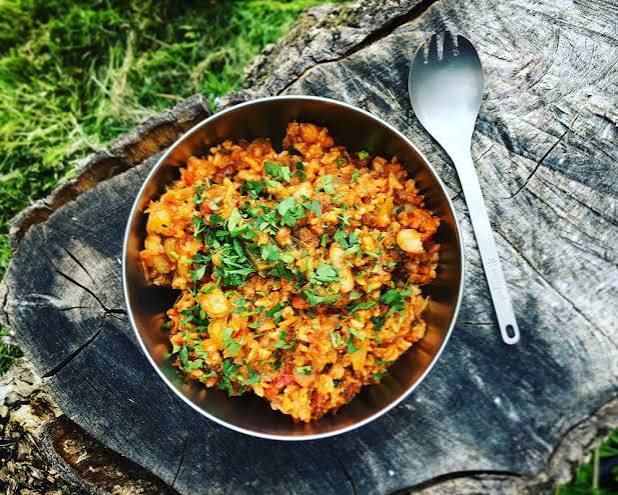
Cold-soaked food has a reputation for being bland, gritty, and uninspiring. A spoonful of olive oil changes that equation. The fat coats starches and vegetables, creating a silky mouthfeel that mimics a warm, cooked dish. When combined with salt, pepper, and herbs, the oil acts as a flavor carrier, releasing aromatic compounds that would otherwise stay locked in dry ingredients. A cold-soaked Mediterranean couscous bowl with sun-dried tomatoes, olives, and a good glug of extra-virgin olive oil can taste remarkably fresh.
However, not all olive oils shine in cold applications. Extra-virgin olive oil (EVOO) has a strong, peppery, sometimes grassy profile that some hikers love and others find overpowering in a cold dish. At low temperatures—common in alpine environments—EVOO can congeal or become cloudy, dulling its flavor and making the meal feel greasy rather than luxurious. Lighter olive oils (often labeled “pure” or “light”) have a neutral taste and stay liquid longer in the cold, but they lack the polyphenol antioxidants that make EVOO a “superfood.” For cold-soaking, many hikers prefer a mid-quality EVOO that balances flavor with cold stability.
“I tried two tablespoons of EVOO in cold ramen on the PCT. First bite was heaven. By the third mile, my stomach was gurgling and I had to make an emergency pit stop. Now I stick to one tablespoon max, and I mix it with vinegar to cut the richness.” — Sarah M., 2022 PCT thru-hiker
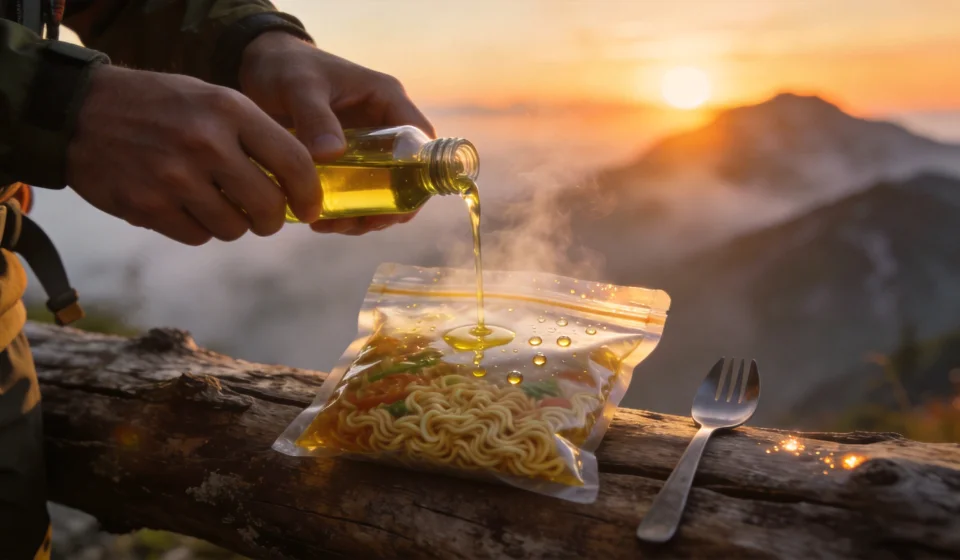
To mitigate texture issues, consider shaking your oil with vinegar or lemon powder before adding it to the meal. An acid emulsion helps the fat disperse more evenly, reducing that “slime” factor. Alternatively, drizzle the oil over the finished meal just before eating, rather than stirring it into the rehydration bag, so the oil stays separate and you control how much you ingest per bite.
The Digestive Dilemma — Why Your Stomach Might Rebel
The most commonly cited drawback of olive oil in cold-soak meals is gastrointestinal distress. Cold fat is harder for the body to break down than warm fat. In a cold-soak environment—where the water temperature might be 40–50°F (4–10°C)—the oil doesn’t fully emulsify with the food. Large fat globules reach the small intestine, where bile salts struggle to process them quickly. The result can be bloating, cramping, urgent diarrhea, or that unpleasant “oil slick” feeling that leads to nausea.
Individual tolerance varies wildly. Hikers who eat a high-fat diet at home often handle it better. Others, especially those with gallbladders removed or those prone to IBS, may find even a teaspoon triggers issues. The risk increases with fat concentration: a meal where 40% or more of calories come from oil is far more likely to cause trouble than one where oil contributes 10–15%. If you’re new to cold-soaking with oil, test it on a short day hike before committing to a multi-day trip.
Finding the Sweet Spot: How Much Is Too Much?
For most hikers, 1 tablespoon (≈120 kcal) per meal is the “safe” starting point. Two tablespoons (≈240 kcal) can work for larger appetites or high-output days, but only if you’ve tested your tolerance. Pushing beyond 2 tablespoons per meal rarely pays off; the extra calories come with diminishing returns in palatability and digestibility.
Which type of olive oil tastes best cold? Here’s a quick breakdown:
| Oil Type | Flavor Profile | Cold Stability | Best For |
|---|---|---|---|
| Extra-Virgin | Bold, peppery, grassy | Can thicken below 50°F | Savory meals, short trips (use fresh) |
| Light/Pure Olive Oil | Neutral, buttery | Stays liquid longer | Delicate flavors, cold climates |
| Organic First-Cold-Press | Fruity, mild | Moderate | All-around, good balance |
Note: Avoid flavored oils (e.g., garlic-infused) in cold-soak meals; the infusion often contains water or dairy solids that spoil quickly without refrigeration.
Beyond Olive Oil: Top Alternatives for Cold Soaking
If olive oil doesn’t agree with your stomach—or if you want more variety—several alternatives offer similar caloric density with different digestive profiles and flavors.
- Ghee (Clarified Butter): Ghee has a high smoke point (so it’s shelf-stable for months) and a nutty, rich taste. Because the milk solids are removed, it’s lactose-free and often easier to digest for people sensitive to dairy. It remains semi-solid at cool temperatures, but it’s easy to scoop. One tablespoon = ~115 kcal.
- Nut Butters (Almond, Peanut, Cashew): These provide protein and fiber alongside fat, making them more satiating. However, they’re thick and can be messy in a cold-soak bag. Mix them with a little water first to create a sauce. Calorie density is similar (~100 kcal/tbsp). Downside: high in omega-6, and some hikers find nut butters cause “nut gut” when consumed on long hikes.
- Powdered Fats: Products like PB2 (powdered peanut butter), coconut milk powder, or whole milk powder deliver fat in a concentrated, lightweight form that rehydrates quickly. They emulsify beautifully in cold water, reducing digestive strain. For example, 2 tablespoons of coconut milk powder = ~80 kcal and adds a creamy coconut flavor. These powders are also less prone to leaking in your pack.
Which one should you choose? Use the table below for a side-by-side comparison of how they stack up for cold-soak use.
| Option | Calories/Tbsp | Digestibility (Cold) | Shelf Life (Unrefrigerated) | Flavor Impact |
|---|---|---|---|---|
| Olive Oil | 120 | Moderate – can cause issues | 6–12 months (depends on type) | Strong, savory |
| Ghee | 115 | High – easier on stomach | 6–9 months (jarred) | Rich, buttery |
| Nut Butter | 100 | Moderate – thick, may clog | 3–6 months (natural varieties) | Sweet, savory |
| Powdered Fats | 40–80* | Very high – emulsify easily | 12–18 months (dry) | Mild to strong (depends) |
*Powdered fats vary widely; check labels. Coconut milk powder is typically 2g fat per tbsp (18 kcal), while whole milk powder is ~1g fat per tbsp (9 kcal). For significant fat intake you’d need several tablespoons.
Real-World Strategies for Different Trips
Your choice should align with trip length, climate, and personal biology. Here are three scenarios:
- Day Hike / Overnight: Bring a small 2-ounce bottle of extra-virgin olive oil. Use it on cold-soaked pasta or quinoa with sun-dried tomatoes and basil. Because you’re home soon, you don’t worry about rancidity or long-term GI adjustments.
- Weeklong Thru-Hike (e.g., JMT section): Pre-portion olive oil into leak-proof squeeze pouches (2–3 days’ supply each) or switch to ghee because it’s more stable and less likely to cause upset. Pack a spork with a long handle to stir easily.
- Long-Distance Thru-Hike (e.g., PCT, AT): Consider powdered fats as your primary source of cold-soak fat. Mix 2–3 tablespoons of coconut milk powder into your ramen for a creamy Thai-inspired broth. Supplement with small amounts of nut butter for flavor variety. This combination keeps your fat intake high without the digestive gamble of straight oil.
Pro tip: Always carry an emergency packet of anti-diarrheal medication if you’re experimenting with oil for the first time on a long trip. The trail is no place for urgent unscheduled stops.
Conclusion
Olive oil can elevate a dull cold-soak meal into a satisfying, calorie-dense powerhouse—but it demands respect. Start with one tablespoon of a stable oil like ghee or a light olive oil, test your tolerance on a short hike, and always balance fat with carbs and protein. For those who find olive oil too harsh, powdered fats and nut butters offer excellent alternatives without the greasy aftermath. The best cold-soak strategy is the one that keeps you fueled, happy, and comfortably on schedule. Experiment, listen to your gut, and pack accordingly.