The Truth About Water Needs on Backpacking Trips
Every seasoned backpacker has heard the warning: “Freeze-dried meals demand extra water, so you’ll be carrying a heavier pack.” It sounds logical—add water to powder, and you’ve increased your liquid load. But this well‑intentioned advice is physiologically backwards. In reality, the water you pour into a dehydrated meal isn’t an extra burden; it’s simply part of your daily hydration budget. Understanding this shift in perspective can save you unnecessary weight, prevent over‑packing, and even improve your performance on the trail.
Let’s cut through the noise. The water you consume with food counts toward your total fluid intake. Your body doesn’t distinguish between water drunk from a bottle and water that rehydrates your dinner. This article will debunk the “freeze‑dried = more water” myth, explain the physiology of hydration during backpacking, and give you a practical framework for planning your water supply—whether you’re trekking through the Sonoran Desert or the Appalachian rain forest.
The Misconception: “Freeze‑Dried Meals Require More Water”
Ask any hiker why they avoid freeze‑dried meals, and you’ll often hear: “They need too much water. I’d have to carry an extra liter just for dinner.” This belief has been repeated for decades, reinforced by packaging that lists “2 cups of water” as an ingredient. The leap is understandable: if your meal needs two cups, you must bring those two cups on top of your drinking water. Right? Wrong.
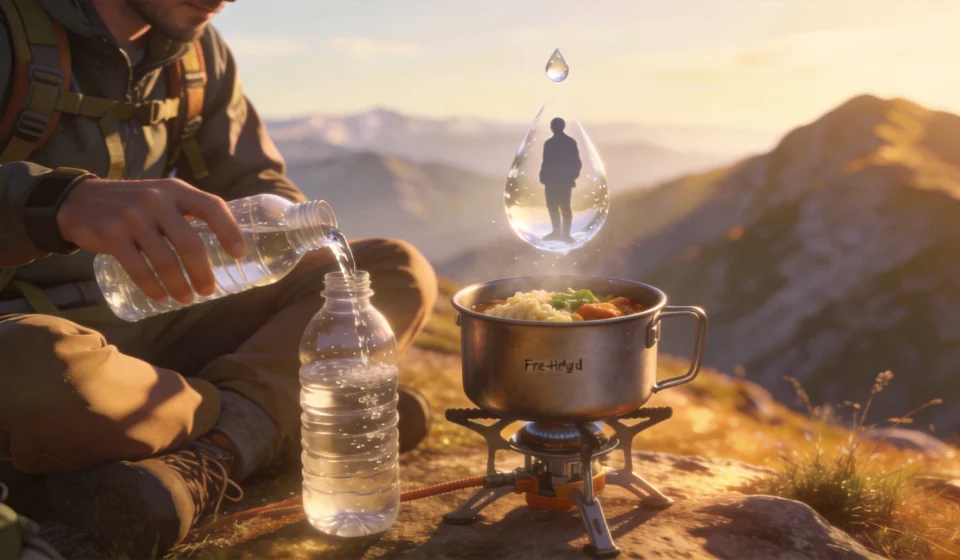
The error lies in treating meal water as an independent requirement, separate from your daily hydration needs. In truth, you must drink a certain volume of water per day regardless of what you eat. When you rehydrate a meal, you are simply shifting some of that drinking water from your bottle to your cook pot. The total water you consume—drunk plus eaten—does not increase. You were going to drink that water anyway; now you’re eating it with your chili mac.
“The body treats water from food exactly like water from a stream or a bottle. It enters the same metabolic pool, hydrates the same cells, and contributes to the same daily balance. There is no physiological difference between ‘drinking water’ and ‘meal water.’” – Dr. Rebecca L. Fenton, Sports Nutritionist
Consider a typical day on the trail: you plan to consume 4 liters of fluid total. If your freeze‑dried dinner requires 500 ml of water, that 500 ml is part of your 4 liters, not an addition to it. You still need to carry only 4 liters (minus the water you find at sources). The meal doesn’t add a separate “hydration tax.”
Physiology of Hydration: Why Water in Meals Counts
To understand why this myth persists, we need a quick trip inside your body. Human hydration is governed by net fluid balance: water in (drinks + food moisture + metabolic water) minus water out (sweat, urine, respiration, feces). Your body doesn’t care about the source—it cares about the total.
Metabolic Water: A Hidden Bonus
When you eat, your body produces a small amount of water through the oxidation of carbohydrates, fats, and proteins. This is called metabolic water. For a typical backpacking meal, you might generate 100–150 ml of metabolic water during digestion. Freeze‑dried meals, being dense in calories, actually yield more metabolic water than many fresh foods. So, paradoxically, the water you add to rehydrate the meal, combined with the metabolic water produced, can mean your net water availability is slightly higher than if you ate a dry snack.
The Role of Electrolytes
Meal water also carries sodium, potassium, and other electrolytes—especially in freeze‑dried options designed for active people. These electrolytes help your body retain water and maintain fluid balance. Drinking plain water without electrolytes can actually increase urine output (dilution diuresis), whereas the same water consumed as part of a seasoned meal is more effectively used. In other words, water from meals may hydrate you better than pure water alone.
Real‑World Example
Take two hikers on a 10‑mile day in 85°F weather. Hiker A eats dry snacks (bars, nuts, jerky) and drinks 3.5 liters of plain water. Hiker B eats a freeze‑dried dinner (adding 500 ml water) and drinks 3.0 liters of water throughout the day. Their total fluid intake is identical: 3.5 liters. Hiker B’s meal water rehydrates just as effectively as the 500 ml Hiker A drank from a bottle. Both end the day with the same urine specific gravity—a measure of hydration status.
The only difference? Hiker B carried the 500 ml of water either way—it was just consumed during dinner rather than throughout the afternoon. But Hiker A might need extra salt to compensate for the lack of electrolytes in plain water. So, if anything, the freeze‑dried meal offers a hydration advantage.
The Real Water Budget: Calculating Total Needs
Now that we’ve debunked the myth, let’s talk about how to actually plan your water carry. The key principle: your total water need is driven by sweat rate, not by meal type. Use these steps to create a personal water budget.
- Estimate daily sweat loss: For moderate activity in moderate climate, expect 3–5 liters per day. In hot or high‑altitude conditions, it can exceed 6 liters.
- Add urine and other losses: Average 1–1.5 liters of urine, plus 0.5 liters through respiration and feces. Total output = sweat + urine + other.
- Determine required intake: You need to replace that output to stay euhydrated. Start with 3–6 liters total.
- Subtract metabolic water (~300–500 ml/day) from a full day of eating. This is a small bonus, but don’t rely on it heavily.
- Add the water in your meals (the rehydration water) as part of that intake, not extra.
The final number is your total water to have available—including water you drink from bottles, water you add to food, and water you collect from sources. If you carry 4 liters for a full day and use 0.5 liters for dinner, you have 3.5 liters for drinking plus 0.5 for dinner = 4.0 total. Perfect.
| Factor | Volume (mL) | Notes |
|---|---|---|
| Sweat loss | 3,000 | Varies widely; use 250–500 mL/hr |
| Urine loss | 1,200 | Healthy output; lower if dehydrated |
| Respiration + feces | 400 | Increases at high altitude |
| Total output | 4,600 | |
| Metabolic water (from food) | −400 | Offset by digestion |
| Required intake | 4,200 | Roughly 4.2 liters |
| Water from freeze‑dried dinner | 500 | Part of intake |
| Water to drink from bottles | 3,700 | Total minus meal water |
Notice that the freeze‑dried dinner water is included in the required intake. You don’t need to carry 4.2 + 0.5 = 4.7 liters. You carry 4.2, and 0.5 of that ends up in your pot.
Salt, Climate, and Other Hydration Factors
The myth about freeze‑dried meals often overlooks two critical variables that actually increase water needs: salt intake and climate. Understanding these will help you fine‑tune your planning.
Salt (Sodium) and Thirst Drive
Freeze‑dried meals are often high in sodium—400–1,000 mg per serving—to replace the salt lost in sweat. This is a feature, not a bug. Sodium stimulates thirst, encouraging you to drink more. If you eat a low‑water meal (like a bar or jerky) with no added salt, you may not feel as thirsty and could under‑drink. In fact, some hikers who use “dry” foods end up less hydrated because they don’t have the salt‑driven urge to consume enough water. The freeze‑dried meal, by combining water and salt, creates a natural hydration loop.
“I used to avoid freeze‑dried dinners to save water weight. Then I did a Grand Canyon rim‑to‑rim in July. I ate only dry snacks and carried 6 liters. By day two, I was cramping and urinating dark yellow. My mistake? I didn’t have enough sodium to retain what I drank, so I peed out half of it. On later trips with freeze‑dried meals, I actually carried less water because I stayed better balanced.” – Ken T., experienced ultralight hiker
Climate: Dry vs. Humid
In arid environments (desert, high mountain), the air pulls moisture from your breath and skin at a much higher rate. You lose water continuously, even when resting. Humidity also affects how much water you need to add to food—freeze‑dried meals already account for this because the added water is precisely measured. In contrast, in humid climates you sweat more but lose less through respiration. Regardless, the freeze‑dried meal’s water requirement remains the same: it’s still part of your total intake.
Other Factors That Increase Water Demand
- Altitude: Above 10,000 feet, respiration losses double. You need more total water—but again, meal water counts.
- Fiber intake: High‑fiber foods (common in backpacking bars) can draw water into the colon, increasing stool water loss. A balanced freeze‑dried meal often has a mix of fiber and moisture that’s easier on digestion.
- Alcohol or caffeine: These are diuretics. If you bring a whiskey flask or instant coffee, those fluids actually reduce net hydration. They should be counted separately and offset with extra water.
Practical Takeaways: What This Means for Your Pack Weight
So, how do you apply this knowledge on your next trip? Here’s a step‑by‑step plan to optimize water weight without sacrificing hydration.
- Stop treating meal water as “extra.” When you plan your daily carry, include the water you’ll add to meals inside the total. If your route has reliable water sources, you can fill up at dinner time instead of carrying dinner water from camp.
- Use freeze‑dried meals with high electrolyte content. They help you retain water better than plain H₂O. Check labels—aim for at least 500 mg sodium per meal.
- Test your personal sweat rate. Weigh yourself before and after a day hike (nude, after towel drying). Each pound lost = ~500 ml of fluid deficit. This gives you your baseline.
- Pair meals with drinking water, not separate. Example: boil 750 ml total. Use 500 ml for dinner and drink the remaining 250 ml. You’ve consumed all 750 toward your daily goal.
- Consider alternative low‑water meals only if you truly cannot find water sources. In that case, you’re restricting total fluid, not saving weight—because you still need to drink. No‑cook or cold‑soak meals use less water, but they also provide less hydration. If you choose that route, you must compensate with more drinking water.
When Low‑Water Meals Do Make Sense
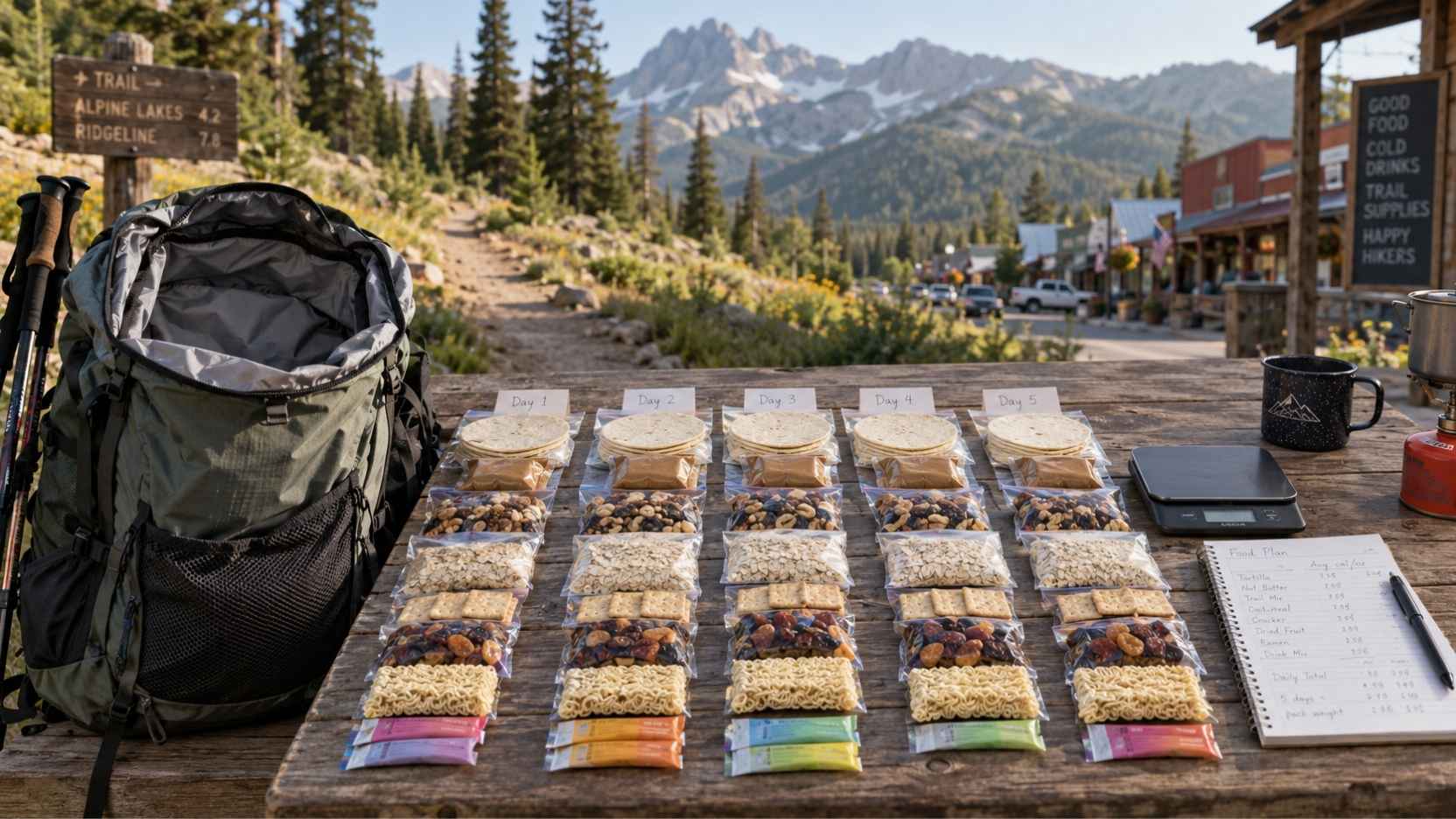
There is one scenario where dry foods can reduce pack weight: when water sources are abundant but the weight of the food itself matters. A dry meal (e.g., tortillas, peanut butter, and salami) weighs less than a freeze‑dried pouch of the same calories—but only if you can pick up water at every stop for drinking. In that case, you’re not saving water weight, you’re saving food weight. The water you drink still comes from the same sources. The myth, however, confuses food weight savings with water weight savings.
Bottom line: Freeze‑dried meals do not force you to carry more total water. Your body needs a certain volume each day. That water can come from your bottle, your pot, or a stream. The meal just redistributes it.
Conclusion
The next time someone warns you that freeze‑dried dinners will triple your water load, politely correct them. The human body doesn’t care whether water enters through a Nalgene or a spork—it all hydrates the same. Plan your total water budget based on your sweat rate, climate, and activity, then let your meals contribute to that budget. You’ll carry less anxiety, better nutrition, and ultimately, the same weight of water you always needed—just used more wisely.