How to Build a Vegan Trail Menu With a Simple Protein and Calorie Calculation 🌱🥾
Introduction
Planning vegan food for a backpacking trip does not have to mean carrying complicated spreadsheets or trying to calculate every nutrient perfectly.
The most useful approach is much simpler:
Choose your meals, check the calories and protein on the actual packages, add the numbers together, and adjust the portions until the menu fits your trip.
This matters because hiking food has two competing requirements. You need enough energy to support long days on the trail, but you also have to carry everything on your back.
A good vegan trail menu therefore needs to balance:
- 🔥 Enough calories
- 🌱 Adequate protein
- 🎒 Reasonable food weight
- 💧 Foods that work with your water supply
- ⛺ Simple preparation
- 😋 Meals you actually want to eat
Here’s how to build that menu without making the math complicated.
1. Start With the Trip, Not the Recipe
Before choosing food, write down the basics.
Ask yourself:
How many days am I hiking?
A three-day trip requires a very different food plan from a seven-day trip.
Then consider:
- Expected hiking hours
- Distance and elevation
- Weather
- Water availability
- Cooking equipment
- Resupply opportunities
- Whether food needs to remain unrefrigerated
- Your usual appetite
Your calorie needs on the trail are individual. They can change substantially depending on body size, activity level, terrain, weather, and other factors.
So instead of copying someone else’s exact calorie target, use their menu structure as a starting point and adjust it using your own food requirements and experience.
2. Use a Simple Calorie Formula 🔢
The basic calculation is:
Calories per day = breakfast + lunch + dinner + snacks
For example, imagine a sample menu containing:
| Meal | Calories |
|---|---|
| Breakfast | 600 |
| Lunch | 700 |
| Dinner | 800 |
| Snacks | 700 |
| Daily total | 2,800 |
That does not mean 2,800 calories is the correct amount for every backpacker.
It simply demonstrates how to calculate a daily total.
If you know from previous trips that you need more food, increase the portions. If you consistently return with substantial leftovers, adjust future quantities.
Your actual food labels are the best starting point for calculating the menu you will physically carry.
3. Calculate Protein the Same Way 🌱
Protein calculation works exactly the same way.
Look at the nutrition label for each ingredient and record the protein.
For example:
| Ingredient | Protein |
|---|---|
| Oats | 10 g |
| Peanut butter | 8 g |
| Chia seeds | 5 g |
| Plant protein powder | 20 g |
| Meal total | 43 g |
The numbers above are only an example. Actual values vary significantly between products and serving sizes.
That’s why you should use the nutrition label of the specific food you are packing.
You can then calculate:
Daily protein = breakfast + lunch + dinner + snacks
This makes protein planning much easier than trying to calculate it from memory.
4. Don’t Make Protein the Only Goal
A common mistake is creating a backpacking menu that looks extremely “high protein” but doesn’t provide enough overall energy.
Protein is important, but hiking also requires energy from carbohydrates and fats.
A practical vegan trail menu can combine:
🌾 Carbohydrates
- Instant rice
- Couscous
- Oats
- Noodles
- Tortillas
- Instant potatoes
- Dried fruit
🫘 Protein
- Lentils
- Beans
- TVP
- Soy products
- Pea protein
- Soy protein
- Nuts and seeds
🥜 Energy-dense fats
- Peanut butter
- Nuts
- Seeds
- Olive oil
- Coconut products
The goal is not to make every ingredient perform the same nutritional job.
Build meals where the ingredients complement one another.
5. Use the “Base + Protein + Fat + Flavor” Formula 🍜
A simple formula can make vegan trail planning much easier.
1. Choose a base
Pick one:
Rice, couscous, oats, noodles, potatoes, or tortillas
2. Add protein
Pick one:
Lentils, beans, TVP, soy curls, or plant protein
3. Add energy
Pick one:
Peanut butter, nuts, seeds, olive oil, or coconut milk powder
4. Add flavor
Pick one:
Curry powder, chili, garlic, soy sauce, nutritional yeast, herbs, or spice blends
Example
Instant rice + TVP + dehydrated vegetables + peanut butter + chili seasoning
Now you have a practical dinner without needing a complicated recipe.
6. Build Breakfast Around Convenience ☀️
Breakfast is often the easiest meal to standardize.
A simple option is:
Peanut Butter Protein Oatmeal
- Instant oats
- Peanut butter or peanut butter powder
- Chia seeds
- Dried banana
- Plant protein powder
Calculate the calories and protein from each package.
Then add them together.
For example:
Oats: 300 calories + peanut butter: 190 + seeds: 120 + protein powder: 120 = 730 calories
The exact numbers will depend on the products and portions you use.
If 730 calories is more than you want at breakfast, reduce one ingredient.
If you need more energy, increase the portion or add another calorie-dense ingredient.
7. Make Lunch Easy to Eat on the Trail 🥙
Lunch does not always need to be a cooked meal.
A good trail lunch can include:
- Tortillas
- Nut butter
- Dried fruit
- Roasted chickpeas
- Nuts
- Shelf-stable hummus powder
- Crackers
- Protein bars
For a hot-weather or long-distance day, foods that can be eaten quickly without stopping for a full cooking session can be particularly convenient.
The important thing is that your lunch fits your storage conditions and doesn’t require refrigeration unless you have a safe way to provide it.
8. Make Dinner Your Comfort Meal 🍲
Dinner is where you can add more variety.
Try combinations such as:
🌶️ Spicy Peanut Noodles
Noodles + TVP + dehydrated vegetables + peanut butter + chili
🍛 Coconut Lentil Rice
Instant rice + lentils + dehydrated vegetables + coconut milk powder + curry spices
🥔 Loaded Vegan Potatoes
Instant mashed potatoes + dehydrated beans + nutritional yeast + dehydrated vegetables + olive oil
🍅 Tomato Couscous
Couscous + lentils + tomato powder + vegetables + herbs
These meals can use many of the same ingredients while still tasting completely different.
9. Don’t Forget Snacks 🎒
Snacks make calorie planning much easier.
Instead of forcing enormous meals into your menu, distribute food throughout the day.
Useful vegan trail snacks include:
- Nuts
- Trail mix
- Dried fruit
- Roasted chickpeas
- Nut butter packets
- Vegan energy bars
- Crackers
- Peanut butter tortillas
- Dried banana
- Seed mixes
You can also carry a small “emergency snack” that you don’t plan to eat unless your normal food is insufficient.
That gives you some flexibility without rebuilding the entire meal plan.
10. Calculate Calories Per Ounce or Gram ⚖️
Once your daily calories are working, look at food weight.
A simple calculation is:
Calories per gram = total calories ÷ food weight in grams
For example, if a food provides 500 calories and weighs 125 grams:
500 ÷ 125 = 4 calories per gram
This is useful when comparing backpacking foods.
Foods containing more fat tend to provide more calories for their weight than foods with a high water content.
That’s one reason nuts, seeds, nut butters, and oils are common in backpacking menus.
However, calorie density isn’t the only consideration. Taste, nutrition, preparation, hydration, and digestion all matter too.
11. Create a Daily Calculation Table 📋
Once you’ve selected your meals, put everything into one table.
| Food | Calories | Protein |
|---|---|---|
| Breakfast | 700 | 25 g |
| Lunch | 650 | 20 g |
| Dinner | 850 | 35 g |
| Snacks | 700 | 15 g |
| Daily total | 2,900 | 95 g |
Again, these are example numbers, not a universal prescription.
Your own table should use the actual quantities and nutrition labels of the foods you are taking.
For a three-day trip, multiply the daily ingredients by three.
Then add your emergency food separately.
12. Adjust the Menu Instead of Starting Over 🔧
This is where the calculation becomes useful.
If calories are too low
Add a calorie-dense ingredient such as:
- Peanut butter
- Nuts
- Seeds
- Olive oil
- Coconut products
If protein is too low
Increase:
- TVP
- Lentils
- Beans
- Soy products
- Plant protein powder
If food weight is too high
Look for foods with less water and greater calorie density.
For example, dehydrated ingredients can replace some fresh foods.
If meals are too repetitive
Change the seasoning rather than adding lots of new ingredients.
The same rice, lentils, and vegetables can become a curry, chili-style bowl, or peanut-based meal with different seasonings.
13. Don’t Ignore Fiber and Digestion
Vegan foods can provide plenty of fiber, but suddenly eating a very large amount of beans, lentils, seeds, and dried fruit can be uncomfortable for some people.
If your normal diet is relatively low in fiber, don’t use a backpacking trip as the first experiment with enormous portions of legumes and seeds.
Test your meals at home first.
Pay attention to:
- Portion size
- Fiber load
- Spices
- Fat content
- Hydration
- Foods that personally upset your stomach
Your trail menu should be something your body already knows how to handle.
14. Test the Complete Menu Before Your Trip 🏕️
This step is easy to skip and extremely useful.
Make one complete day of your planned food at home.
Measure the ingredients.
Cook the meals using the same equipment you expect to use outdoors.
Then ask:
Was I still hungry?
Was the meal too large?
Did it take too long to prepare?
Did I like the taste?
Did everything rehydrate properly?
Was cleanup manageable?
You can then adjust your quantities before carrying several days of food into the wilderness.
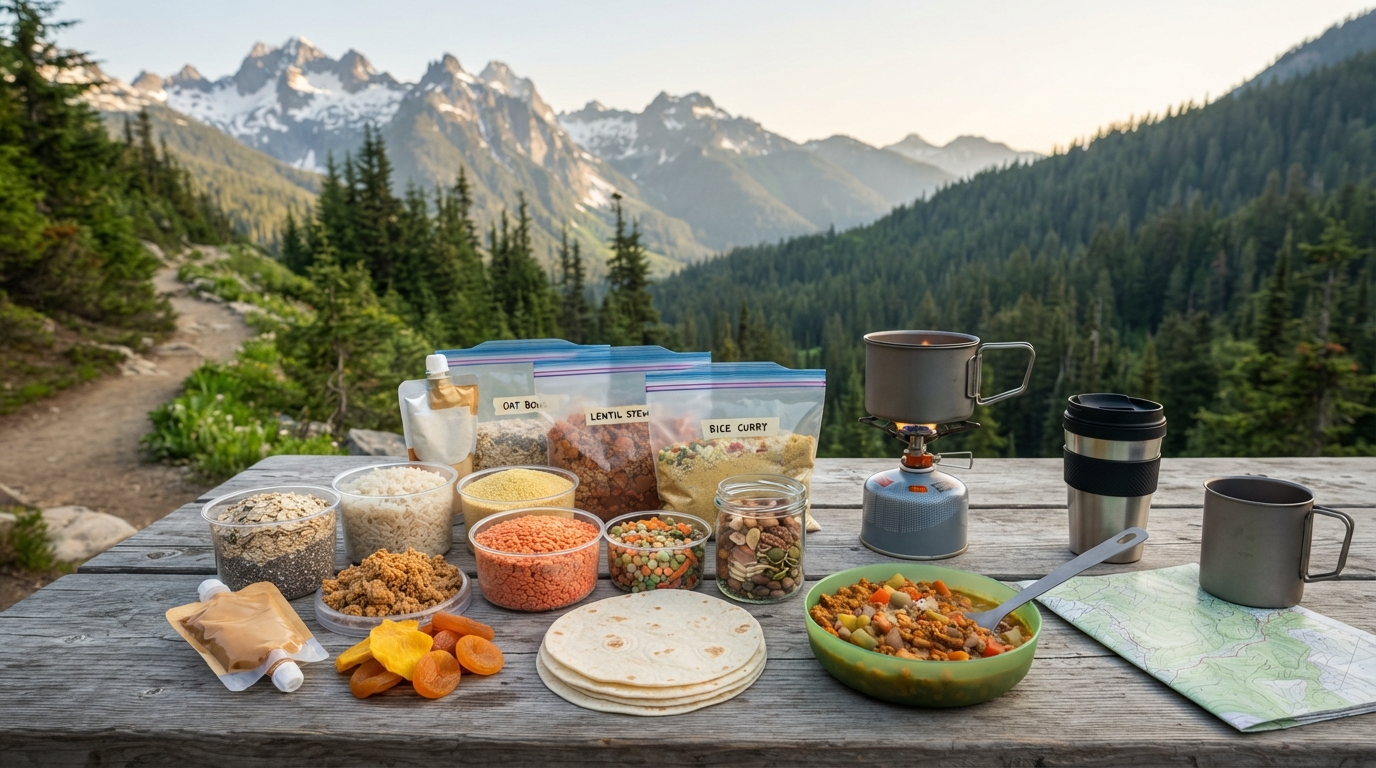
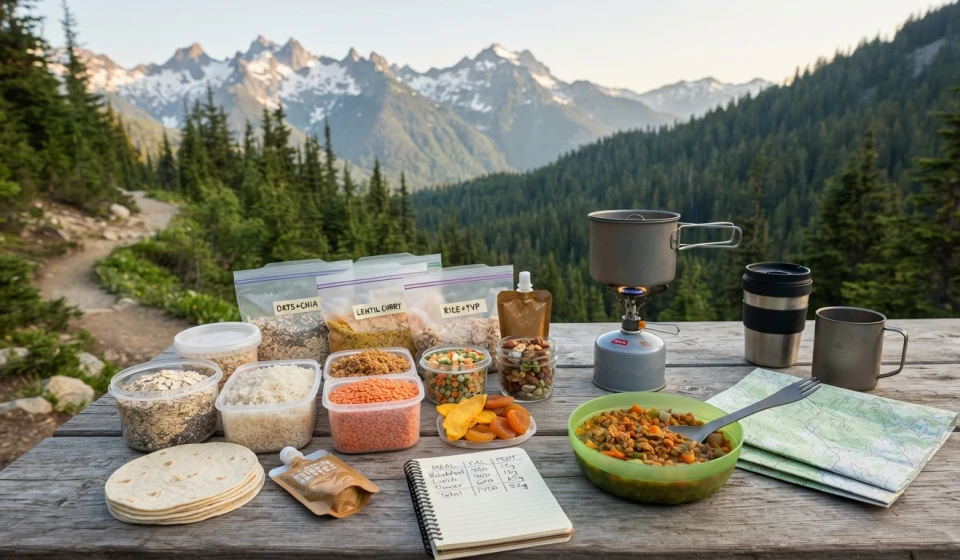
15. Example of a Simple One-Day Vegan Trail Menu 🌱
Here’s what the finished system might look like:
☀️ Breakfast
Protein oatmeal with peanut butter, chia seeds, and dried banana.
🥙 Lunch
Tortilla wraps with shelf-stable hummus powder, roasted chickpeas, and dried vegetables.
🥜 Trail Snacks
Trail mix, dried fruit, and a vegan protein bar.
🌙 Dinner
Instant rice with TVP, dehydrated vegetables, peanut sauce, and chili seasoning.
🔢 Calculation
Record the actual calories, protein, and weight for every ingredient.
Then calculate:
Daily calories = all meals + snacks
Daily protein = all meals + snacks
Food weight = all ingredients
Calories per gram = total calories ÷ total food weight
That’s enough information to start making meaningful adjustments.
Final Thoughts 🌄
A vegan backpacking menu doesn’t need complicated nutrition software.
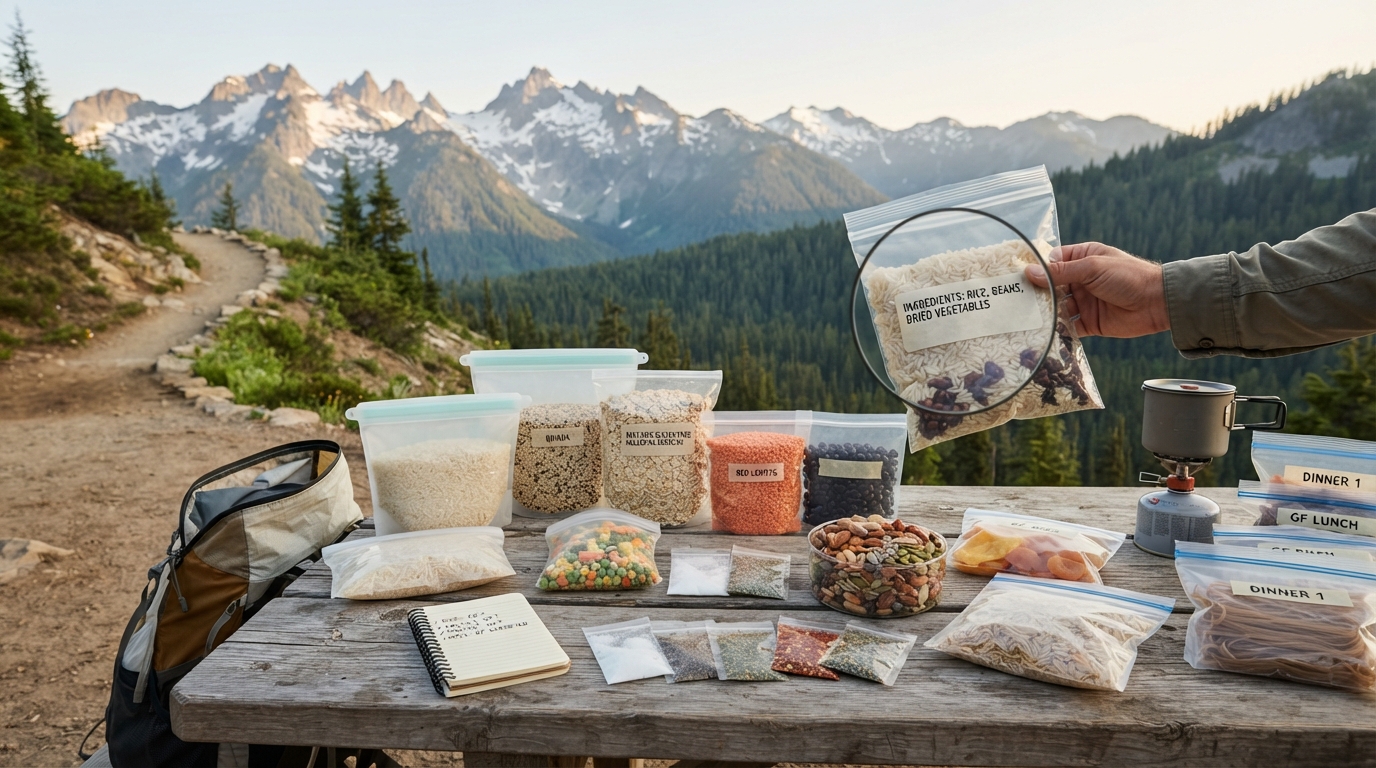
Start with the foods you actually enjoy, use the nutrition labels from the exact products you plan to carry, and organize the menu into breakfast, lunch, dinner, and snacks.
Then calculate three things:
🔥 Calories
🌱 Protein
🎒 Food weight
If something doesn’t work, adjust the portions rather than rebuilding the entire menu.
Most importantly, remember that a calculation is a planning tool, not a guarantee. Your energy needs can change from one trip to another, and your appetite may change with distance, elevation, temperature, and effort.
The best vegan trail menu is one you’ve tested before the trip, fits your storage conditions, provides enough food for your personal needs, and is simple enough to prepare when you’re tired.
That’s the sweet spot between nutrition, simplicity, and packability. 🌱🥾