DIY Dehydrated Meals vs. Mountain House: What Does Each Backpacking Meal Really Cost?
When planning a backpacking trip, food costs can become surprisingly significant. A few freeze-dried meals from a familiar outdoor brand may seem reasonably priced when purchased individually, but the total can add up quickly on a multi-day trip. At the same time, making your own dehydrated meals at home sounds cheaper—but is it actually?
The answer depends on more than the price of ingredients. You also need to consider food weight, serving size, preparation time, equipment, packaging, and how much food you actually eat on the trail.
Mountain House is one of the best-known options for commercially prepared backpacking meals. DIY dehydrated meals offer a different approach: buy ordinary groceries, prepare them yourself, remove moisture with a dehydrator, and package individual trail meals.
Here is how the two approaches compare when you calculate the real cost per serving.
The Basic Cost of Commercial Backpacking Meals
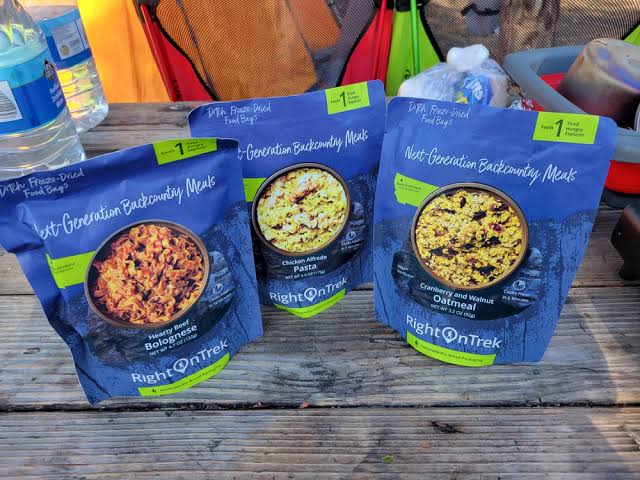
Commercial freeze-dried meals are convenient because almost everything is already done. The food has been cooked, freeze-dried, portioned, packaged, and prepared for long-term storage.
A typical commercial meal might cost roughly $10 to $15 or more depending on the product, package size, retailer, and number of servings. Larger packages can sometimes provide a lower cost per serving than individual pouches.
However, the label can be misleading if you simply divide the package price by the number of servings.
A package advertised as two servings may not feel like two full meals to a hungry backpacker.
For example, imagine a pouch costs $13 and contains two labeled servings. The mathematical cost is $6.50 per serving. But if one hungry hiker eats the entire pouch, the practical cost is $13 for that meal.
This is why backpackers should distinguish between the manufacturer’s serving size and their personal trail serving.
DIY Dehydrated Meals Start With Grocery Prices
DIY meals have a different cost structure.
Instead of purchasing a finished backpacking meal, you purchase ordinary ingredients. Rice, pasta, beans, lentils, vegetables, chicken, sauces, spices, and other ingredients can often be purchased in regular grocery stores.
Suppose you make a simple dehydrated pasta meal using:
- Pasta: $0.60
- Tomato sauce: $0.50
- Dehydrated vegetables: $0.75
- Seasonings: $0.20
- Cheese powder: $0.50
- Protein: $1.25
The ingredient cost would be about $3.80 for one substantial meal.
That is considerably less than many commercial backpacking meals.
However, ingredient cost isn’t the entire DIY calculation.
Don’t Forget the Cost of Dehydration
A food dehydrator consumes electricity. The exact cost depends on the appliance, drying temperature, drying time, and local electricity rate.
For a single batch, electricity may only add a modest amount to the total cost. The important point is that you can dry several meals or ingredients at once.
If you dehydrate enough food for 10 meals in one batch, the electricity cost per meal becomes relatively small.
The same principle applies to equipment.
If you already own a dehydrator, there is no new equipment purchase for your current trip. If you are buying one specifically for backpacking food, however, the initial equipment cost should be included when calculating the first-year cost.
For example, a $100 dehydrator used to prepare 50 meals adds $2 per meal in equipment cost during that first group of meals. If you eventually prepare 200 meals, the equipment cost falls to only $0.50 per meal.
Packaging Can Change the Calculation
Packaging is another small expense that is easy to ignore.
DIY backpackers commonly use heat-sealed bags, freezer bags, reusable containers, or vacuum-sealed packaging. The cost per bag might be relatively low, but it becomes meaningful when preparing dozens of meals.
Suppose your food and packaging cost $4.00 per meal. Adding $0.30 for packaging and $0.20 for electricity brings the practical cost to approximately $4.50.
That is still potentially much cheaper than buying a $12 commercial meal.
But there is another factor: your time.
What Is Your Time Worth?
DIY dehydrating takes work.
You may need to cook the ingredients, spread them onto dehydrator trays, monitor drying, allow the food to cool, package it, label it, and clean the equipment.
For some backpackers, this is part of the fun. For others, it is a chore.
If you spend two hours preparing food for a week-long trip, you could assign a value to that time. For example, valuing your time at $20 per hour would add $40 of labor.
If you make 10 meals, that represents another $4 per meal.
Under that calculation, the $4.50 DIY meal becomes $8.50 in total economic cost.
It is still potentially less expensive than a $12 commercial meal, but the difference is smaller.
Mountain House Wins on Convenience
Commercial meals have an important advantage that is difficult to express in dollars: convenience.
You don’t need to plan recipes, purchase individual ingredients, cook large batches, dehydrate food, or package everything yourself.
For a busy backpacker, paying extra for convenience can be reasonable.
Commercial meals are also predictable. You know approximately how much food is in each package, how much water it requires, and how long it generally takes to prepare.
DIY meals provide more control.
You can increase calories, change the protein source, reduce sodium, add more vegetables, or create meals around your personal preferences.
A Simple Cost Comparison
Consider a hypothetical five-day trip with one dinner per day.
A commercial meal averaging $12 would cost approximately:
5 × $12 = $60
A DIY meal costing approximately $4.50 in ingredients, packaging, and electricity would cost:
5 × $4.50 = $22.50
That creates a difference of $37.50 for only five dinners.
For longer trips, the difference can become substantial.
If you prepare 20 DIY meals, the savings compared with $12 commercial meals could approach $150 before accounting for equipment and labor.
The Best Choice Depends on Your Priorities
DIY dehydrating is particularly attractive for frequent backpackers, families preparing large quantities of trail food, and people who enjoy cooking.
Commercial meals may make more sense for occasional hikers, first-time backpackers, or people who prioritize convenience over minimizing food costs.
There is also a middle ground.
You can purchase some commercial meals while making inexpensive DIY breakfasts, snacks, and dinners. For example, oatmeal, instant rice, couscous, pasta, dried beans, and dehydrated vegetables can form the foundation of inexpensive homemade meals.
Final Cost Per Serving
The most useful comparison is not simply “DIY is cheaper” or “commercial meals are expensive.”
Instead, calculate your actual cost.
For DIY food, include:
Ingredients + packaging + electricity + equipment + optional labor
For commercial food, consider:
Purchase price ÷ actual portions eaten
A DIY dehydrated meal may cost around $3 to $6 in direct expenses depending on ingredients and recipe. A commercial meal may cost roughly $8 to $15 or more depending on package size and retailer.
The exact numbers vary, but the broader lesson is consistent: DIY dehydrating can significantly reduce the cost of backpacking meals when you prepare food in batches and use inexpensive ingredients.
Mountain House and similar commercial meals, meanwhile, charge for more than ingredients. You are also paying for processing, packaging, shelf stability, consistency, convenience, and the time you don’t have to spend preparing your own food.
For backpackers who enjoy the process, DIY dehydrating can turn an expensive part of trip planning into an opportunity to save money and customize every meal.