The Ultimate Ultralight Cook Kit: Sub 5 oz Setup Guide
Imagine shedding over half a pound from your pack just by rethinking how you boil water. For gram‑counting thru‑hikers and weekend warriors alike, an ultralight cook kit that weighs less than five ounces is the holy grail. Every component—from the burner to the spoon—must earn its place, and the trade‑offs between convenience, durability, and weight are razor‑thin. In this guide, we’ll dissect the anatomy of a sub‑5 oz setup, compare the reigning champions of ultralight cookware, and give you a complete LighterPack list that will make your scale smile.
Why Go Sub‑5 oz? The Philosophy of Minimalist Cooking
Ultralight backpacking isn’t about suffering—it’s about freedom. Carrying a heavy, bulky stove system often means leaving behind extra miles or a camera lens. By trimming your cook kit to below five ounces (roughly 142 grams), you free up both pack space and mental bandwidth. The typical “lightweight” kit clocks in at 7–10 oz, so shaving off those last few ounces requires deliberate choices: ditching a full‑size windscreen, using a DIY stove, or swapping a titanium spoon for a carbon‑fiber one. But the payoff is real: a sub‑5 oz setup will boil two cups of water in under eight minutes, handle most dehydrated meals, and weigh less than a single energy bar.
Component Deep Dive: Each Piece Under the Microscope
1. Stove: The Heart of the Kit
Your stove choice is the biggest weight variable. Let’s examine three popular ultralight options that dominate the sub‑5 oz space.
| Stove Model | Weight (oz) | Fuel Type | Pros | Cons |
|---|---|---|---|---|
| Zelph’s Kojin | 0.4 | Alcohol (denatured) | Incredibly lightweight, near‑instant start, no moving parts | Requires windscreen, slow in cold temps |
| Trail Designs Caldera Cone (alcohol version with cone) | 1.5–2.0 (cone + stove) | Alcohol | Integrated windscreen & pot support, highly efficient | Bulky when packed, heavier than bare‑stove solutions |
| DIY Foster Can Stove | 0.3–0.4 | Alcohol | Practically free, ultralight, easy to replace | Fragile, homemade consistency varies |
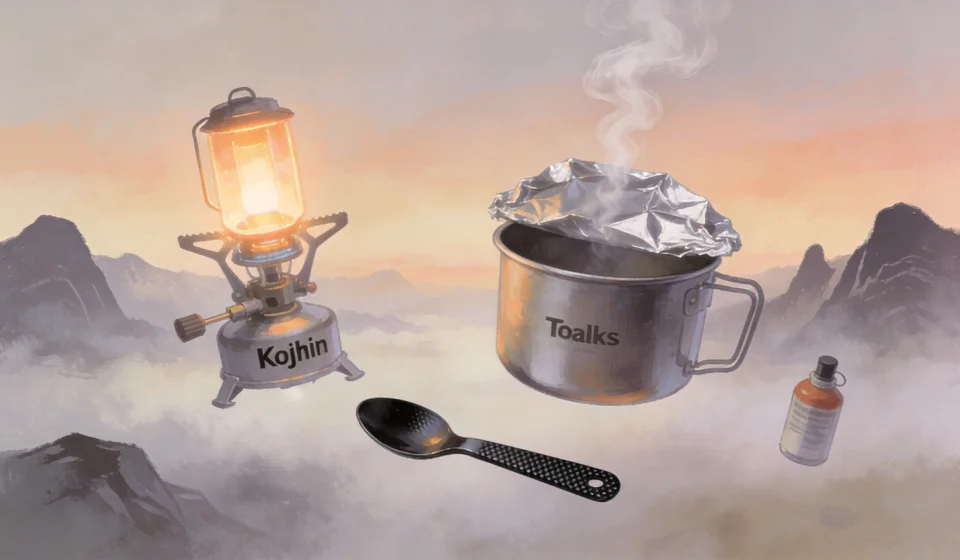
Practical insight: The Kojin is a fan favorite because it’s both light and reliable. One hiker I know used his Kojin for a 400‑mile section of the Colorado Trail, pairing it with a homemade foil windscreen. The secret? Always test your stove in windy conditions before a trip—a simple cardboard‑sized wind barrier can cut boil time by 40%. If you prefer an all‑in‑one system, the Caldera Cone is worth its extra weight because the cone itself acts as a pot stand and wind guard; you won’t need to carry separate support.
2. Pot & Lid: Where Every Gram Counts
Your pot is usually the heaviest piece. For a sub‑5 oz kit, aim for 1.7–2.5 oz. Popular choices include:
- Toaks Titanium 550ml Pot: 2.3 oz – the gold standard for one‑person meals. Handles boil‑in‑bag and freeze‑dried dishes with ease.
- Evernew Titanium 400ml Cup: 1.7 oz – my personal favorite for solo trips where I only need one cup of water. Paired with a Kojin, you can achieve a total cook system near 3 oz.
- Snow Peak Titanium 450ml Mug: 2.2 oz – slightly wider than the Toaks, making it easier to eat directly from the pot.
For the lid, skip the heavy titanium version. A DIY aluminum foil lid (cut from a disposable pie pan) weighs 0.1 oz and fits any pot. Crimp the edges for a snug fit—it significantly reduces boil time and fuel consumption.
3. Utensils & Fuel Container: The Tiny Details
A standard titanium spoon (like the Sea to Summit Delta) weighs about 0.4 oz, but you can go even lighter. The Gossamer Gear Carbon Fibre Spoon is 0.2 oz and surprisingly durable. Pro tip: cut a standard plastic spoon handle to 4 inches—it’s free, 0.1 oz, and works well for stirring.
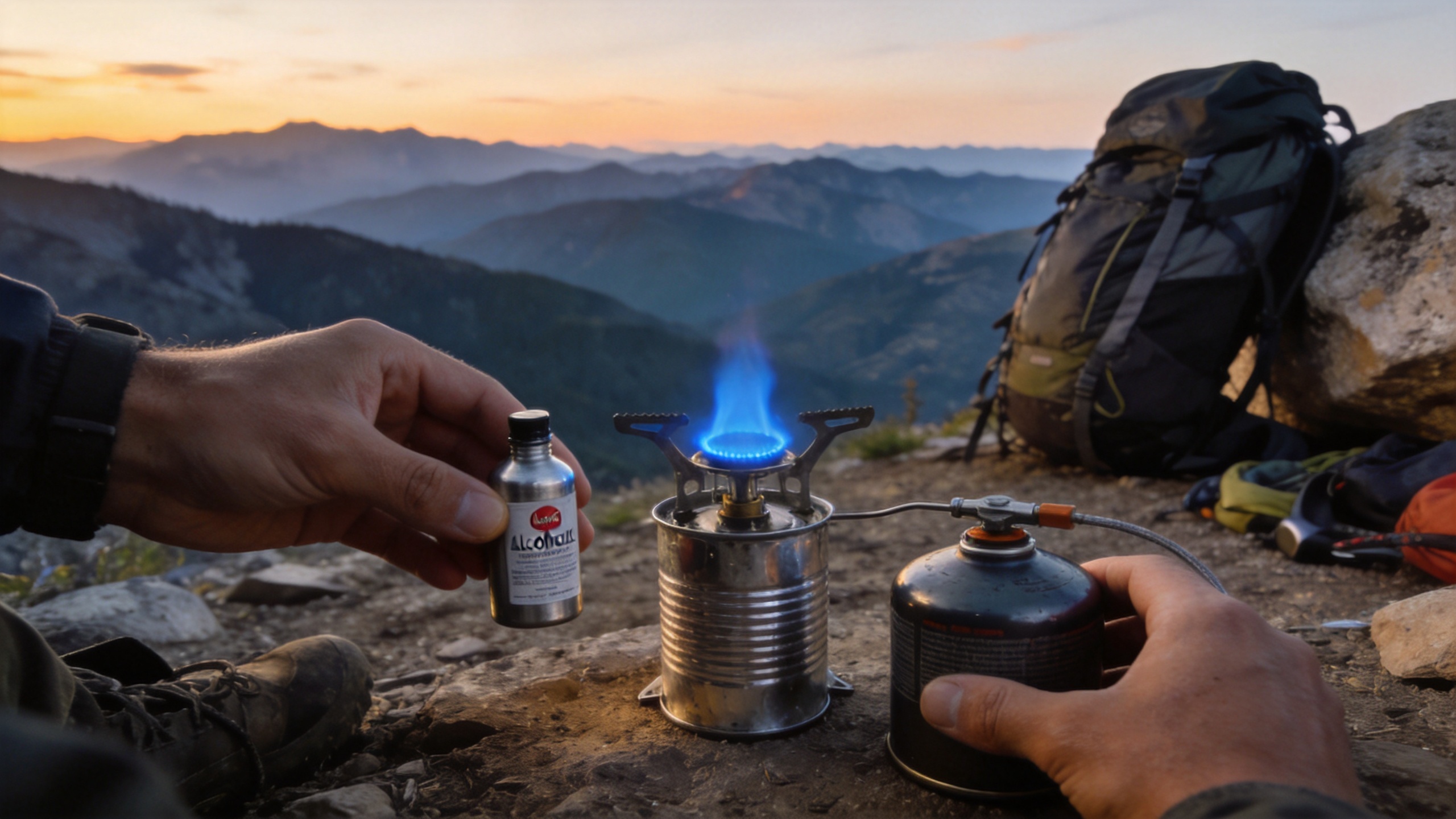
Your fuel container must be leak‑proof and light. The Litesmith 1.5 oz polyethylene bottle (0.3 oz) is perfect for enough alcohol to boil 4–5 cups of water. Avoid heavy Nalgene containers. A high‑pressure fuel canister for iso‑butane is not an option here—alcohol is the only way to stay below 5 oz.
“I’ve used the same Foster can stove for over 500 miles. My total cook kit—stove, Toaks 550ml pot, foil lid, carbon spoon, and a Litesmith fuel bottle—weighs 3.8 oz without fuel. I could toss an extra ounce of fuel in and still be under 5 oz. The key is testing at home and carrying exactly what you need.” — Ryan, PCT 2022 thru‑hiker
The Complete Sub‑5 oz LighterPack List
Below is a realistic, field‑tested LighterPack inventory. All weights are as measured on a 0.1 oz resolution scale. Total: 4.6 oz (fuel not included—add 1 oz for a full day’s cooking).
- Stove: Zelph’s Kojin – 0.4 oz
- Pot: Toaks Titanium 550ml – 2.3 oz
- Lid: Homemade aluminum foil – 0.1 oz
- Utensil: Gossamer Gear Carbon Fibre Spoon – 0.2 oz
- Fuel Container: Litesmith 1.5oz bottle (empty) – 0.3 oz
- Windscreen: Folded aluminum foil (cut from a pie pan) – 0.3 oz
- Pot Support: 3 small titanium tent stakes used as pot stand – 1.0 oz
Note: You can skip the dedicated pot support if your stove comes with a built‑in support (e.g., Caldera Cone). Those tent stakes double as ground stakes for your shelter, so their weight is shared.
Real‑World Tips for Making It Work
Fuel Management
Alcohol is efficient only if you use a lid and windscreen. A typical boil of 2 cups takes 8–12 ml of denatured alcohol (about 0.3 oz). For a three‑day trip with two boils per day, you need ~60 ml (2 oz) of fuel. A Litesmith bottle holds 1.5 oz—enough for one day. If you need more, carry two bottles (total container weight 0.6 oz) and you’ll still be under 5 oz.
Wind is Your Enemy
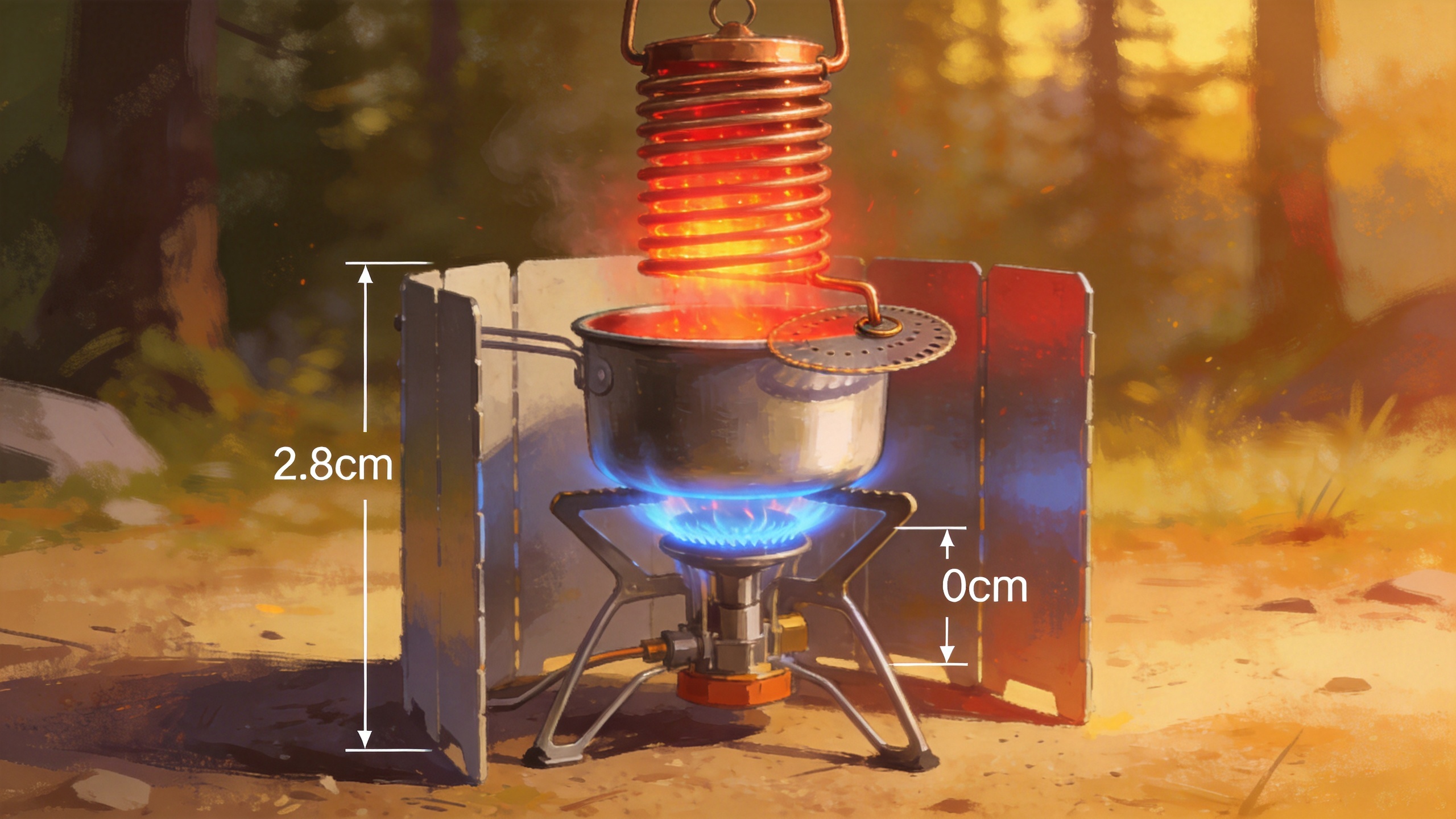
Without a quality windscreen, an open alcohol stove can take 15 minutes to boil. Use a U‑shaped foil shield that surrounds the pot and stove but leaves an opening for air intake. Fold it when not in use into a 3×3 inch square—it fits inside your pot.
Meal Hacks
Dehydrated meals (e.g., Backpacker’s Pantry) usually require ~1.5 cups of boiling water. A 550ml pot works perfectly. For breakfast, just boil water, pour it into a freezer‑bag with oats, and let sit while you pack up. No cleanup needed.
Conclusion
A sub‑5 oz cook kit is not a gimmick—it’s a legitimate, repeatable system that saves you from carrying unnecessary bulk. By choosing an alcohol stove like the Kojin or a DIY Foster can, a titanium pot, a foil lid, and a carbon spoon, you can keep your total gear weight under five ounces while still enjoying hot meals on the trail. Test your setup before you leave, pack only the fuel you need, and you’ll never look back at that heavy canister stove again.