Caffeine Per Ounce: Instant Coffee vs Pills vs Gum vs Drink Mix for Backpacking
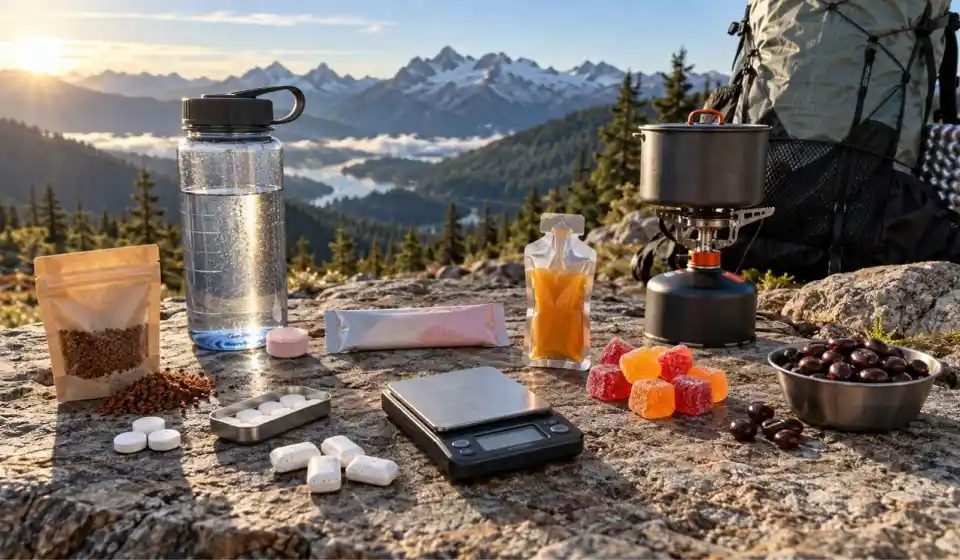
Backpackers normally talk about calories per ounce, but caffeine creates a different packing problem because the lightest source may provide almost no food energy at all. ☕ A can of energy drink may deliver caffeine conveniently at home, yet carrying the water, container, and beverage itself makes little sense when the same caffeine can come from a few grams of coffee powder, gum, tablets, or drink mix. That raises a useful Camp Kitchen Lab question: how much caffeine are you actually carrying for every ounce devoted to it?
The answer cannot be reduced to one winner because caffeine products perform different jobs inside a trail-food system. A gel may provide carbohydrates and caffeine together, instant coffee creates a familiar morning beverage, electrolyte products combine several functions, while a tablet exists almost entirely to provide caffeine. 🎒 Comparing them therefore requires looking beyond milligrams of caffeine to weight, calories, water, preparation, packaging, and the purpose of each serving.
What Caffeine Per Ounce Actually Means
“Caffeine per ounce” measures the amount of caffeine contained in one ounce of the dry or ready-to-eat product you actually carry, not the weight of the water eventually added on trail. For example, 2 grams of instant coffee providing roughly 50–90 milligrams of caffeine translates to approximately 710–1,276 milligrams of caffeine per ounce of dry coffee, although actual coffee products vary. 📊 That number sounds enormous only because one ounce contains about fourteen 2-gram servings.
This metric should not be confused with calories per ounce, because caffeine itself is not a backpacking fuel strategy. A zero-calorie caffeine tablet can score extremely well for pack efficiency while contributing essentially nothing toward a hiker’s food-energy requirement, whereas a caffeinated gel carries considerably more weight because much of that weight is carbohydrate and water. In practice, your food spreadsheet may benefit from having separate columns for calories per ounce and caffeine per ounce.
Instant Coffee: Lightweight With A Preparation Step
Instant coffee is surprisingly efficient when judged strictly by dry pack weight because only a few grams are required for a cup. ☕ A representative 2-gram serving can contain roughly 50–90 milligrams of caffeine, meaning several days of morning coffee can weigh less than many single trail snacks. Calories are negligible when the coffee is consumed black, while sugar, powdered creamer, milk powder, or other additions change both weight and calorie content.
Its main requirement is water, although heat is optional rather than mandatory because instant coffee can also dissolve in cold water with enough mixing and time. Hot coffee introduces additional considerations such as stove use, fuel consumption, mug cleanup, and morning preparation, while cold preparation removes most of those steps. For hikers who genuinely enjoy the coffee ritual, those extra steps may be worth more than shaving another fraction of an ounce.
Caffeine Tablets: Maximum Simplicity, No Food Value
Caffeine tablets are one of the most concentrated practical formats because individual products commonly contain measured doses such as 100 or 200 milligrams of caffeine per tablet. 💊 They require virtually no food preparation, contribute essentially no meaningful calories, and occupy remarkably little space compared with drinks or caffeinated foods. That makes them attractive from a pure pack-weight perspective, especially when a hiker does not care about drinking coffee.
However, a trustworthy caffeine-per-ounce calculation needs the actual total tablet weight, including binders and other ingredients, and that information is not consistently displayed on every consumer label. Saying that every caffeine pill provides a particular number of milligrams per ounce would therefore create false precision. The more defensible conclusion is simply that tablets occupy the high-concentration, low-functionality end of the spectrum: caffeine is essentially the reason they are being carried.
Gum And Mints Remove The Water Requirement
Caffeinated gum offers another unusually compact option, with some products providing about 50 milligrams per piece and requiring neither trail water nor cooking. 🥾 That creates a different kind of efficiency because there is no bottle to mix, cup to clean, wrapper full of sticky gel, or morning stove routine. A hiker can also count individual pieces before leaving home, making the caffeine inventory physically easy to see.
Again, exact caffeine per ounce depends on the gum’s individual weight, which is not always disclosed alongside caffeine information. Mints create the same measurement issue, so reading both the net package weight and caffeine statement is necessary before putting an exact number into a spreadsheet. Their real logistical advantage is therefore less about a universal mg-per-ounce number and more about tiny servings, minimal preparation, and easy portioning.
Powdered Drink Mixes Do More Than Deliver Caffeine
Caffeinated drink powders occupy a middle ground because part of their weight comes from ingredients serving other purposes, including carbohydrates, flavoring, sodium, and other electrolytes. 🥤 A current caffeinated hydration mix can provide around 50 milligrams of caffeine per serving, while formulations and serving weights differ substantially between brands. Instead of asking whether the additional powder is “wasted weight,” ask whether you were already planning to carry a flavored carbohydrate or electrolyte drink.
That distinction creates the idea of multifunction weight: one ounce may contribute caffeine, calories, sodium, flavor, and drink preparation rather than performing only one job. A pure caffeine tablet will generally look better in a caffeine-concentration contest, but the drink mix may replace another item that would otherwise be packed separately. For menu planning, that systems-level comparison is often more useful than ranking ingredients in isolation.
Caffeinated Electrolyte Tablets Have A Different Job
Effervescent electrolyte tablets make this distinction even clearer because one representative caffeinated product weighs around 5.4 grams, provides 40 milligrams of caffeine, 15 calories, and 300 milligrams of sodium. That works out to approximately 210 milligrams of caffeine per ounce of dry tablets, considerably less caffeine-dense than dry instant coffee but still very compact. 💧 It also illustrates why caffeine-per-ounce should never be the only column considered.
The tablet is designed to be dissolved in a substantial amount of water, so it makes sense primarily when a hiker already intends to prepare a flavored electrolyte beverage. Carrying it exclusively for caffeine would ignore much of what the product is designed to provide. This is a recurring trail-food principle: a lower score on one metric can still produce a more useful overall item when one product replaces several separate functions.
Gels, Chews And Caffeinated Foods Trade Concentration For Calories
Caffeinated energy gels belong in a fundamentally different category because their weight includes water and carbohydrate intended to provide food energy. 🍯 One representative 32-gram caffeinated gel contains roughly 100 calories and 35 milligrams of caffeine, equal to only about 31 milligrams of caffeine per ounce. That looks inefficient beside instant coffee until you remember that coffee provides virtually none of those 100 calories.
Caffeinated chews follow the same logic, with some products combining roughly 100 calories with 25–50 milligrams of caffeine, depending on flavor and formulation. Chocolate-covered coffee beans go even further toward the “food” side of the spectrum because their weight includes chocolate, coffee beans, fat, sugar, and calories rather than merely an isolated caffeine source. 🍫 These formats make most sense when the hiker actually wants food plus caffeine, not when caffeine concentration alone is the objective.
The Complete Backpacking Caffeine Comparison
The table below uses representative label examples and useful ranges rather than universal values, because caffeine content, serving size, sodium, calories, and formulation can change from one product to another. Where both serving mass and caffeine amount are known, caffeine per ounce can be calculated directly; where the complete mass is not reliably disclosed, the honest answer is “varies” rather than an invented number. 🧪 That makes the table more useful as a decision framework than as a claim that every product in one category is identical.
| Format | Representative caffeine | Typical calories | Water required | Heat required | Approx. caffeine/oz | Main trail role |
|---|---|---|---|---|---|---|
| Instant coffee | 50–90 mg per 2 g | ~0–5 | Yes | No | ~710–1,276 mg | Coffee ritual + caffeine |
| Caffeine tablet | 100–200 mg/tablet | ~0 | Usually minimal | No | Varies by tablet mass | Maximum concentration |
| Caffeine gum | ~50 mg/piece | Low | No | No | Varies | No-prep caffeine |
| Caffeine mint | Brand dependent | Low | No | No | Varies | Tiny no-prep option |
| Powdered drink mix | ~50 mg/serving in some products | Varies | Yes | No | Product dependent | Caffeine + drink |
| Electrolyte tablet | ~40 mg/5.4 g example | ~15 | Yes | No | ~210 mg | Caffeine + electrolytes |
| Caffeinated gel | ~35 mg/32 g example | ~100 | No | No | ~31 mg | Carbs + caffeine |
| Caffeinated chews | ~25–50 mg/packet examples | ~100 | No | No | Product dependent | Carbs + chewable food |
| Chocolate coffee beans | Highly variable | Moderate-high | No | No | Not reliably standardized | Snack + caffeine |
The most revealing column may actually be main trail role, because it explains why the highest caffeine-per-ounce product is not automatically the correct thing to pack. Coffee replaces morning coffee, gum eliminates preparation, electrolyte products combine hydration-related ingredients with caffeine, and gels or chews combine caffeine with carbohydrate calories. Your ideal format depends on what other gear and food the caffeine product allows you to remove—or forces you to add.
Which Format Solves Which Packing Problem?
For minimum caffeine weight, measured tablets, gum, and concentrated dry coffee are the obvious formats to investigate first, while hikers wanting minimal preparation may favor tablets, gum, or mints. Someone who wants a morning beverage may willingly accept the water and preparation involved with instant coffee, while somebody already carrying electrolyte drink mix may prefer combining those functions. 🏕️ None of those choices needs to be declared physiologically superior for the logistical comparison to be useful.
For fuel plus caffeine, gels, chews, and caffeinated foods deserve their own category instead of being penalized for weighing more. A 100-calorie gel is carrying food energy that a caffeine pill simply does not contain, so comparing the two solely by caffeine concentration is like comparing a tent to a rain jacket based only on ounces. The correct Camp Kitchen Lab question is what jobs does each ounce perform inside the complete pack-out?
Do Not Let Pack Efficiency Become Dose Creep
There is one danger in making caffeine extremely lightweight: physical pack weight no longer provides much friction against carrying or consuming a large amount. ⚠️ Multiple coffees, caffeinated gels, gum, drink mixes, and tablets can quietly add together across a long hiking day, particularly when the caffeine comes from several different categories. Keeping a simple milligram-per-serving count beside the food inventory makes that total easier to see.
Individual responses to caffeine vary, and more is not automatically better simply because carrying it costs almost no pack weight. Bulk pure or highly concentrated caffeine powders are especially poor candidates for DIY trail portioning because extremely small measurement errors can represent very large dose differences. For anyone with medical conditions, medication interactions, pregnancy considerations, or unusual caffeine sensitivity, individualized guidance belongs with a qualified healthcare professional rather than a backpacking spreadsheet.
The Better Metric Is Caffeine Per Ounce Per Purpose
The caffeine-per-ounce idea works best when it becomes one column in a larger trail-food database, beside calories per ounce, carbohydrate, sodium, serving weight, water requirements, heat requirements, packaging, and preparation. 📋 That immediately reveals why a tablet can dominate one column while a gel dominates another and a drink mix may score well because it replaces several separate products. It also prevents ultralight thinking from reducing every trail-food decision to whichever item produces the largest single number.
For Camp Kitchen Lab, the larger lesson is the same one found throughout caloric-density analysis: weight only becomes meaningful when you know what the weight is accomplishing. Instant coffee, pills, gum, drink powders, electrolyte tablets, gels, chews, and caffeinated foods are not interchangeable even when their labels show similar caffeine totals. 🎒 Build the caffeine choice around the trip, the rest of the menu, and the preparation system rather than declaring one format the universal winner.