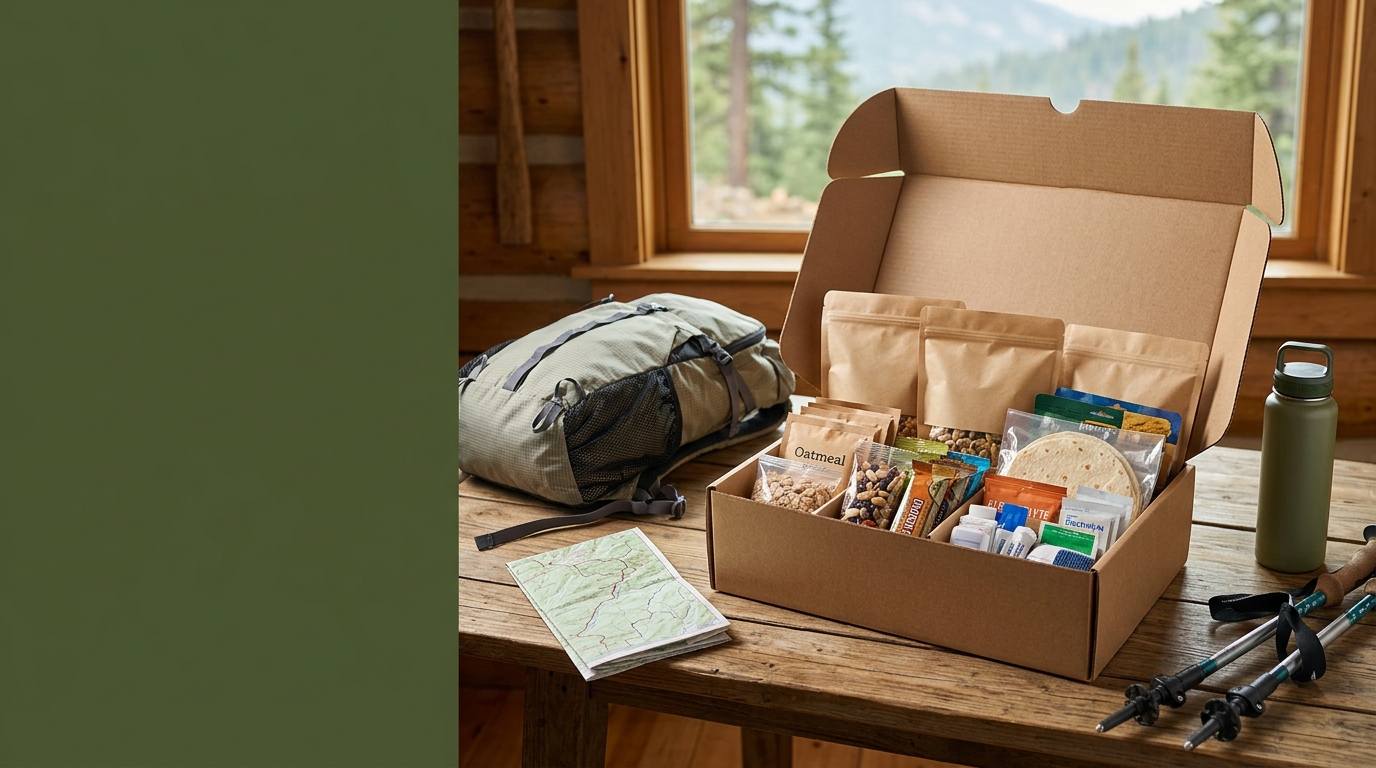
🥾 How Many Calories Should You Pack Per Day for a Backpacking Trip?
Introduction
Planning backpacking food can feel like a balancing act. Pack too little, and you may struggle with hunger, fatigue, and low energy on the trail. Pack too much, and your backpack becomes heavier than necessary.
The goal is to bring enough food to support your hiking, recover between days, and enjoy your meals without carrying unnecessary weight.
There isn’t one calorie target that works for every backpacker. Your food needs depend on your body size, hiking duration, terrain, pace, weather, and individual appetite. A short walk on a gentle trail is very different from a steep, demanding day with a heavy pack.
This guide explains how to estimate your daily trail-food needs, calculate a starting food budget, and adjust your plan using your own hiking experience. 🎒
1. Start With a Practical Calorie Estimate
For planning purposes, some backpackers use approximately 2,500–4,500 calories per day as a broad initial range for demanding outdoor trips. This is not a universal recommendation or a guarantee that your needs fall within those numbers. Some hikers need less, while others need substantially more.
Your normal energy requirements, the difficulty of your route, and the amount of time you spend moving all influence the total.
Use a starting estimate as a planning tool, not a strict limit. If you regularly feel hungry, lose weight unintentionally, or struggle to maintain your energy on multi-day trips, your current food plan may need adjustment.
2. Five Factors That Change Your Daily Food Needs
1. Duration and time spent moving ⏱️
A day with three hours of easy hiking may require less energy than a day spent climbing for eight hours. However, total time on the trail isn’t the only factor. Long breaks, pack weight, elevation gain, and the intensity of movement also matter.
For multi-day trips, remember that you need enough food for recovery as well as the next day’s hike.
2. Terrain and elevation
Steep climbs, repeated ascents, uneven surfaces, sand, snow, and rough trails can make hiking more demanding than walking on a flat path.
A route with substantial elevation gain may require more energy than a similar-distance route on level ground. Distance alone is therefore a poor way to estimate food needs.
3. Pace and pack weight
A fast pace can increase the intensity of your hike, while a heavier backpack generally increases the effort needed to move.
Two hikers covering the same trail may have different energy requirements because they carry different loads, move at different speeds, or take different routes.
4. Body size and individual physiology
Body size, age, fitness, and other individual factors influence energy use. Larger bodies often require more energy for movement, but body weight alone cannot predict an individual’s exact needs.
Avoid comparing your food intake too closely with another hiker’s. Their body, pace, pack, and route may be very different from yours.
5. Weather and appetite
Cold conditions can increase energy demands, particularly when you are exposed to the elements. Heat can suppress appetite for some people, even when their bodies still need fuel.
Stress, altitude, unfamiliar food, and strenuous exercise may also affect how much you feel like eating. Choose foods you enjoy and can comfortably eat while hiking.
3. Calculate a Starting Daily Food Budget
A simple way to plan is to choose a tentative daily target based on your previous hiking experience and expected conditions, then calculate the total for the trip.
Example calculation A: A three-day backpacking trip
Suppose you choose 3,000 calories per day as an initial planning target.
- Daily target: 3,000 calories
- Trip duration: 3 days
- Total planned food energy: 3,000 × 3 = 9,000 calories
This is an example of the math, not a claim that 3,000 calories will meet everyone’s needs.
Example calculation B: A four-day trip with a higher starting target
Suppose your route is more demanding, so you choose 3,500 calories per day as your initial estimate.
- Daily target: 3,500 calories
- Trip duration: 4 days
- Total planned food energy: 3,500 × 4 = 14,000 calories
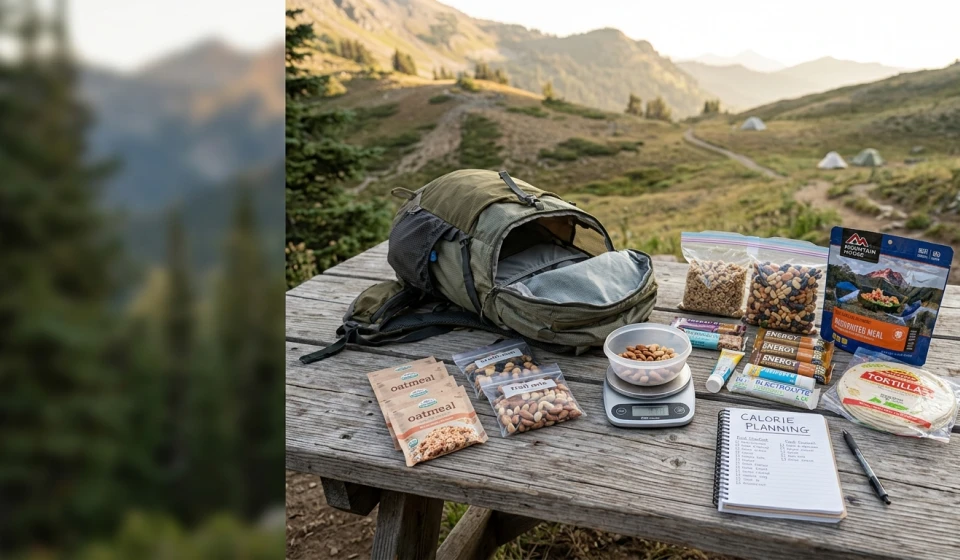
Before finalizing either plan, consider whether your meals and snacks realistically provide those amounts. Check package labels and serving sizes rather than estimating by appearance alone.
Should you pack extra food?
A sensible backup is useful when delays, route changes, or unexpected conditions could extend your trip. How much to carry depends on the route, weather, remoteness, and availability of resupply.
For a remote trip, plan for plausible delays rather than assuming you’ll finish exactly on schedule. Keep emergency food separate from your routine daily portions when practical, and make sure your safety plan accounts for the possibility of a longer stay.
4. Turn Calories Into Food You Can Actually Carry
A calorie target is only useful if the food is practical to transport, prepare, and eat.
Look for a mix of:
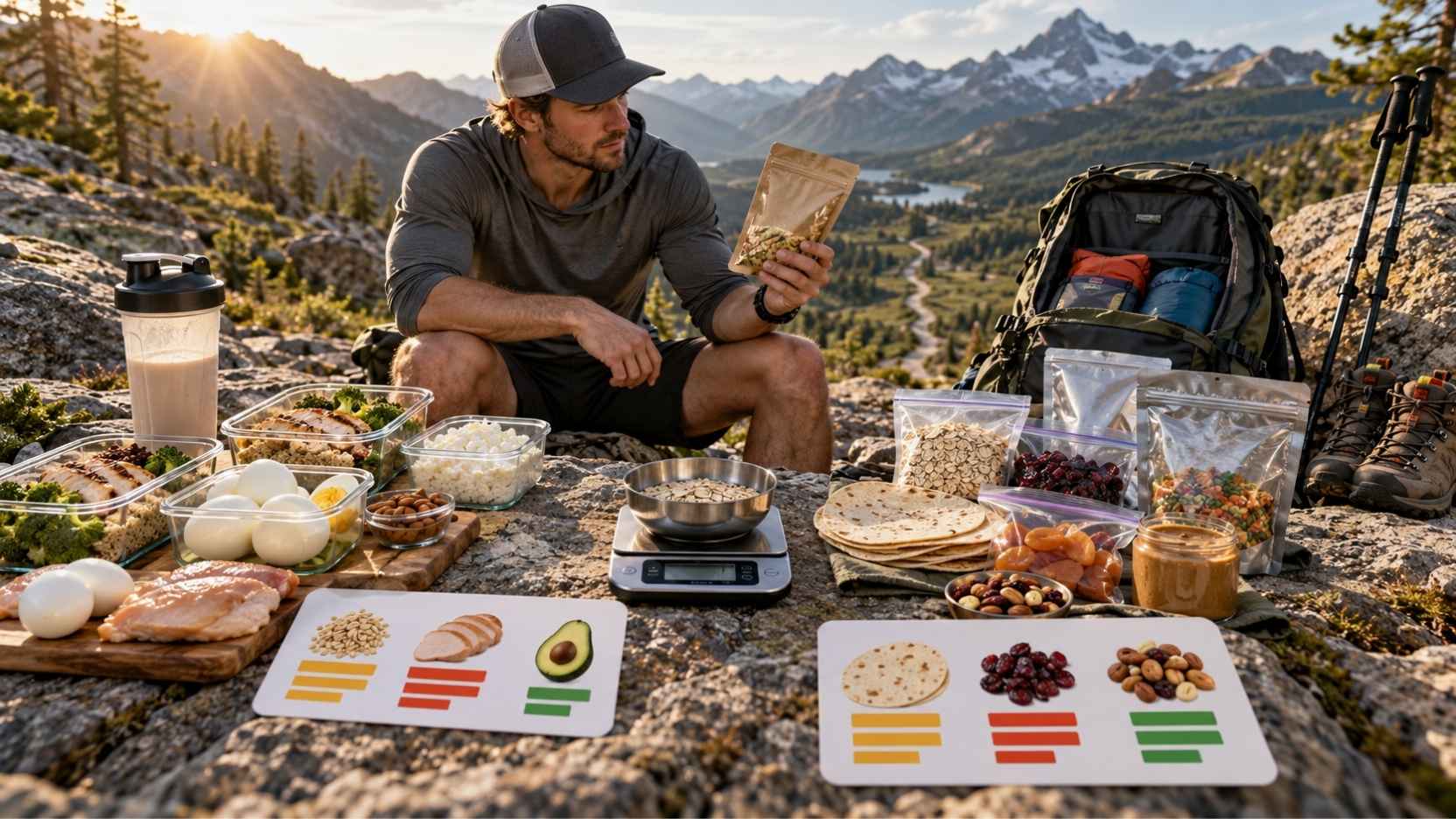
- Carbohydrates: Oats, tortillas, rice, crackers, dried fruit, and energy bars can provide convenient fuel.
- Fats: Nuts, seeds, nut butter, and olive oil offer substantial energy in relatively small portions.
- Protein: Beans, nuts, tuna packets, powdered milk, and suitable dehydrated meals can help meet protein needs.
- Variety and flavor: Salty snacks, sweet foods, familiar meals, and different textures may make it easier to keep eating over several days.
Foods with more calories per ounce can reduce pack weight, but calorie density should not be your only selection rule. You also need enough food, variety, and nutrients to support your trip.
Example: Comparing calorie density
Imagine two snacks:
| Snack | Illustrative calories | Illustrative weight |
|---|---|---|
| Snack A | 200 calories | 50 g |
| Snack B | 300 calories | 50 g |
Snack B provides more calories for the same weight. Its calorie density is 6 calories per gram, compared with 4 calories per gram for Snack A.
These figures are hypothetical. Use the actual package label when comparing products.
To calculate calorie density:
[
\text{Calories per gram}=
\frac{\text{Calories per serving}}{\text{Serving weight in grams}}
]
For example, a 250-calorie bar weighing 50 grams provides 5 calories per gram.
This comparison helps you evaluate food weight, but it doesn’t determine how much you personally need to eat.
5. Don’t Forget Hydration and Food Safety 💧
Calories are only one part of trail nutrition. You also need a reliable water plan, appropriate food storage, and enough time to eat and rest.
- Carry a water-treatment method appropriate for your route and water sources.
- Protect food from moisture and contamination.
- Follow storage instructions for foods that require temperature control.
- Keep foods accessible during the day so you can eat before you become excessively hungry.
- In hot conditions, pay particular attention to food safety and the risk of spoilage.
Electrolyte products may be useful during prolonged activity in heat or heavy sweating, depending on your circumstances. They do not replace meals or adequate fluid intake.
6. Adjust Your Plan After Each Trip
Your first estimate is a starting point. Your experience on the trail helps you make the next plan more accurate.
Ask yourself:
- Was I hungry between meals or before the day ended?
- Did I finish most of my food, or carry a substantial amount home?
- Did I have enough energy for climbs and the final hours of hiking?
- Were the foods appealing when I was tired or hot?
- Did I have enough food for delays?
- Did my pack contain food I couldn’t comfortably prepare or eat?
Repeated hunger, persistent fatigue, or unintended weight loss can indicate that your plan needs attention. They can also have causes beyond food intake. If symptoms are significant or continue, consider advice from a qualified healthcare professional or sports dietitian.
Do not use a successful short hike as proof that the same food quantity will be adequate for a longer, colder, steeper, or more remote trip.
7. Your Daily Backpacking Calorie Worksheet 📝
Use this reusable worksheet before each trip. Fill in the estimates, then revise them based on your experience and the conditions you expect.
Final Thoughts 🌲
The right amount of backpacking food isn’t a magic number. It’s a realistic estimate shaped by your body, your route, your pace, and your experience.
Start with a reasonable daily target, build a menu from foods you enjoy, and check the actual calories and serving sizes. Then learn from every trip. If your hikes become longer, your pack gets heavier, or the terrain becomes more demanding, reassess your plan instead of automatically repeating the same portions.
Pack enough to support the hike you’re actually doing, not just the distance on the map. A little preparation can make your days on the trail more comfortable, energetic, and enjoyable.