Beef and Rice for Backpacking: Calories, Weight, and the Better Trail Version
Why Beef And Rice Works Differently At Home And On Trail
Beef and rice is ordinary home food, which is exactly why it makes such a useful backpacking nutrition experiment. 🍚 At home, the water absorbed by cooked rice and retained in cooked beef barely matters because the meal travels only from the kitchen to the table. On trail, every gram must be carried, so the more useful question is how much dry food goes into the pack and how much water can be added later at camp.
That distinction changes the calorie-density calculation without making beef and rice nutritionally special. A bowl can contain plenty of carbohydrate, protein, and fat yet still look inefficient by calories per ounce because much of its scale weight is simply water. 🎒 Backpackers therefore need to separate weight when eaten from weight while carried, especially when comparing home-cooked meals with dehydrated or freeze-dried foods.
Cooked Weight Vs Packed Dry Weight
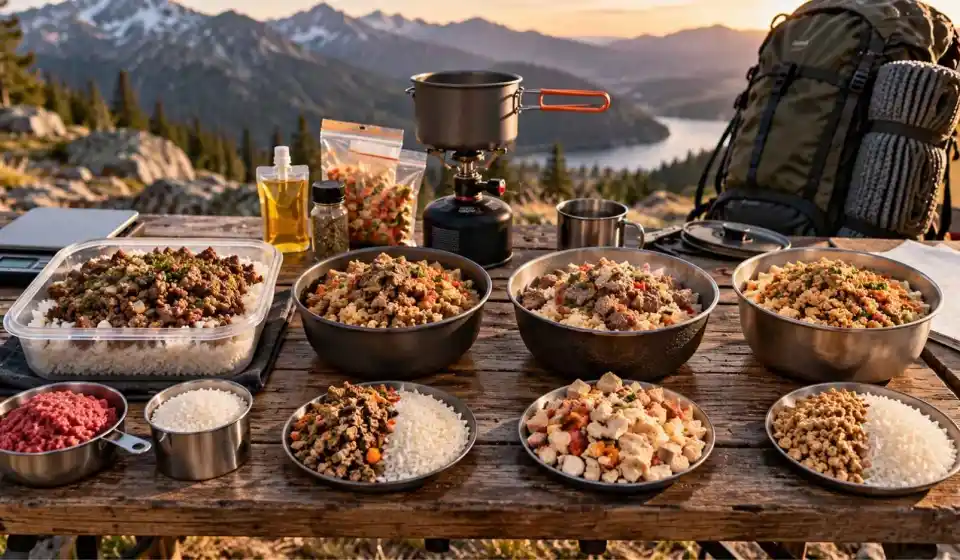
Using standard reference values, 100 grams of cooked 90 percent lean ground beef provides about 204 calories and 25 grams of protein, while 200 grams of cooked white rice contributes roughly 260 calories and 5 grams of protein. Together, that basic bowl weighs 300 grams, or about 10.6 ounces, and supplies around 464 calories before sauce or vegetables. That equals only about 44 calories per ounce if you physically carry the fully cooked meal.
The low number is mostly a water problem: cooked rice is more than two-thirds water by weight in the USDA reference, while the cooked ground-beef entry is also over 60 percent water. 💧 By contrast, two 46-gram servings of dry instant white rice provide about 340 calories, and one 35-gram example serving of dehydrated ground beef provides roughly 170 calories and 26 grams of protein. Packed together, those dry ingredients total about 510 calories at roughly 4.5 ounces, or about 114 calories per ounce before oil or seasonings.
Option 1: Dehydrated Beef And Instant Rice
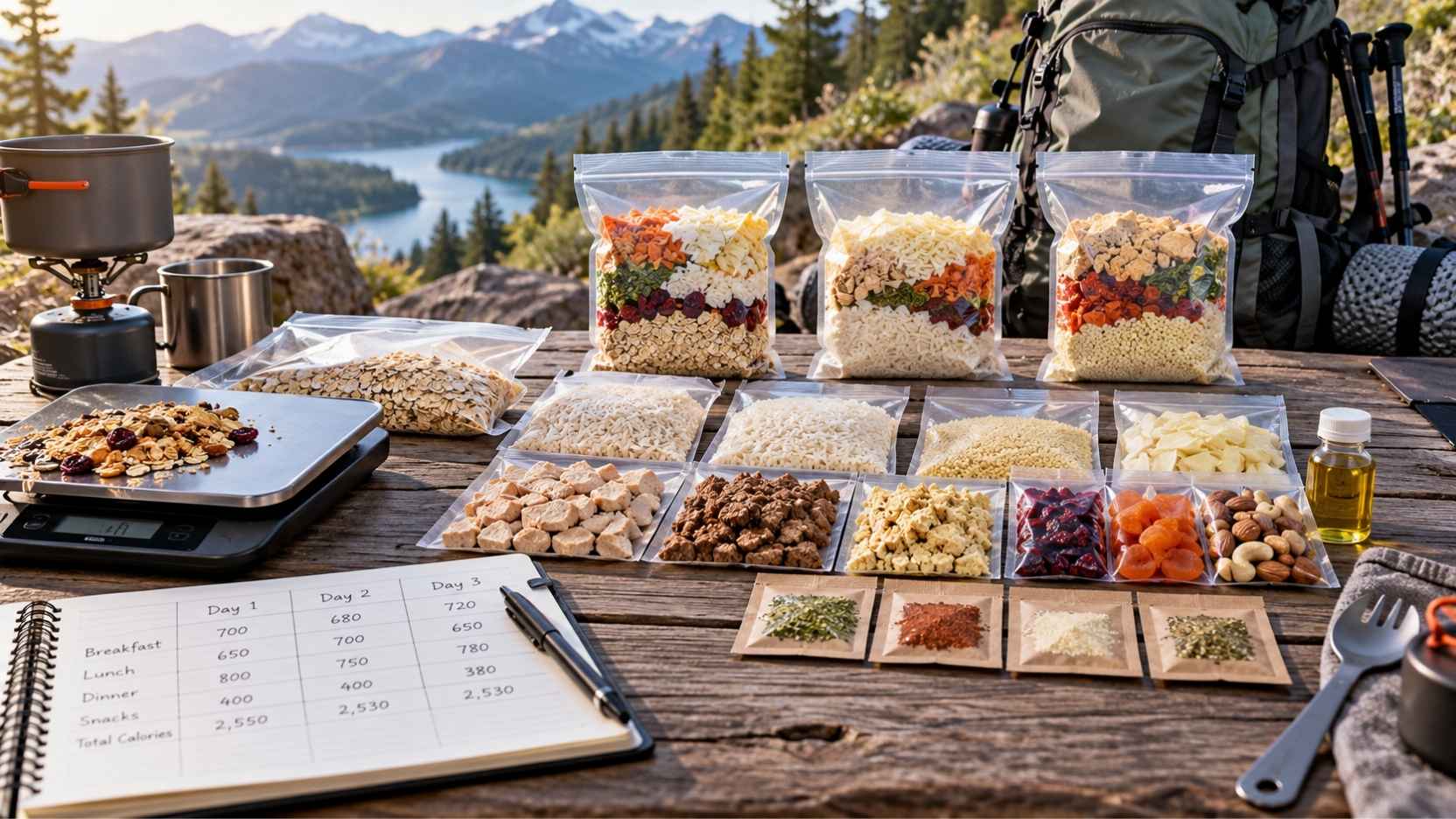
Dehydrated beef with instant rice is the most adjustable version because both ingredients can be weighed separately and scaled to the trip. Instant rice has already been cooked and dried, while dehydrated beef can be rehydrated with the rice, so the campsite water source replaces much of the moisture you would otherwise carry from home. 🔥 Adding one tablespoon of olive oil at roughly 119 calories would take the example meal to about 629 calories and approximately 127 calories per packed ounce.
Homemade dried meat requires more food-safety care than simply putting cooked beef into a dehydrator and assuming dryness makes it safe. USDA guidance emphasizes heating meat to a safe temperature before dehydration and maintaining proper drying temperatures, while raw ground beef should reach 160°F before eating. For hikers who do not want to manage that process, commercially prepared shelf-stable meat or a complete freeze-dried meal is the simpler route.
Option 2: Freeze-Dried Beef And Rice Or A Plant-Based Alternative
Commercial freeze-dried meals trade customization for convenience because the meat, rice, vegetables, sauce, and seasoning are usually packaged together and need only measured hot water. One current beef-and-rice example lists 710 calories, 28 grams of protein, and a dry weight of 5.18 ounces, which works out to about 137 calories per ounce, with rehydration taking around ten minutes. 🥘 That is a useful benchmark, but commercial meals vary substantially in calories, protein, sodium, serving size, price, and required water.
A plant-based dried version can use textured vegetable protein, or TVP, instead of beef without changing the basic meal structure. One plain TVP product provides 80 calories and 12 grams of protein per 23 grams dry, so two servings combined with two servings of instant rice produce about 500 calories, 32 grams of protein, and roughly 4.9 ounces before sauce or added fat. 🌱 Because plain TVP contains very little fat, adding oil or another calorie-dense ingredient may be necessary if the goal is a higher-calorie backpacking dinner rather than simply a high-protein rice bowl.
Sauces, Vegetables, Water And Fuel Change The Final Math
Sauces can quietly decide whether a beef and rice backpacking meal stays light or starts carrying unnecessary water. Dry bouillon, powdered gravy, spices, dehydrated salsa, or dried vegetables add flavor with relatively little moisture, while a heavy jarred sauce may force you to transport water that could have been added at camp. 🌶️ Oil, cheese powder, coconut milk powder, nuts, or seeds can raise calories quickly, but the final calorie density should always be recalculated from the actual ingredient labels.
Fuel use matters too because saving food weight is less impressive if the meal needs a long stove simmer. Instant rice, dried meat, TVP, and most freeze-dried meals can often be prepared by boiling water and allowing the ingredients to stand, whereas ordinary uncooked rice or dry beans generally demand more cooking. ⛺ Exact fuel consumption varies with stove, wind, pot, altitude, starting water temperature, and water volume, so describing a meal as low-, medium-, or high-fuel is more defensible than promising one universal number of grams of gas.
Example 700-, 900-, And 1,100-Calorie Trail Portions
For planning purposes, a roughly 700-calorie version could use about 92 grams of instant rice, 35 grams of dried beef, and approximately 1.6 tablespoons of oil, producing a packed weight near 5.2 ounces before seasoning. A roughly 900-calorie version could use about 115 grams of instant rice, the same 35 grams of beef, and enough added fat to reach the target, coming in near 6.5 ounces under the same assumptions. 📏 These examples demonstrate the math rather than prescribe a recipe, because brands, dehydration level, drained fat, sauces, and measuring accuracy all change the result.
A roughly 1,100-calorie version can scale the rice to about 138 grams, increase the dried beef to around 44 grams, and add enough calorie-dense ingredients to close the remaining energy gap, producing a meal around eight packed ounces in a simplified calculation. Pouring all of those extra calories in as oil may taste unpleasant to some people, so a real recipe could divide them among oil, cheese powder, nuts, seeds, or another dense ingredient instead. The practical goal is not merely to hit a number but to create a meal that combines reasonable packed weight, enough food, acceptable preparation time, and a taste you will actually want after hiking all day.
Where Beef And Rice Fits In A Full-Day Backpacking Menu
Beef and rice works best as one substantial meal inside a varied day rather than as a complete trail nutrition strategy. Rice supplies a large carbohydrate base, beef or TVP contributes protein, and added fats can raise energy density, while breakfast and snacks can provide different foods, textures, and nutrients. 🥾 This also prevents dinner from becoming enormous simply because a hiker is trying to force most of the day’s calories into one bowl.
The larger Camp Kitchen Lab lesson is that home nutrition and backpacking nutrition use the same calories but different logistics. At home, cooked weight is convenient; on trail, dry carried weight, rehydration water, calories per ounce, cooking time, and fuel demand can become equally important. Beef and rice is valuable not because it is automatically the best backpacking dinner, but because it clearly shows why dehydration and rehydration can transform the weight mathematics of an otherwise ordinary meal.