The Under-10-Pound Food Challenge: Planning a 5-Day Backpacking Menu
Introduction 🥾
Packing five days of backpacking food under 10 pounds sounds like a simple weight challenge. But the real goal is not just carrying less. It is bringing enough calories, protein, carbohydrates, fat, and variety to support your hike without packing unnecessary weight.
The trick is choosing calorie-dense foods, planning every meal and snack, and accounting for packaging instead of counting only the food itself.
This guide builds a practical five-day menu with a target of less than 10 pounds of total food weight, including food packaging. It uses a mix of grocery-store staples and lightweight backpacking foods, with transparent estimates so you can adjust the plan to your appetite, budget, and route.
Important: This is an illustrative menu, not a guarantee that 10 pounds will be enough for every hiker. Energy needs vary with body size, terrain, elevation, temperature, pack weight, and daily mileage.
1. Set the Rules Before You Pack
For this challenge, the weight limit means:
- Duration: Five full hiking days.
- Daily meals: Breakfast, lunch, dinner, and snacks.
- Weight limit: Less than 10 pounds for all food carried at the start.
- Packaging: Included in the weight budget.
- Water: Excluded because it is collected or carried separately.
- Cooking fuel and cookware: Excluded from food weight.
- Food storage bags: Included if they are carried as part of the food system.
The estimates below are planning figures, not measured product specifications. Actual weights and nutrition vary by brand, serving size, and packaging. Weigh your actual portions and packages before relying on the total.
2. Understand the Calorie Trade-Off
A lightweight menu works best when a reasonable share of its calories comes from foods that provide substantial energy for their weight.
Nuts, peanut butter, olive oil, granola, and some dried meals are useful because they can provide many calories in relatively small portions. Crackers, dried fruit, and instant grains add carbohydrates and variety, while protein-rich ingredients help round out meals.
However, reducing weight too aggressively can leave you short on energy or nutrients.
For example, a menu that provides 2,000 calories per day might be adequate for some easy trips but insufficient for a hiker covering long distances with substantial elevation gain. Other hikers may need considerably more.
Use calorie density to reduce unnecessary weight, not to justify eating too little.
3. The Five-Day Backpacking Menu
This sample plan targets roughly 2,400–2,700 calories per day. It prioritizes shelf-stable ingredients and simple preparation, with some variety to avoid eating exactly the same meals every day.
Weights are estimates for the packed portions, including a small allowance for packaging. Calorie values are approximate and should be checked against the products you actually buy.
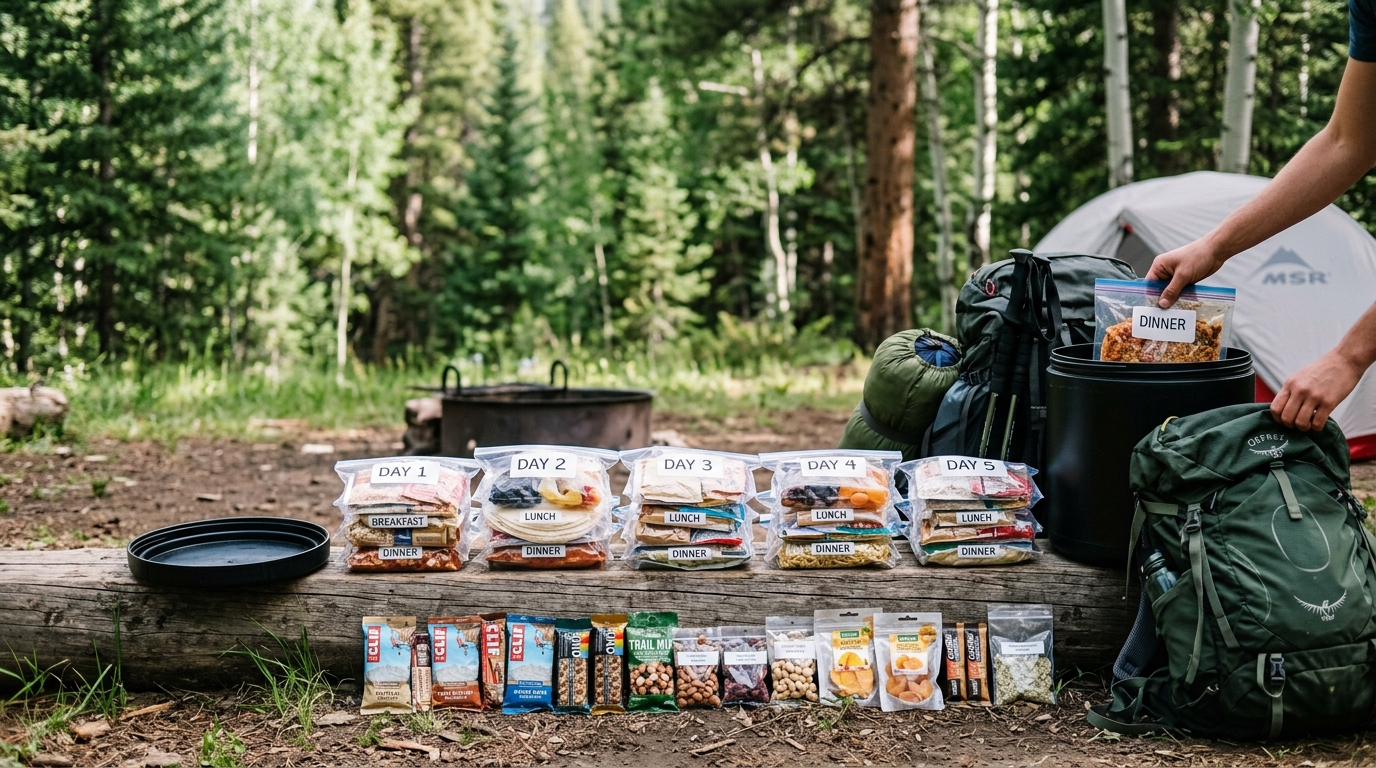
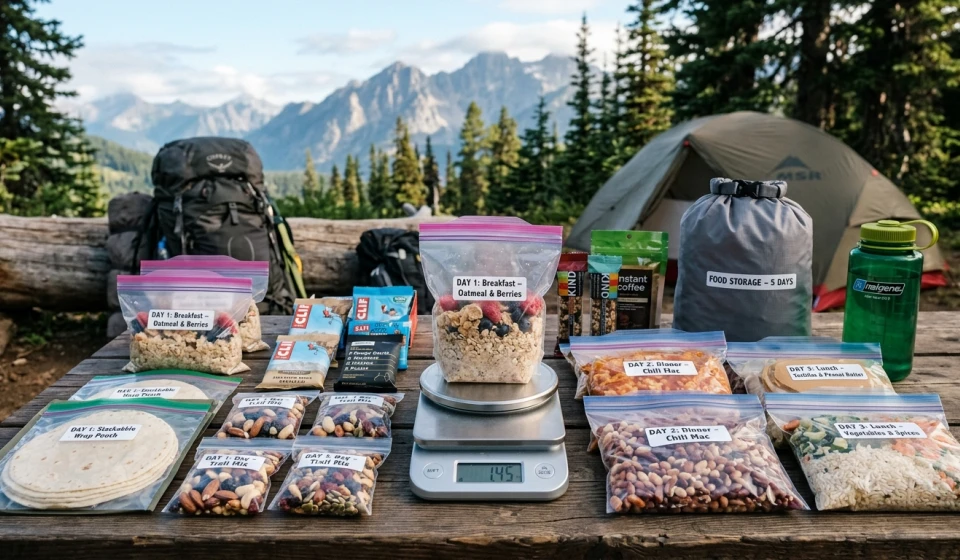
Day 1: A Simple Start
| Meal or snack | Food | Weight | Calories |
|---|---|---|---|
| Breakfast | Oats, powdered milk, chia seeds, dried cranberries | 5 oz | 480 |
| Lunch | Tortillas, peanut butter, honey | 5 oz | 600 |
| Snack | Trail mix | 3 oz | 450 |
| Snack | Energy bar | 2 oz | 220 |
| Dinner | Dehydrated meal with olive oil added | 7 oz | 650 |
| Extra snack | Dried mango | 2 oz | 180 |
| Daily total | 24 oz | 2,580 |
Day 2: More Variety
| Meal or snack | Food | Weight | Calories |
|---|---|---|---|
| Breakfast | Granola with powdered milk | 5 oz | 520 |
| Lunch | Tortillas, cheese that is suitable for the conditions, and jerky | 5 oz | 550 |
| Snack | Trail mix | 3 oz | 450 |
| Snack | Peanut butter packet | 1.5 oz | 270 |
| Dinner | Instant couscous, dehydrated vegetables, olive oil, and a dried protein ingredient | 7 oz | 650 |
| Extra snack | Dark chocolate | 1.5 oz | 230 |
| Daily total | 23 oz | 2,670 |
Day 3: Midweek Energy
| Meal or snack | Food | Weight | Calories |
|---|---|---|---|
| Breakfast | Instant oatmeal, powdered milk, walnuts, and raisins | 5 oz | 520 |
| Lunch | Crackers, tuna pouch, and olive oil | 5 oz | 500 |
| Snack | Trail mix | 3 oz | 450 |
| Snack | Energy bar | 2 oz | 220 |
| Dinner | Dehydrated pasta meal | 7 oz | 650 |
| Extra snack | Dried fruit | 2 oz | 180 |
| Daily total | 24 oz | 2,520 |
Day 4: Keep It Easy
| Meal or snack | Food | Weight | Calories |
|---|---|---|---|
| Breakfast | Granola, powdered milk, and chia seeds | 5 oz | 530 |
| Lunch | Tortillas, peanut butter, and dried banana | 5 oz | 620 |
| Snack | Trail mix | 3 oz | 450 |
| Snack | Energy bar | 2 oz | 220 |
| Dinner | Instant rice, dehydrated beans, seasoning, and olive oil | 7 oz | 650 |
| Extra snack | Dark chocolate | 1.5 oz | 230 |
| Daily total | 23.5 oz | 2,700 |
Day 5: Finish Strong
| Meal or snack | Food | Weight | Calories |
|---|---|---|---|
| Breakfast | Oats, powdered milk, peanut butter, and dried fruit | 5.5 oz | 600 |
| Lunch | Tortillas, hard cheese suitable for the conditions, and jerky | 5 oz | 550 |
| Snack | Trail mix | 3 oz | 450 |
| Snack | Energy bar | 2 oz | 220 |
| Dinner | Dehydrated meal with olive oil added | 7 oz | 650 |
| Extra snack | Dried fruit | 2 oz | 180 |
| Daily total | 24.5 oz | 2,650 |
Food-safety note: Cheese, tuna, and other ingredients must be appropriate for the expected temperatures and storage conditions. Shelf-stable packaging does not mean every product can safely be stored after opening.
4. Does the Menu Actually Stay Under 10 Pounds?
Here is the complete weight accounting based on the five daily estimates above.
<text color=”secondary” size=”sm”>Clarification: The table weights represent food only. Packaging is counted separately below, so it is not double-counted.</text>
<box border radius=”lg” padding={4} gap={3}> <row align=”center” justify=”between”> <text color=”secondary” size=”sm”>Five-day food weight</text> <title size=”lg” color=”default”>7.44 lb</title> </row> <row align=”center” justify=”between”> <text color=”secondary” size=”sm”>Estimated packaging allowance</text> <title size=”md”>0.31 lb</title> </row> <divider color=”subtle”/> <row align=”center” justify=”between”> **Estimated total packed food** <title size=”xl” color=”success”>7.75 lb</title> </row> <row align=”center” justify=”between”> <text color=”secondary” size=”sm”>Remaining under 10 lb</text> <title size=”md”>2.25 lb</title> </row> <text color=”secondary” size=”xs”>Calculated from the estimated menu weights. Actual packaged weight will vary by brand and portion.</text> </box>
The menu provides approximately 13,120 calories across five days, averaging 2,624 calories per day. These are estimates, not verified nutrition-label totals.
The remaining weight is a buffer, not a reason to add unnecessary items or cut food without considering your energy needs. Use it for additional food if your hiking demands require it, or to accommodate heavier packaging and larger portions.
One important distinction: this is the food load at the start of the trip. The weight decreases as you eat, while fuel, water, and other supplies are separate from this calculation.
5. When the Under-10-Pound Target May Not Be Suitable
A lightweight menu is not automatically an appropriate menu for every backpacker.
You may need more food if you are:
- Hiking long days with substantial elevation gain.
- Carrying a heavy pack over difficult terrain.
- Traveling in cold conditions where your energy needs may increase.
- Doing strenuous activity for several consecutive days.
- Naturally hungrier than the sample plan assumes.
If you need 3,000 calories daily, this menu would leave a significant gap. Do not ignore persistent hunger, weakness, dizziness, or declining performance simply to meet a weight target.
People with specific dietary requirements, food allergies, or medical nutrition needs should adjust the plan accordingly. For remote trips, also consider whether your food choices are practical to prepare and eat when tired or dealing with poor weather.
The goal is the lightest menu that adequately fuels your trip, not the lightest menu at any cost.
6. A Practical Packing Checklist
Before leaving, check the following:
- Weigh every portion rather than relying on package estimates.
- Read nutrition labels and calculate the actual daily calories.
- Count all meals, snacks, condiments, and cooking ingredients.
- Include food bags and other packaging in the final weight.
- Remove unnecessary outer packaging when safe and practical.
- Check food storage requirements and any local wildlife regulations.
- Pack an appropriate reserve for delays or unexpected changes.
- Confirm that your stove, fuel, and water-treatment plan are suitable for the route.
Do not assume that a certain number of meals will fit inside a particular bear canister or food container. Container capacity depends on the food’s shape, packaging, and packing method. Test the actual load before your trip.
Final Thoughts 🥾
The under-10-pound food challenge is a useful way to rethink backpacking meals. By planning five complete days of breakfasts, lunches, dinners, and snacks, you can avoid carrying unnecessary packaging while keeping calories and variety in view.
This sample menu weighs an estimated 7.75 pounds including its packaging allowance and supplies approximately 2,624 calories per day. Your actual result will depend on the products you choose and how much energy your hike requires.
Start with your route, mileage, appetite, and calorie needs. Then build a menu around those requirements and weigh everything before departure.
Lightweight backpacking works best when careful planning reduces unnecessary weight without sacrificing the food you need to enjoy the journey.