How to Customize a Backpacking Meal Plan for Your Appetite and Hiking Pace 🥾🍽️
Introduction
A backpacking meal plan can look perfect on paper but feel completely wrong on the trail. You might finish a steep climb feeling ravenous, struggle to eat a full dinner after a tiring day, or discover that the snacks you packed are not the ones you actually want.
The solution is not to follow a rigid menu. It is to build a flexible food plan around your hiking pace, appetite, daily mileage, and personal preferences.
The best backpacking meal plan is one that provides enough energy, fits your pack, and includes food you genuinely want to eat. Here is how to customize a sample menu without overpacking or running short.
1. Start With Your Hiking Day, Not Just Your Mileage 🗺️
Two hikers covering the same distance may have different energy needs. Elevation gain, terrain, pack weight, temperature, hiking speed, and individual body size all affect how demanding a day feels.
Before choosing portions, consider:
- Easy days: Short distances, gentle terrain, and frequent breaks.
- Moderate days: Longer mileage, rolling terrain, or a steady hiking pace.
- Hard days: Sustained climbs, rough terrain, long distances, or carrying a heavy pack.
These are planning categories, not precise calorie formulas. Your actual needs may vary considerably, even between similar hiking days.
Use your planned route and previous hiking experience to estimate how much food to bring. Then adjust based on hunger, energy, recovery, and how much you actually eat.
2. Adjust Serving Sizes Instead of Rebuilding the Whole Menu
A sample menu is a starting point, not a rulebook. Keep your basic meals familiar and change portions according to your needs.
For example, a simple trail breakfast might include instant oatmeal, powdered milk, nuts, and dried fruit.
- Smaller breakfast: Use a smaller portion of oatmeal and fewer toppings if that suits your appetite.
- Standard breakfast: Follow the planned serving size.
- Larger breakfast: Add more oats, nuts, or powdered milk when you need a more substantial meal.
Use the same approach for lunch and dinner. You might increase the amount of couscous, instant rice, pasta, or other staple foods on demanding days, while keeping easy-to-eat snacks available throughout the hike.
Do not assume that every strenuous day requires the same increase. Your hunger, tolerance for food during exercise, and recovery needs all matter.
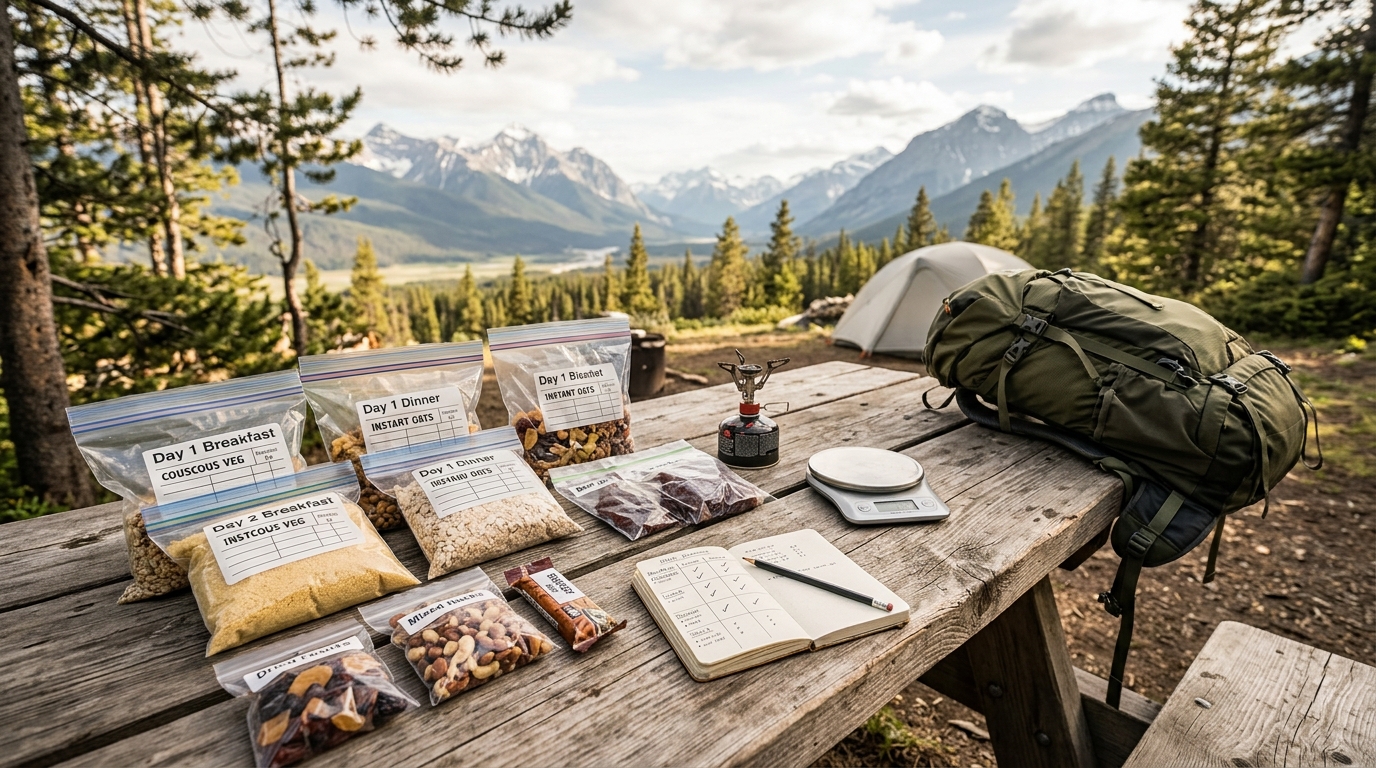
Practical tip: Write down the dry weight of each meal before packing it. This makes it easier to estimate food weight and compare the portions you planned with what you actually ate.
3. Build Optional Snack Modules 🍫
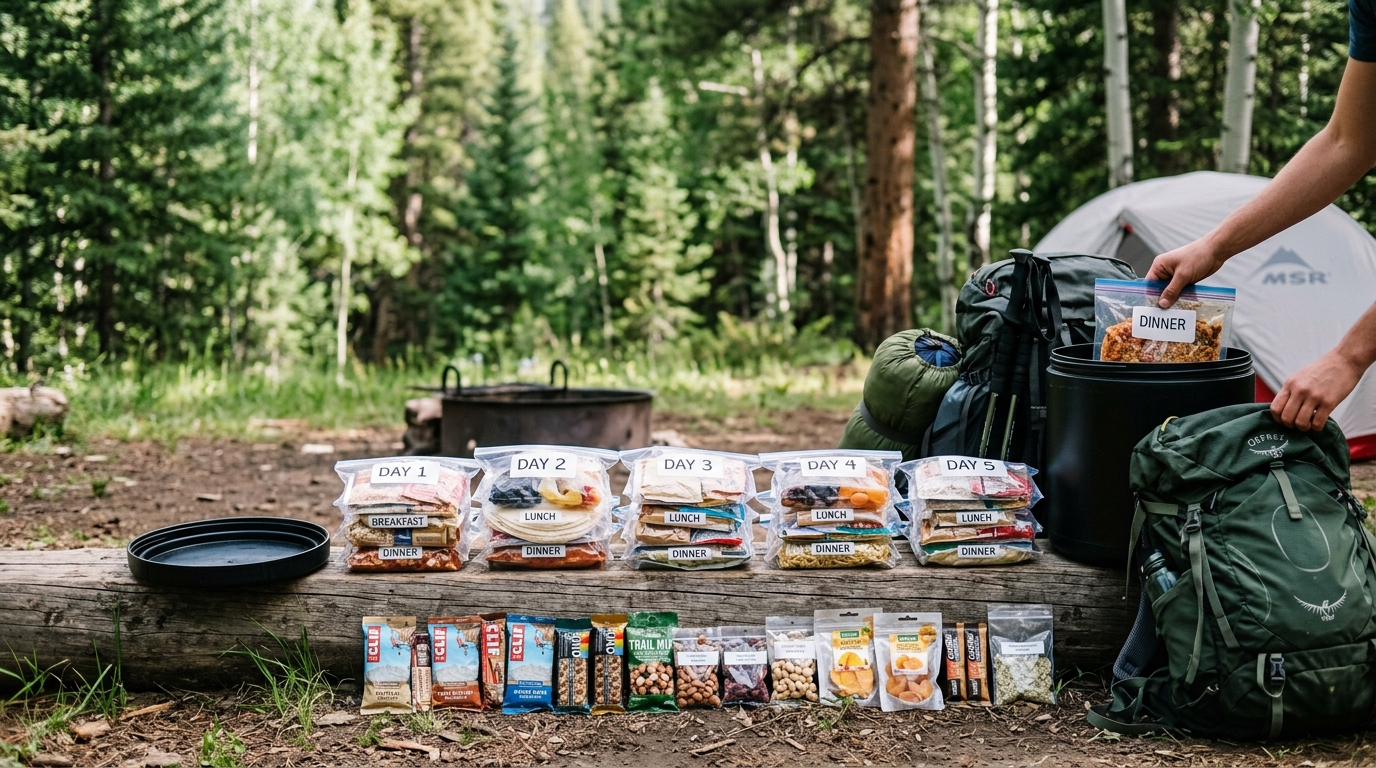
Instead of packing a completely different menu for every possible appetite, create small snack modules that you can add to your daily food bag.
A snack module is a pre-portioned collection of foods that you can carry separately and eat when needed.
<text weight=”medium”>Example snack modules</text>
Quick-energy module
- Dried fruit
- Fruit chews or another familiar carbohydrate snack
More substantial module
- Nuts or trail mix
- A granola bar or energy bar
Savory module
- Crackers or pretzels
- Roasted chickpeas or another shelf-stable savory snack
Extra meal module
- An additional portion of instant oats, couscous, or another easy-to-prepare staple
Choose foods you enjoy and can tolerate while moving. Energy density, packaging, durability, and preparation requirements also matter.
For demanding days, you can pack an additional module rather than automatically increasing every meal. If you do not need it, keep it as a reserve, provided it can be carried safely to the next resupply point.
4. Match Food Timing to Your Hiking Pace
Your meal schedule should support your activity rather than force you to stop eating at fixed times.
Some hikers prefer a substantial breakfast before setting out. Others feel better starting with a smaller meal and eating more later.
Try this flexible approach:
- Before hiking: Eat a familiar breakfast that provides enough energy without making you uncomfortable.
- During the hike: Eat snacks regularly, adjusting the amount and timing to your hunger and activity.
- At lunch: Choose food that is convenient to eat and gives you a useful break.
- After hiking: Eat a satisfying dinner with carbohydrates, protein, and other nutrients that support recovery.
On a fast-moving day, easy-to-access snacks may be more practical than a lunch that requires lengthy preparation. On a relaxed day, you may have more time for a cooked meal.
Avoid waiting until you are completely exhausted and extremely hungry before eating. At the same time, do not force yourself to eat large amounts while moving if that causes nausea or discomfort.
5. Track What You Actually Eat 📓
One of the most useful backpacking habits is comparing your planned food with what you consumed.
A simple daily record can reveal patterns that are difficult to notice during the trip.
Use a notebook, phone note, or spreadsheet to record:
- The meal or snack you packed
- The amount you actually ate
- Any food left over
- Your hunger and energy levels
- Whether the food was appealing and easy to prepare
- Any stomach discomfort or appetite changes
For example, you may notice that you consistently leave half your breakfast uneaten but finish every afternoon snack. On your next trip, you could reduce breakfast slightly and move some of that food into snacks you are more likely to eat.
If you repeatedly feel hungry late in the day, consider increasing your food allowance or making more calories accessible during the afternoon.
A single day is not enough to establish a universal rule. Look for patterns across several days or trips.
6. Use a Simple Daily Food Log
Here is an easy format to copy into your trip notes.
| Meal or snack | Planned | Actually eaten | Notes |
|---|---|---|---|
| Breakfast | Oatmeal and nuts | Record portion | Too much or just right? |
| Morning snack | Trail mix | Record portion | Hunger and energy |
| Lunch | Wrap or couscous | Record portion | Easy to prepare? |
| Afternoon snack | Bar and dried fruit | Record portion | Needed more? |
| Dinner | Rice or pasta meal | Record portion | Satisfying? |
At the end of the day, ask yourself three questions:
- Did I feel adequately fueled during the hike?
- Did I have enough food that I wanted and could comfortably eat?
- What would I change for tomorrow?
Use the answers to guide your next day’s portions, but keep a reasonable food reserve. Do not cut food sharply just because one day ended with leftovers.
7. Balance Appetite, Food Weight, and Safety
Lightweight food is useful, but minimizing pack weight should not come at the expense of adequate nutrition.
When choosing food, consider:
- Energy density: Nuts, nut butter, oils, and some snack bars provide substantial energy for their weight.
- Carbohydrates: Oats, rice, pasta, dried fruit, and similar foods help provide fuel for hiking.
- Protein: Beans, lentils, powdered milk, nuts, and suitable packaged meals can contribute to daily protein needs.
- Variety: Different foods help make the menu more appealing and provide a broader range of nutrients.
- Hydration: Plan enough drinking water and account for the water needed to prepare meals.
Pack enough food for the planned route, likely delays, and the time until your next reliable resupply. A flexible snack reserve is especially useful when weather, terrain, or hiking speed changes unexpectedly.
Store food securely according to local wildlife regulations. Perishable ingredients also require appropriate temperature control; do not assume that all foods are safe to carry unrefrigerated for several days.
Final Thoughts 🌲
Customizing a backpacking meal plan is about learning from your own experience. Mileage and elevation provide useful clues, but your appetite, food preferences, hiking pace, and actual energy levels help determine what works best.
Start with a practical menu, adjust serving sizes, add optional snack modules, and track what you eat. After each trip, use those observations to make your next food plan more accurate.
Do not plan only for the hiker you expect to be. Plan for the real hiker who gets hungry, tired, excited, and occasionally tired of eating the same meal.
A flexible food system can help you carry what you need, waste less, and enjoy the trail with greater confidence.