Too Early to Chew? How to Choose Soft, Sippable Foods for an Alpine Start
An alpine start can make breakfast feel less like a meal and more like another piece of gear to manage before sunrise. When the air is cold, your hands are busy, and appetite is limited, a dense bar may contain plenty of calories yet still be a poor choice if you struggle to finish it. 🏔️ That is why an easy to eat hiking breakfast should be judged by texture, temperature, preparation, packaging, and realistic eatability—not calories alone.
Think of this as food accessibility: a meal plan only works when the food can actually be eaten under trip conditions. Soft hiking foods, drinkable calories for hiking, and easy to chew trail snacks can reduce the effort needed to eat without claiming to solve a medical problem. The goal is not to make every meal liquid, but to give yourself several usable textures instead of relying on one food that may suddenly feel unappealing.
Why Food Texture Matters on Early Climbs
Dry and firm foods usually require more biting, chewing, and saliva than soft or moist foods. A chilled bar, thick bagel, or dense cookie can therefore feel more laborious than oatmeal, fruit purée, a soft tortilla, or a prepared drink when you are eating quickly. 🥣 That difference matters more when breakfast happens at 3:00 or 4:00 a.m. instead of at a relaxed kitchen table.
Texture can also change how much of a planned serving you finish. A 300-calorie meal you comfortably eat may be more useful than a 500-calorie meal you abandon halfway because it feels too dry or tough. For trail planning, consumable calories matter more than impressive numbers that stay inside the wrapper.
Solid Vs Soft Vs Liquid Breakfasts
Solid foods still have advantages because many are compact and easy to pack, but “solid” covers very different textures. A soft flour tortilla is easier to bite than many dense bars, dry cereal can be eaten by the handful, and oatmeal becomes very soft once water is added. 🍞 These foods let you change texture without completely changing the breakfast ingredients you already like.
Semi-liquid and liquid choices reduce chewing further. Applesauce or fruit-purée pouches require little chewing, gels are compact, and a prepared carbohydrate drink can be sipped gradually while you organize gear or begin moving. A liquid breakfast for mountaineering can be convenient, but it still needs to be evaluated for calories, water weight, packaging, taste, and cold-weather usability.
How Much Energy Fits Into Each Format?
Food texture and calorie density are different measurements, so soft does not automatically mean lightweight. Representative labels commonly place plain instant oatmeal around 100–160 calories per packet, applesauce pouches around 50–100, medium flour tortillas around 130–180, and many energy gels near 90–110 calories. 📊 Values vary by brand, portion, ingredients, and moisture, so the label on the food you actually carry should be your final reference.
The useful comparison is calories per serving, calories per ounce carried, and calories you can realistically finish. A roughly 100-calorie gel may weigh far less than an 80-calorie fruit pouch because the pouch contains more water, while dry oatmeal stays relatively light until you add water. That tradeoff is why an easy breakfast cannot be judged from softness alone.
Food Texture And Accessibility Matrix
| Food format | Texture | Preparation | Water | Main advantage |
|---|---|---|---|---|
| Instant oatmeal | Very soft | Add water | Required | Adjustable thickness |
| Applesauce pouch | Purée | None | Already in food | Minimal chewing |
| Soft tortilla | Soft solid | None | None | Compact and flexible |
| Dry cereal | Crisp/softened | Optional | Optional | Easy to portion |
| Energy gel | Semi-liquid | None | Water often useful | Small and accessible |
| Prepared drink | Liquid | Mix or carry | Required/carried | Easy to sip |
The matrix shows that easy to eat is not one category. A tortilla may be softer than a bar but still needs chewing, while a fruit pouch is easy to swallow yet carries considerable water for relatively few calories. Your best choice depends on whether the bigger constraint is appetite, weight, preparation, water access, or cold-weather handling.
How Temperature Changes Food Usability
Cold weather can turn a perfectly acceptable home snack into an awkward trail food. Some bars, candies, nut-butter mixtures, and dense baked foods become firmer when chilled, while tiny tear tabs and stiff wrappers can be frustrating with cold hands or gloves. ❄️ A drink may also remain perfectly usable yet become less appealing simply because it is very cold.
A useful pre-trip test is to chill the foods you plan to bring, then try opening and eating them. If a bar becomes unpleasantly hard after refrigeration, it may not deserve a central role in your predawn breakfast, while an easy-cap pouch may prove more practical. Testing reveals usability problems that a nutrition label cannot show.
Building A Texture-Variety Food Kit
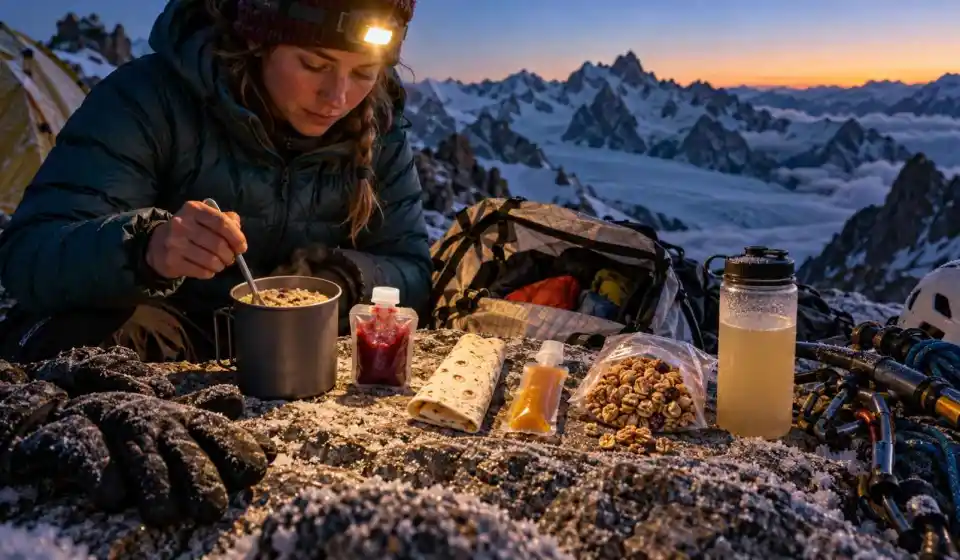
Instead of choosing one “perfect” breakfast, build a compact kit with more than one texture. One example could contain instant oatmeal, a fruit-purée pouch, a soft tortilla with nut butter, and a gel or powdered drink serving as backup. 🎒 That gives you soft, soft-solid, purée, and liquid options without requiring four full meals.
The same strategy can continue with easy to chew trail snacks such as a tortilla roll, soft dried fruit, purée, or a tender baked item. Firmer foods can stay available for later when chewing feels less bothersome, so your whole menu does not depend on one texture. Texture variety is simply redundancy applied to food.
A Practical Alpine-Start Breakfast Setup
For a quick departure, you could sip part of a prepared drink while packing, eat thin oatmeal or a soft tortilla before moving, and keep a gel or fruit pouch accessible for later. ⏰ This spreads breakfast across smaller opportunities instead of forcing a large meal when you may not want one. It also separates food before departure from food during the first section of the climb.
For a lighter pack, favor dry foods that become soft after water is added. Oatmeal, powdered drink mix, milk powder, or other dehydrated breakfast components can stay compact until camp water turns them into a softer meal, while one ready-to-eat item provides convenience. This connects texture directly with caloric density, fueling strategy, and pack-out design.
Drinkable Calories Are Useful, Not Magical
Drinkable calories for hiking can be practical because they require little chewing and can be consumed gradually. 🧃 However, a calorie-containing drink should not be described as a treatment for altitude illness, dehydration, nausea, gastrointestinal problems, or other medical symptoms. If concerning symptoms appear at altitude, appropriate safety decisions matter more than changing breakfast texture.
Liquid foods also have a weight tradeoff. A premixed drink makes you carry both calories and water from the trailhead, while powder lets you add water later where a reliable source is available. Following the product’s mixing directions is more sensible than making an extremely concentrated drink simply to chase higher calories per ounce.
How To Choose Your Own Easy To Eat Hiking Breakfast
Ask four questions before packing: Can I eat this cold, can I open it with limited dexterity, does it require water or cooking, and how much will I realistically finish? Then compare foods with similar calories but different textures, such as a bar versus a tortilla, oatmeal versus cereal, or a gel versus a fruit pouch. 🔍 This creates a personal test without pretending everyone needs the same alpine breakfast.
Finally, test the combination before the trip rather than discovering its weaknesses at 4:30 a.m. in the mountains. Your best easy to eat hiking breakfast may be one soft food, one sippable option, and one calorie-dense backup instead of a single large meal. The strongest system is the one that remains practical when cold, darkness, water availability, appetite, and pack weight all meet in the same morning.