🍲 How to Upgrade Knorr Sides Into Complete Backpacking Dinners
Knorr-style pasta, rice, and other side-dish packets can be surprisingly useful for backpacking.
They’re inexpensive compared with many specialty freeze-dried meals, easy to find in ordinary supermarkets, and designed to turn into a quick meal with water.
The problem is that a side dish is not necessarily a complete dinner.
Depending on the specific product, it may provide plenty of carbohydrates but leave you wanting more protein, calories, or overall variety after a long day on the trail.
The good news? You don’t need to replace it with an expensive backpacking meal.
Instead, treat the side dish as your base and build around it.
Think:
Knorr-style side + protein + calorie booster + optional vegetables + flavor
With that simple formula, an inexpensive supermarket packet can become a practical backpacking dinner. 🎒🍲
🛒 Start With the Actual Package Label
Before planning your meal, check the specific product you’re buying.
Different side dishes can vary considerably in:
- Calories
- Serving size
- Protein
- Fat
- Carbohydrates
- Sodium
- Preparation method
- Required water
- Cooking time
- Package weight
Don’t assume every pasta or rice packet has the same nutritional profile.
Some products may list multiple servings per package, so calculate the entire package if you’re planning to eat the whole thing.
Your starting calculation
Write down:
Total calories = calories per serving × servings in the package
Then you know how much energy your base meal provides.
From there, you can decide what needs to be added.
🧮 Think of the Side Dish as Your Base
Instead of asking:
“Is this packet a complete backpacking dinner?”
Ask:
“What does this packet already provide, and what is missing?”
The side dish may already provide:
- Carbohydrates
- Some fat
- Some protein
- Flavor
- A convenient cooking base
Your job is to add what makes sense for your menu.
For many backpackers, the biggest additions will be protein and calorie density.
🐟 Add a Shelf-Stable Protein
After a long hiking day, you may want more protein than the side dish provides on its own.
Shelf-stable options can include:
- Tuna
- Other packaged fish
- Shelf-stable meat products
- Dehydrated meat
- Soy-based protein products
- Nuts and seeds
- Powdered dairy products
Choose something compatible with your diet and your food-storage system.
Easy combination
Cheesy pasta side + tuna + seasoning
This creates a simple savory dinner with a substantial protein addition.
For a vegetarian option, you could instead use an appropriate shelf-stable plant-based protein.
🥜 Use Nuts or Seeds When You Want Multiple Jobs From One Ingredient
Nuts and seeds are particularly useful in backpacking because they can contribute calories, fat, and protein.
Possible additions include:
- Peanuts
- Cashews
- Sunflower seeds
- Pumpkin seeds
- Other mixed nuts
Some combinations work better than others.
For example, peanuts can pair well with certain savory noodle dishes, while seeds can add texture to rice-based meals.
The advantage is that the same ingredient can also become a trail snack.
That means fewer individual ingredients to pack.
🫒 Add Oil for More Calories
If the side dish doesn’t provide enough calories for your dinner, cooking oil can increase the energy content without adding much weight.
Possible options include:
- Olive oil
- Other cooking oils
- Flavored oils
You don’t need much.
Measure your oil at home and pack it in a reliable leak-resistant container.
A small amount can make a meaningful difference to the total energy of a meal.
But don’t overdo it
More calories aren’t automatically better.
A very fatty meal can feel unpleasant during or after strenuous activity, particularly if you’re not accustomed to it.
Test the amount before your trip.
🥛 Make Creamy Sides More Substantial
Some Knorr-style pasta sides already have creamy or cheese-based flavors.
You can build on that profile using ingredients such as:
- Powdered milk
- Powdered cheese
- Shelf-stable protein
- Oil
- Dried vegetables
Powdered milk can add protein and calories while also making some meals creamier.
Always follow the storage instructions for the specific product, particularly after it has been reconstituted.
🍚 Add Instant Rice or Other Grains
Sometimes the side dish alone isn’t enough food for your appetite or calorie target.
One simple solution is to combine it with another quick-cooking carbohydrate.
For example:
Rice side + instant rice + tuna + oil
Or:
Pasta side + quick-cooking pasta + shelf-stable protein
This approach increases meal size, but remember that every additional ingredient also increases pack weight.
Compare the calories you’re adding with the grams you’re carrying.
🥕 Add Dehydrated Vegetables
Vegetables aren’t necessarily the best way to increase calories, but they can improve variety and texture.
Good candidates include:
- Dehydrated peas
- Carrots
- Corn
- Mushrooms
- Dried spinach
- Mixed dehydrated vegetables
Add them to the pot according to their rehydration requirements.
This can turn a basic packet into something that feels much more like a real dinner.
Why bother?
Because backpacking food fatigue is real.
Eating the same flavor and texture every evening can become tiresome.
A small amount of dried vegetables can make a simple meal more interesting without requiring fresh produce.
🌶️ Upgrade the Flavor With Tiny Ingredients
You don’t need a large spice kit.
A few small additions can transform a repetitive side dish.
Consider:
- Chili flakes
- Garlic powder
- Black pepper
- Curry powder
- Dried herbs
- Hot sauce powder
- Parmesan-style powdered cheese
- Seasoning blends
Because these ingredients are used in small quantities, their contribution to pack weight can be minimal.
🍲 Five Easy Upgrade Formulas
Instead of memorizing recipes, use formulas.
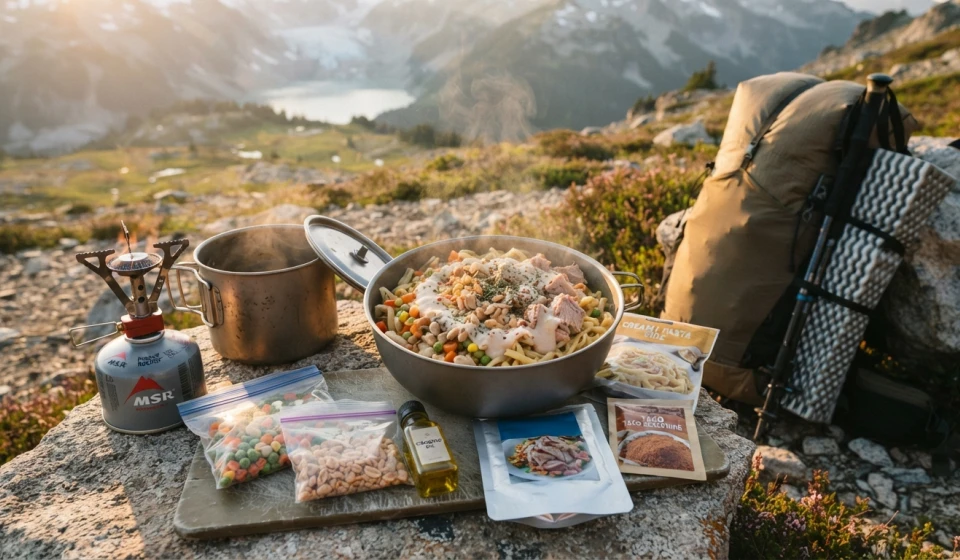
1. Creamy Protein Pasta
Side dish + shelf-stable protein + powdered milk + oil
Good for hikers who want a rich, filling dinner.
2. Tuna Rice Bowl
Rice side + tuna + oil + dehydrated vegetables
Simple, savory, and easy to portion.
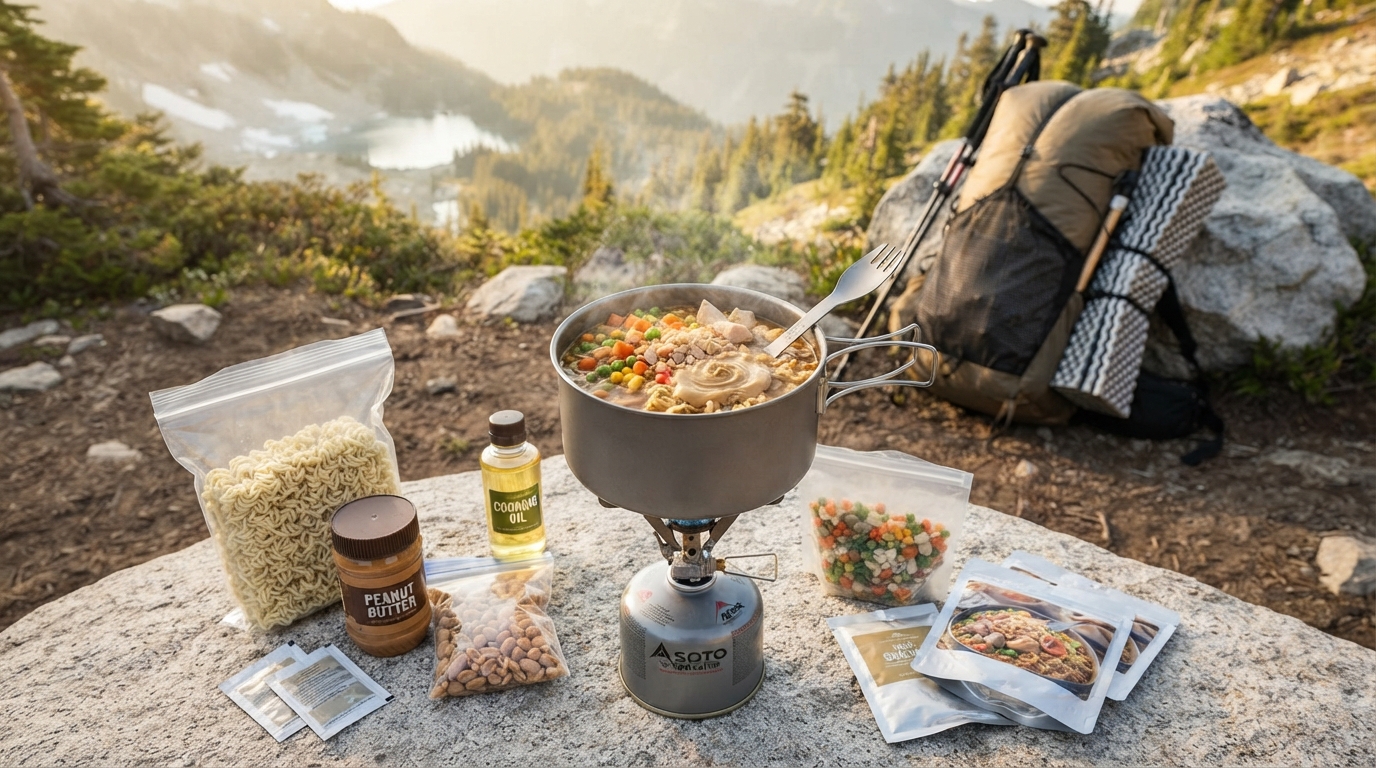
3. Peanut Noodle Bowl
Noodle side + peanut butter + peanuts + chili seasoning
A useful option if you already carry peanut butter for breakfast or snacks.
4. Cheesy Vegetable Pasta
Pasta side + dehydrated vegetables + powdered cheese + protein
Adds variety while keeping preparation straightforward.
5. Double-Carb Dinner
Side dish + instant rice or quick-cooking grain + protein + oil
Useful when the base packet doesn’t provide enough calories for your needs.
The quantities should be based on the nutrition information of the actual products you’re using.
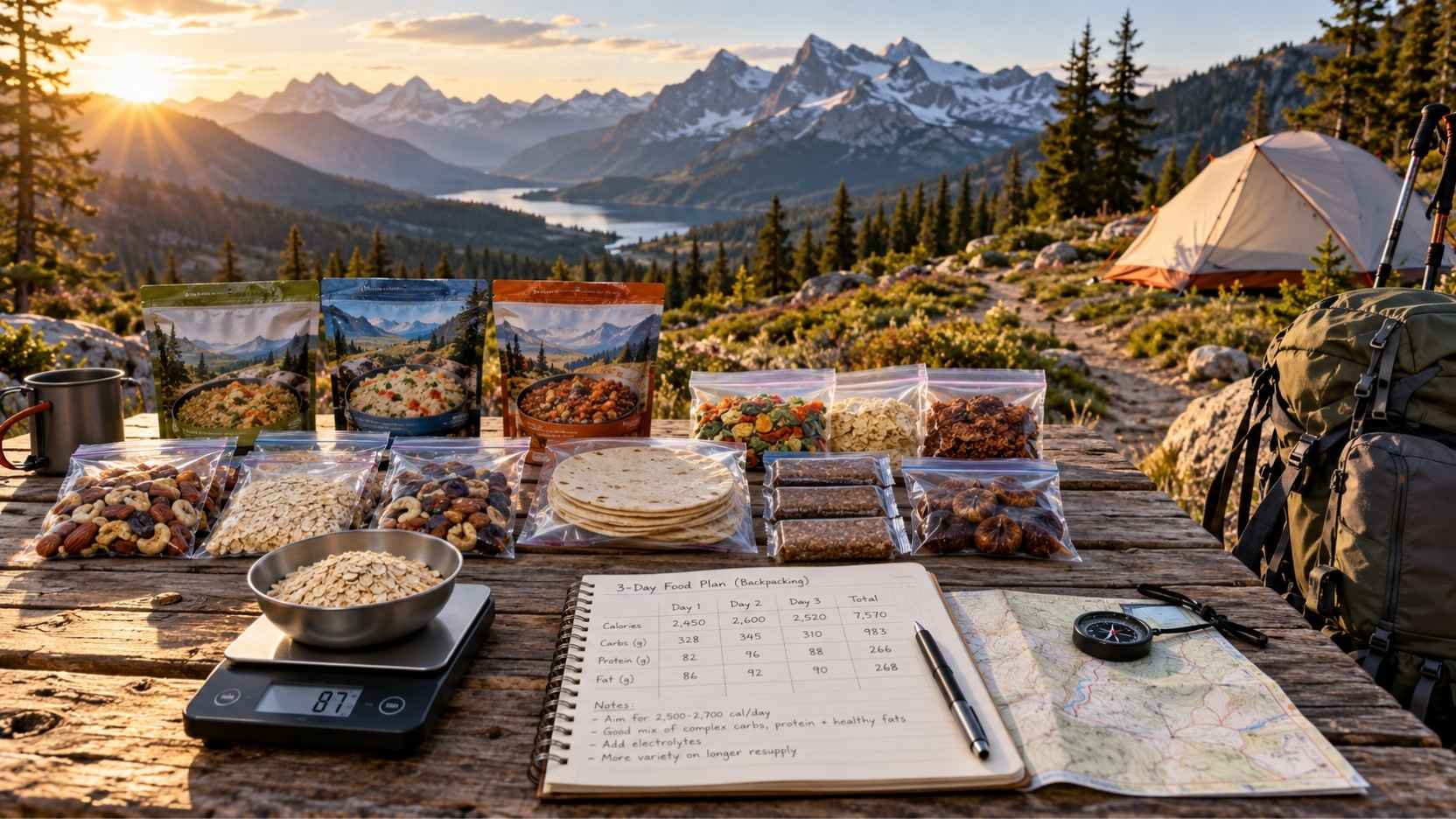
📊 Calculate the Final Meal Calories
This is where your side dish becomes part of a real backpacking meal plan.
Imagine your base side contains:
400 calories
You add:
Protein: 150 calories
Peanut butter: 190 calories
Oil: 120 calories
Your approximate meal total becomes:
400 + 150 + 190 + 120 = 860 calories
These numbers are only an example.
Use the actual nutrition labels from your products.
This approach makes it much easier to adjust your meals to your daily calorie target.
⚖️ Don’t Forget Food Weight
Calories are only half the calculation.
You’re carrying everything.
For each finished meal, calculate:
Calories per gram = total meal calories ÷ total food weight
For example, if your completed meal contains 800 calories and weighs 300 grams:
800 ÷ 300 = 2.67 calories per gram
You can compare that with another dinner to decide which fits your pack better.
But don’t chase maximum calorie density at the expense of everything else.
A meal needs to be:
- Tasty
- Digestible
- Practical
- Nutritious enough for your overall menu
- Easy to prepare
💧 Follow the Package Cooking Instructions
This is particularly important with packaged side dishes.
Some products require:
- Boiling water
- Simmering
- Additional milk
- Additional butter or margarine
- A specific cooking time
Those instructions may not translate perfectly to an ultralight backpacking setup.
Before taking the product into the backcountry, test it using your actual cooking method.
You may discover that it needs more water, more stirring, or more cooking time than expected.
🔥 Consider Fuel Consumption
A meal that requires several minutes of simmering may use more stove fuel than a meal that only requires hot-water rehydration.
If you’re building a lightweight cooking system, this matters.
Record:
Water needed + cooking time + fuel used
during your test meal.
Then decide whether the convenience and taste justify the fuel requirement.
📦 Repackage Your Ingredients
Once you’ve decided on a meal, portion everything at home.
For example:
DAY 3 — DINNER
- 1 side-dish packet
- Measured protein
- Measured dehydrated vegetables
- Measured oil
- Seasoning
Place the dry ingredients together where appropriate and keep liquids in secure containers.
Label the meal clearly.
This saves time at camp and prevents you from accidentally eating the wrong day’s dinner.
🧾 Make a Complete Meal Card
For a multi-day trip, you can create a small meal card for each dinner.
Dinner: Creamy Tuna Pasta
Base:
1 pasta side
Protein:
1 tuna portion
Calorie booster:
Measured oil
Vegetables:
Dehydrated peas and carrots
Water:
Use the amount determined during your home test
Cooking:
Follow the product’s instructions and your tested method
Calories:
Calculate from actual package labels
Weight:
Weigh the complete meal before packing
This turns an inexpensive supermarket product into a predictable part of your food system.
⚠️ Watch Sodium and Overall Nutrition
Many packaged side dishes and instant foods can contain substantial sodium.
That doesn’t automatically make them inappropriate for backpacking.
However, don’t look at one dinner in isolation.
Consider your entire day’s food intake.
If breakfast, lunch, snacks, and dinner all rely heavily on highly salted packaged foods, your overall diet may become very different from what you normally eat.
You can also choose to use less of a seasoning packet when appropriate, although that will change the flavor and nutrition information.
If you have a medical reason to restrict sodium, follow individualized dietary advice rather than a generic backpacking menu.
🥾 Test Your Upgraded Dinner Before the Trip
Never make your first attempt on the trail.
Prepare the complete meal at home.
Then ask:
- Is the portion large enough?
- Is the flavor good?
- Does the protein work with the sauce?
- Is it too salty?
- Is it too greasy?
- Does it need more water?
- How long does it take to cook?
- How much fuel does it use?
- How much does the complete meal weigh?
- Does it leave you feeling comfortable afterward?
A five-minute test at home can save you from several frustrating nights in the backcountry.
💡 The Complete Backpacking Dinner Formula
When shopping, remember:
BASE
Knorr-style pasta, rice, or noodle side
↓
PROTEIN
Tuna, meat, soy protein, nuts, seeds, or another shelf-stable option
↓
CALORIE BOOSTER
Oil, nut butter, nuts, powdered dairy, or another suitable ingredient
↓
OPTIONAL VEGETABLES
Dehydrated vegetables for variety and texture
↓
FLAVOR
Seasoning, herbs, spices, or sauce powder
This gives you a flexible system rather than one fixed recipe.
You can change the protein or seasoning while keeping the same basic structure.
🎒 Build Your Backpacking Dinner Around What You Already Carry
One of the smartest ways to keep food weight and cost under control is to use ingredients across multiple meals.
For example:
Peanut butter
Breakfast → oatmeal
Lunch → tortilla
Snack → crackers
Dinner → peanut noodles
Peanuts
Snack → trail mix
Dinner → rice or noodles
Oil
Dinner → pasta
Dinner → rice
Dinner → soup
This reduces the number of specialty ingredients you need to buy.
🌲 Final Thoughts
Knorr-style side dishes can be much more than a side dish on the trail.
Treat the packet as a starting point, then build around it with protein, calorie-dense ingredients, optional dehydrated vegetables, and small flavor additions. 🍲🎒
The goal isn’t to create a complicated gourmet meal.
It’s to create something that provides enough energy, fits your food budget, doesn’t add unnecessary pack weight, works with your stove and water supply, and tastes good after a long day outside.
Before your trip, calculate the actual calories and weight using the products you’re buying. Test the cooking method at home, measure your ingredients, and adjust the recipe based on what you actually enjoy eating.
A supermarket side dish may cost far less than a specialty backpacking dinner, but with the right upgrades, it can still become a satisfying and practical end-of-day meal.