Why Your 100g Canister Doesn’t Last as Long as You Think
The 100g Canister Myth: Why Your Stove Fuel Disappears Faster Than You Expect
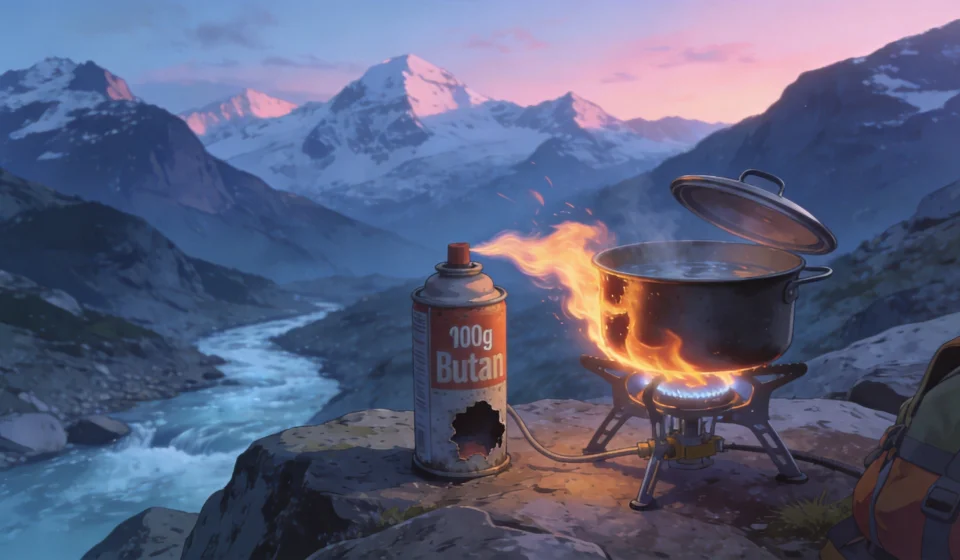
Every backpacker knows the sinking feeling: you planned three meals and two hot drinks from that shiny 100g isobutane canister, but by the second cup of coffee the flame sputters and dies. You’re not alone. There’s a persistent myth that a 100g canister delivers a predictable, generous number of boils. The reality is far more frustrating — and far more instructive. Understanding why your fuel vanishes so quickly can save you weight, money, and cold dinners on the trail.
The Silent Thieves: Common Mistakes That Waste Fuel
Most hikers don’t realize that tiny habits can siphon off 20–40% of their fuel. Let’s start with the biggest culprits.
Boiling with the Lid Off
This is the #1 fuel-waster in backcountry kitchens. Without a lid, heat escapes directly into the air, forcing the stove to run longer to reach the same temperature. A simple lid can cut fuel use by 30%. Yet countless campers leave the pot uncovered, thinking they’re “checking on it.”
The “Full Blast” Fallacy
Many assume that cranking the valve to max flame boils water fastest. Not true. Modern canister stoves are most efficient at a medium, steady flame — one that just licks the bottom of the pot. A roaring flame wastes heat that shoots up the sides, and in windy conditions it can even cause incomplete combustion. Test after test shows that running a stove at 70% capacity uses 15–25% less fuel than full throttle for the same volume of water.
Ignoring the Wind
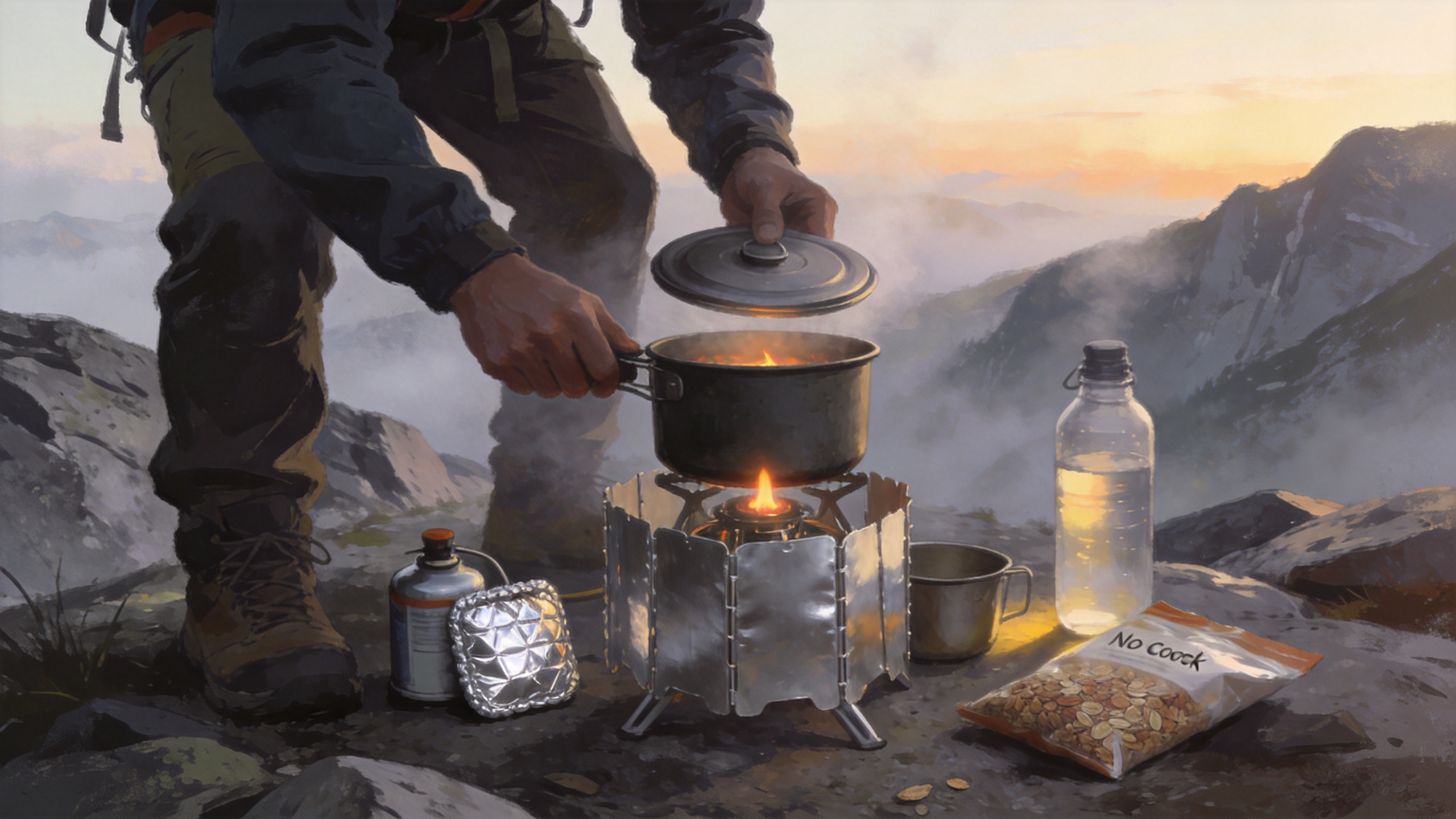
Even a light breeze (5 mph) can double fuel consumption. The flame gets pushed, heat dissipates, and the stove has to work overtime. Use a windscreen whenever possible, but ensure it doesn’t block the stove’s ventilation — a wrapped screen can cause dangerous overheating. A simple foil shield placed on the windward side can save a third of your canister.
Cooking for “Extra” Minutes
We tend to over-boil. Once water reaches a rolling boil, continuing to heat is pure waste. Turn the stove off immediately or reduce to a simmer. A minute of extra vigorous boiling burns roughly 2–3 grams of fuel — that’s a full warm drink’s worth every five minutes.
“After decades of testing stoves and fuels, I’ve seen campers burn through three times the fuel needed — not because their stove was bad, but because of a dozen small, preventable mistakes. The biggest? Not accounting for the starting water temperature.”
— Mike “Trail” Henderson, gear reviewer and author of Burn Less, Eat More
Altitude and Water Temperature: The Unseen Fuel Eaters
You might know that water boils at a lower temperature at altitude, but that doesn’t mean it’s easier to boil. In fact, the opposite is true.
Why High Altitude Doesn’t Save Fuel
At sea level, water boils at 100°C (212°F). At 3,000 m (10,000 ft), the boiling point drops to about 90°C (194°F). That means you need to raise the water’s temperature by a smaller amount. However, air is thinner at altitude, reducing the oxygen available for combustion, which lowers flame temperature and heat-transfer efficiency. Additionally, the lower atmospheric pressure means water molecules escape more easily as steam, so you lose heat faster through evaporation. The net effect? You actually burn more fuel per liter at 3,000 m than at sea level — often 15–30% more, depending on your stove.
Starting Water Temperature Is Everything
This is the single biggest variable that hikers ignore. A liter of water at 5°C (from a mountain stream) requires about 395 kJ to boil, while a liter at 20°C (room temp) needs only 335 kJ — a 18% difference. But here’s the kicker: ice-cold water (0°C) needs a startling 420 kJ to reach boiling. That means boiling water from a snow-fed stream can consume nearly 30% more fuel than boiling water from your kitchen tap at home.
To put this into perspective, consider the following data from controlled field tests:
| Starting Water Temp | Fuel Used (grams) | % Increase vs. 20°C |
|---|---|---|
| 20°C (room temp) | 6.5 g | — |
| 10°C (cool tap) | 7.8 g | +20% |
| 5°C (cold stream) | 8.6 g | +32% |
| 0°C (ice water) | 9.4 g | +45% |
Now add altitude: at 3,000 m with 5°C starting water, you could easily burn 11–12 grams per liter. Suddenly that 100g canister, which you hoped would deliver 15 liters, only yields 8–9 liters — if you’re careful.
“Time to Boil” Is a Misleading Metric
Stove manufacturers love advertising “3 minutes to boil!” It sells stoves. But as a measure of fuel efficiency, it’s nearly worthless.
What “Time to Boil” Hides
Different stoves are tested under ideal, standardized conditions: sea level, 20°C water, in a lab with no wind, using a specific pot. Those conditions never match reality. More importantly, a fast boil time usually means a high burn rate. That “3-minute” stove might consume 8 grams of fuel in those three minutes, while a slower “5-minute” stove might use only 6 grams. The slower stove is actually more fuel-efficient — you just wait longer.
For backpackers, the key metric should be fuel per liter (grams per liter), not seconds. A stove that boils a liter in 3 minutes but uses 8 g is less efficient than one that takes 4 minutes but uses 6 g. Always look for real-world reviews that report fuel consumption, not just speed.
The Danger of Overcorrecting
Some hikers try to compensate for slow stoves by cranking the valve. Don’t fall into this trap. As mentioned earlier, a higher flame does not linearly improve heat transfer — much of the extra energy is lost. The relationship between flame size and fuel consumption is not linear. Here’s a rule of thumb: for most canister stoves, the maximum efficiency occurs when the flame’s blue cones are just touching the pot bottom. Any larger and you’re wasting fuel; any smaller and you’re wasting time.
Practical Strategies to Stretch Your 100g Canister
Now that you know the thieves, here’s how to reclaim your fuel. Follow these actionable tips on your next trip:
- Always use a lid. Even a loose-fitting lid reduces fuel use by 20–30%. Carry a lightweight aluminum lid if your pot doesn’t have one.
- Optimize flame size. Turn the valve until the blue flame tips just kiss the pot. Don’t let flames lick up the sides.
- Insulate your pot. A simple pot cosy (foam sleeve) retains heat while simmering, cutting fuel needs by up to 40% for meals that require longer cooking.
- Shield the wind. Use a windscreen made of aluminum foil or a dedicated product. But leave a 1-inch gap at the bottom for ventilation to avoid overheating the canister.
- Start with warmer water. If you’re collecting stream water, let it sit in the sun for 30 minutes. At night, fill your pot from a water bottle you’ve kept inside your sleeping bag.
- Pre-heat your fuel canister in cold conditions. Below freezing, isobutane loses pressure. Warm the canister in your jacket for 10 minutes, or place it in a shallow puddle of lukewarm water (never on an open flame).
- Turn off immediately. For coffee or tea, bring water almost to a boil, then shut the stove — the residual heat will finish it. For freeze-dried meals, boil just enough water and pour it into the pouch; don’t keep the stove running.
When to Upgrade Your Gear
If you regularly hike at altitude or in cold weather, consider a stove with a regulated canister valve (e.g., MSR WindBurner or Jetboil Sumo). These stoves maintain consistent flame performance in low-pressure and cold conditions, often using 15–20% less fuel than unregulated models. Another option: switch to liquid fuel (white gas) for extreme environments — it’s denser and performs more predictably.
Rethinking Your Fuel Budget
The table below gives a more realistic estimate for how many liters you can boil from a 100g canister under different scenarios. Use it to plan your trips.
| Scenario | Starting Water Temp | Altitude | Liters Possible |
|---|---|---|---|
| Baseline (ideal lab) | 20°C | Sea level | ~15 L |
| Typical car camping | 15°C | 300 m | ~12 L |
| Backpacking, moderate altitude | 10°C | 2,000 m | ~9 L |
| High altitude, cold stream | 5°C | 3,500 m | ~6 L |
| Winter camping, snow melt | 0°C | 2,500 m | ~5 L |
Conclusion
A 100g canister is a lightweight marvel, but it’s not a magic fuel bank. Common mistakes like skipping the lid, ignoring wind, and cranking the flame can halve your usable boils. Altitude and cold water silently steal even more. And the “time to boil” spec tells you almost nothing about real-world efficiency. By understanding these factors — and adopting a few small habits — you can double your fuel’s lifespan, lighten your pack, and never run out of hot water when it matters most.