Cold Soaking vs Stove: The Real Weight Math
The Dry Weight Illusion
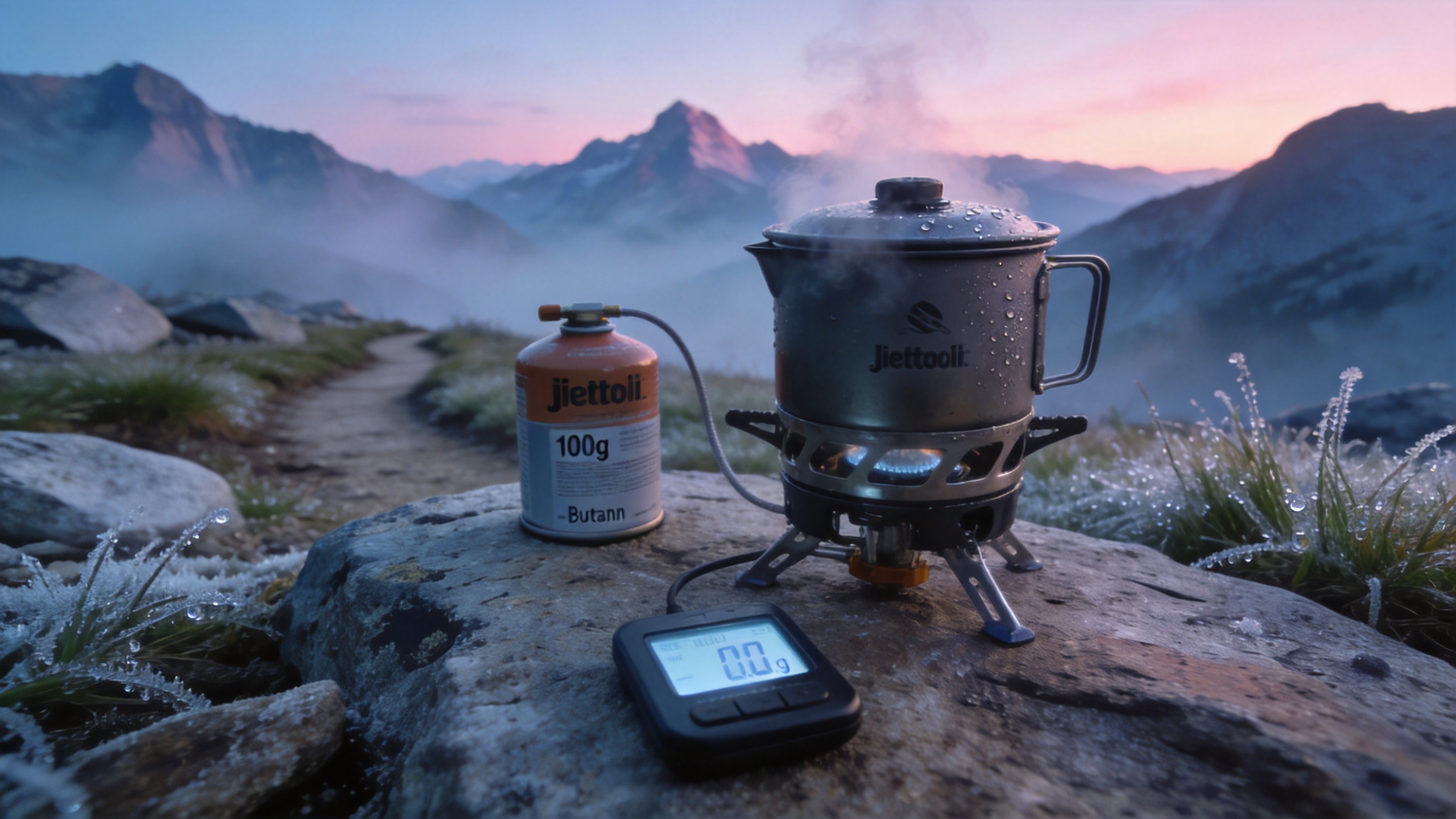
When ultralight hikers debate cold soaking versus a stove, the first number thrown around is dry base weight. A typical cold soak jar (a wide-mouth peanut butter jar or a dedicated Talenti container) weighs about 1.5–2 oz (45–60 g). Add a plastic spoon (0.1 oz) and you’re at roughly 2 oz for the entire “cooking” system. Compare that to a minimalist stove setup: a BRS-3000T (0.9 oz) + a 750 mL titanium pot (3.5 oz) + a 100 g fuel canister (7.2 oz full) = roughly 11.6 oz total. On paper, cold soaking looks like a 9.6 oz savings—almost three-quarters of a pound. But this comparison is deeply flawed.
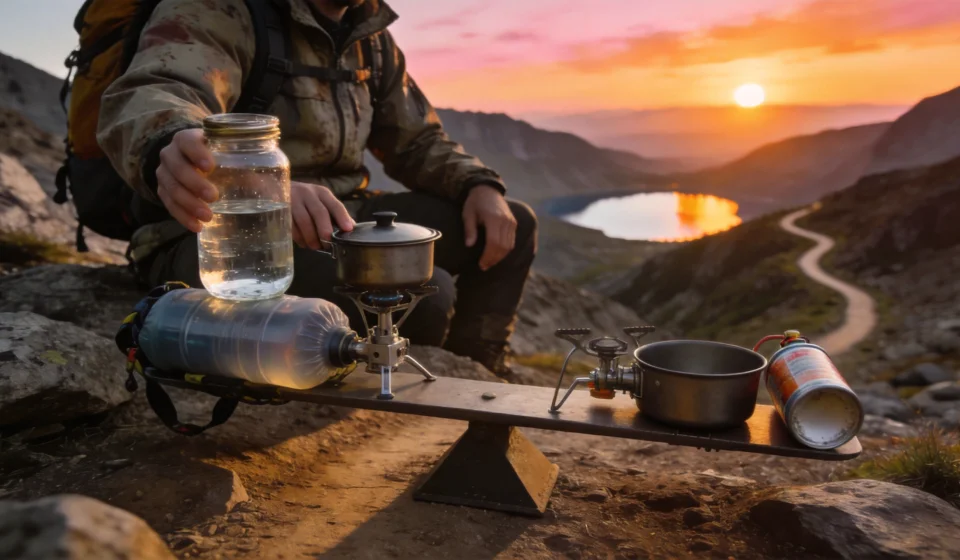
The dry weight argument ignores the single biggest variable: water. Cold soaking requires that you carry all the water needed to rehydrate your meal at the moment you start soaking. A stove, on the other hand, can boil water sourced from a stream, lake, or snow patch. The moment you factor in water weight, the cold soak “advantage” starts to evaporate.
The Water Weight Elephant
A typical dehydrated backpacking meal (e.g., Mountain House or a homemade mix) requires 2–2.5 cups of water (16–20 oz by weight). With a stove, you filter that water from a source at camp and boil it—the water weight is zero on your back because you consume it immediately. With cold soaking, you must carry that 16–20 oz of water from your last water source, often for miles before you stop for dinner.
“The cold soak only saves weight if you camp right next to a water source. If you have to carry soaking water for even a single mile, the math flips.” — Mike Clelland, author of Ultralight Backpacking Tips
Let’s put numbers on it. Assume a 3-day, 2-night trip where you eat two cold-soaked dinners and two cold-soaked lunches (four total soaks). You need 2 cups (16 oz) of water per soak. That’s 64 oz (4 lbs) of additional water you’ll carry at various points. If your water sources are well-spaced, you might carry this water for an average of 5 miles. The work (or “pound-miles”) is substantial. Meanwhile, the stove user carries zero extra water for cooking beyond their drinking water.
When Water Sources Are Scarce
In dry desert sections (e.g., the PCT’s Southern California or the Arizona Trail), you may need to carry 2–3 liters of cooking water on top of your drinking water. Cold soaking then requires 6–9 lbs extra for two days of meals. That quickly outweighs any dry-weight savings from ditching the stove. Even in wet environments, you often have to leave a lake or stream and hike several miles to a campsite—meaning you carry that soaking water uphill.
Fuel Depletion: The Averaged Canister
Stove advocates love to point out that a full 100 g fuel canister weighs 7.2 oz, but more than half of that weight is the steel canister itself (empty weight ~4.6 oz). As you use fuel, the canister gets lighter. Over a typical 5-day trip, you might burn 30–40 g of fuel for two boils a day. By day 4, your canister weighs roughly 5.5 oz—only 0.9 oz heavier than a cold soak jar. The cold soak jar’s weight is constant, but the stove system’s weight decreases over time.
| Day | Cold Soak Jar (oz) | Stove System (oz)* | Difference (oz) |
|---|---|---|---|
| Start | 2.0 | 11.6 | +9.6 (stove heavier) |
| Day 2 | 2.0 | 10.1 | +8.1 |
| Day 3 | 2.0 | 8.6 | +6.6 |
| Day 4 | 2.0 | 7.1 | +5.1 |
| Day 5 (last) | 2.0 | 5.6 | +3.6 |
*Stove system includes pot (3.5 oz), burner (0.9 oz), and partially full 100 g canister. Assumes 17 g fuel used per day for two boils.
By day 5, the stove system weighs only 3.6 oz more than the jar. That 3.6 oz is roughly the weight of one extra Clif Bar. And remember: the stove user didn’t carry any additional water for cooking. The cold soak user still lugged around 4–5 lbs of soaking water over the week.
The Break-Even Point
So when does cold soaking actually save total pack weight? The answer depends on three factors: trip length, water availability, and meal frequency.
Short Trips (1–2 Nights) with Reliable Water
If you hike to a lake, camp right next to it, and only need one cold soak dinner, the weight savings are real. You carry no stove, no fuel, and you can soak at your tent while using lake water. Total saving: ~9–10 oz. That’s a legitimate win for cold soaking.
Long Trips (5+ Nights) with Scarce Water
Over a week, the stove system’s weight drops as fuel burns, while cold soaking forces you to repeatedly carry heavy water. Moreover, cold-soaked meals often require more water volume because they don’t evaporate during boiling—you end up carrying exactly what you eat, which can be 20% more water than a boiled meal (since boiling condenses slightly). The break-even flips: by day 4, the stove user’s total carried weight (system + no cooking water) is lower than the cold soak user’s (jar + 16 oz of water per meal).
Real-world example
On the John Muir Trail (210 miles, ~12 days), ranger stations report that many cold-soakers quit and switch to a stove by day 6. The cumulative weight of carrying soaking water for every dinner and breakfast becomes unbearable. A stove user carries a consistent ~11 oz system, but the cold soak user’s daily water load adds 1–2 lbs per day. Over 12 days, that’s 12–24 pound-miles of extra lifting—more than the stove system’s initial weight penalty.
Practical Tips for UL Hikers
Rather than committing to one method, consider a hybrid approach that adapts to terrain and trip length.
- Short trips with predictable water: Cold soak exclusively. Save the stove weight and enjoy no-cook simplicity.
- Multi-week trips with varied terrain: Bring a stove. Use cold soaking only for lunch (soak while hiking) to save fuel weight, but rely on boiling for dinner.
- Desert sections: If water carries are extreme, but cold soak lunches avoid a hot meal you’d otherwise boil. Weigh the water carry carefully. Often a stove wins because you drink the cooking water (making it part of your daily hydration) while cold soak water is strictly a “dead” weight.
“The lightest gear is the one you use correctly. If cold soaking makes you carry an extra liter of water for five miles, you’re not saving grams—you’re earning them.” — Andrew Skurka, professional adventure guide
Data-Driven Decision Tool
Use this simple formula to estimate total cooking-related weight for a trip:
- Cold soak: Jar weight (2 oz) + (number of meals × 16 oz water × distance-to-source in miles / 100) — a rough “pound-mile” factor.
- Stove: Pot + burner + canister empty (5.5 oz) + (fuel used per meal × number of meals) — note fuel weight drops over time, so average fuel weight is about half the initial.
Plug in your specific trip parameters. More often than not, trips longer than 4 consecutive days with water sources more than 1 mile apart favor a stove. Trips under 3 days with water right at camp favor cold soaking.
Conclusion
Cold soaking’s dry-weight advantage is real but vastly overinflated when you account for the water you must carry. A stove system can actually be lighter over extended backcountry travel because it eliminates the need to haul soaking water. The real weight math isn’t about the jar vs. the burner—it’s about understanding the total load across time and terrain. Pick the system that matches your itinerary, not your gear fomo.