Boiled Potatoes for Hiking? Why a Heavy Trail Food Can Still Make Sense
Ultralight backpacking advice usually pushes hikers toward one simple rule: carry more calories for less weight, which makes a boiled potato look like a terrible trail food before it even reaches your pack. 🥔 A cooked potato is bulky, full of water, relatively low in calories per ounce, and nowhere near as weight-efficient as nuts, bars, tortillas, oils, or many dehydrated foods. Yet boiled potatoes continue to appear in endurance-sport conversations because the lightest food on a spreadsheet is not automatically the most useful food for every type of outing.
That apparent contradiction is exactly what makes potatoes interesting from a Camp Kitchen Lab perspective, because a three-hour hike, trail race, first-day backpacking lunch, overnight trip, and five-day resupply do not have the same food-weight problem. A hiker carrying lunch for today can tolerate water weight that would become annoying when multiplied across several days of food. 🎒 The better question is therefore not “Are potatoes good hiking food?” but “When does carrying the water inside a potato make enough practical sense to justify the weight?”
Why Anyone Would Carry A Boiled Potato Hiking
The obvious attraction is simplicity: boil a small potato, cool it safely, season it, pack it, and you have a familiar carbohydrate-rich food that requires no trail cooking at the moment you eat it. A plain boiled potato also tastes very different from the sweet bars, gummies, dried fruit, drink mixes, and other sweet foods that can dominate a hiking snack bag. 🥔 That difference does not prove that potatoes improve performance, but it can make them an appealing savory real-food option for hikers who simply want more variety.
Texture matters too, because a soft potato feels more like ordinary food than a compressed bar or handful of dried fruit, while salt, pepper, herbs, or another lightweight seasoning can change the experience without much preparation. The drawback is that the convenience exists only because you already paid the weight penalty by carrying the potato’s cooking water inside the food. In other words, a boiled potato is convenient at mealtime precisely because it is not dehydrated.
The Weight Problem: Most Of Your Potato Is Water
Standard USDA reference data puts boiled potato flesh at roughly 87 calories per 100 grams, with about 20 grams of carbohydrate and approximately 77 grams of water. Converted into trail-food language, that is only around 25 calories per ounce, which is extremely low compared with the calorie densities many backpackers deliberately target. 💧 Carry four ounces of boiled potato and you may have only around 100 calories despite allocating a noticeable amount of pack weight to it.
This is why a potato can look perfectly reasonable on a kitchen plate yet inefficient inside a backpack: your kitchen does not penalize food for carrying its own water, but your shoulders do. The same principle explains why fresh fruit, canned food, and many other everyday foods can become surprisingly heavy when evaluated by calories per ounce. If you already use a rule such as 100, 125, or 140 calories per ounce when designing longer backpacking menus, fresh boiled potatoes fall far below that range.
Potato Flakes Show What Removing Water Changes
Dehydration transforms the calculation dramatically, because dry mashed-potato flakes contain only a small fraction of the water found in cooked potatoes. USDA reference data for dry dehydrated potato flakes lists about 354 calories and 81 grams of carbohydrate per 100 grams, equivalent to approximately 100 calories per ounce before any oil, cheese, or other additions. That makes dry potato flakes roughly four times as calorie-dense by weight as the boiled-potato example, even though both begin with potatoes. 🔥
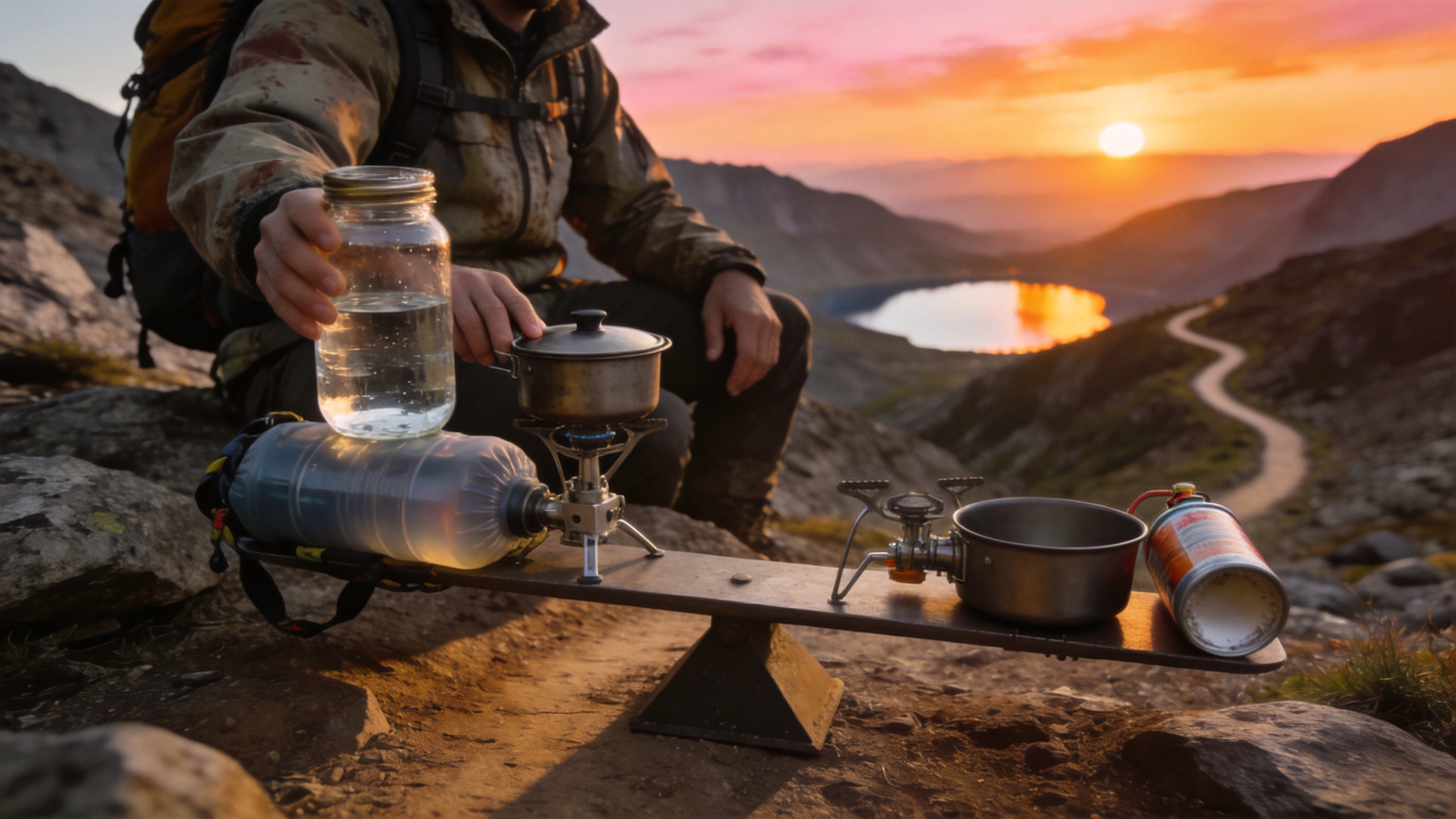
Of course, the dry flakes eventually need water again, but on many backpacking routes you obtain that water at camp or from a reliable water source rather than carrying it all day inside your food. This illustrates one of the most important concepts in trail menu design: water acquired on the route usually does not need to occupy your food bag for every mile you walk. For longer trips, that advantage can matter much more than the convenience of opening a bag and eating a ready-cooked potato immediately.
Potato Vs Tortilla Vs Bar Vs Dried Fruit
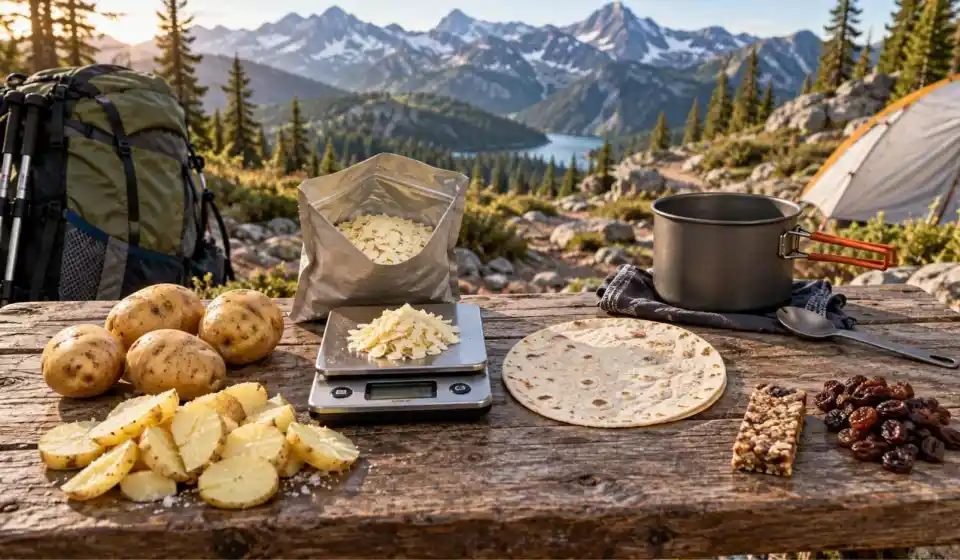
A useful comparison shows how quickly the weight gap develops: a boiled potato sits near 25 calories per ounce, while a typical flour tortilla from USDA reference data comes in around the mid-80s per ounce and raisins are also around the mid-80s. A dense hard granola-style bar can exceed 130 calories per ounce, although actual commercial energy bars vary widely depending on ingredients, moisture, fat, nuts, coatings, and formulation. 📊 The potato therefore does not win a pure calorie-to-weight contest.
But calorie density answers only one question, and backpacking food selection involves several others: Will you eat it willingly, does it require cooking, will it crush or leak, how long must it survive, and does the food fit the particular stage of the trip? A tortilla is more compact and durable, dried fruit offers concentrated carbohydrate in very little weight, and many bars deliver substantially more calories per ounce than a fresh potato. The potato’s case becomes strongest when maximum calorie density is not the dominant constraint, particularly on shorter outings.
The Savory Food Advantage Without The Performance Hype
One reason the potato idea keeps sounding appealing is simply that many common portable carbohydrate foods lean sweet: dried fruit, chews, gummies, cookies, sweet bars, chocolate, and flavored drink mixes can create a repetitive flavor profile. 🧂 A salted potato occupies a different sensory lane—soft, starchy, neutral, and savory—which may make a food bag feel less monotonous. That is a preference and menu-design advantage, however, not evidence that potatoes automatically fuel hiking better than other carbohydrate sources.
The same distinction matters for SEO content because “real food hiking snacks” can easily drift into unsupported claims about stable energy, superior digestion, or athletic performance. A more defensible comparison focuses on carbohydrate amount, calorie density, sodium added, portability, food safety, preparation, and personal preference. If an individual has medical reasons to manage carbohydrate, sodium, fluids, or another nutrient closely, that moves beyond general trail-food planning and should be discussed with a qualified healthcare professional.
When Fresh Potatoes Actually Make Sense
The most convincing use case is a short outing where the potato will be eaten early, because there is little reason to obsess over saving two or three ounces when you are not carrying several days of food. A cooled potato can work as part of a same-day picnic-style hiking meal, an early lunch on the first day of a backpacking trip, or another situation where fresh-food weight disappears from the pack quickly. 🥾 In those scenarios, taste and convenience may reasonably matter more than achieving the highest possible calories per ounce.
Food safety does limit the idea, however, because cooked food should not simply ride warm inside a backpack indefinitely. USDA guidance says perishable foods should generally not remain unrefrigerated for more than two hours, or one hour when temperatures exceed 90°F/32°C, unless they are kept safely cold or hot. That makes an insulated setup with a cold source more appropriate when needed and makes multi-day unrefrigerated potato storage a poor fit compared with shelf-stable alternatives.
When Dehydrated Potatoes Make More Sense
Once the trip becomes longer, dry potato flakes begin solving nearly every logistical weakness of the boiled version: substantially less carried water, easier portioning, compact packaging, and generally simpler integration into a lightweight dinner system. 🏕️ They can be measured into individual meal bags and rehydrated when water is available, which moves the food closer to the logic behind couscous, instant rice, dehydrated beans, and other backpacking staples. The price is that you now need water, a container, and usually some method of heating or soaking.
This is where your internal trail-food chain becomes useful: someone interested in boiled-potato weight can naturally move into Foods That Look Light But Aren’t, then dehydration, calorie-density targets, and full menu design. The potato becomes more than an unusual snack idea—it becomes an easy demonstration of why dehydration changes food weight without magically changing the underlying ingredient into a different food. For a five-day backpacking menu, that lesson is considerably more useful than declaring either fresh potatoes or potato flakes universally superior.
Salt, Oil And Toppings Change The Calculation
A plain boiled potato is naturally very low in sodium in standard USDA data, so a “salty trail potato” gets most of its sodium from whatever salt or seasoning the hiker intentionally adds. That makes homemade potatoes adjustable, but it also means there is no universal sodium number for a seasoned potato—you need to count the amount actually added rather than assigning one number to every recipe. 🧂 Packaged flakes and seasonings can likewise vary substantially, so checking the specific nutrition label is more useful than assuming all potato products are nutritionally identical.
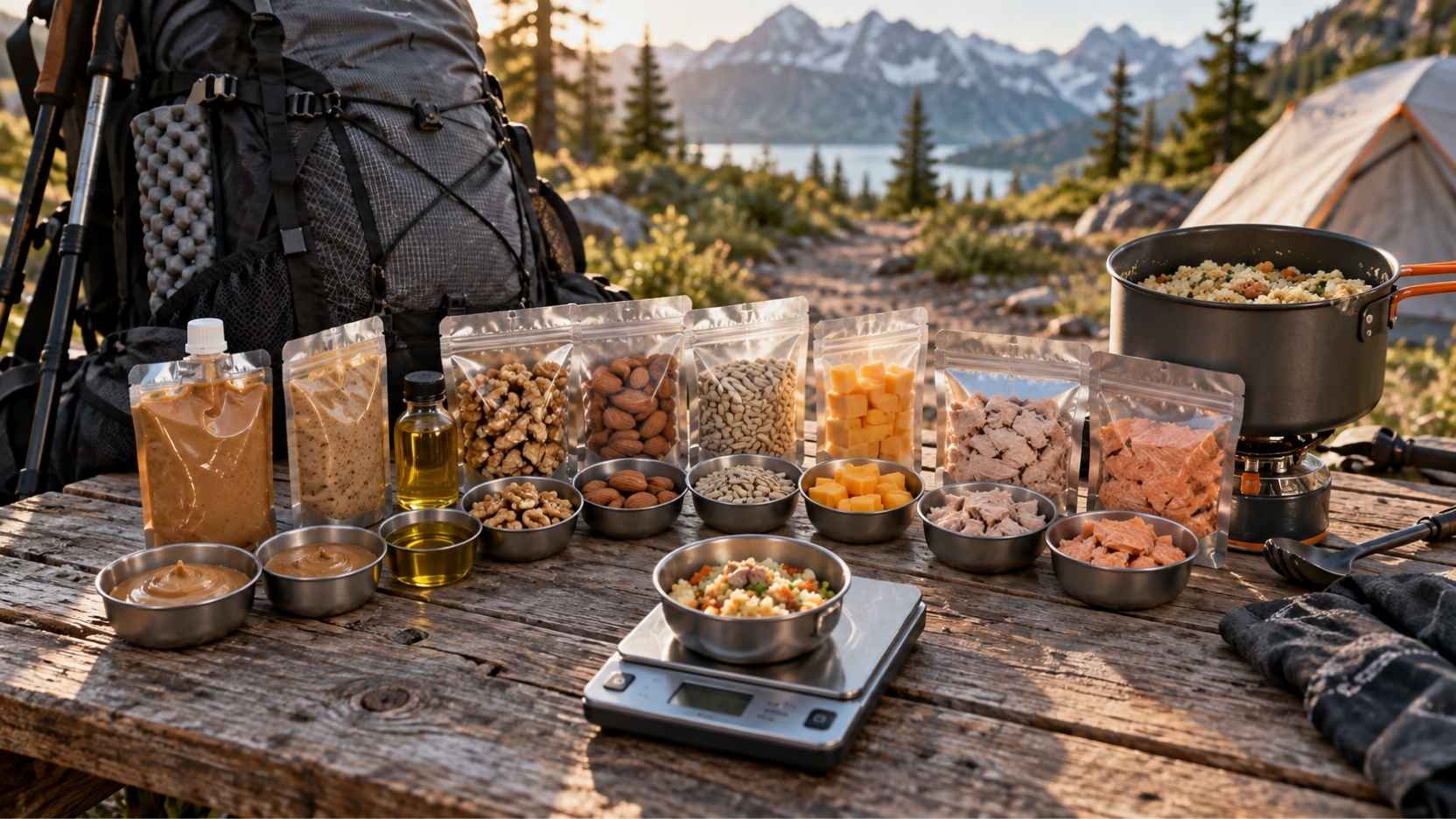
Adding fat changes calorie density far more dramatically, because oil contributes about nine calories per gram compared with roughly four calories per gram for carbohydrate or protein. A small amount of olive oil, butter, cheese powder, nut butter, or another compatible ingredient can therefore raise the calorie density of a potato-based meal, although every addition also changes taste, storage requirements, packaging, and cleanup. The useful trail question is always calories added versus ounces added, rather than whether an ingredient sounds traditionally “healthy” or “unhealthy.”
Three Potato Configurations For Three Different Trips
For a short day hike, the simplest configuration is a cooled boiled potato with measured salt and dry seasoning, eaten early enough that food safety and carrying time remain manageable. 🥔 It is heavy for its calories, but the food disappears from your pack that same day, so optimizing every ounce may be unnecessary. Pair it with a more calorie-dense food if the potato alone does not provide enough energy for your planned menu.
For an overnight or lightweight backpacking trip, dry potato flakes become more logical: portion them at home, carry them dry, then rehydrate them at camp with seasonings and an optional calorie-dense addition. For a multi-day trip, the same flakes can become one component in a broader menu alongside tortillas, nuts, dried fruit, couscous, instant rice, or other compact foods rather than carrying several pounds of water-rich fresh potatoes. 🎒 That is the larger Camp Kitchen Lab lesson: the best trail food is not determined by one number—it is determined by what that number means for the specific trip you are actually taking.