Do You Need to Eat During a 2-Hour Hike? Duration vs Intensity Explained
A two-hour hike sounds short enough that food might seem unnecessary, yet hikers can have completely different experiences over the same amount of time. One person may finish a relaxed two-hour walk without thinking about food, while another may deliberately eat carbohydrate during a steep, fast, heavily loaded outing of equal duration. 🥾 The difference is that clock time tells you how long you were outside, not how hard your body was working.
That is why questions such as “Do I need to eat on a 2-hour hike?” cannot be answered accurately with a universal yes or no. Duration matters, but so do intensity, elevation gain, pack weight, pace, body size, environmental conditions, and what you ate before starting. Understanding those variables gives you a much more useful fueling strategy than following a rigid 60-, 90-, or 120-minute rule.
The Misleading “Two-Hour Rule” ⏱️
It is tempting to create a simple cutoff: hike less than two hours and skip food; hike longer than two hours and start eating. That rule is attractive because it is easy to remember, but human energy expenditure does not suddenly change when a stopwatch reaches a particular number. A hike exists on a continuum, with energy demand gradually changing according to the work being performed.
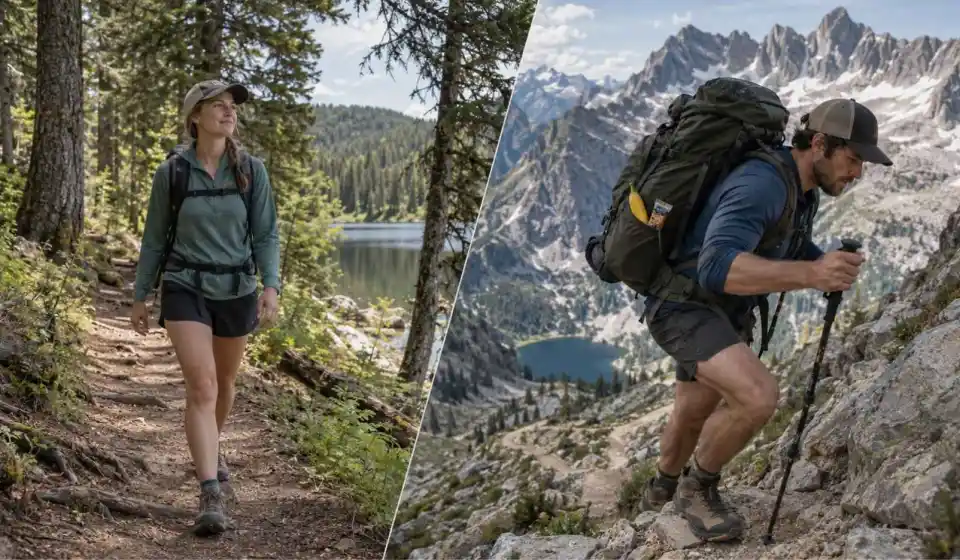
Consider two hikers who are both outside for exactly 120 minutes. One follows a mostly level trail at a comfortable conversational pace, while the other climbs continuously with a loaded backpack and maintains a much higher effort. Calling both activities “two-hour hikes” hides the factor that matters most: the total workload accumulated during those two hours.
Duration Is Only One Part Of Workload 🏔️
Walking becomes more energetically expensive when you increase speed, climb steeper terrain, carry additional weight, or combine all three. Even small changes repeated for thousands of steps can produce a substantial difference in total energy expenditure. This means the food needs of a leisurely two-hour trail walk can look very different from those of two hours of sustained climbing.
Terrain can also make effort fluctuate dramatically within the same hike. You might spend twenty minutes climbing hard, fifteen minutes descending easily, another thirty minutes climbing, and the rest cruising through flatter terrain. Your watch still records two hours, but your physiological workload is a mixture of easy and demanding periods rather than one consistent intensity.
Your Body Already Starts With Stored Energy 🔋
You do not begin a hike with an empty fuel tank simply because you are not eating while walking. The body stores carbohydrate primarily as glycogen in the muscles and liver, while also carrying a much larger supply of energy in body fat. During activity, your body uses a changing mixture of carbohydrate and fat depending partly on exercise intensity and individual factors.
This helps explain why many well-fed people can comfortably complete relatively short hikes without consuming calories along the trail. If you recently ate a normal meal and the outing is moderate, you already have energy available from food digestion and stored fuels. Eating during exercise therefore is not automatically necessary simply because an activity lasts longer than an hour.
What You Ate Before Hiking Changes The Equation 🍚
Imagine starting a morning hike after breakfast containing carbohydrate, protein, and some fat versus beginning the same hike several hours after your last meal. The trail has not changed, but your fueling context has. A person beginning adequately fed may have little interest in trail food during an easy outing, while someone starting hungry may appreciate calories much earlier.
Pre-hike nutrition is one reason two hikers can report completely different strategies without either experience being inherently wrong. One person saying, “I never eat during two-hour hikes,” may routinely eat beforehand, while another saying, “I always fuel after an hour,” may be performing harder sessions or starting under different conditions. 🚶♂️ Their statements describe individual situations rather than universal physiological deadlines.
A 60-Minute Easy Hike Is Usually A Different Problem 🌲
Picture a 60-minute walk on rolling terrain at a pace that allows easy conversation. For many adequately fed adults, the activity may simply be too short and comfortable for eating during the hike to provide much practical benefit. Bringing water and having normal meals before and after the outing may be perfectly workable from a general fueling-logistics perspective.
However, “one hour” still does not guarantee low workload. A steep uphill training hike performed aggressively while carrying a heavy pack may demand considerably more energy per minute than casual walking. This is why a calorie-burn calculator that considers body mass, terrain, duration, and workload is more informative than duration alone.
A 90-Minute Hike Can Sit In The Middle ⚖️
At around 90 minutes, hikers often encounter the gray area that creates online disagreement. An easy 90-minute hike after a solid meal may feel completely manageable without trail calories, while a fast mountain workout with sustained climbing may make eating carbohydrate useful for maintaining a planned fueling routine. Neither experience establishes a mandatory threshold for everybody else.
Suppose an easy hiker averages roughly 250 calories of energy expenditure per hour while a harder, larger, heavily loaded hiker averages 500 calories per hour. Over 90 minutes, those hypothetical workloads would equal about 375 versus 750 calories expended. The numbers are only examples, but they show why the same duration can represent roughly twice the total energy demand.
A 120-Minute Hike Makes Intensity Even More Important 🥾
Now extend those hypothetical rates to two hours. At 250 calories per hour, the easy hike represents about 500 calories of total expenditure, while 500 calories per hour would produce roughly 1,000 calories of expenditure. Neither number automatically tells you how many calories must be eaten during the hike, because energy expenditure and immediate food replacement are not the same thing.
Instead, the comparison illustrates why duration should be paired with workload. Two hours of gentle hiking may remain straightforward for someone who ate beforehand, whereas two hours of demanding climbing may encourage some hikers to consume portable carbohydrate during the session. The correct takeaway is not “everyone should eat at two hours,” but two hours can represent very different fueling situations.
Higher Intensity Changes Fuel Use 🔥
As exercise intensity rises, carbohydrate generally becomes increasingly important as a readily usable fuel source. Easier hiking allows a greater relative contribution from fat oxidation, while harder climbs and faster movement typically shift the mixture toward greater carbohydrate use. That does not mean fat suddenly disappears from the equation; the body continuously uses a mixture whose proportions change with intensity.
This helps explain why an athlete doing a hard two-hour training session might intentionally consume carbohydrate even when another person can walk for two hours without food. They are not necessarily operating under conflicting nutrition science. They are asking their bodies to perform different amounts and types of work within the same clock time.
Pack Weight And Elevation Can Quietly Raise The Cost 🎒
A backpack adds resistance to every step, and elevation gain repeatedly requires your body to lift itself and the carried load against gravity. A lightweight daypack containing water and a jacket creates a very different workload from a loaded backpack containing shelter, food, cooking equipment, and overnight gear. Steep terrain magnifies that difference further.
This is particularly important for hikers comparing their experiences online. Someone describing a “two-hour hike” might mean five easy miles through a local park, while someone else means two hours of mountain switchbacks carrying substantial weight. Without pace, terrain, elevation, and pack context, duration by itself is a weak comparison metric.
When Carrying A Snack Still Makes Sense 🍫
Not needing planned calories during a short hike does not mean leaving every bit of food at home is always practical. A small bar, chew, dried-fruit portion, or similar compact snack weighs very little and can provide logistical backup when a supposedly short outing takes longer than expected. Trail closures, navigation mistakes, photo stops, weather delays, or unexpectedly difficult terrain can easily stretch a planned trip.
Think of the snack as contingency food rather than proof that a two-hour hike requires fueling. You may carry it and never eat it, especially on familiar trails close to civilization. For more remote routes, having a modest reserve can simply be sensible trip planning independent of your scheduled fueling strategy.
When Should You Start Eating While Hiking? 🍌
Instead of asking for one exact minute, consider four questions: How long will I be moving, how hard will I be working, what did I eat beforehand, and how long might the outing realistically become? A short, comfortable hike after breakfast creates one answer, while sustained climbing during a demanding training day creates another. This decision framework is more useful than treating 60, 90, or 120 minutes as biological switches.
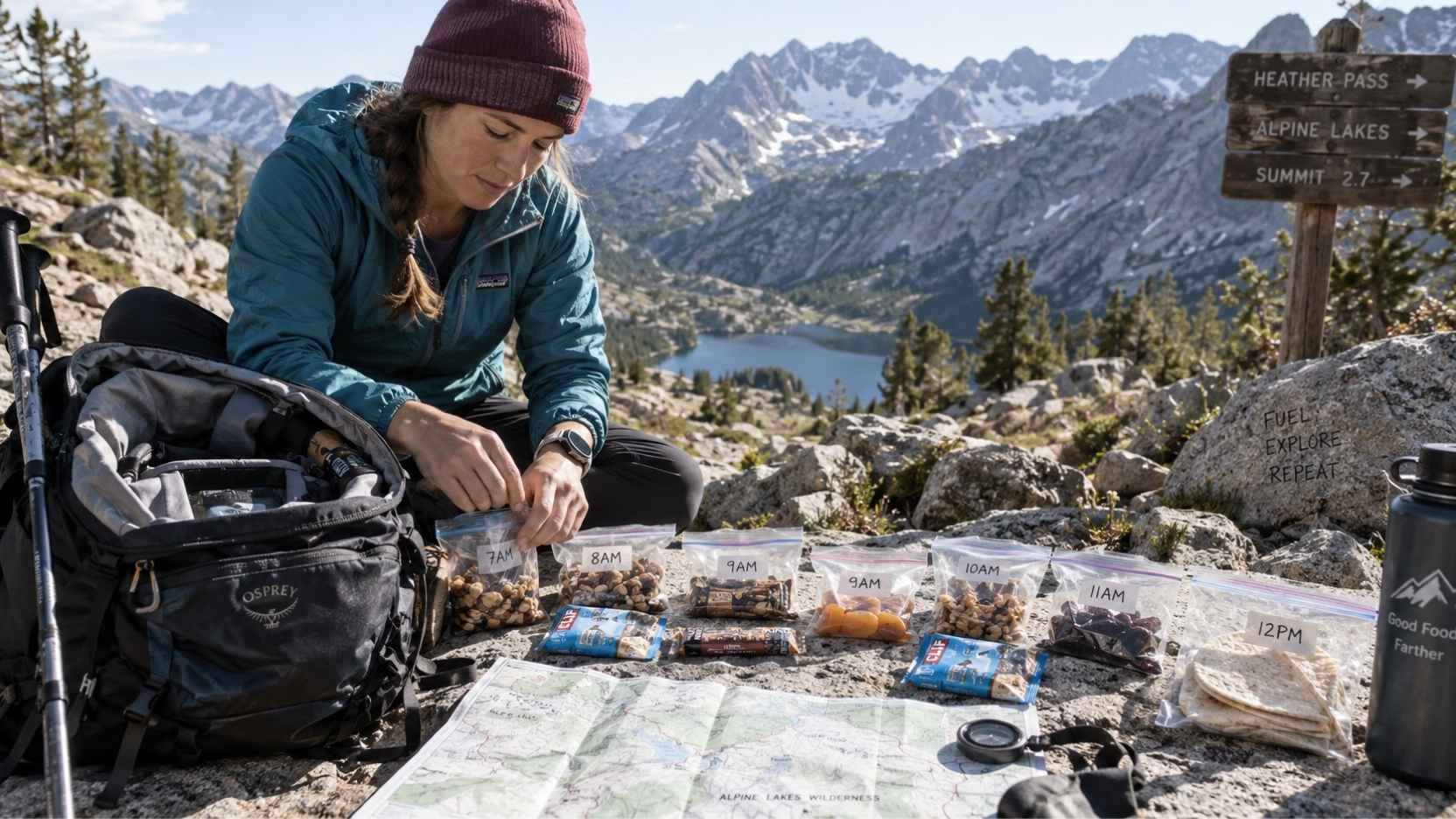
You can also plan food according to the entire day rather than reacting only when hunger appears. On longer hikes, regularly scheduled eating can become more useful because total energy expenditure continues accumulating for many hours. That is where questions such as how often to eat while hiking and how to build a longer trail eating schedule become increasingly important.
The Better Rule: Match Fueling To The Hike 🧭
For an easy two-hour hike after a normal meal, many people may complete the outing comfortably without intentionally eating along the way. For a strenuous two-hour session involving fast movement, sustained climbing, significant pack weight, or training goals, consuming some food during the hike may fit the situation better. Neither approach needs to become a universal rule.
Use duration as the starting variable, not the final answer. Combine it with workload, terrain, pack weight, pace, pre-hike meals, and the expected total length of your day, then adjust your packing and eating plan accordingly. For individualized nutrition concerns or medical considerations that affect exercise fueling, consult a qualified healthcare professional.