White Rice + Beans vs Brown Rice: Which Makes the Better Backpacking Meal?
Introduction — The Wrong Question Is “Which Rice Is Healthier?”
For backpackers, the useful question is not simply whether brown rice or white rice is “healthier,” because trail food must solve several problems at once. A meal needs enough energy, manageable food weight, reliable cooking, limited fuel use, and enough protein, fiber, and variety to feel satisfying. That turns the brown rice vs white rice backpacking debate into a meal-design problem rather than a nutrition slogan. 🥾
A whole-grain rice can provide more fiber and naturally retained nutrients, but that does not automatically make the final meal lighter, faster, or better balanced. White rice is lower in fiber by itself, yet pairing it with dehydrated beans can radically change the protein and fiber totals. The better trail choice therefore depends on the complete meal, not simply the color of the rice.
What Refining Rice Actually Changes
Brown rice keeps the bran and germ along with the starchy endosperm, while white rice is milled so the bran and germ are removed. Refining reduces fiber and removes some naturally occurring nutrients, although enriched white rice can have certain B vitamins and iron added back afterward. Enrichment does not make white rice nutritionally identical to brown rice, and it generally does not restore the original fiber. 🌾
That difference matters, but backpackers rarely eat plain rice as a complete dinner. Beans, vegetables, nuts, seeds, oil, cheese, powdered sauces, and seasonings can substantially change the finished meal’s nutrition and calorie density. Once those ingredients enter the bag, whole grain versus refined grain becomes only one variable.
White Rice vs Brown Rice: Trail Nutrition Numbers
Using dry long-grain rice as a baseline, brown rice provides about 367 calories, 76 grams of carbohydrate, 7.5 grams of protein, and 3.6 grams of fiber per 100 grams. Unenriched white long-grain rice is very close in energy at about 365 calories, with roughly 80 grams of carbohydrate, 7.1 grams of protein, and 1.3 grams of fiber per 100 grams. The obvious macro difference here is fiber, not calories. 📊
Calorie density is also remarkably similar: both dry rices land near 104 calories per ounce before other ingredients are added. Brown rice contains more fat than white rice, but not enough to create a dramatic backpack-weight advantage. If your goal is a higher-calorie dinner, the larger lever is usually what you add to the rice.
Now Add Beans To The White Rice
This is where the comparison changes, because dehydrated beans add substantial protein and fiber while remaining shelf-stable and lightweight. One instant refried-bean label lists 130 calories, 7 grams of protein, and 11 grams of fiber per 35 grams, while another dehydrated pinto bean product provides 358 calories, 23 grams of protein, and 16 grams of fiber per 100 grams. Numbers vary by brand and processing method, so use the label from the beans you actually carry. 🫘
Adding beans does not turn white rice into brown rice, because the foods still differ in structure and micronutrient profile. It does create a different meal in which beans can contribute far more fiber than either rice provides alone. That is why meal composition can matter more than judging the grain in isolation.
The Hidden Backpacking Variable: Cooking Fuel
At home, extra cooking minutes are minor, but on trail they can mean more fuel, more waiting, and more trouble in wind or cold. Conventional brown rice generally needs longer cooking than white rice, which makes it less convenient for lightweight trips unless it has been precooked. Instant rice changes the equation because much of the cooking was completed before the food reached your pack. 🔥
One widely sold instant white rice lists a five-minute stovetop cooking time, while its instant brown rice counterpart lists ten minutes. That is far shorter than conventional brown-rice cooking, but the difference can still matter across several dinners. If fuel efficiency is important, compare instant white rice with instant brown rice rather than comparing two products designed for very different cooking times.
Calories Per Ounce Changes The Decision
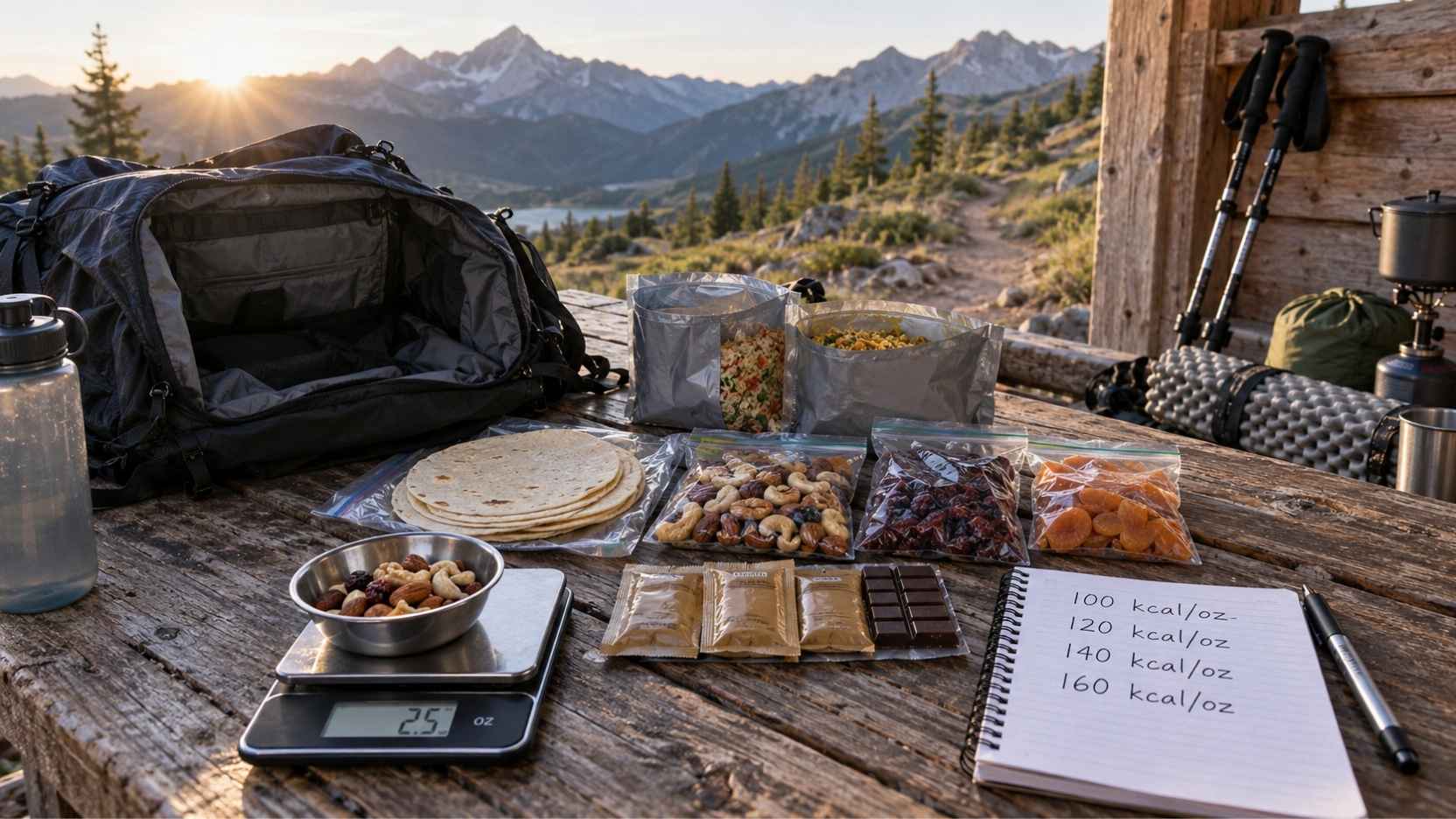
Calorie density tells you how much energy you carry per ounce, but it does not tell you whether a meal is balanced or satisfying. Plain dry rice sits close to 100 to 105 calories per ounce, while adding olive oil can raise the average quickly because fat supplies about nine calories per gram. Beans and dehydrated vegetables improve protein, fiber, texture, and variety, yet they do not always increase calorie density. ⚖️
That creates a real trail tradeoff: the most nutrient-diverse meal may weigh slightly more for the same calories, while the lightest meal may be less balanced. A practical menu does not maximize one number and ignore everything else. It checks calorie density alongside protein, fiber, cooking time, appetite, and digestive tolerance.
Three Equal-Calorie Trail Meal Builds Compared
The examples below target about 500 calories using dry-label values from instant rice, instant refried beans, and a dehydrated vegetable mix. They are not universal recipes because brands vary, but they show how the math changes when ingredients are combined. Cooking water is excluded from carried food weight because these examples assume water is collected on trail.
| Meal build | Dry ingredients | Approx. calories | Dry weight | Calories/oz | Protein | Fiber |
|---|---|---|---|---|---|---|
| Brown rice only | 139 g instant brown rice | 500 | 4.90 oz | 102 | 11 g | 5.6 g |
| White rice + beans | 80 g instant white rice + 55 g instant refried beans | 500 | 4.76 oz | 105 | 18 g | 17.3 g |
| White rice + beans + vegetables | 60 g instant white rice + 45 g instant refried beans + 34 g dehydrated vegetables | 500 | 4.89 oz | 102 | 18 g | 20.1 g |
The surprise is that plain brown rice is not meaningfully lighter than the mixed meals at the same calorie target. The white-rice-and-bean build is slightly lighter here while providing much more protein and fiber, although that result depends strongly on the bean product used. The vegetable version weighs about the same as brown rice while adding ingredient variety and an even larger fiber load.
Build The Meal Around The Trip
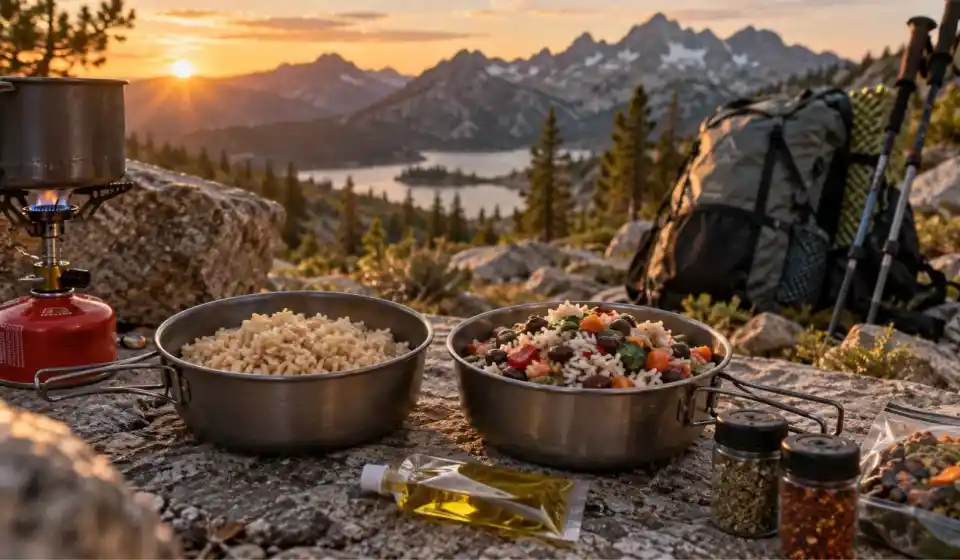
For a short overnight, instant brown rice can be practical because it creates a simple whole-grain base with almost no ingredient planning. For a longer trip where dinner must contribute more protein and fiber, white rice plus dehydrated beans may be the more efficient design even though the grain is refined. Adding dehydrated vegetables can improve flavor and variety without carrying the water weight of fresh produce. 🏕️
Digestive tolerance matters too, because concentrated beans and dehydrated vegetables can create a very high-fiber dinner quickly. A 15- to 20-gram fiber meal may feel comfortable for one hiker and unpleasant for another, especially if the rest of the day is already fiber-heavy. Test the exact recipe at home before making it a multi-day trail staple.
The Practical Takeaway
The better backpacking meal is not automatically brown rice, and it is not automatically white rice with beans. Brown rice gives you a whole-grain base with more fiber than plain white rice, while white rice offers a flexible carbohydrate base that pairs easily with beans, vegetables, and calorie-dense additions. Compare the finished meal by calories, ounces, protein, fiber, and cooking time rather than assigning one grain a universal winner. ✅
When planning a full menu, use your Calories Per Ounce Database, Trail Macro Cheat Sheet, and How Much Food Weight Per Day guide to check whether one dinner fits the larger food plan. Then compare the result with your rice-and-beans menu category to see how oil, vegetables, seasoning, and portion size change the final numbers. On trail, the meal you build often matters more than whether the rice started brown or white.