Winter Camping Stoves: Canister vs White Gas Showdown
When the mercury drops below freezing, the choice between canister and white gas stoves becomes a matter of safety, efficiency, and sanity. Winter camping in the backcountry demands a reliable heat source for melting snow and cooking meals, and picking the wrong fuel can turn a dream trip into a frigid nightmare.
The Fuel Family Tree: Canister vs. White Gas Basics
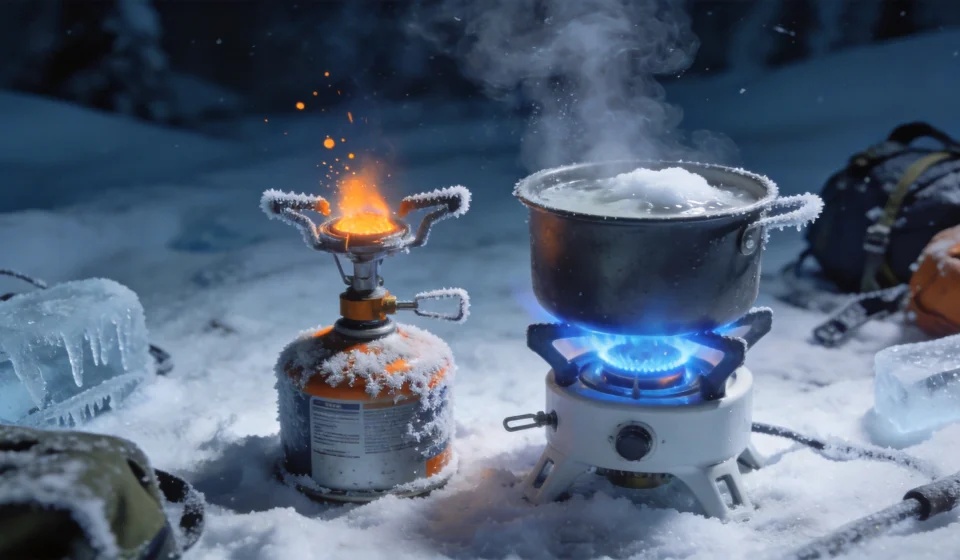
Canister stoves use pre‑pressurized blend of propane and butane (often isobutane) sealed in lightweight metal canisters. They are popular for three‑season use because of their simplicity: screw on, light, and cook. In cold weather, however, the gas mixture’s vapor pressure drops dramatically, causing weak flame or even failure.
White gas stoves (sometimes called “liquid fuel” stoves) burn refined naphtha – a liquid at room temperature. These require priming (preheating) and pumping to pressurize the fuel bottle, but they retain their performance in sub‑zero temperatures because the liquid fuel does not rely on vapor pressure alone. Models like the MSR WhisperLite Universal or the classic Coleman Peak 1 are icons of winter mountaineering.
Why Temperature Matters for Canisters
A standard isobutane‑propane blend (typically 80/20 or 70/30) begins to struggle around 20°F (-7°C). Below 10°F (-12°C) many canisters will barely produce a usable flame. To mitigate this, winter campers sometimes “warm” the canister inside their sleeping bag or in a jacket pocket overnight, but this is a temporary fix and can be dangerous if the canister leaks.
“A canister stove at 0°F is like a car engine with a frozen carburetor – it might sputter, but it won’t get you to the summit.” – Mountain Safety Research trainer, 2022
Sub‑Zero Performance Showdown: Canister vs. White Gas
When the thermometer reads ‑15°F (-26°C) or colder, white gas stoves shine. The liquid fuel remains pumpable down to ‑40°F (-40°C) with proper fuel (Coleman “white gas” or MSR fuel). Canister stoves, even with “winter blends” (higher propane content, like 30/70), become unusable below about ‑4°F (-20°C) in real wind conditions.
Real‑World Case: Denali vs. Rockies
On a ten‑day winter trip in Montana’s Madison Range, temperatures dropped to ‑18°F at night. My partner’s canister stove (MSR PocketRocket Deluxe) needed constant hand‑warming and produced only a weak, orange flame. My white gas stove (Primus OmniLite Ti) melted snow for 5 liters of water in 15 minutes without any performance dip.
Key Performance Metrics at ‑10°F
| Parameter | Canister (winter blend) | White Gas |
|---|---|---|
| Boil time (1 liter water) | 9‑12 min (often inconsistent) | 5‑7 min |
| Fuel stability | Drops off below 10°F | Stable to ‑40°F |
| Wind resistance | Moderate (needs windscreen) | Good (can use wide windscreen) |
| Priming complexity | None | Requires 2‑3 min preheat |
Pros and Cons of Each Fuel for Snow Camping
Every snow campsite presents trade‑offs. Below is a balanced look at what each fuel type excels at – and where it falls short.
Canister Stoves – The Lightweight Contenders
- Pros: No priming, no pump, no fuel spilling; extremely simple operation; lighter total system if the trip is short (< 4 days) and temperatures stay above 15°F.
- Cons: Fuel performance plummets in cold; difficult to gauge remaining fuel; empty canisters are bulky trash; cannot refill from a large bottle.
White Gas Stoves – The Cold‑Weather Workhorses
- Pros: Excellent cold weather power; fuel efficiency (higher BTU per ounce); can carry fuel in a single bottle; easy to estimate fuel use (measure by dipping a stick into the bottle).
- Cons: Need to prime the stove (takes practice); pump can fail; liquid fuel can spill and freeze; slightly heavier (stove + pump + bottle).
How to Choose Based on Trip Length and Conditions
The best choice depends on three factors: lowest expected temperature, trip duration, and your willingness to tinker.
Short Weekend Trips (1–3 nights) Above 15°F
If the mercury stays above 15°F and you’re out for only a few days, a quality canister stove with a winter blend fuel is perfectly fine. Make sure to use a tall windscreen (but leave enough ventilation for the canister to breathe). Example: a weekend snowshoeing in the Adirondacks with lows of 10°F – canister works if you keep it in your jacket pocket between meals.
Medium Trips (4–7 nights) with Sub‑Zero Nights
When temperatures routinely dip below 0°F, white gas is the safer bet. You’ll avoid the hassle of nursing a weak flame. For a week‑long Colorado winter hut‑to‑hut trip, a 30‑ounce bottle of white gas lasted six days with careful use. A comparable canister would have required two or three 8‑ounce cartridges, adding weight and waste.
Extended Expeditions (10+ days) Below ‑10°F
No contest: white gas wins hands down. The ability to melt snow for hours without flame degradation, and to carry fuel in a single unpressurized bottle, is essential. Example: a two‑week ski traverse in Alaska’s Brooks Range – every party I know uses white gas. Canister stoves are simply unreliable below ‑10°F, even with the “extreme” blends.
Fuel Efficiency Comparison (Per Trip)
- Canister (8 oz cartridge)
- ~2–2.5 hours of burn time at high output; equivalent to ~22,000 BTU.
- White Gas (30 oz bottle)
- ~6–8 hours of burn time; equivalent to ~90,000 BTU.
Weight per BTU is lower for white gas, making it more efficient for longer trips. And you can refill from a large 5‑liter fuel can, whereas canisters force you to carry multiple small cartridges.
Practical Tips for Cold‑Weather Stove Use
No matter which fuel you choose, these tricks will keep you warm and fed:
- Always warm the canister (or fuel bottle) in your sleeping bag for at least an hour before cooking. Never leave a propane canister near an open flame to heat it – that’s an explosion risk.
- Use a heat exchanger pot (like MSR’s “Reactor” system) to improve efficiency in wind.
- For white gas stoves, learn to prime without using a lot of fuel: a dime‑sized puddle under the burner is enough. Practice at home before your trip.
- Carry a small bottle of denatured alcohol or a priming paste if you’re using a white gas stove at extreme altitude – it lights more reliably than white gas.
“I’ve seen too many parties on Denali trying to light a canister stove at 14,000 feet in -20°F. They end up eating cold tortillas. White gas is non‑negotiable for serious winter expeditions.” – Marmot guide, 2023
Conclusion
Canister stoves excel for lightweight, short trips in mild winter conditions, but they fail when the thermometer drops below 10°F. White gas stoves require more skill and maintenance but provide consistent, powerful heat even at ‑40°F. For any trip longer than four nights or where single‑digit temperatures are guaranteed, invest in a white gas system. Your cold fingers will thank you.