How Long Can Cheese Sit Out? A Guide to Hard, Soft, and Fresh Cheese
Cheese is one of those foods that can make almost any meal better. It works in sandwiches, pasta, crackers, salads, camping meals, and snacks. But unlike shelf-stable foods such as dried fruit or crackers, many types of cheese require careful temperature control.
If you are traveling, hiking, packing a lunch, or simply wondering whether the cheese left on the counter is still safe, an important question is: How long can cheese stay unrefrigerated?
The answer depends heavily on the type of cheese, temperature, moisture level, packaging, and how long it has been outside refrigeration. Hard cheeses and soft cheeses behave very differently, so treating all cheese the same can lead to poor food-safety decisions.
Why Cheese Does Not Have One Universal Shelf-Life
Cheese is a broad category of foods rather than a single product.
Parmesan, cheddar, Brie, cream cheese, mozzarella, feta, and fresh goat cheese all have different moisture levels, acidity, salt content, production methods, and textures.
These characteristics influence how easily microorganisms can grow.
Generally speaking, hard, aged cheeses are more resistant to spoilage than soft, high-moisture cheeses. That does not mean hard cheese can be safely left at room temperature indefinitely. It simply means that its lower moisture content and aging process can make it less supportive of microbial growth.
Soft and fresh cheeses usually require greater temperature control because they contain more moisture and are often less aged.
The General Room-Temperature Rule
For perishable foods, including many cheeses, U.S. food-safety guidance uses the 40°F to 140°F (4°C to 60°C) temperature range as the danger zone where bacteria can multiply more rapidly.
A common food-safety guideline is to avoid leaving perishable foods at room temperature for more than 2 hours, or more than 1 hour when temperatures are above 90°F (32°C).
These time limits are useful rules of thumb for foods that require refrigeration. They should not be interpreted as an exact point at which every piece of cheese suddenly becomes unsafe.
The type of cheese matters.
Hard Cheese: Cheddar, Parmesan, and Similar Varieties
Hard and semi-hard cheeses generally contain less moisture than fresh or soft cheeses.
Examples include:
- Parmesan
- Pecorino
- Aged cheddar
- Manchego
- Aged Gouda
- Swiss cheese
- Some firm provolone
Because these cheeses are relatively dry and often aged, they are generally more resistant to microbial growth.
This is one reason hard cheese has historically been useful for travel and storage.
However, “more resistant” does not mean “room-temperature safe forever.” Once cheese is cut, handled, exposed to contamination, or stored in warm conditions, the risk changes.
If a package of hard cheese has been sitting out for an extended period, especially in a hot environment, it should not automatically be considered safe simply because it is a hard cheese.
Soft Cheese Requires More Caution
Soft cheeses usually have a higher moisture content.
Examples include:
- Brie
- Camembert
- Cream cheese
- Cottage cheese
- Ricotta
- Fresh mozzarella
- Fresh goat cheese
- Some soft-ripened cheeses
These products generally require refrigeration.
A soft cheese sitting on a warm kitchen counter or inside a hot backpack is a different food-safety situation from a sealed wedge of aged Parmesan.
If you are packing cheese for a picnic, road trip, or hiking excursion, soft cheese should generally be treated as a perishable food requiring reliable temperature control.
Fresh Cheese Is Particularly Perishable
Fresh cheeses often have a short refrigerated shelf life compared with aged varieties.
Fresh mozzarella, ricotta, cottage cheese, and cream cheese contain substantial moisture and have not gone through the same extended aging process as hard cheeses.
For that reason, they are poor choices for situations where refrigeration is unavailable.
A backpacker spending several days in the wilderness may be better served by shelf-stable alternatives or appropriately packaged aged cheese rather than carrying fresh cheese without a dependable cooling system.
What About Brie?
Brie sometimes causes confusion because it is technically a cheese that can be served at room temperature.
Restaurants and cheeseboards commonly allow Brie to warm before serving. This does not mean Brie can safely remain warm for an unlimited amount of time.
There is an important distinction between serving cheese at room temperature for a limited period and storing cheese at room temperature.
Letting Brie warm briefly before a meal can improve its texture and flavor. Leaving it unrefrigerated for many hours is a different matter.
Temperature Makes a Big Difference
The room-temperature phrase can be misleading.
A cool 65°F room and a 95°F outdoor campsite are not equivalent environments.
Heat accelerates many food-safety concerns. A cheese container sitting inside a parked car during summer can become much warmer than the surrounding outdoor temperature.
Similarly, cheese carried inside a backpack on a sunny hiking day may experience temperatures significantly above typical indoor room temperature.
For outdoor trips, consider the actual conditions rather than simply asking whether the cheese is “at room temperature.”
Does Vacuum-Sealed Cheese Last Longer?
Vacuum packaging can protect cheese from oxygen exposure and contamination, and it can help preserve quality.
However, vacuum sealing does not automatically turn a refrigerated cheese into a shelf-stable product.
Unless the manufacturer specifically identifies the product as shelf-stable, follow its storage instructions.
An unopened vacuum-sealed package that is designed to remain refrigerated should still be refrigerated.
Packaging can reduce certain forms of spoilage, but it does not eliminate the need for temperature control.
What About Cheese for Hiking?
Cheese can be an excellent hiking food because it provides protein, fat, and calories in a relatively compact package.
For short hikes, a small insulated lunch bag with a cold pack can make carrying refrigerated cheese easier.
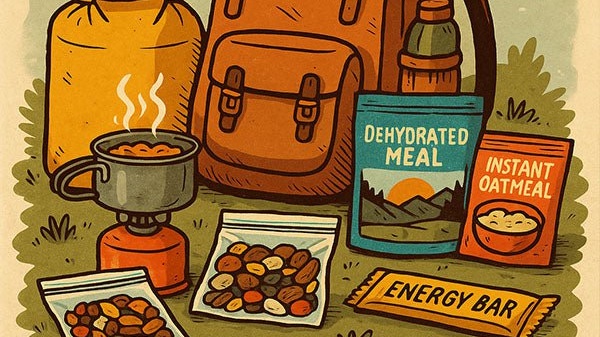
For longer backpacking trips, consider cheeses that are naturally firmer and lower in moisture. Pairing them with shelf-stable foods such as crackers, nuts, dried fruit, or tortillas can create a convenient trail snack.
The important point is to understand the storage requirements of the specific cheese you are carrying.
Signs of Spoilage
Visible mold can sometimes be an obvious warning sign, but appearance is not a complete safety test.
Different cheeses naturally contain different molds. Some specialty cheeses are intentionally produced with edible molds, while unexpected mold growth on another product may indicate spoilage.
Unusual odors, sliminess, discoloration, damaged packaging, or other changes in appearance can also be warning signs.
However, foodborne pathogens may not produce obvious changes in smell or appearance. Never assume that food is safe simply because it looks normal.
The Bottom Line
There is no single answer to how long cheese can remain unrefrigerated.
Hard, aged cheeses generally tolerate temperature changes better than soft and fresh cheeses, but they are not automatically safe after unlimited time at room temperature.
Soft and fresh cheeses require more careful refrigeration because their higher moisture content can support microbial growth.
If you are unsure, check the manufacturer’s storage instructions and consider the time, temperature, packaging, and type of cheese involved.
For hiking and travel, the easiest strategy is to choose cheese that fits your storage conditions. Use a cooler or insulated container for refrigerated varieties, and avoid carrying highly perishable soft cheeses on trips where reliable refrigeration is unavailable.
Cheese may be a simple snack, but understanding the difference between hard and soft varieties can make your food choices much safer.