Backpacking Food Safety 101: How Heat and Time Affect Trail Meals
A backpacking meal has to do more than taste good. It needs to survive transportation, changing weather, limited cooking equipment, and sometimes an entire day inside a backpack.
That is why food safety deserves a place on every outdoor packing list.
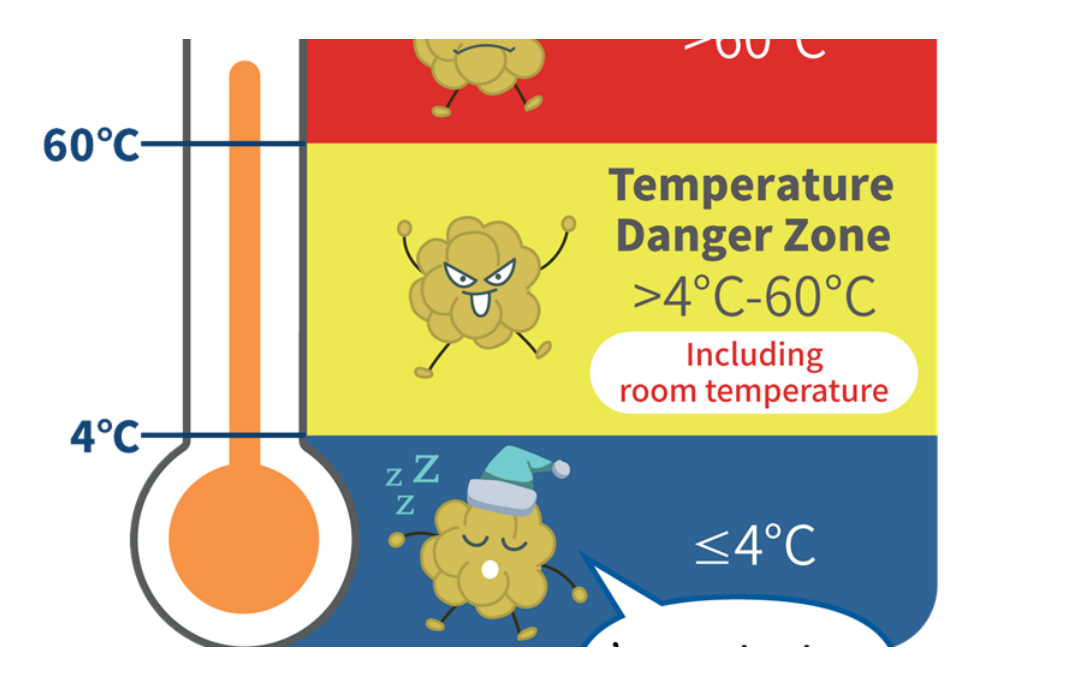
One of the most important concepts to understand is the temperature danger zone, the range in which many bacteria can multiply more quickly. For food-safety purposes, this range is commonly described in the United States as 40°F to 140°F (4°C to 60°C).
Knowing what this means can help hikers decide which foods are appropriate for a particular trip, how to handle perishable ingredients, and when leftovers should be discarded.
The Danger Zone Is About Risk, Not an Instant Deadline
The phrase “danger zone” can sound dramatic, but it is important to understand what it actually means.
Food does not suddenly become dangerous the moment it reaches 40°F or 140°F. Rather, temperatures within this range can provide favorable conditions for the growth of many bacteria.
The amount of risk depends on several factors, including the type of food, the amount of time it spends at a favorable temperature, moisture, acidity, and the presence of microorganisms.
For backpackers, the practical lesson is simple: avoid keeping perishable foods warm for extended periods whenever possible.
Why Hiking Can Make Temperature Control Difficult
A refrigerator gives you a controlled environment. A backpack does not.
During a summer hike, the temperature inside your pack can rise considerably. Your food may be exposed to body heat, warm air, sunlight, and repeated temperature changes.
Even if the morning starts cool, the situation may be completely different by afternoon.
Consider a backpacker who leaves camp at 7 a.m. with a refrigerated meal. By lunchtime, the food may have been outside reliable refrigeration for several hours. If the hike continues until late afternoon, the total time becomes even longer.
This is why packing decisions should be made before the trip begins.
Choose Foods Based on the Trip
The best food system for a one-night winter trip may be completely different from the best system for a five-day summer backpacking trip.
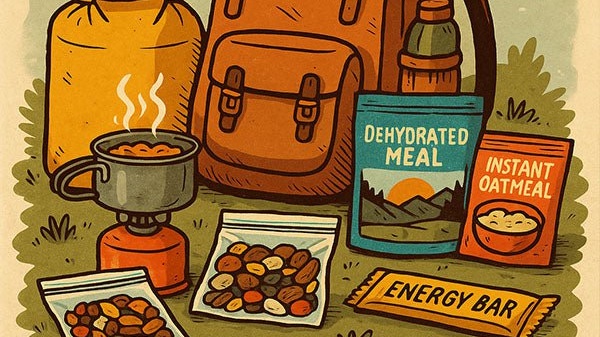
For longer trips without dependable refrigeration, shelf-stable foods are often easier to manage.
Popular options include:
- Freeze-dried meals
- Dehydrated vegetables
- Instant rice or noodles
- Oatmeal
- Trail mix
- Nuts
- Dried fruit
- Shelf-stable tortillas
- Crackers
- Energy bars
- Commercially packaged shelf-stable foods
These products are generally easier to transport because they do not require the same cold-storage conditions as many fresh foods.
Fresh Food Can Be More Complicated
Fresh ingredients can be appealing on shorter trips.
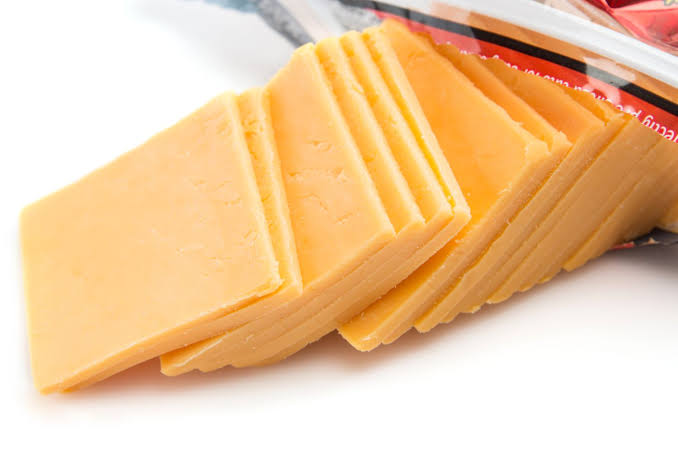
Cheese, deli meat, cooked chicken, hard-boiled eggs, yogurt, and other refrigerated foods may be practical when you have a reliable cooler and a short travel period.
The challenge is maintaining appropriate temperatures.
A backpacker should not assume that an insulated bag automatically keeps food safe all day. Insulation slows temperature change, but it does not create refrigeration indefinitely.
Cold packs, frozen water bottles, and high-quality insulated containers can help, but their effectiveness depends on the starting temperature, ambient conditions, insulation, quantity of food, and duration of the trip.
Hot Weather Changes the Equation
Outdoor temperatures are particularly important.
On a mild spring morning, food may remain relatively cool for several hours. On a hot summer day, the same food can warm much more quickly.
Direct sunlight can make matters worse.
Never assume that because the air temperature is comfortable, the food temperature must also be comfortable. A dark-colored container sitting in direct sunlight can absorb substantial heat.
Whenever possible, keep food in the shade and inside an insulated container.
Cooked Food Needs a Plan
Cooking at camp creates another food-safety consideration.
Once dry ingredients are rehydrated or raw ingredients are cooked, the food’s characteristics change. Moisture becomes available, and the meal can become a more suitable environment for bacterial growth.
A freshly prepared meal should be eaten promptly rather than casually left around camp for hours.
This is especially important for meals containing meat, poultry, seafood, eggs, dairy, or other perishable ingredients.
If you know you will not be able to refrigerate leftovers, cook only the amount you expect to eat.
Don’t Trust Your Nose
One common mistake is assuming that food is safe if it smells normal.
Unfortunately, appearance and smell are not reliable tests for the presence of every harmful microorganism.
Food can look completely normal while still presenting a food-safety risk.
Likewise, reheating questionable food is not necessarily a solution. Some microorganisms can produce substances that may remain problematic even after the food is heated.
When food has been handled or stored under questionable conditions, sensory inspection should not be the only basis for deciding whether to eat it.
Cross-Contamination Matters Too
Temperature control is only one part of backpacking food safety.
Cross-contamination can occur when microorganisms move from one surface or food to another.
For example, a knife used to cut raw meat should not then be used for ready-to-eat food without proper cleaning. Likewise, dirty hands can contaminate snacks, utensils, and meal ingredients.
Trail kitchens are small, which makes organization important.
Use clean utensils for cooked food. Keep raw ingredients separated from ready-to-eat foods. Clean preparation surfaces as thoroughly as your outdoor conditions allow.
Water Safety and Food Preparation
Water is another major consideration.
Even if your food is packaged safely, contaminated water can introduce microorganisms during cooking or rehydration.
Backpackers should use an appropriate water-treatment method when collecting water from natural sources. Depending on the situation, this may include filtration, chemical treatment, boiling, or a combination of methods.
Follow the instructions for your specific treatment system.
Remember that clear-looking mountain water is not automatically microbiologically safe.
What About a Meal That Has Been Sitting Out?
This is one of the most common trail questions.
There is no single answer based only on the fact that a meal “sat out.” You need to consider the food, temperature, duration, preparation method, and storage conditions.
However, if a perishable meal has spent an extended period in warm conditions without reliable temperature control, treating it as questionable rather than assuming it is safe is the more cautious approach.
This is especially important in remote locations where medical treatment may be far away.
Build Food Safety Into Your Packing System
A good backpacking food system should make safe choices easy.
Before leaving home, divide foods into categories:
Shelf-stable foods:
These can generally be carried without refrigeration when properly packaged.
Perishable foods:
These require temperature control and should be packed with an appropriate cooling strategy.
Prepared foods:
Think about how quickly they will be eaten and whether leftovers can be safely stored.
Water-dependent foods:
Make sure you have enough treated water and a reliable preparation method.
This simple organization can prevent many problems before the hike even begins.
A Practical Trail Rule
If you remember only one concept, remember this:
Time and temperature matter together.
Keeping perishable foods cold slows bacterial growth. Keeping them warm for extended periods can increase risk. Heating food thoroughly can kill many microorganisms, but it does not make every questionable storage situation harmless.
For backpackers, prevention is usually easier than trying to fix a food-safety problem later.
Final Thoughts
The temperature danger zone is a fundamental concept for anyone carrying food outdoors. The commonly used 40°F–140°F range provides a useful framework for understanding why perishable foods need careful handling.
You do not need to eliminate fresh food from every backpacking trip. Instead, match your food choices to your storage capabilities.
For long or hot trips, shelf-stable foods can simplify logistics. For short trips, properly chilled perishables may be practical. For every trip, pay attention to preparation, cleanliness, water quality, storage time, and leftovers.
The goal is not to make outdoor cooking complicated. It is to understand how heat and time affect food so you can make sensible choices before a small meal becomes a big problem.
Good preparation lets you spend more time enjoying the trail—and less time worrying about what is happening inside your food bag.