🥾 How to Create a 3-Day Backpacking Menu With Breakfast, Lunch, Dinner, and Snacks
Planning food for a three-day backpacking trip can feel harder than planning the hike itself. You need enough food to keep you fueled, but you also have to think about weight, storage, preparation, water, cleanup, and what will actually sound appetizing after hours on the trail.
The good news is that you don’t need a completely different meal for every occasion. A smart backpacking menu uses a small collection of versatile ingredients across several meals.
The goal is simple: enough food, manageable weight, minimal fuss, and meals you genuinely want to eat. 🎒🌲
🗺️ Start With Your Actual Itinerary
Before choosing food, figure out exactly what your three days look like.
Ask:
- When will you start hiking?
- How long will you hike each day?
- Will you eat breakfast before reaching the trail?
- When will you reach camp?
- Will you have access to reliable water?
- Will you carry a stove?
- How difficult is the terrain?
- What weather should you expect?
- Will you have opportunities to leave the trail early?
This matters because a “three-day trip” doesn’t necessarily mean nine full meals plus snacks.
For example, if you eat breakfast at home before starting on Day 1 and arrive back at the trailhead around lunchtime on Day 3, your food requirements are different from a trip where you’re hiking continuously for three complete days.
Build the menu around the actual hours you’ll be away from regular food, not simply the number of calendar days.
🍽️ Use a Simple Daily Structure
A straightforward backpacking menu can follow this pattern:
🌅 Breakfast
Something quick and familiar.
🥙 Lunch
A meal that requires little or no cooking.
🍲 Dinner
Your most substantial cooked or hot-water meal.
🥜 Snacks
Small portions eaten throughout the hiking day.
🍫 Evening snack
Optional, depending on your appetite and overall food plan.
This structure gives you a framework without forcing every day to look exactly the same.
🥣 Day 1 Menu
Breakfast
If you’re starting early from home, you might eat breakfast before driving to the trailhead.
If breakfast needs to happen on the trail, keep it simple:
Instant oatmeal + powdered milk + nuts + dried fruit
Why it works:
- Easy to portion
- Requires minimal preparation
- Can be customized
- Ingredients can be used in other meals
You can prepare the ingredients at home so that breakfast only requires adding water.
🥜 Morning Snack
Choose something that can be eaten during a short break.
For example:
- Trail mix
- Nuts
- Dried fruit
- Granola bar
- Energy bar
You don’t need all of them. Pick one or two that you enjoy.
🥙 Lunch
A no-cook lunch can make the middle of the hiking day much easier.
Try:
Tortilla + nut or seed butter + dried fruit
Or:
Tortilla + shelf-stable tuna/chicken + seasoning
Tortillas are particularly useful because they are relatively compact and don’t require the preparation associated with bread.
🍫 Afternoon Snack
Keep this accessible in a hip belt, shoulder pocket, or other easy-to-reach location.
Examples:
- Nuts
- Chocolate
- Bar
- Dried fruit
Having food readily available can be more practical than repeatedly opening your main food bag.
🍲 Dinner
Dinner can be the one meal where you use hot water.
For example:
Instant rice + tuna/chicken + olive oil + seasoning
Or:
Couscous + protein + dried vegetables + seasoning
A simple meal means less cooking and less cleanup after you arrive at camp.
🌙 Evening Snack
If you like eating something after dinner, keep it simple.
A small serving of:
- Chocolate
- Trail mix
- Nuts
- Dried fruit
can work well.
🌲 Day 2 Menu
Day 2 is often where a repetitive food plan starts to become noticeable, so this is a good place to introduce a little variety.
🥣 Breakfast
Try another oatmeal combination:
Oatmeal + powdered milk + dried banana + nuts + cinnamon
The base stays the same, but changing the toppings can make breakfast feel different.
🥜 Morning Snack
Try a different combination from Day 1:
Nuts + dried fruit
Or:
Energy bar + small serving of trail mix
🌯 Lunch
Use another tortilla-based meal.
For example:
Tortilla + nut butter + dried fruit
If you used a savory tortilla on Day 1, switching to a sweet version can provide some variety without requiring additional cooking equipment.
🍫 Afternoon Snack
Chocolate, a bar, or another compact snack can provide a different texture and flavor.
You don’t need to pack an enormous variety of foods.
A few favorites are usually better than carrying ten different snack products.
🍚 Dinner
Make dinner slightly different from Day 1.
For example:
Instant mashed potatoes + shelf-stable protein + seasoning
Or:
Instant couscous + tuna + oil + spices
The important thing is choosing foods that can be prepared safely and appropriately under your trip conditions.
🌙 Evening Snack
If you still have room in your food plan:
Chocolate + nuts
can be an easy end-of-day option.
🥾 Day 3 Menu
Day 3 depends heavily on when you expect to finish.
If you’re hiking until late afternoon, plan a normal breakfast, lunch, and snacks.
If you’ll reach the trailhead by late morning, you may only need breakfast and trail food.
🥣 Breakfast
Keep it fast:
Instant oatmeal + powdered milk + dried fruit
You could also add nuts for additional texture and energy.
🥜 Morning Snack
Pack something that requires no preparation:
Trail mix or an energy bar
🌯 Lunch
If you’re still hiking around lunchtime:
Tortilla + remaining nut butter or shelf-stable protein
Use ingredients intentionally so you don’t finish the trip carrying large amounts of leftover food.
🍌 Final Trail Snack
Keep one small snack accessible for the final portion of the hike.
It could be:
- A bar
- Nuts
- Dried fruit
- Chocolate
- Trail mix
Once you’re back at the trailhead, you can transition to your normal meals.
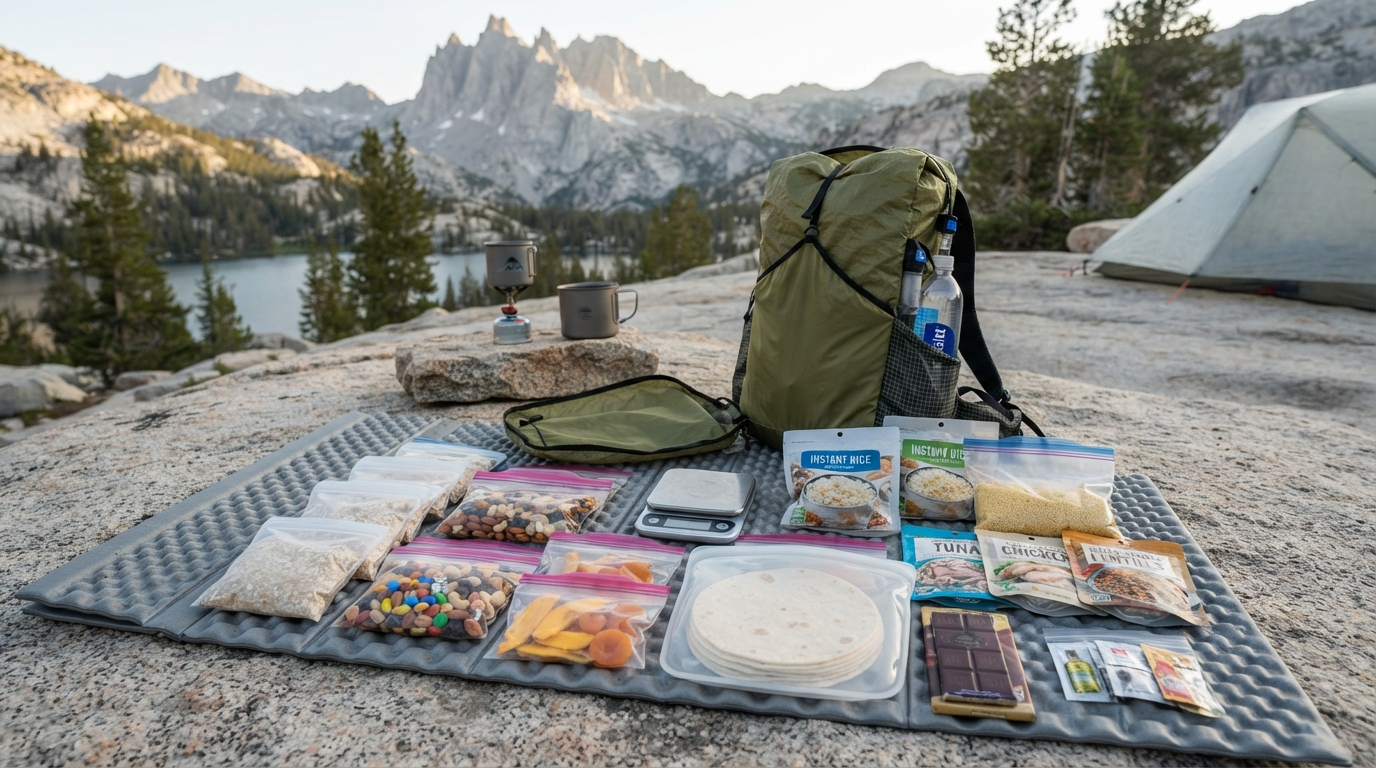
⚖️ Think in Ingredients, Not Individual Meals
One of the biggest backpacking menu tricks is ingredient overlap.
Instead of buying separate ingredients for every meal, use the same foods in multiple ways.
For example:
Oats
Breakfast + evening snack ingredient
Nuts
Breakfast + trail snack + dinner topping
Tortillas
Lunch + snack
Dried fruit
Breakfast + lunch + trail snack
Nut butter
Breakfast + lunch
Seasoning
Multiple dinners
This reduces the number of ingredients you have to buy, organize, and carry.
🔥 Decide How Much Cooking You Actually Want
A three-day menu doesn’t need three elaborate dinners.
You can choose:
Mostly no-cook
Best if you don’t want to carry a stove specifically for food.
Hot-water only
A useful middle ground.
You boil water and add it to instant foods rather than actually cooking a recipe.
Simple one-pot meals
Useful if you want a hot dinner but don’t mind carrying a stove and fuel.
The best choice depends on your preferences, weather, water availability, and trip conditions.
💧 Build Water Into the Menu
Food and water planning should happen together.
Before leaving, determine:
- Where your water sources are
- Whether they are reliable
- Whether treatment is required
- How much water you’ll need between sources
- How much water your meals require
A dehydrated meal may be lightweight to carry but still require water at camp.
Never assume that clear-looking water from a natural source is safe to drink without appropriate treatment.
🧂 Don’t Forget Flavor
Backpacking meals can become boring surprisingly quickly.
You don’t need a full spice cabinet.
Small amounts of:
- Salt
- Pepper
- Chili flakes
- Garlic powder
- Curry seasoning
- Soy sauce
- Hot sauce
- Parmesan
can make simple ingredients more enjoyable.
Use tiny portions and choose flavors that work across several meals.
🧮 Estimate Portions Based on Your Needs
There is no single calorie target that works for every backpacker.
Energy needs vary based on:
- Body size
- Age
- Sex
- Hiking intensity
- Distance
- Elevation gain
- Weather
- Individual metabolism
- Appetite
Instead of copying someone else’s exact calorie number, use your previous hiking experience.
If you regularly finish a hiking day extremely hungry, your next meal plan may need more food.
If you consistently return with large amounts of untouched food, you may be packing more than you need.
A kitchen scale can also help you understand how much food you’re actually carrying.
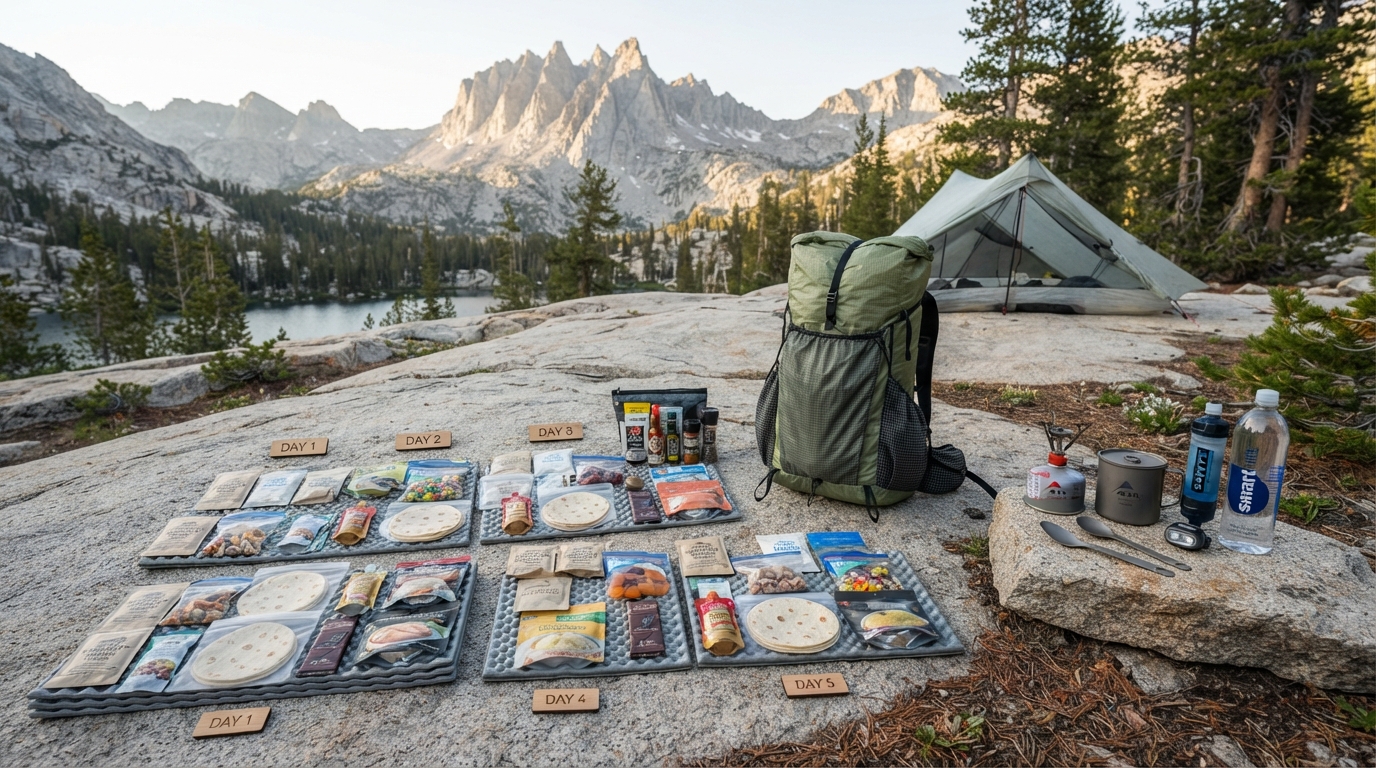
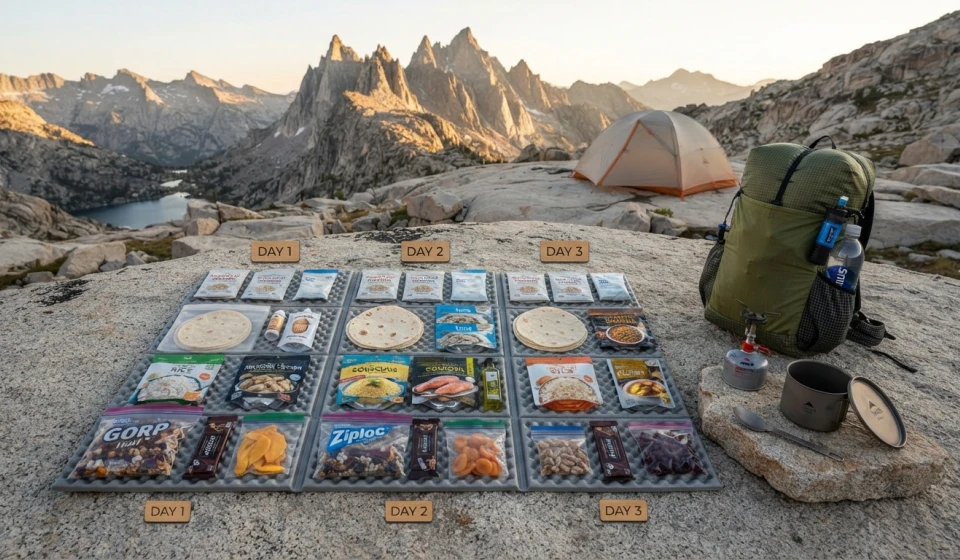
📦 Pack by Eating Occasion
Organizing food by meal can make camp much easier.
For example:
Bag 1: Day 1
- Breakfast
- Lunch
- Dinner
- Snacks
Bag 2: Day 2
- Breakfast
- Lunch
- Dinner
- Snacks
Bag 3: Day 3
- Breakfast
- Lunch
- Snacks
Alternatively, keep all snacks together if you prefer to choose them throughout the day.
The best system is the one that makes your food easy to find without unpacking your entire backpack.
📝 Sample 3-Day Menu at a Glance
| Day | Breakfast | Lunch | Dinner | Snacks |
|---|---|---|---|---|
| Day 1 | Oatmeal + milk + nuts + fruit | Tortilla + nut butter | Instant rice + protein | Trail mix + bar + chocolate |
| Day 2 | Oatmeal + dried banana + nuts | Tortilla + protein | Couscous + protein + seasoning | Nuts + dried fruit + chocolate |
| Day 3 | Oatmeal + milk + dried fruit | Tortilla + remaining filling | — | Trail mix + bar |
This is a framework rather than a universal prescription. Adjust portions and ingredients to your needs, dietary restrictions, route, climate, and cooking setup.
🎒 A Few Things to Pack Separately
Keep these items easy to locate:
☐ Spoon or utensil
☐ Stove, if needed
☐ Fuel, if needed
☐ Lighter or ignition source
☐ Water treatment
☐ Food-storage equipment
☐ Waste bags
☐ Seasonings
☐ Emergency/backup snack
If you’re hiking somewhere with wildlife, follow the local rules for food storage.
🚫 Avoid the “Too Much Variety” Trap
Variety sounds appealing when you’re shopping at home.
But you don’t necessarily need:
- Three different breakfast styles
- Four types of bars
- Five flavors of trail mix
- Multiple sauces
- A separate ingredient for every meal
A smaller collection of foods that can be combined in different ways is usually easier to pack.
Think modular, not elaborate.
🌲 Final Thoughts
Creating a three-day backpacking menu doesn’t mean designing nine completely different meals.
Start with the basic structure of breakfast, lunch, dinner, and snacks, then build meals around versatile ingredients that can appear in several places.
Keep breakfasts quick, make lunches easy to eat on the trail, use dinner for a simple hot meal if you want one, and portion snacks so they are accessible throughout the day.
Most importantly, build the menu around your actual hike and your own appetite, not a generic formula.
A good backpacking menu should make the trip easier, not turn every meal into a cooking project. 🥾🎒🌲