🥾 How to Build a 1-Night Backpacking Meal Plan With Almost No Cooking
A one-night backpacking trip does not need a complicated food system. In fact, when you are carrying everything on your back, simple meals can make the entire trip easier.
The goal is not to create elaborate trail cuisine. It is to build a small menu that gives you enough energy, requires little cleanup, and can be prepared with hot water, cold water, or almost no preparation at all.
For a one-night trip, you can usually keep things especially simple: one trail snack period, one dinner, one breakfast, and a few compact snacks. 🥜
The trick is choosing foods that are lightweight, reasonably calorie-dense, easy to portion, and enjoyable enough that you will actually want to eat them.
🎒 Start With the Trip, Not the Recipes
Before choosing food, establish the basic conditions of your trip.
Ask yourself:
- How many people are eating?
- How long will you actually be on the trail?
- Will you have access to clean water?
- Are you bringing a stove?
- Can you boil water?
- Will the weather be hot or cold?
- How much food can you comfortably carry?
- Do you have allergies or dietary restrictions?
For a 1-night backpacking trip, you generally do not need the same elaborate food system you might use for a week-long expedition.
A simple structure could look like this:
| Eating occasion | Simple approach |
|---|---|
| Before or during the hike | Compact snacks |
| Afternoon trail snack | Nuts, dried fruit, bar, crackers |
| Dinner | No-cook or just-add-hot-water meal |
| Evening snack | Chocolate, nut butter, or snack mix |
| Breakfast | Instant oats, cereal, or another quick option |
| Morning trail snack | Bar, nuts, or dried fruit |
This gives you several opportunities to eat without requiring a full cooking session.
🍜 Choose Your Cooking Level
“Almost no cooking” can mean different things.
For a one-night trip, consider one of these three approaches.
1. Completely no-cook
Everything can be eaten directly from the package.
Examples include:
- Tortillas
- Peanut or other nut butter
- Trail mix
- Nuts
- Dried fruit
- Granola
- Crackers
- Shelf-stable tuna or chicken
- Hard cheese where appropriate for the conditions
- Ready-to-eat packaged foods
This is the simplest option because you don’t need to carry a stove or fuel just for meals.
2. Hot-water only
You carry a stove but don’t actually cook ingredients.
You simply add boiling water and wait.
Good choices include:
- Instant oatmeal
- Instant couscous
- Instant rice
- Dehydrated meals
- Instant mashed potatoes
- Some instant noodle products
This approach gives you a warm meal while keeping preparation and cleanup relatively simple.
3. One-pot minimal cooking
You prepare one simple meal in a pot and avoid complicated recipes.
For example, you might combine instant grains with a ready-to-eat protein and seasoning.
The important distinction is that you are minimizing cooking, not necessarily eliminating heat altogether.
⚖️ Think in Meals, Snacks, and Calories
A common mistake is focusing only on individual foods.
Instead, build the menu around eating occasions.
For example:
Dinner 🍲
Choose one filling carbohydrate base + one protein + one flavor component.
Example:
Instant rice + tuna or chicken pouch + seasoning
Evening snack 🍫
Choose something calorie-dense and enjoyable.
Example:
Dark chocolate + nuts
Breakfast 🥣
Choose something quick and familiar.
Example:
Instant oats + powdered milk + nuts + dried fruit
Trail snacks 🥜
Choose foods that can be eaten while walking or during short breaks.
Example:
Trail mix + energy bar + dried fruit
This approach makes packing easier because you can count portions by occasion rather than bringing a random collection of snacks.
🥜 Build Around Compact, Energy-Dense Foods
Backpacking food has one major limitation: you have to carry it.
That makes compact foods particularly useful.
Some practical categories include:
Nuts and seeds
Peanuts, almonds, cashews, sunflower seeds, and similar foods provide a combination of fat, protein, and calories in a relatively compact package.
Nut or seed butter
Single-serving packets are convenient because they require no preparation.
You can eat them with tortillas, crackers, oats, or directly from the packet if you prefer.
Dried fruit
Raisins, dried mango, apricots, cranberries, and other dried fruits are convenient alternatives to carrying fresh fruit.
Bars
Granola bars, oat bars, protein bars, and similar products can be useful for quick snacks.
Choose based on what you actually enjoy eating rather than buying something simply because it is marketed for hiking.
Tortillas
Tortillas can work as a versatile no-cook base.
You can fill one with nut butter, tuna, chicken, cheese, or another shelf-stable ingredient.
🍚 Make Dinner the Easiest Meal
Dinner does not need to be a backpacking cooking project.
One useful formula is:
Carbohydrate + protein + flavor + optional fat
For example:
Instant rice + tuna pouch + olive oil packet + seasoning
Or:
Instant mashed potatoes + tuna/chicken + cheese + seasoning
Or:
Instant couscous + shelf-stable protein + dried vegetables + seasoning
The advantage of this formula is flexibility.
You can change the flavor without completely changing the meal.
Try:
- Soy sauce or seasoning packets
- Curry seasoning
- Chili flakes
- Garlic powder
- Parmesan
- Peanut sauce ingredients
- A small hot-sauce packet
Pack seasonings in tiny portions rather than carrying an entire bottle.
🥣 Make Breakfast Practically Automatic
Morning is usually not the time for complicated cooking.
You may be tired, cold, or eager to start hiking.
Instant oatmeal is one straightforward option because it can be prepared with hot water.
A simple combination might be:
Instant oats + powdered milk + dried fruit + nuts
You can portion everything into one container before the trip.
Then in camp:
- Add hot water.
- Stir.
- Wait according to the oatmeal instructions.
- Add any toppings.
- Eat.
You can also use cold water if the specific product allows it, although the texture and preparation time may differ.
The important point is to test the method before your trip.
💧 Don’t Forget Water
Food planning and water planning are closely connected.
A meal that requires substantial water may not be ideal if water is difficult to obtain on your route.
Before leaving, determine:
- Where you will get water
- Whether the source is reliable
- Whether water treatment is required
- How much water you need to carry
- Whether your meals require additional water
If you are relying on natural water sources, follow appropriate water-treatment practices rather than assuming clear-looking water is safe.
And remember that food itself does not replace your hydration plan.
🧼 Minimize Cleanup
Almost-no-cooking meals become even better when they produce almost no dishes.
One strategy is to use the packaging as the preparation container when appropriate.
For example, if a dehydrated meal comes in a suitable pouch, you may be able to add water directly to it according to the manufacturer’s instructions.
For homemade meals, a lightweight reusable container can serve as both the cooking and eating vessel.
After eating:
- Remove food residue.
- Wipe the container if appropriate.
- Pack out all packaging.
- Do not leave food scraps at camp.
- Follow the area’s food-storage and waste rules.
Leave No Trace principles matter even on a one-night trip. 🌲
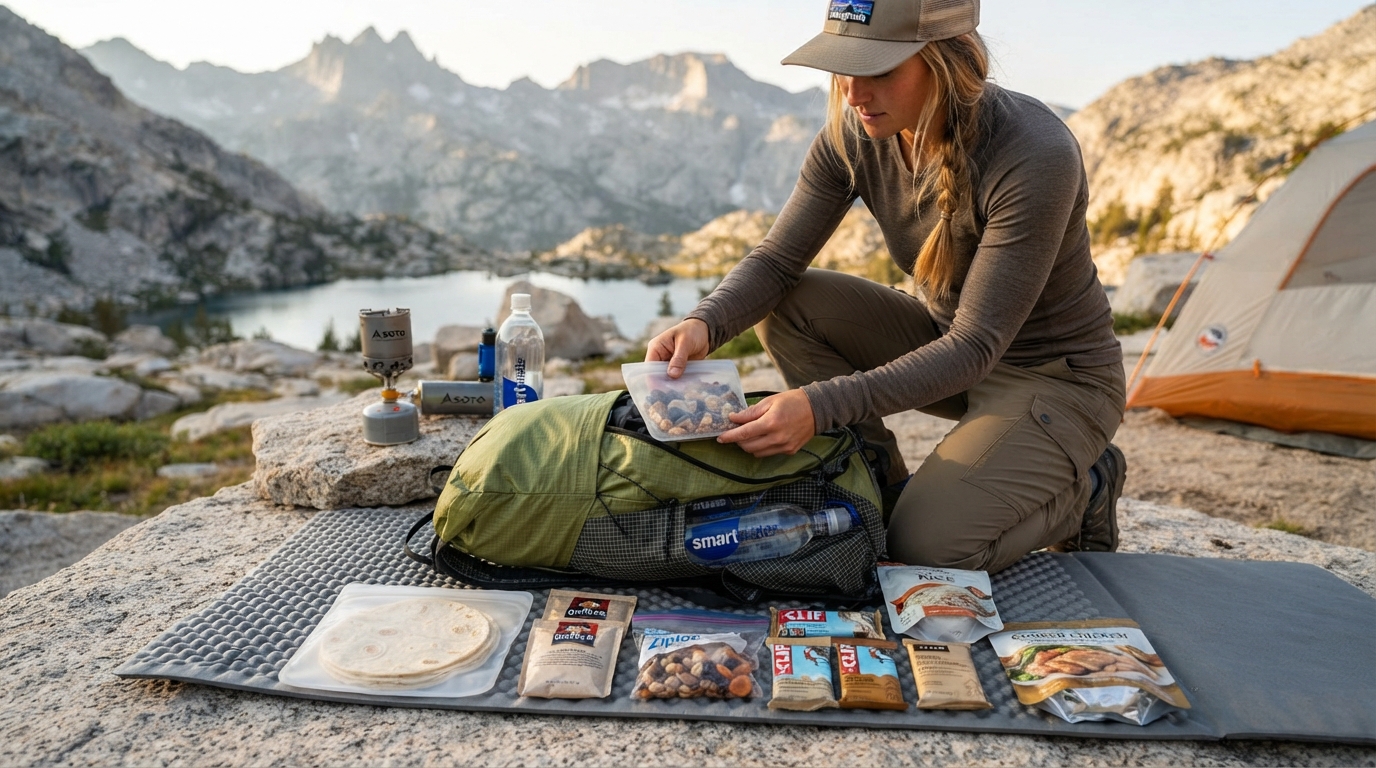
📦 Pre-Portion Everything at Home
This is one of the easiest ways to make a short backpacking trip feel organized.
Instead of bringing full packages, portion your food before you leave.
For example:
Dinner bag
- Instant rice
- Tuna pouch
- Seasoning
- Oil packet
Breakfast bag
- Instant oats
- Powdered milk
- Dried fruit
- Nuts
Snack bag
- Trail mix
- Chocolate
- Energy bar
Label each bag clearly.
This reduces decision-making at camp and makes it much easier to know whether you packed everything.
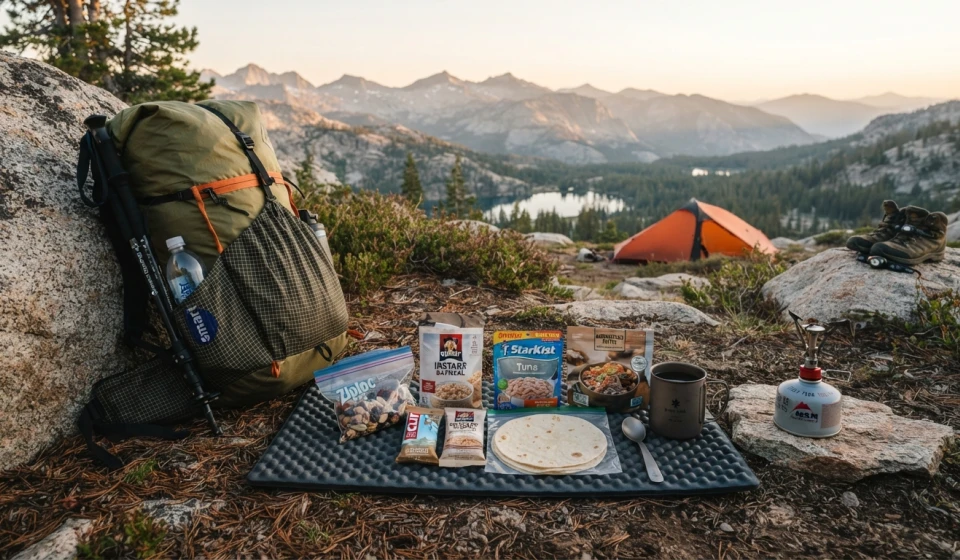
🧮 Example: Simple 1-Night Meal Plan
Here’s an example framework for one person:
Before/during the hike
🥜 Trail mix
🍫 Energy or granola bar
🍌 Dried fruit
Dinner
🍚 Instant rice
🐟 Tuna or chicken pouch
🧂 Seasoning
🫒 Small oil packet, optional
Evening snack
🍫 Chocolate
🥜 Nuts
Breakfast
🥣 Instant oatmeal
🥛 Powdered milk
🍇 Dried fruit
🥜 Nuts
Morning trail snack
🌯 Tortilla with nut or seed butter
or
🍫 Another compact bar
The exact quantity should depend on your individual energy needs, the hike’s difficulty and duration, your body size, weather, and how much food you normally need.
Rather than blindly following a universal calorie number, use the plan as a starting framework and adjust it based on your own experience.
🔥 A Useful “Almost No Cooking” Rule
For a one-night trip, try to make at least two of your main eating occasions completely no-cook or hot-water-only.
That means you are not spending valuable time preparing food when you could be:
- Setting up camp
- Resting your feet
- Enjoying the scenery
- Getting ready for bed
- Starting your morning hike
Your backpacking menu should support the trip, not become another task you have to manage.
📝 Your Quick Packing Checklist
Before leaving, check:
☐ Dinner
☐ Breakfast
☐ Trail snacks
☐ Evening snack
☐ Extra food appropriate for your trip
☐ Water plan
☐ Stove and fuel, if needed
☐ Lighter or ignition source
☐ Spoon or eating utensil
☐ Food storage
☐ Waste bags
☐ Seasonings and condiments
☐ Any required food-treatment or storage equipment
Also check the regulations and conditions for your destination, particularly regarding food storage and wildlife.
🌲 Final Thoughts
A good one-night backpacking meal plan does not need to be impressive. It needs to be easy, satisfying, compact, and realistic.
Start with the eating occasions, choose foods you already know you enjoy, minimize preparation, and organize everything before leaving home. A combination of no-cook snacks, one simple dinner, and a quick breakfast can take much of the stress out of camp food.
The best backpacking meal is often the one that lets you spend less time cooking and more time enjoying the trail. 🥾🌲