Vegan Backpacking Protein: Can TVP, Beans And Bars Cover A 20-Mile Day?
A 20-mile hiking day can make food planning complicated, especially when every additional ounce must be carried across mountains, forests, and long stretches of trail. For vegan backpackers, the challenge is finding enough plant-based backpacking protein without filling their food bags with heavy ingredients or relying entirely on packaged supplements. 🥾 Fortunately, textured vegetable protein (TVP), instant beans, nuts, grains, and protein bars can all contribute to a practical trail menu.
However, carrying several protein-rich foods does not automatically mean your diet meets your nutritional needs, because serving sizes and actual protein content vary considerably. A bag of peanuts might provide plenty of calories, while a smaller portion of TVP could deliver more protein with substantially less weight. Understanding vegan backpacking protein begins with calculating your daily target and comparing it with the nutrition actually packed in your food bag.
Why Vegan Backpacking Protein Is More Than A Protein Powder Question
Protein powder often dominates conversations about vegan trail nutrition because it provides a concentrated source of protein without requiring cooking or carrying bulky ingredients. However, many backpackers obtain protein from ordinary foods, including peanut butter, roasted soybeans, dehydrated beans, tortillas, and packaged bars. 🫘 These ingredients also contribute carbohydrates, fats, fiber, and other nutrients that protein powder alone may not provide.
A common mistake is treating protein requirements and calorie requirements as the same calculation, even though they address different nutritional needs. Protein contributes to the maintenance and repair of body tissues, while carbohydrates and fats supply much of the energy needed for sustained hiking. A successful vegan trail food plan must consider both calculations rather than maximizing protein at the expense of sufficient daily calories.
How Much Protein Do Backpackers Need? Understanding The Math
Sports nutrition guidance commonly places protein intake for physically active adults around 1.2–2.0 grams per kilogram of body weight daily, depending on training demands and individual circumstances. A separate sports nutrition position statement identifies approximately 1.4–2.0 grams per kilogram as a range that supports training adaptations for many exercising adults. These are general athletic reference ranges, not a universal prescription for everyone hiking 20 miles.
For an illustrative calculation, consider a healthy backpacker weighing 68 kilograms, approximately 150 pounds, using a planning range of 1.4–1.6 grams per kilogram. ⚖️ Multiplying 68 by 1.4 produces approximately 95 grams of protein, while multiplying 68 by 1.6 produces approximately 109 grams. This creates an example daily planning range of 95–109 grams, although the appropriate target depends on the individual.
Mileage alone cannot determine backpacking protein requirements because hiking intensity, training history, energy intake, and individual circumstances also matter. Someone walking 20 relatively level miles may have different nutritional demands from someone covering the same distance with substantial elevation gain. For longer trips, calculate your calorie needs separately using body weight, mileage, ascent, pace, and expected hiking conditions.
TVP Vs Instant Beans Vs Protein Bars: A Trail Protein Comparison
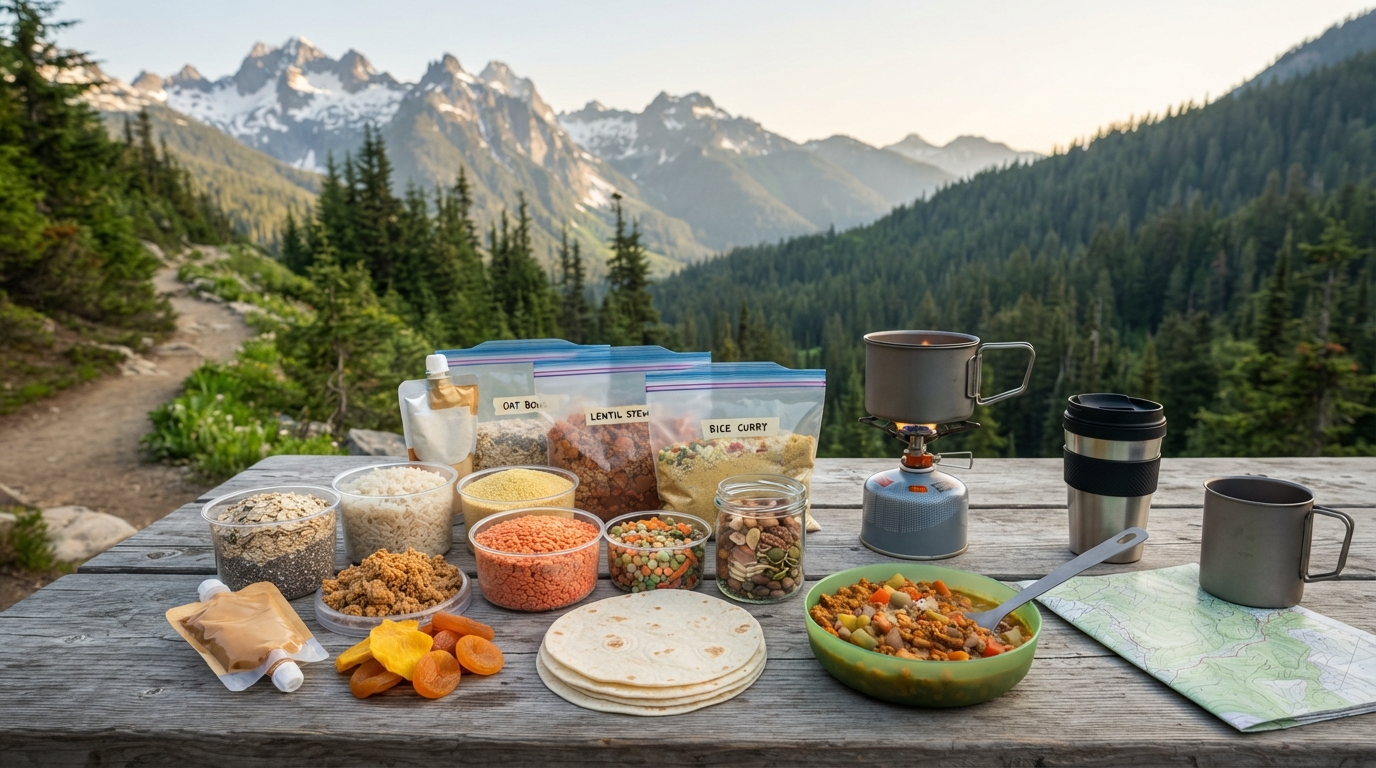
Textured vegetable protein is a useful ingredient for TVP backpacking meals because it contains concentrated soy protein and weighs relatively little before rehydration. Instant refried beans provide additional protein alongside carbohydrates and fiber, while protein bars offer ready-to-eat convenience during walking breaks. Their nutritional differences become clearer when serving size, calories, and packed weight are compared directly.
15 Plant-Based Trail Foods Compared
The following table uses rounded, illustrative nutrition values for common serving sizes rather than claiming that every brand has an identical nutritional profile. Packed weight means the weight of the food before adding preparation water, excluding wrappers and containers. Always check the actual Nutrition Facts panel when calculating your food bag.
| Plant-Based Trail Food | Packed Weight | Protein | Calories |
|---|---|---|---|
| Textured vegetable protein | 23 g | 12 g | 80 |
| Instant refried beans | 28 g | 6 g | 100 |
| Dry-roasted edamame | 28 g | 13 g | 130 |
| Roasted chickpeas | 28 g | 5 g | 120 |
| Vegan protein bar | 68 g | 20 g | 280 |
| Peanut butter | 32 g | 7 g | 190 |
| Roasted peanuts | 28 g | 7 g | 170 |
| Pumpkin seeds | 28 g | 9 g | 160 |
| Sunflower seeds | 28 g | 6 g | 165 |
| Almonds | 28 g | 6 g | 165 |
| Instant oatmeal | 40 g | 5 g | 150 |
| Dry couscous | 56 g | 7 g | 210 |
| Instant rice | 45 g | 3 g | 160 |
| Flour tortillas | 50 g | 4 g | 150 |
| Vegan protein powder | 30 g | 20 g | 120 |
Using these examples, TVP provides approximately 14.8 grams of protein per ounce, compared with 6.1 grams for instant refried beans and 8.3 grams for the example protein bar. However, protein density is only one consideration because peanut butter and nuts provide substantially more calories from fat than TVP. 🎒 Preparation time, food preferences, packaging weight, and available water should also influence your selection.
Can You Get Enough Protein Without Carrying Protein Powder?
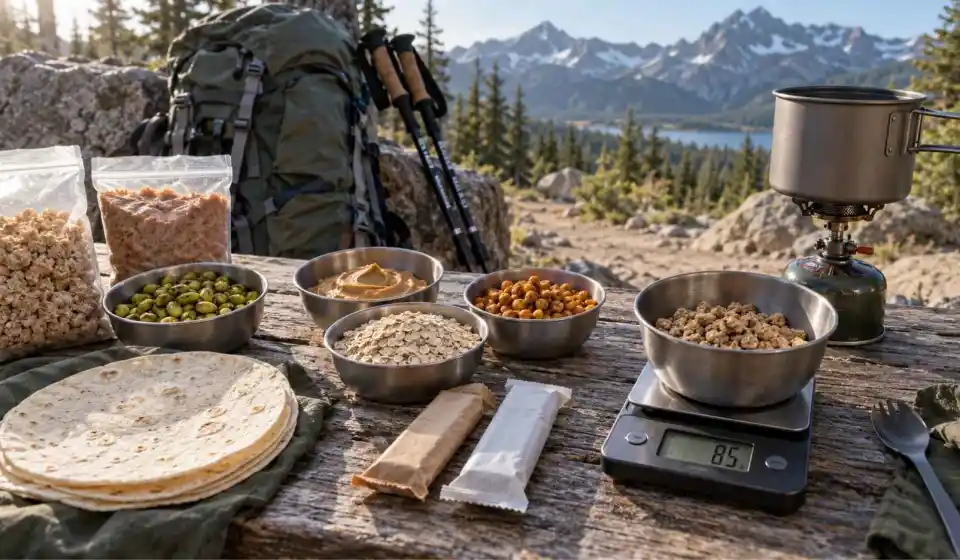
Consider a hypothetical food bag containing 46 grams of TVP, 56 grams of instant beans, one protein bar, 80 grams of oats, and 32 grams of peanut butter. Adding 28 grams of peanuts, 100 grams of tortillas, 56 grams of couscous, and 28 grams of roasted edamame brings the approximate total to 109 grams of protein. These protein-containing ingredients weigh approximately 496 grams and provide roughly 1,940 calories before additional foods are included.
A second food bag could replace the 68-gram protein bar with a 30-gram serving of vegan protein powder providing approximately 20 grams of protein. That substitution reduces the weight of these ingredients by about 38 grams but also removes approximately 160 calories from the example menu. Neither bag represents a complete 20-mile food plan because additional calorie-rich foods may still be necessary.
The comparison demonstrates that protein powder is a convenience option rather than an automatic nutritional requirement for every vegan backpacker. However, protein grams alone cannot establish whether a food bag provides sufficient calories, essential fatty acids, carbohydrates, vitamins, or minerals. A varied vegan diet also needs a reliable source of vitamin B12 through appropriate fortified foods or supplementation.
A Sample Vegan Protein Schedule For A Long Hiking Day
A practical approach to protein for thru-hikers is spreading protein-containing foods across meals instead of depending on one unusually large dinner. For example, breakfast could include 80 grams of oats, 32 grams of peanut butter, and 40 grams of raisins, providing approximately 18 grams of protein and 610 calories. A morning snack containing roasted edamame, dried mango, and a carbohydrate-rich trail snack could contribute another 15 grams of protein and approximately 470 calories.
Lunch could combine 56 grams of instant refried beans, two 50-gram tortillas, and 14 grams of olive oil for approximately 20 grams of protein and 620 calories. An afternoon snack consisting of a vegan protein bar, 28 grams of peanuts, and 40 grams of dates could add approximately 28 grams of protein and 560 calories. 🌱 Dinner could include 23 grams of TVP, 56 grams of couscous, 28 grams of olive oil, and 40 grams of raisins, contributing roughly 20 grams of protein and 650 calories.
Together, these illustrative meals provide approximately 101 grams of protein and 2,910 calories, with the actual totals depending on the products selected. This example falls within the hypothetical 68-kilogram backpacker’s protein planning range, but its calorie total may be insufficient for some 20-mile days. Additional food should be planned according to the hiker’s estimated energy needs, with appropriate extra provisions for unexpected delays.
The Bottom Line On Plant-Based Trail Protein
TVP, instant beans, nuts, grains, and protein bars can collectively provide substantial protein without requiring a daily protein shake. However, the amount each backpacker needs depends on body weight, activity demands, overall energy intake, and individual nutritional considerations. The most useful calculation compares total daily protein, calories, and packed food weight rather than judging individual ingredients in isolation.
Before a longer trip, check product labels, weigh your planned portions, and test whether your meals are practical to prepare and comfortable to eat. Use only appropriately precooked instant beans or grains for simple rehydration, follow product preparation instructions, and remember that raw dried legumes require proper cooking. For individualized dietary requirements, medical conditions, or concerns about nutritional adequacy, consult a qualified healthcare professional or registered dietitian.