Electrolyte Drink Mix vs Tablets vs Salt Packets: What Are You Actually Carrying?
Choosing an electrolyte product for backpacking sounds simple until you compare the weight, price, packaging, and actual nutrients inside each option. Some hikers prefer powdered drink mixes, others carry dissolvable tablets, and budget-conscious backpackers sometimes rely on ordinary salt packets or sodium-containing foods. 🥾 The real question behind electrolyte drink mix vs tablets for hiking is whether you are carrying something that fits your hydration routine, nutritional needs, and resupply strategy.
A product that looks lightweight on a store shelf might become less convenient when you account for bulky packaging, additional water bottles, or complicated preparation. Meanwhile, an inexpensive salt packet might provide sodium without the potassium, magnesium, carbohydrates, or flavor included in certain electrolyte mixes. Understanding these differences helps backpackers compare products objectively instead of assuming that the most expensive or concentrated option is automatically appropriate.
Four Common Ways Backpackers Carry Electrolytes
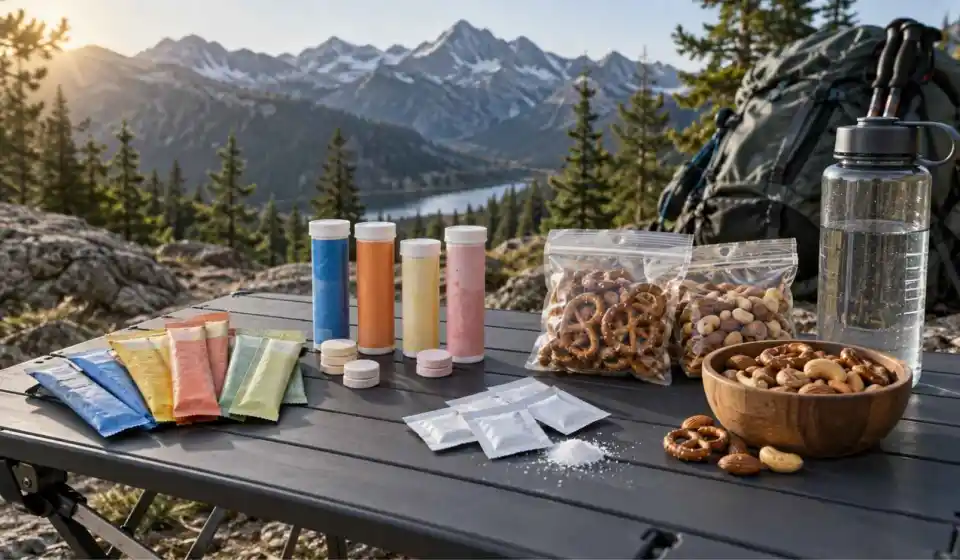
Powdered electrolyte drink mixes usually come in individual sachets, bulk containers, or resealable pouches, making them relatively easy to divide into portions for a multiday trip. Their formulations vary considerably because some contain sodium and other electrolytes without sugar, while others include carbohydrates that contribute additional calories. Powder also allows hikers to choose how much water to use, although changing the dilution does not change the total nutrients contained in the portion.
Dissolvable electrolyte tablets offer another compact format, but they should not be confused with salt tablets or capsules intended to be swallowed according to their instructions. Salt packets generally contain sodium chloride, while salty trail foods provide sodium alongside whatever calories, protein, fat, or carbohydrates their ingredients contain. 🧂 Each format has a different practical purpose, so a useful backpacking electrolyte comparison must examine what the product contains and how it fits into a hiker’s existing food and water plan.
How Much Sodium Does Each Format Provide?
Sodium is often the main nutrient backpackers compare because it is an important electrolyte lost through sweat, but its quantity can differ substantially between products. A powdered mix might contain several electrolytes, while an ordinary salt packet supplies sodium and chloride without meaningful amounts of potassium or magnesium. Always compare milligrams of sodium per labeled serving, rather than assuming that two packets, tablets, or capsules contain equivalent amounts.
Serving size matters because manufacturers may define one serving as a single sachet, multiple tablets, or a particular measurement of loose powder. For perspective, one gram of pure sodium chloride contains approximately 390 milligrams of sodium, which is different from a packet containing one gram of an electrolyte blend. Checking the ingredients and nutrition information also helps identify added carbohydrates, sweeteners, and other nutrients that may affect your overall trail menu.
Why More Sodium Is Not Automatically Better
A product with a higher sodium concentration does not automatically suit every backpacker because sweat losses, drinking patterns, food intake, environmental conditions, and individual circumstances differ. Hikers already eating sodium-rich meals and snacks should consider those contributions rather than evaluating electrolyte products in isolation. For individualized hydration or sodium guidance, especially when medical conditions or medications are involved, consult a qualified healthcare professional.
Cost Per Serving Vs Cost Per 1,000 Mg Of Sodium
The simplest way to compare electrolyte cost per serving is to divide the package price by the number of servings it contains. For example, a hypothetical $14 container with 20 servings costs $0.70 per serving, while a hypothetical $12 package with 10 servings costs $1.20 per serving. 💰 However, those prices alone reveal nothing about how much sodium or additional nutrition each serving provides.
For a more consistent comparison, divide the cost per serving by its sodium content in milligrams and multiply the result by 1,000. If the hypothetical $0.70 serving provides 350 milligrams of sodium, its cost is $2 per 1,000 milligrams, while a $1.20 serving containing 800 milligrams costs $1.50 per 1,000 milligrams. This calculation measures purchasing cost rather than nutritional suitability, meaning the cheapest sodium is not necessarily the most appropriate product for your hiking plan.
Remember What The Price Does Not Include
A sodium-only calculation can make simple salt packets appear inexpensive compared with products containing additional electrolytes, flavoring, or carbohydrates. However, those additional ingredients may be relevant to a hiker’s meal planning, taste preferences, or willingness to drink a prepared beverage. Compare the complete ingredient list and serving information before deciding whether the difference in price represents something you actually want to carry.
Packaging Weight And Convenience For Ultralight Backpackers
For hikers researching ultralight hydration products, the weight of the contents is only one part of the calculation because wrappers, plastic tubes, resealable bags, and containers also contribute to pack weight. Individually packaged powders simplify portion control but generate more wrappers, while bulk powder reduces individual packaging at the expense of requiring careful portioning. Tablets may pack neatly into a compact tube, although the container’s weight and the tablet’s dimensions should be considered before assuming they are the lightest solution.
Bottle compatibility is another practical issue because some dissolvable tablets may not fit through narrow openings without being broken apart. Powder can create spills when poured into narrow-neck bottles, while certain tablets require time to dissolve before the drink is ready. 🚰 Salt packets avoid some mixing complications when used with food, but adding salt directly to drinking water requires attention to quantity and palatability rather than guessing.
What Happens To The Packaging After Use?
Empty wrappers may weigh very little individually, yet a week of single-serving products can leave a surprising collection of small pieces of trash. Backpackers should account for every wrapper and container in their pack-out plan, especially when using individually wrapped products throughout a long itinerary. Reusable containers can reduce disposable packaging, provided powders remain properly protected and their portions and contents remain clearly identifiable.
Which Products Are Easier To Find In Trail Towns?
Resupply availability matters because a product that works perfectly at home may be difficult to replace in a small trail town with limited shopping options. Grocery stores may stock sports drinks, powdered beverage mixes, salty snacks, and ordinary table salt, while specialty electrolyte tablets or particular formulations may require an outdoor retailer or advance shipping. Availability depends on the location and retailer, so hiking electrolyte packets should be evaluated for replacement convenience as well as their labeled nutrient content.
A practical approach is to identify acceptable alternatives before leaving rather than depending entirely on a particular flavor, brand, or package size. Backpackers using resupply boxes can include their preferred products, but shipment delays or unexpected itinerary changes make a backup plan useful. Keeping a record of sodium per serving and other relevant label details makes it easier to compare available alternatives without assuming different formulations are interchangeable.
Electrolyte Product Comparison Table
The following table compares common electrolyte formats using characteristics that matter during backpacking rather than assigning an overall product ranking. Exact nutrient quantities, prices, and package weights depend on the manufacturer, serving size, and specific product purchased. Use official nutrition labels and current retailer information to complete a brand-specific comparison before making purchasing decisions.
| Comparison Factor | Drink Mix | Dissolvable Tablets | Salt Packets Or Capsules | Sodium-Containing Foods |
|---|---|---|---|---|
| Sodium per serving | Varies by formula | Varies by tablet and serving size | Depends on sodium chloride content | Depends on ingredients and portion |
| Potassium and magnesium | May contain both | May contain both | Usually absent from plain sodium chloride | Varies by food |
| Cost per serving | Calculate from package price | Calculate from tablet count | Often inexpensive, but check actual quantities | Include the cost of the food portion |
| Package weight | Sachets or bulk containers | Tablets and storage tube | Small packets or bottles | Food plus packaging |
| Preparation method | Mix with water | Dissolve in water | Follow product directions or use salt with food | Eat as part of a meal or snack |
| Calories and carbohydrates | Depends on formulation | Usually limited, but check the label | Plain salt provides no calories | Depends on the food |
| Trail-town availability | Depends on local inventory | May require specialized retailers | Ordinary salt is widely available | Depends on grocery selection |
Why these factors matter: A backpacker prioritizing precise portioning might evaluate individual packets differently from someone who prefers purchasing a larger container and measuring servings before departure. Similarly, hikers carrying food that already contributes significant sodium may evaluate their overall menu differently from those depending on specialized hydration products. The most useful comparison considers the complete day’s food, water, packaging, and resupply requirements rather than treating an electrolyte supplement as an isolated purchase.
How To Choose An Electrolyte Format For Your Trip
Start by calculating how many servings you intend to carry, then multiply that number by the weight and cost of each product’s labeled portion. Next, compare the stated sodium and other nutrient content with the contributions from your planned meals and snacks, without assuming that a single formula suits every hiking day. Finally, consider whether the product requires a dedicated bottle, creates packaging waste, tastes acceptable when prepared as directed, and can be replaced along your route.
For longer trips, electrolyte planning works best as part of your complete backpacking nutrition strategy, alongside hydration logistics, food weight, calorie density, and daily menu design. A drink mix containing carbohydrates may contribute to your energy intake, while an electrolyte-only tablet or ordinary salt packet does not replace the calories needed for a demanding hiking day. Understanding these differences connects electrolyte science with nutrient-density analysis and practical backpacking menu templates.
The Bottom Line: Compare What You Actually Carry
There is no universal answer to the electrolyte drink mix vs tablets for hiking question because the products differ in composition, preparation, packaging, price, and availability. A lighter package is not necessarily easier to use, and a lower cost per milligram of sodium does not establish that a product matches an individual’s needs. 🎒 Comparing actual labels and complete pack-out requirements makes purchasing decisions more transparent while helping hikers avoid carrying unnecessary products.
Before buying a full trip’s supply, check the manufacturer’s current serving information, ingredient list, package weight, and preparation instructions. Test the format during an ordinary training hike to identify practical issues such as bottle compatibility, flavor preferences, and packaging convenience without treating the test as evidence of medical effectiveness. The goal is to carry a product you understand, can use as directed, and can realistically incorporate into your food and hydration plan.