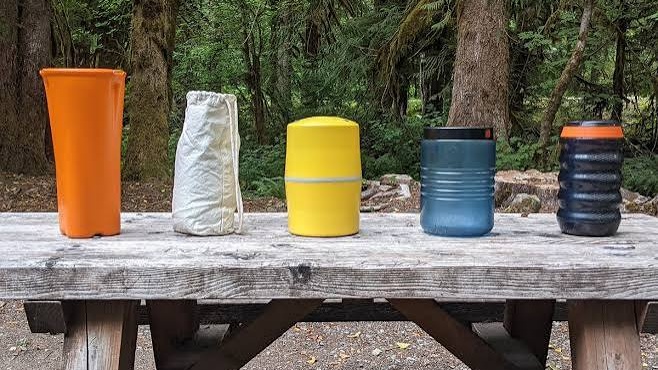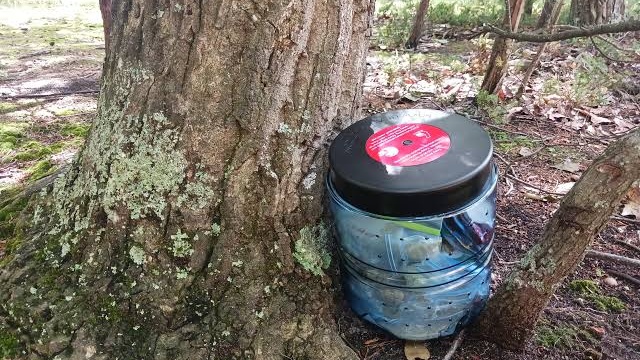
Planning a backpacking trip for 2026?
Before you calculate how many freeze-dried meals fit in your pack, check whether your destination requires a bear-resistant food container.
Bear canister rules are surprisingly complicated. One national park may require a canister throughout its wilderness, another may require one only in specific zones, and another may allow a bear canister as an alternative to a food hang.
The rules can also change seasonally.
For backpackers, this means that buying a popular canister is only the first step. You also need to make sure the specific model and storage method are legal where you plan to camp.
The Most Important Rule: There Is No Universal Requirement
The National Park Service does not have one rule saying every national park backpacker must carry a bear canister.
Individual parks establish food-storage regulations based on wildlife behavior, vegetation, campsite design, visitor use, and local management needs.
That is why a canister that is perfectly acceptable in one park may be unnecessary—or even insufficiently approved—in another.
The 2026 regulations at several major parks demonstrate how different these systems can be.
Yosemite: Canister Country Throughout the Park
Yosemite is one of the easiest parks to understand in terms of backcountry food storage.
The park requires food to be properly stored throughout Yosemite. Approved portable bear-resistant containers and designated food lockers are accepted, while hanging food is illegal throughout the park.
Yosemite’s definition of food storage also goes beyond dinner.
Food and drinks, trash, toiletries, sunscreen, soap, insect repellent, lip balm, deodorant, medications, and other scented items may need to go into the approved container.
The container must be closed and locked, and the park recommends placing it on level ground at least 100 feet from camp.
If Yosemite is your destination, plan your food system around the canister rather than treating it as an optional accessory.
Olympic: Check the Approved List
Olympic National Park is another destination where wilderness campers should take the canister requirement seriously.
Animal-resistant food containers are required in Olympic’s wilderness areas. The park maintains a specific list of approved containers, and that list was updated in 2026.
This is an important distinction because product marketing and park regulations are not the same thing.
A manufacturer may describe a product as bear resistant, but Olympic states that containers not appearing on its approved ARFC list are not permitted as approved containers.
For hikers who already own a canister, checking the official list before the trip is essential.
Grand Teton: No Food Hanging
Grand Teton National Park requires backpackers to carry approved bear-resistant storage except where food-storage boxes are provided.
The park requires IGBC-approved containers for backcountry food storage, and hanging food within park boundaries is prohibited.
All food, garbage, toiletries, and other odorous attractants must be secured when not immediately in use.
Grand Teton also provides a convenient option for permit holders: bear-resistant canisters may be checked out with the permit at no charge.
This can be useful for occasional backpackers who do not want to purchase a canister for every trip.
Rocky Mountain: Seasonal but Strict
Rocky Mountain National Park provides a good example of a seasonal requirement.
For wilderness camping in designated areas, the park requires a commercially manufactured, carry-in/carry-out bear-resistant food-storage canister during the applicable season. The current park guidance identifies wilderness areas below tree line and Boulder Field on Longs Peak as covered areas.
During the required period, hanging food is not permitted.
The park’s 2026 planning information also states that a bear canister is not required from November 1 through March 31.
This makes Rocky Mountain a perfect example of why date matters.
A hiker doing the same route in winter may have different food-storage requirements from someone camping there during the summer season.
Lassen Volcanic: No Hanging Alternative
Lassen Volcanic National Park has one of the more straightforward backcountry rules.
Backcountry campers must use a bear-resistant food-storage container that is certified appropriately and allowed by the park. Hanging food and other storage methods are prohibited during the applicable season.
There is a winter exception beginning December 1 and ending April 15.
If your trip falls outside that exception, plan to carry the required container.
The park also notes that limited rental availability may exist, but hikers should not assume a rental will be available when they arrive.
Bryce Canyon: Bring or Borrow an Approved Canister
Bryce Canyon requires bear-resistant canisters for backcountry camping.
The park makes this easier for visitors by offering canisters for free loan at the Visitor Center. Hikers bringing their own containers must have them checked by a backcountry ranger to ensure they meet the park’s requirements.
The rules also prohibit hanging food from trees.
Bryce specifically requires food and scented personal items to be stored in the canister.
That means packing toiletries separately from meals does not necessarily solve the storage problem. Your entire attractant load needs to be considered.
Sequoia and Kings Canyon: Know Your Route
Sequoia and Kings Canyon require a more careful reading of the map.
Canisters are required in certain areas from May 1 through October 31. The current list includes Dusy Basin, Rae Lakes Loop, North Dome, Rock Creek, and Pear and Emerald Lakes.
Outside those designated areas, the park may allow other food-storage methods depending on the location.
This creates a common planning trap.
A hiker might research Sequoia and conclude that a canister is “recommended,” then discover that the particular route selected is actually inside a mandatory canister zone.
Always compare your itinerary with the park’s designated areas.
North Cascades: Camps and Cross-Country Zones
North Cascades National Park Complex uses a similar location-based approach.
Bear canisters are required at nine specific backcountry camps and six cross-country zones during the applicable season. The designated camps include Desolation, Fisher, Hooter, Monogram Lake, Pierce Mountain, Sahale Glacier, Sourdough, Thornton Lakes, and Thunder Basin.
The six named cross-country zones include Boston Basin, Eldorado, Hidden Lake, Sulphide Glacier, Tapto Lakes, Trapper Lake, and Terror Basin.
The current requirement runs from June 1 through November 15.
Elsewhere, approved food hangs may be permitted if appropriate conditions exist.
North Cascades also warns that temporary food-storage requirements can be imposed when wildlife conditions require them.
Yellowstone: A Canister Can Be an Alternative
Yellowstone works differently.
In the backcountry, hikers can secure food using designated food poles or certain IGBC-approved hard-sided bear-resistant containers. Soft-sided bear-resistant containers are not allowed.
Therefore, a backpacker may not need to carry a canister for every Yellowstone itinerary.
However, the permitted container must meet the park’s requirements, and all food and scented items must be properly secured.
Yellowstone’s food-storage rules apply to far more than meals, including garbage, beverages, toiletries, cooking equipment, and other attractants.
Glacier Bay and Glacier National Park
Alaska’s Glacier Bay National Park provides another example where bear canisters are highly useful but not the only legal method.
Glacier Bay requires food, garbage, and scented items to be properly stored at least 100 feet from camp. Approved bear-resistant canisters or properly constructed hangs may be used, although canisters are strongly recommended because many areas lack suitable trees.
Glacier National Park in Montana similarly permits several wildlife-resistant methods depending on the location and season. Its backcountry regulations include IGBC-approved bear-resistant containers and properly constructed food hangs, with special requirements near or above tree line.
Again, the exact route matters.
What Should Go Inside the Canister?
A common mistake is to pack only meals into the canister.
Many parks treat all scented or food-related items as attractants.
That can include:
- Freeze-dried meals
- Trail mix
- Jerky
- Energy bars
- Cheese
- Cooking oil
- Trash
- Toothpaste
- Sunscreen
- Lip balm
- Soap
- Deodorant
- Food wrappers
- Pet food
- Cooking equipment
The exact list varies by park, so read the local regulations.
Bear Canister Capacity Matters
Once you know that a canister is required, capacity becomes your next challenge.
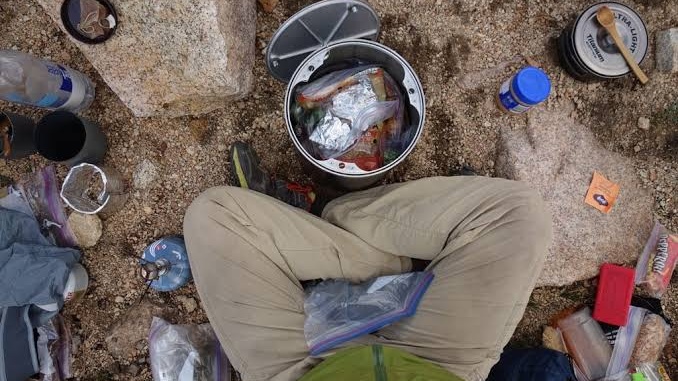
A seven-day food load can occupy much more space than expected if meals remain in bulky commercial packaging.
Repackaging appropriate foods into compact, food-safe packaging can improve space efficiency.
High-calorie foods also allow backpackers to carry more energy without filling every cubic inch with low-density food.
But do not compromise food safety or packaging integrity simply to squeeze in another meal.
How to Build a 2026 Food-Storage Checklist
Before a trip, make a simple checklist:
1. Park: Identify the exact national park.
2. Route: Determine the wilderness area, campsite, or cross-country zone.
3. Dates: Check whether seasonal restrictions apply.
4. Container: Confirm the exact approved model or certification.
5. Contents: Identify all food and scented items that must be stored.
6. Placement: Learn how far the container must be kept from camp and whether it should remain on the ground.
7. Backup: Know whether rentals, food lockers, or alternative storage methods are available.
This takes only a few minutes and can prevent a major problem at the trailhead.
Final Thoughts
The phrase “bear canister required” sounds simple, but the 2026 regulations show that it can mean very different things depending on the park.
Yosemite and Olympic have extensive wilderness food-storage requirements. Grand Teton requires approved bear-resistant storage in its backcountry. Rocky Mountain applies seasonal wilderness requirements. Lassen and Bryce impose strong canister requirements for applicable backcountry trips. Sequoia & Kings Canyon and North Cascades focus their mandatory requirements on specific areas and seasons. Yellowstone, Glacier Bay, and Glacier National Park demonstrate how approved containers can coexist with other legal storage methods.
The most important lesson for 2026 backpackers is not simply to buy a bear canister.
It is to check the exact rules for your park, route, campsite, and dates.
Food-storage regulations exist to keep wildlife wild and to reduce conflicts between animals and visitors. Treat them as an essential part of trip planning, just like permits, water sources, weather, and navigation.