How to Find Gluten-Free Backpacking Foods Without Guessing From the Label 🌾🥾
Introduction
Planning gluten-free food for a backpacking trip can be surprisingly tricky.
At home, you may already know which foods work for you. On the trail, however, you’re dealing with unfamiliar brands, dehydrated meals, snack mixes, seasoning packets, instant foods, and shared manufacturing equipment.
And when you’re eating several days of food from a backpack, guessing isn’t a good meal-planning strategy.
The solution is not to memorize every ingredient that might contain gluten. Instead, create a simple system for checking products before they go into your food bag.
The basic process is:
Check the product → read the ingredient list → look for an appropriate gluten-free statement or certification → investigate warnings when necessary → verify preparation and cross-contact concerns → pack only after you’re satisfied with the information.
This approach makes gluten-free backpacking much easier and more predictable. 🎒
1. Start With What “Gluten-Free” Actually Means 🌾
Gluten is a group of proteins found naturally in certain grains, particularly:
- Wheat
- Barley
- Rye
Some foods are obviously gluten-containing, such as ordinary wheat pasta and many wheat-based breads.
The difficult part is that gluten can also appear in less obvious products through ingredients, flavorings, sauces, seasonings, or other components.
That’s why “this food doesn’t look like bread” isn’t enough.
A backpacking meal containing rice may still have other ingredients that require checking.
2. Don’t Judge a Food by Its Main Ingredient
This is one of the easiest mistakes to make.
Consider a meal labeled:
Rice + vegetables + seasoning
Rice itself is naturally gluten-free.
But the finished product still needs to be evaluated as a whole.
The seasoning could contain an ingredient derived from wheat or another gluten-containing grain, depending on the formulation.
The same applies to:
- Soup mixes
- Instant noodles
- Curry packets
- Sauces
- Bouillon
- Gravy
- Protein bars
- Trail mixes
- Flavored nuts
- Chocolate products
- Meat alternatives
- Dehydrated meals
The question isn’t:
“Is rice gluten-free?”
The better question is:
“Is this specific packaged product suitable for a gluten-free diet?”
3. Learn the Grains You Need to Watch 🚨
A quick ingredient-screening habit starts with recognizing common gluten-containing grains.
Look carefully for:
Wheat, barley, rye, and ingredients derived from them.
Wheat can appear in many forms, including ingredients that don’t simply say “wheat flour.”
Barley can also appear in products such as malt-containing ingredients.
For a strict gluten-free diet, don’t rely on the idea that a tiny amount “probably won’t matter.”
If you need to avoid gluten for medical reasons, product-specific information is important.
4. Know Which Backpacking Staples Are Naturally Gluten-Free 🌱
Many useful backpacking foods are naturally gluten-free before processing.
Examples include:
Grains and starches
- Rice
- Corn
- Quinoa
- Buckwheat
- Potatoes
- Certified gluten-free oats
Protein foods
- Lentils
- Beans
- Plain nuts
- Seeds
- Plain meat or fish
- Eggs, when appropriate for your food-storage plan
Fruits and vegetables
- Dehydrated fruit
- Dehydrated vegetables
- Fresh produce suitable for your trip
But there’s an important distinction:
Naturally gluten-free does not automatically mean every packaged version is gluten-free.
Processing, flavoring, additives, and cross-contact can change the situation.
5. Be Especially Careful With Oats 🥣
Oats deserve their own category.
Oats themselves do not contain wheat, barley, or rye, but they can be exposed to gluten-containing grains during growing, harvesting, transportation, or processing.
For people who need to follow a strict gluten-free diet, look for oats specifically identified as gluten-free rather than assuming ordinary oats are suitable.
This is particularly important when you’re making:
- Backpacking oatmeal
- Granola
- Energy bars
- Homemade trail mix
- No-bake snack mixes
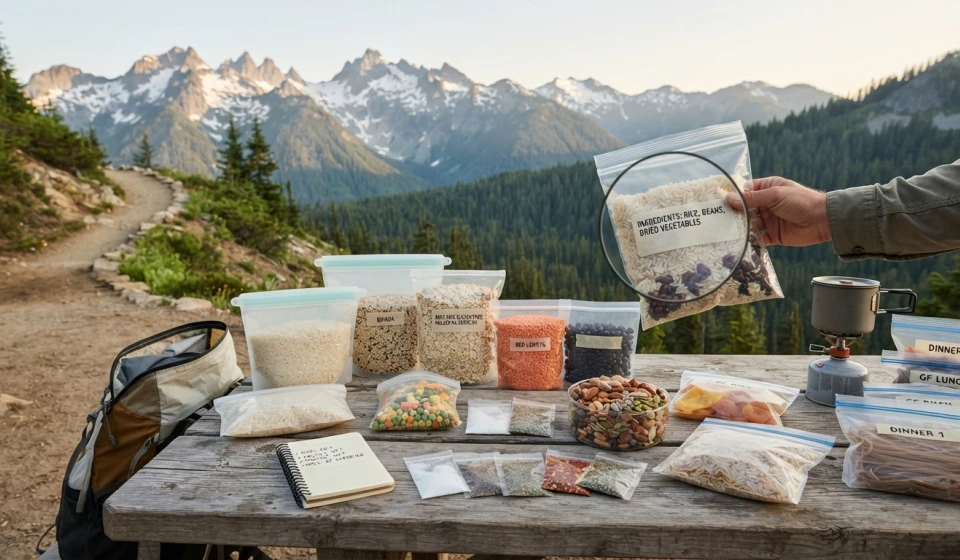
6. Read the Entire Ingredient List
Don’t stop after the first few ingredients.
A product might contain:
Rice + vegetables + seasoning + sauce + flavoring
The ingredients most relevant to gluten may not be the main ingredients.
Create a simple habit:
Step 1
Read the ingredient list.
Step 2
Look specifically for wheat, barley, rye, and relevant derivatives.
Step 3
Check the product’s gluten-free labeling or certification.
Step 4
Look for allergen information and precautionary statements.
Step 5
If the information remains unclear, contact the manufacturer or choose a different product.
This takes a little longer at the store but is much easier than discovering a problem halfway through a five-day trip.
7. Understand “May Contain” and Shared Equipment Statements
Some products include precautionary statements about allergens or shared production environments.
You may see wording such as:
- “May contain wheat”
- “Made on shared equipment”
- “Processed in a facility that also processes wheat”
These statements are not interchangeable with a formal gluten-free claim.
The significance depends on the product, the labeling rules in your country, and your individual medical requirements.
If you have celiac disease or another condition requiring strict gluten avoidance, don’t casually dismiss these warnings.
When the manufacturer’s information is unclear, choosing a product with clearer gluten-free labeling can simplify your decision.
8. Understand Gluten-Free Certification 🏷️
A package saying “gluten-free” is useful information, but certification can provide another layer of confidence.
Independent gluten-free certification programs use their own standards and verification processes.
When shopping, you may encounter a recognized gluten-free certification symbol.
However, don’t assume that every symbol or “free-from” claim means the same thing.
Look at the actual wording and certification information.
For strict gluten avoidance, the goal is not simply to find a package that looks safe.
The goal is to have enough reliable information to make an informed choice.
9. Be Careful With Backpacking Meals
Commercial freeze-dried or dehydrated backpacking meals can be convenient, but don’t assume that every outdoor meal is gluten-free.
Check the specific product.
Look at:
- Ingredients
- Allergen information
- Gluten-free statement
- Certification, if applicable
- Preparation instructions
- Manufacturer information
This is especially important with meals containing sauces, pasta, noodles, seasoning blends, or textured ingredients.
A meal may contain gluten even when the main ingredient appears to be rice, potatoes, beans, or vegetables.
10. Build Your Own Gluten-Free Meal From Verified Ingredients 🍚
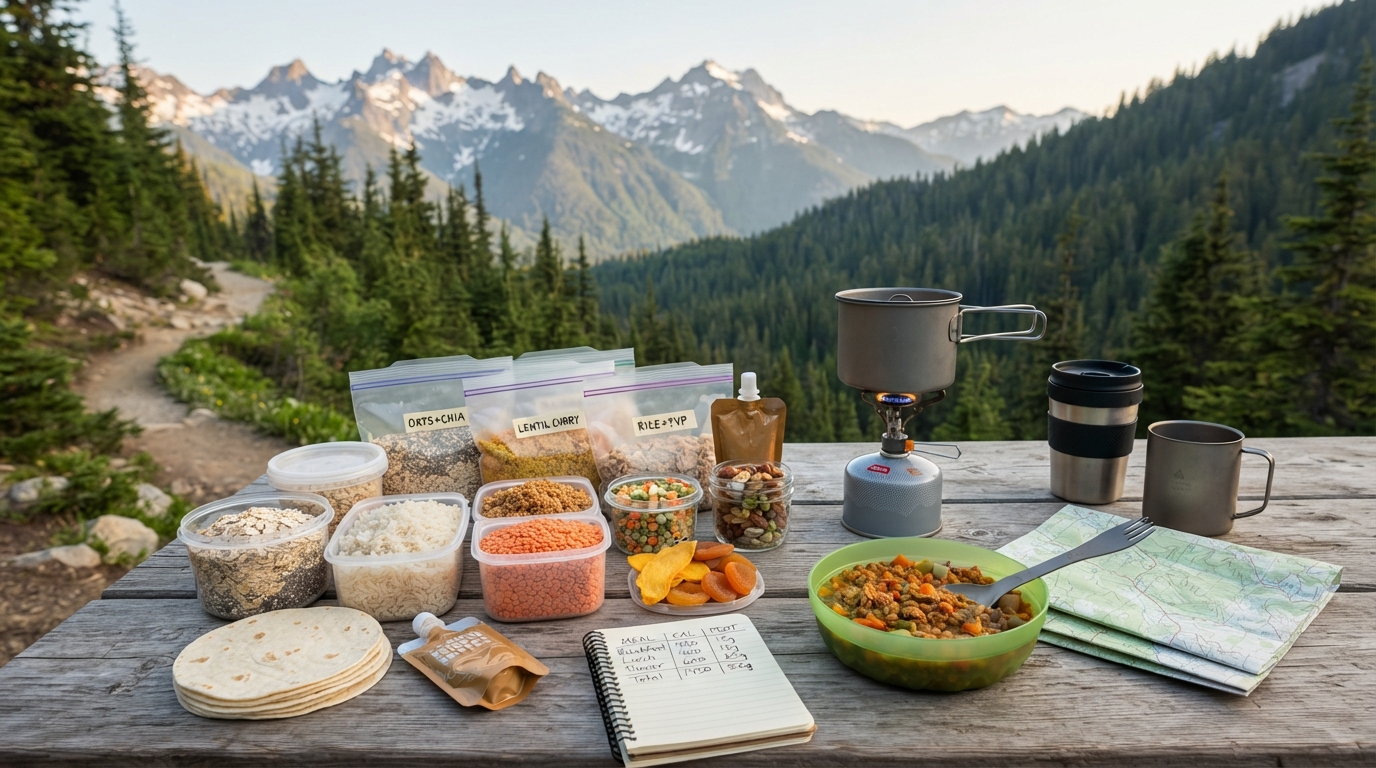
One of the simplest approaches is to create meals from individual ingredients whose gluten-free status you have already verified.
For example:
Mexican-Inspired Rice Bowl
- Instant rice
- Dehydrated black beans
- Dehydrated corn
- Dehydrated peppers
- Gluten-free seasoning
- Olive oil
Peanut Noodles
- Gluten-free noodles
- Peanut butter
- Dehydrated vegetables
- Gluten-free tamari
- Chili flakes
Breakfast Oats
- Certified gluten-free oats
- Peanut butter
- Chia seeds
- Dried banana
- Cinnamon
The advantage is control.
Instead of checking one complicated meal containing 15 ingredients, you can verify each component separately.
11. Watch Out for Sauces and Seasonings 🌶️
Seasonings are easy to overlook because you may only use a teaspoon or two.
But a small ingredient can still matter if you’re avoiding gluten strictly.
Pay particular attention to:
- Soy sauce
- Bouillon
- Gravy mixes
- Soup bases
- Curry sauces
- Seasoning packets
- Marinades
- Flavored spice blends
For example, traditional soy sauce is commonly made with soybeans and wheat.
A gluten-free alternative may be available, but check the actual product rather than assuming that all soy sauce is interchangeable.
12. Don’t Forget Snacks
Backpacking snacks can contain unexpected ingredients too.
Check products such as:
- Granola bars
- Protein bars
- Cookies
- Crackers
- Trail mix
- Flavored nuts
- Jerky
- Chocolate
- Candy
- Energy chews
Plain nuts and seeds are generally straightforward, but flavored versions require their own label check.
A snack that you have eaten safely at home may also have a different formulation in another size, flavor, or market.
Check the package you’re actually taking.
13. Think About Cross-Contact at Camp 🏕️
Food safety doesn’t stop when you leave the supermarket.
If you are avoiding gluten strictly, consider what else comes into contact with your food.
Potential sources include:
- Shared cooking pots
- Cutting boards
- Utensils
- Strainers
- Shared condiments
- Cooking surfaces
- Food bags
- Hands contaminated with crumbs
For a solo trip, this may be easier to control.
On a group trip, communicate your needs before leaving.
A gluten-free meal can become contaminated if it is prepared with equipment covered in gluten-containing food residue.
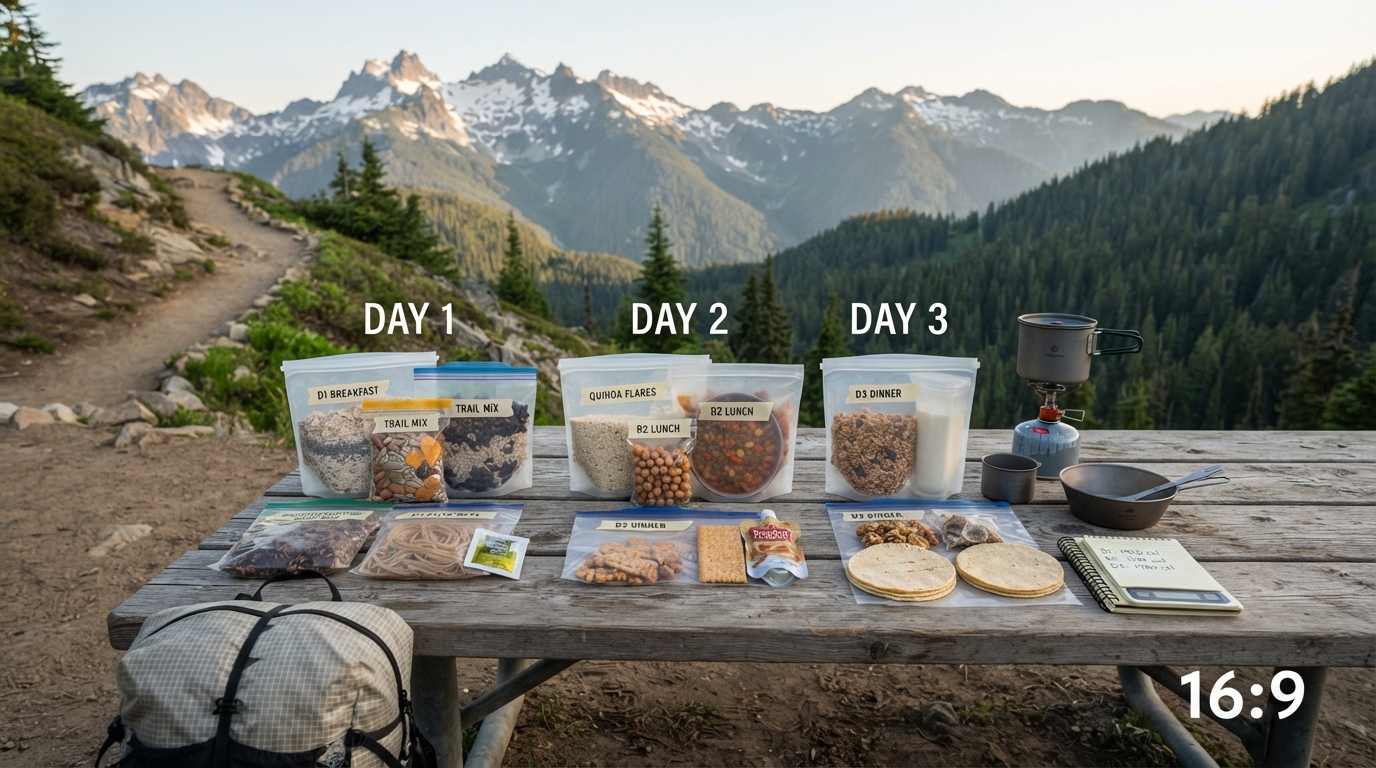
14. Keep Your Food Organized
A simple packaging system can reduce mistakes.
Try dividing your food into:
DAY 1
Breakfast
Lunch
Dinner
Snacks
DAY 2
Breakfast
Lunch
Dinner
Snacks
Then keep your verified gluten-free ingredients together.
If you’re preparing food at home, clearly label homemade meal bags with:
- Meal name
- Ingredients
- Water required
- Cooking instructions
- Any important preparation notes
This is particularly useful when someone else is helping prepare your meals.
15. Make a “Safe Foods” List Before Shopping 📋
Instead of researching every product from scratch every time, create a personal list.
For example:
Breakfast
✓ Verified gluten-free oats
✓ Chia seeds
✓ Peanut butter
✓ Dried fruit
Lunch
✓ Corn tortillas
✓ Verified gluten-free hummus powder
✓ Roasted chickpeas
✓ Nuts
Dinner
✓ Instant rice
✓ Dehydrated beans
✓ Dehydrated vegetables
✓ Verified gluten-free seasoning
Then shopping becomes much faster.
You can also record the exact brands and products you have already verified.
But remember that formulations can change.
Always check the current package rather than relying entirely on an old list.
16. When in Doubt, Don’t Guess
This is the most important rule.
If the label is unclear, the ingredient list is incomplete, or the manufacturer information doesn’t give you enough confidence, choose another product.
You don’t need to turn every backpacking meal into a detective project.
There are plenty of naturally gluten-free foods available.
For strict gluten avoidance, a slightly simpler meal with clearly verified ingredients is often easier to manage than a complicated meal with uncertain components.
A Simple Gluten-Free Backpacking Checklist 🎒
Before putting a product in your food bag, ask:
☐ Is the food naturally gluten-free?
☐ Have I checked the entire ingredient list?
☐ Does the package make an appropriate gluten-free claim?
☐ Is there relevant allergen information?
☐ Are there precautionary statements I need to consider?
☐ Have I checked the actual product and current packaging?
☐ Could cross-contact occur during preparation?
☐ Have I tested the meal before my trip?
If you can answer these questions confidently, you’re no longer relying on guesswork.
Final Thoughts 🌄
Gluten-free backpacking doesn’t have to mean carrying an expensive collection of specialty foods.
The most useful skill is learning how to verify what you’re buying.
Start with naturally gluten-free staples such as rice, potatoes, beans, lentils, quinoa, nuts, seeds, and vegetables. Then carefully evaluate packaged versions, particularly flavored meals, sauces, seasonings, oats, bars, and dehydrated foods.
For people who need strict gluten avoidance, especially those with celiac disease, the details matter. Read the current label, understand precautionary information, consider cross-contact, and use manufacturer information when necessary.
Once you have a collection of verified foods, building a trail menu becomes much easier.
You can then spend less time wondering “Is this safe?” and more time planning meals you’ll actually look forward to eating after a long day on the trail. 🥾🌲