Stop Eating the Same Bar All Day: Build a 6-Snack Backpacking Rotation by Calories and Macros
Backpacking snack ideas work better when they solve a planning problem instead of filling your food bag with six similar bars. A useful hiking snack rotation spreads calories across the day while changing flavors, textures, and the main macronutrients each snack contributes. 🥾 The goal is not a perfect laboratory menu; it is a snack system you will still want to eat late in the day.
Start with the daily calorie target you already calculated for the trip, then subtract calories assigned to breakfast, lunch, dinner, and planned drinks. The calories left become your snack budget, which you can divide among six different roles instead of six identical foods. This method works well for long hikes because appetite, climbing, weather, and boredom can affect what sounds edible.
Why “Bring Some Bars” Isn’t Much of a Food Plan
Bars are compact, labeled, easy to count, and simple to eat while walking, but convenience does not automatically create variety. If every snack tastes equally sweet or has the same dense texture, the food bag may become unappealing even when enough calories remain. 😵💫 A rotation changes the question from “Which bar should I buy?” to “What food role do I need next?”
Variety also lets different foods contribute different macronutrients instead of expecting one product to do everything. Carbohydrate and protein provide about 4 calories per gram, while fat provides about 9, so nuts and spreads can raise calorie density quickly. That does not make fat automatically better; it simply explains why mixed snack bags can combine lighter carbohydrate foods with denser options.
Calculate the Calories Assigned to Snacks
Begin with the daily calorie number from your established caloric-needs method, then subtract the calories already assigned to meals. If your planned day contains 3,200 calories and meals provide 2,000, the remaining 1,200 calories become the snack budget. 🔢 This is planning math rather than a universal intake prescription, so your starting target should reflect your own trip assumptions and experience.
Next, decide whether the six slots should be equal or intentionally uneven. A 1,200-calorie snack budget averages 200 calories per slot, but you might make the nut-butter slot larger and the morning slot smaller. The important rule is that all six planned snacks should add back up to the calorie budget you set before packing.
Six Different Snack Roles
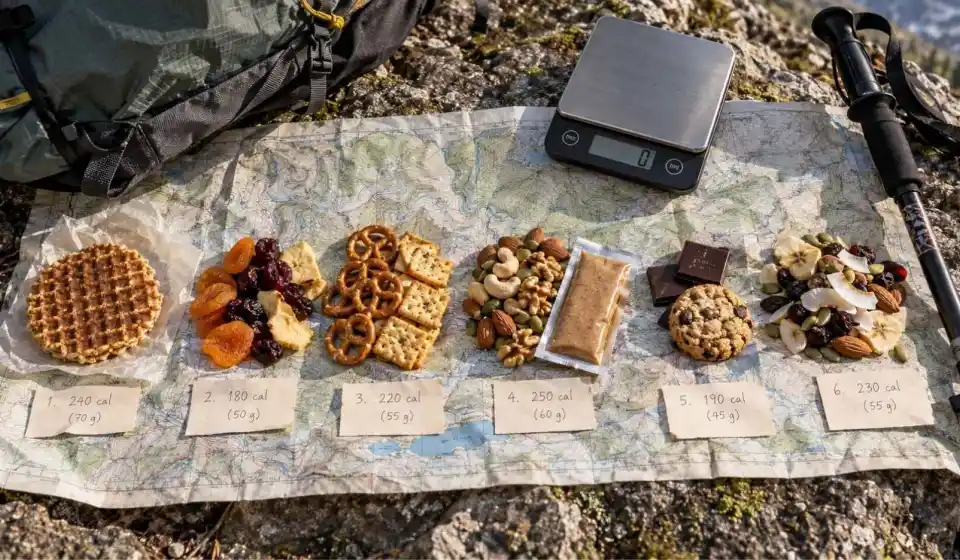
Slot one is a quick-access morning snack, while slot two is a carbohydrate-forward choice such as a waffle, pretzels, crackers, or dried fruit. Slot three becomes the savory break, and slot four is the calorie-dense nuts or spread that can add substantial energy without much food volume. 🍯 These roles create contrast without claiming that every nutrient must be eaten at one exact time.
Slot five is an afternoon sweet option that resets your palate, while slot six is the flexible late-day snack. The final slot can absorb whatever calories remain and should be something you are still likely to want after hours of trail food. Think of the six roles as menu architecture: they organize variety before you choose exact brands, flavors, or serving sizes.
Mix Carbohydrate-, Fat- and Protein-Contributing Foods
A practical rotation can include carbohydrate-forward foods, fat-rich foods, and foods that add meaningful protein without making every snack nutritionally identical. Dried fruit, gummies, pretzels, crackers, and many waffles lean toward carbohydrate, while nuts, seeds, and nut butters usually contribute more fat alongside some protein. 🥜 Jerky, meat sticks, roasted legumes, cheese products, and some bars can add more protein, although exact macros vary by product.
The most accurate planning method is to read the Nutrition Facts label for the exact food you will carry. Multiply the listed calories, carbohydrate, fat, and protein by the portion you actually pack instead of copying numbers from a generic food chart. This label-first approach keeps the six-slot template flexible while making the totals specific to your backpacking snacks.
Add Sweet and Savory Variety
Sweet foods are easy to overpack because bars, gummies, waffles, cookies, and dried fruit can begin to occupy the same taste territory. A savory slot interrupts that pattern with options such as salted nuts, pretzels, crackers, roasted chickpeas, or shelf-stable meat snacks. 🧂 The point is not to ban sweet foods; it is to prevent the whole day from tasting like dessert.
Texture deserves the same attention because you may be eating repeatedly for many hours. Pair chewy foods with crunchy foods, smooth nut butter with crackers, or soft dried fruit with nuts so each snack feels different. If an item requires refrigeration or special storage, follow its package directions and choose a shelf-stable alternative when trail conditions cannot keep it safely stored.
Calculate the Weight of the Finished Snack Bag
After the six slots meet your calorie budget, weigh the actual portions instead of estimating from package size. Add the ounces of every snack, then divide total snack calories by total snack weight to calculate the bag’s calories per ounce. ⚖️ This shows whether two rotations with similar calories create very different food-weight demands.
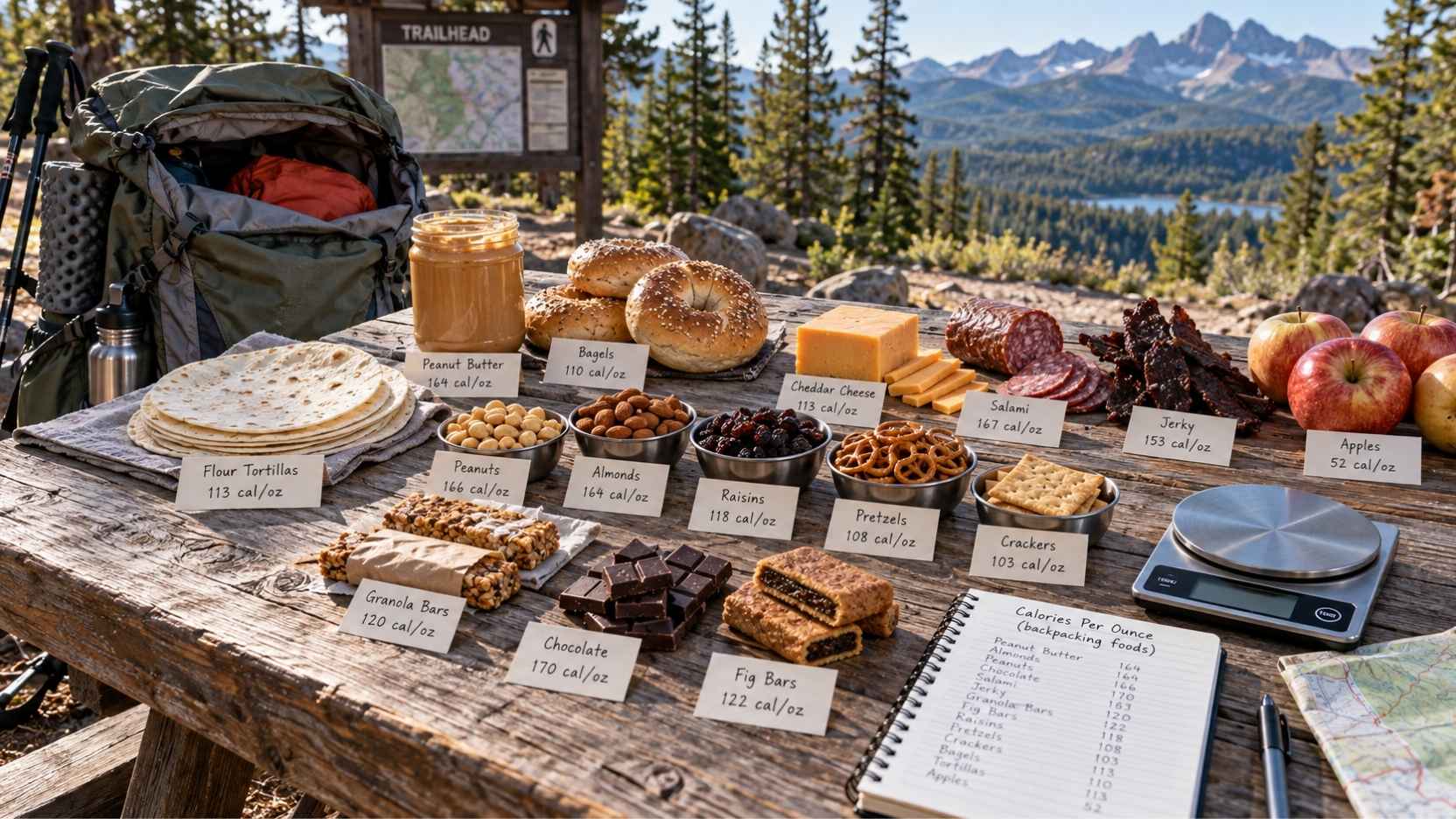
For example, a 1,200-calorie snack bag weighing 9.5 ounces averages about 126 calories per ounce, while 12 ounces averages 100 calories per ounce. Neither result is automatically superior because taste, texture, variety, digestion, and convenience may justify carrying a heavier food. The calculation simply makes the tradeoff visible and connects naturally to a separate Calories Per Ounce Table.
Example 6-Snack Long-Day Plan
Imagine a long hiking day with 1,200 snack calories remaining after meals are already counted. You might assign roughly 150 calories to the morning slot, 200 to the carbohydrate slot, 180 to savory, and 250 to nuts or spread. 🌲 That leaves about 420 calories for the afternoon sweet option and flexible late-day slot, which you can divide around the foods you pack.
The actual foods can rotate from trip to trip without changing the structure. A waffle, dried fruit, pretzels, meat snack, peanut-butter packet, crackers, nuts, and a small sweet item can fill different roles depending on portions. Use package labels to make the six numbers total your planned snack calories instead of forcing foods into one fixed menu.
Adjust the Template for Your Own Menu
Your six-slot plan should change whenever the rest of the menu changes. If breakfast is large, the first snack may shrink; if lunch is small, more calories may move into the middle slots. 🔄 On shorter hikes you can reduce portions, while very long days may require a larger overall food plan before you calculate the snack share.
Also adjust for what you reliably eat, because an efficient snack has little value when it repeatedly comes home untouched. Test foods on day hikes, note which flavors remain appealing late in the day, record actual weights, and update the rotation after each trip. This article can then lead naturally into How Many Calories Do You Burn Hiking?, a Calories Per Ounce Table, Fueling a 20-Mile Day, and your full Menu Template.
What to Eat While Hiking Without Getting Burned Out
The best backpacking snack ideas are not necessarily the newest bars or the foods with the highest calorie density. They are foods that fit your calorie plan, complement your meals, travel safely, add useful variety, and still sound appealing at snack number five. 🎒 A six-snack rotation makes those decisions before fatigue and hunger turn the food bag into a random grab.
General hiking guidance also supports planning food around trip length and conditions, carrying nutritious easy-to-eat snacks, and keeping extra food for unexpected delays. Your six-slot system adds structure by deciding beforehand how many calories belong to snacks and how those calories are distributed across different roles. Once the template works, save it as a printable planner and swap individual foods without rebuilding the entire menu from zero.