You Don’t Need “Hiking Food”: 20 Grocery Store Foods That Work on the Trail
Walk through an outdoor store and it is easy to believe every hike requires specialized energy gels, freeze-dried meals, performance bars, and packages covered in mountain graphics, but ordinary supermarket shelves already contain dozens of foods that perform perfectly well outdoors. 🥾 For many day hikes and simple overnight trips, grocery store hiking food can provide plenty of carbohydrates, fat, protein, and calories without requiring expensive products marketed specifically to hikers. The better question is not whether something says “trail” on the package, but how much useful food you are getting for its weight, cost, preparation, and bulk.
That makes everyday foods such as peanut butter, tortillas, bagels, crackers, cheese, salami, raisins, chocolate, and even pizza worth examining scientifically. Instead of building another list based only on personal favorites, the Camp Kitchen Lab approach compares ordinary supermarket foods using the same practical trail criteria. 🔬 This makes the guide useful for anyone searching for cheap hiking snacks, hiking food without cooking, what food to bring hiking, or inexpensive backpacking food.
Why Ordinary Groceries Deserve a Place in a Hiking Food Plan
Your body does not know whether carbohydrates came from a sports chew, raisins, pretzels, or a peanut butter sandwich, because the marketing category does not determine the food’s basic nutritional function. Many supermarket foods also combine good calorie density, familiar flavors, low preparation requirements, and easy availability, which can make them surprisingly effective trail options. 🥜 Familiar food has another advantage: you already know whether you enjoy eating it when tired, hungry, hot, or several hours into a hike.
Specialized hiking foods can still be useful when hikers want extremely compact portions, precise carbohydrate intake, unusual dietary options, or meals specifically designed for storage and rehydration. However, paying more does not automatically mean the product contains more calories per ounce or performs better inside a backpack. A tortilla filled with peanut butter, for example, can be inexpensive, compact, resistant to crushing, and much easier to find than many purpose-built trail foods.
The Camp Kitchen Lab Grocery-Food Test
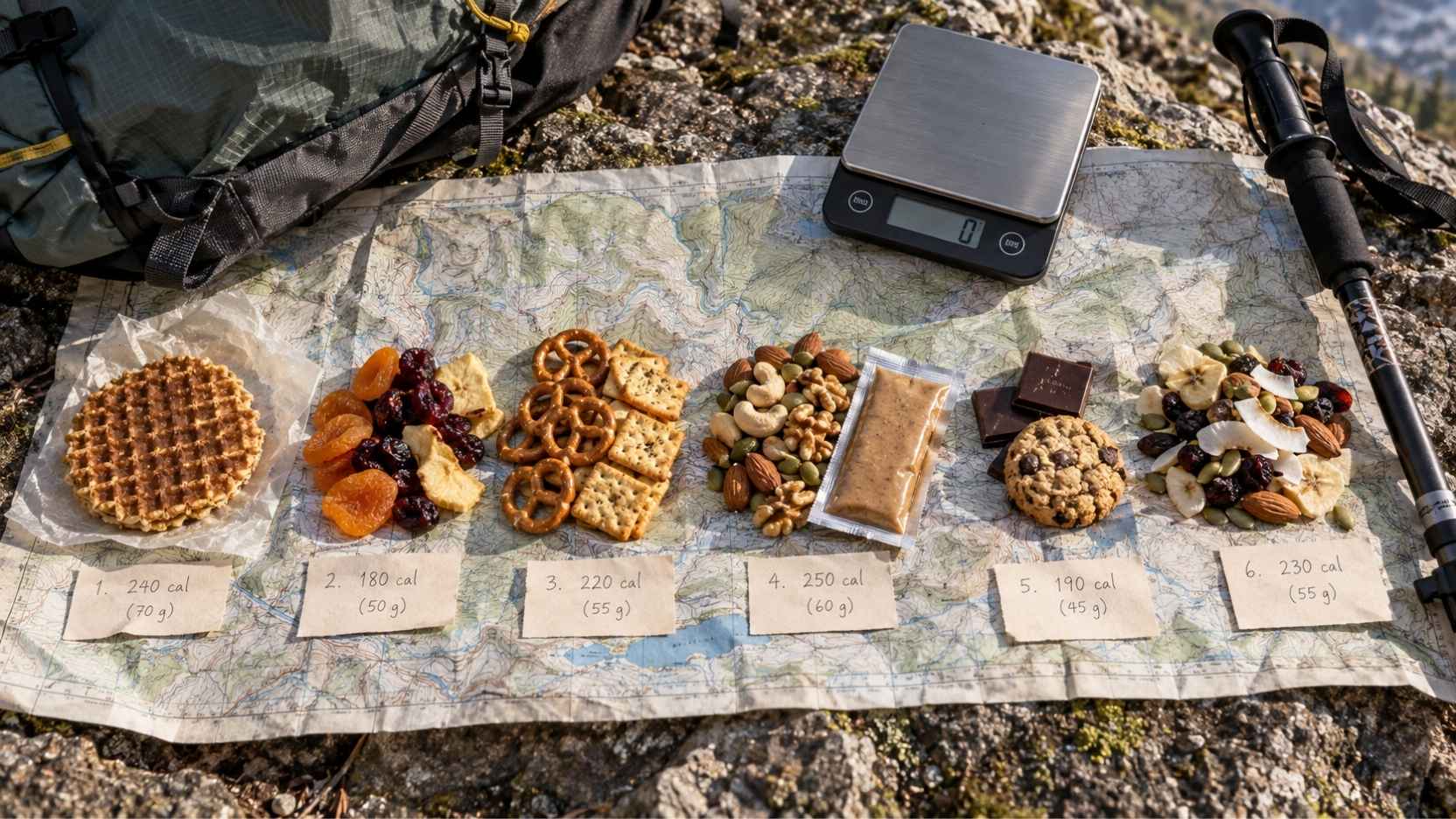
The first measurement is calories per ounce, because every ounce of food must be carried across every mile and every climb. As a practical Camp Kitchen Lab benchmark rather than an official nutrition rule, foods around 125 calories per ounce or more can be considered highly energy-dense, foods around 90–124 calories per ounce are reasonably efficient, and foods substantially below that become heavier ways to transport calories. This explains why nuts and chocolate often perform extremely well while fresh fruit and water-packed foods perform poorly when judged only by pack weight.
The second measurement is cost per 1,000 calories, calculated by dividing the package price by its total calories and multiplying the answer by 1,000. 💰 The test should also consider carbohydrate-fat-protein balance, preparation required, packaging bulk, crumbs, grease, refrigeration concerns, and whether the food can realistically be eaten while walking. A mathematically efficient food is not automatically useful if it leaks, melts, requires utensils, creates excessive trash, or becomes unpleasant after several servings.
20 Supermarket Foods That Work on the Trail
Here are 20 ordinary grocery-store foods worth testing before spending heavily on products marketed specifically for hiking.
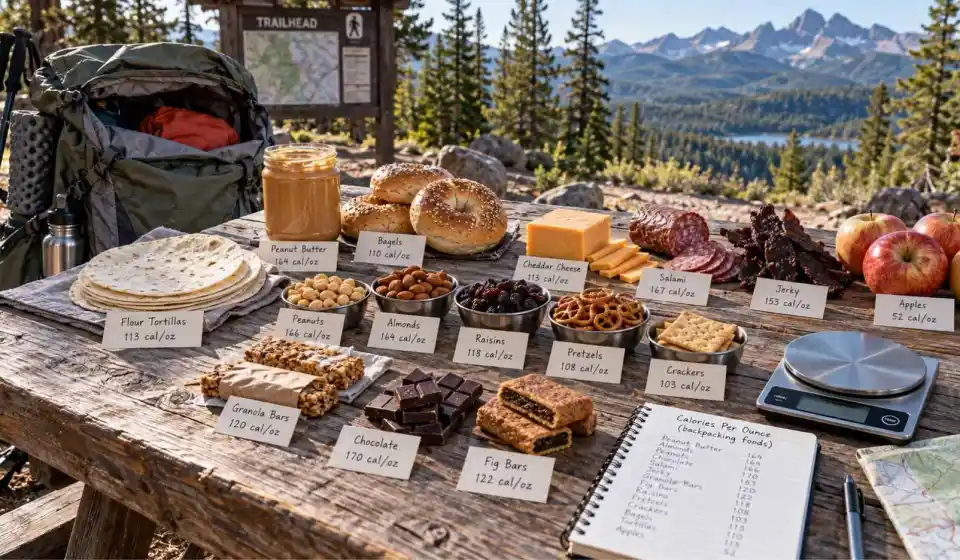
- Peanut butter — Roughly 165–170 calories per ounce, high in fat, inexpensive, filling, and excellent with tortillas or bread. 🥜
- Peanuts — Often around 160–170 calories per ounce and easy to portion into small bags for frequent snacking.
- Almonds — Similar calorie density to peanuts, with substantial fat and some protein, although usually at a higher price.
- Chocolate — Often around 145–160 calories per ounce, making it extremely energy-dense, although heat can create a serious mess. 🍫
- Cookies — Commonly around 125–150 calories per ounce and often inexpensive per calorie, though some varieties crumble badly.
- Granola — Frequently around 120–140 calories per ounce depending on how much oil, nuts, seeds, and sugar it contains.
- Crackers — Often around 120–140 calories per ounce and useful for cheese, peanut butter, tuna, or salami, although crushing is a concern.
- Granola bars — Usually around 110–130 calories per ounce and extremely convenient for eating while moving.
- Pretzels — Roughly 105–115 calories per ounce, low-mess, carbohydrate-heavy, inexpensive, and easy to portion. 🥨
- Fig bars — Often around 95–110 calories per ounce and useful when you want a soft carbohydrate snack instead of dry crackers.
- Flour tortillas — Commonly around 85–100 calories per ounce but valuable because they pack flat and resist crushing better than bread. 🫓
- Raisins — Usually around 80–100 calories per ounce and provide concentrated carbohydrates without the water weight of fresh grapes.
- Hard cheese — Cheddar and similar cheeses commonly provide roughly 110–120 calories per ounce, although storage conditions still matter. 🧀
- Salami — Often reasonably calorie-dense because of its fat content, but hikers should check storage instructions for the specific product.
- Beef jerky — Usually around 70–90 calories per ounce and protein-rich, although less impressive when judged strictly by calorie density.
- Tuna pouches — Water-packed varieties may provide only around 30–50 calories per ounce, making them relatively heavy for the calories they deliver.
- Bagels — Moderate calorie density but extremely practical because they survive backpack compression better than many sliced breads. 🥯
- PB&J sandwiches — Familiar, inexpensive, carbohydrate-rich, and easy to eat, making them especially useful for day hikes.
- Pizza — A surprisingly practical first-day trail meal because it combines carbohydrates, fat, protein, and salt in an easy-to-carry form. 🍕
- Apples — Only around 15 calories per ounce because of their water content, but refreshing and perfectly reasonable when pack weight is not critical. 🍎
These numbers are approximate because recipes, brands, serving sizes, and moisture levels vary significantly between products. Nutrition labels should therefore be treated as the final reference when comparing two specific foods. The point of the test is not to declare one universal winner but to reveal the tradeoff between calories, weight, cost, convenience, and enjoyment.
Best Grocery Foods for Maximum Calorie Density
Peanut butter, peanuts, almonds, chocolate, granola, cookies, and many crackers are among the strongest supermarket candidates when the priority is carrying substantial energy without adding excessive food weight. Their advantage comes partly from fat, which provides about nine calories per gram compared with four calories per gram for carbohydrate or protein. ⚡ This is why foods containing nuts, oils, chocolate, cheese, and other fatty ingredients often perform well in a Calories Per Ounce comparison.
That does not mean a hiking menu should consist entirely of the most calorie-dense foods available. Extremely fatty foods can feel heavy or unappealing during harder efforts, while carbohydrate-rich foods such as pretzels, raisins, bagels, fig bars, and tortillas can be easier to eat regularly while hiking. A stronger trail menu normally mixes different textures, flavors, and macronutrient profiles rather than chasing one metric exclusively.
Best Foods for Easy On-the-Go Eating
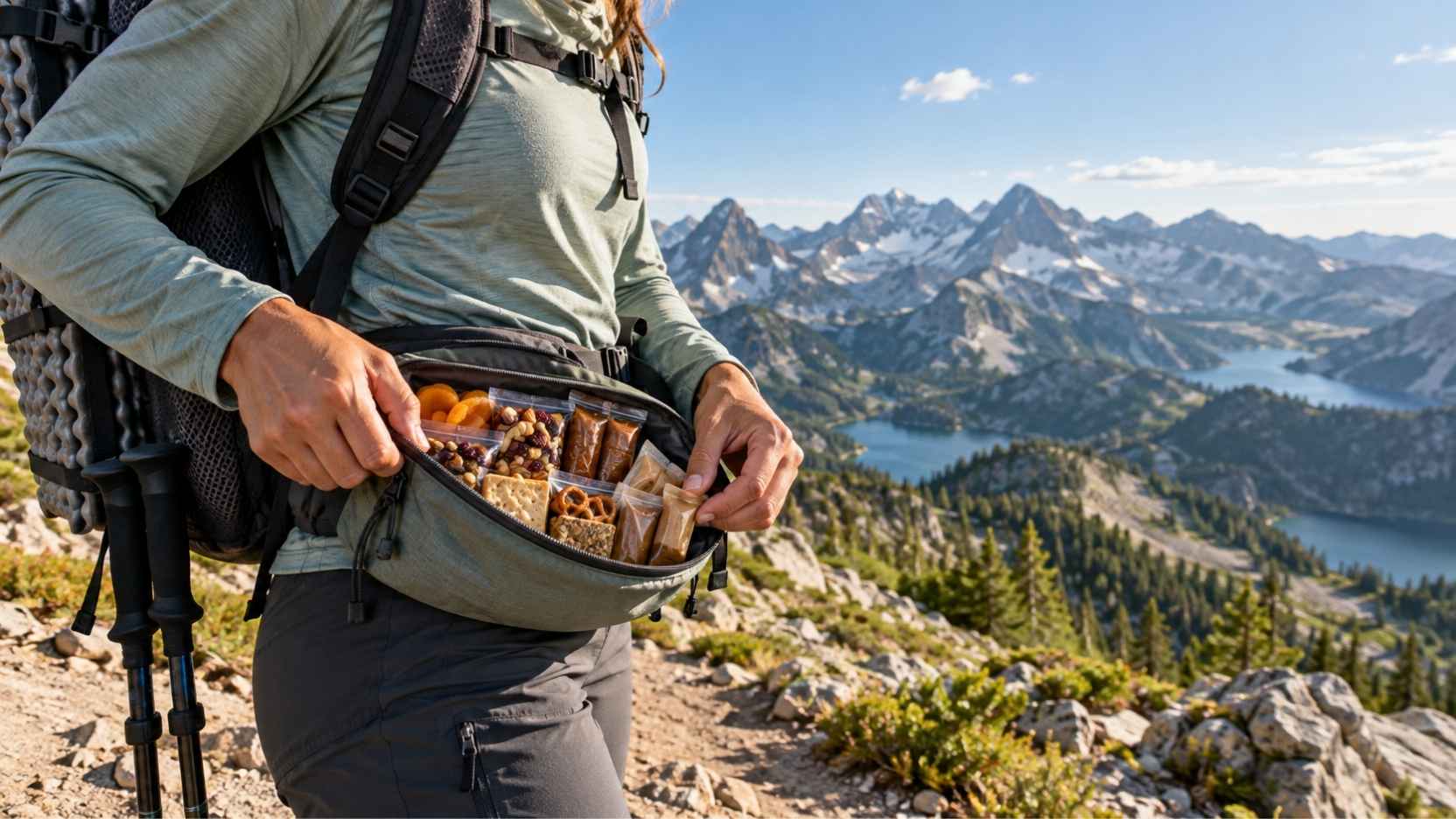
Pretzels, raisins, nuts, granola bars, jerky, crackers, fig bars, and chocolate score well when hikers want food that can be consumed without stopping to cook or assemble a meal. 🎒 Portioning these foods into reusable or lightweight bags before leaving home can also reduce packaging bulk and make snacks easier to reach from a hip-belt pocket or backpack lid. For longer hiking days, convenience matters because a food you repeatedly postpone eating is not especially useful regardless of how impressive its nutrition label looks.
Tortillas are particularly versatile because they can turn several ordinary grocery foods into compact trail meals. Peanut butter and jam create a high-energy sweet option, while appropriate cheese and salami can create a savory alternative under suitable storage conditions. This makes tortillas less impressive as a standalone food but extremely useful as durable edible packaging.
Foods That Carry Surprisingly Little Energy for Their Weight
Fresh fruit demonstrates why calorie-per-ounce calculations can produce surprising results, because much of an apple’s weight comes from water rather than stored food energy. Water-packed tuna creates a similar issue from a different direction: it can contain plenty of protein yet remain relatively inefficient when the goal is maximum calories for minimum carried weight. Someone packing several days of food will notice these differences much more than someone planning a three-hour afternoon hike.
Protein-focused foods can therefore be misleading if hikers assume “high protein” automatically means “good backpacking calorie density.” Beef jerky and tuna can have legitimate roles in a balanced trail menu, but they should be judged alongside calorie-dense foods rather than treated as replacements for them. This is where internal comparisons with the Trail Food Macros Cheat Sheet and How Much Food Weight Per Day? become particularly useful.
Build a Sample Grocery-Store Trail-Food Bag
One simple no-cook grocery-store pack could contain two PB&J sandwiches, two ounces of peanuts, two ounces of raisins, two ounces of pretzels, two granola bars, two ounces of hard cheese, two ounces of suitable salami, and two ounces of chocolate. Depending on the brands and serving sizes selected, a combination like this could provide approximately 2,500–2,800 calories while including sweet, salty, crunchy, soft, carbohydrate-heavy, protein-containing, and fat-rich foods. 🌲 That calorie figure is an example rather than a daily recommendation because energy requirements differ according to body size, distance, elevation gain, pace, weather, trip duration, and individual metabolism.
For a short day hike, you can comfortably add heavier foods such as an apple, sandwich, or slice of pizza because the difference of a few ounces may barely matter. For a multi-day trip, calculating calories per ounce becomes increasingly important because small differences multiplied across several thousand calories can noticeably change total pack weight. This is why the same supermarket can produce both an excellent day-hiking menu and a surprisingly efficient backpacking menu depending on how carefully you choose.
Stop Shopping by the Word “Hiking”
You do not need food labeled “hiking,” “adventure,” or “performance” to build a useful trail menu, because ordinary supermarkets already contain dozens of workable options. 🥾 What matters is comparing calories per ounce, cost per 1,000 calories, macros, preparation, packaging bulk, mess, and actual willingness to eat the food. Once those measurements become part of your shopping process, choosing trail food becomes much easier than relying on outdoor branding.
The goal is also not to eliminate specialized trail food completely, because some products genuinely solve specific problems and may be worth paying for. The bigger lesson is that peanut butter, tortillas, nuts, raisins, crackers, chocolate, bagels, pretzels, cheese, salami, PB&J, and other ordinary foods deserve to compete in the same test. 🔬 Your grocery store is already a massive trail-food laboratory; you simply need better criteria for deciding what earns space in the backpack.