How to Plan Vegan Backpacking Meals Without Refrigeration 🌱🥾
Introduction
Planning vegan food for a backpacking trip can seem complicated when you remove refrigeration from the equation.
At home, vegan meals often rely on fresh vegetables, tofu, plant milk, hummus, fresh fruit, and other foods that don’t travel well for several days. On the trail, however, your food needs to be safe, lightweight, compact, shelf-stable, and easy to prepare.
The good news is that you don’t need a refrigerator to eat well while backpacking.
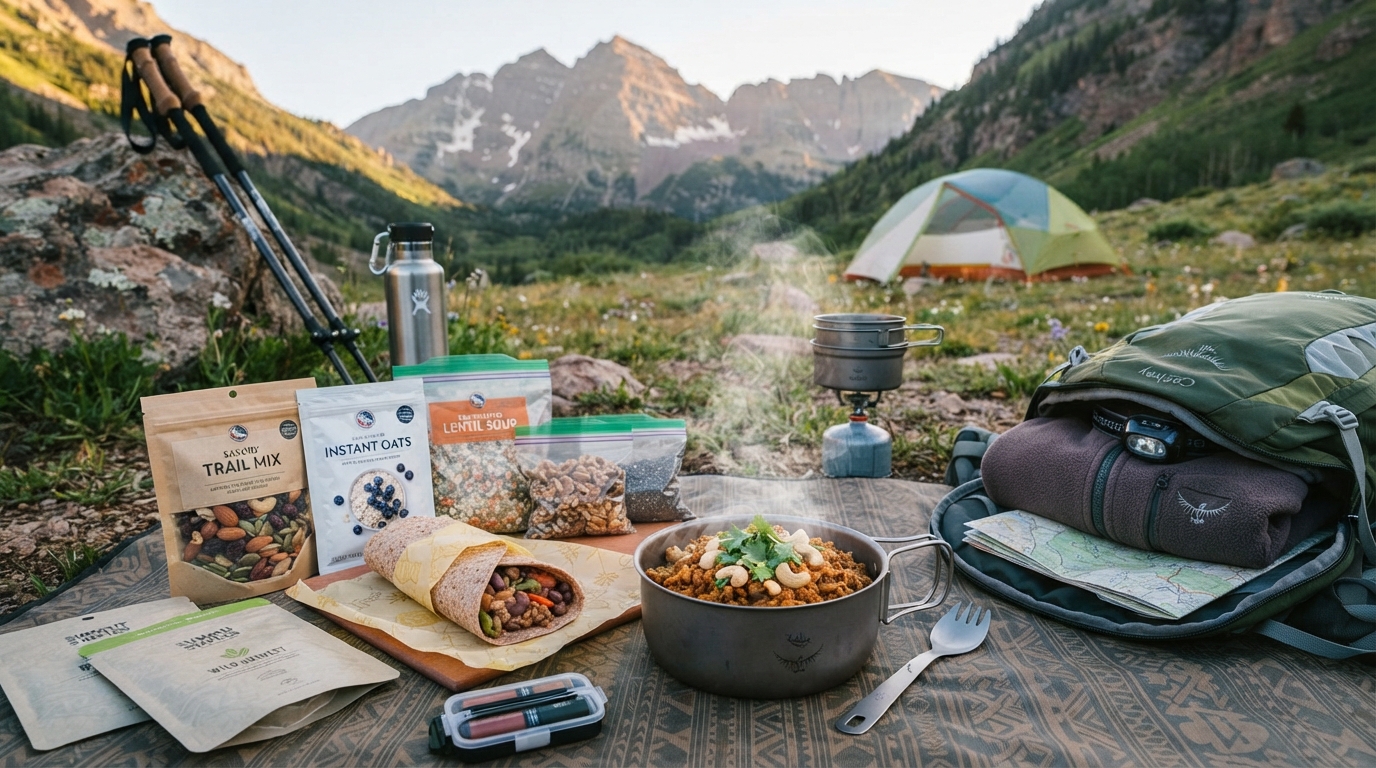
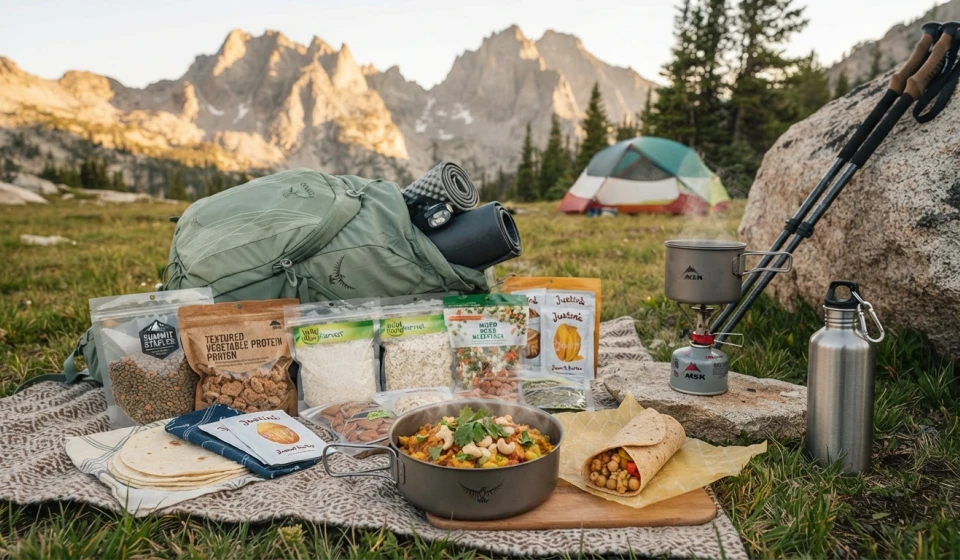
The key is to build meals around dehydrated, dried, powdered, canned, or commercially packaged shelf-stable ingredients, then combine them into meals that provide carbohydrates, protein, fat, flavor, and enough overall energy.
Think of your backpacking menu as a small pantry that travels with you. 🎒
🌱 Start With the Right Vegan Ingredients
Before creating recipes, divide your food into a few basic categories.
Carbohydrate-rich foods
These form the foundation of many backpacking meals.
Good options include:
- Instant oats
- Couscous
- Instant rice
- Quick-cooking pasta
- Rice noodles
- Instant mashed potatoes
- Tortillas
- Crackers
These foods are generally easy to portion and prepare.
Vegan protein sources
Protein deserves special attention when you’re removing meat, eggs, and dairy.
Useful shelf-stable choices include:
- Textured vegetable protein (TVP)
- Soy curls
- Dehydrated lentils
- Dehydrated beans
- Refried bean flakes
- Roasted chickpeas
- Nuts
- Seeds
- Peanut butter
- Nut or seed butter
- Vegan protein powder
Check individual product labels because nutritional values vary considerably between brands.
Calorie-dense fats
Fat can provide substantial energy without adding as much food volume.
Consider:
- Peanut butter
- Almond butter
- Tahini
- Nuts
- Seeds
- Olive oil
- Coconut milk powder
Small packets or leak-proof containers can make these easier to carry.
Flavor ingredients
Don’t underestimate flavor.
Pack small amounts of:
- Curry powder
- Chili flakes
- Garlic powder
- Onion powder
- Nutritional yeast
- Soy sauce packets
- Hot sauce
- Taco seasoning
- Lemon pepper
- Cinnamon
A few lightweight seasonings can turn basic ingredients into completely different meals.
🥣 Build Breakfasts Around a Simple Formula
Breakfast doesn’t need to be elaborate.
A reliable formula is:
Carbohydrate + protein + fat + flavor
For example:
Oats + peanut butter + chia seeds + cinnamon
or:
Oats + vegan protein powder + dried banana + peanut butter
Easy Vegan Trail Oatmeal
Pack:
- Instant oats
- Peanut butter powder
- Chia or ground flaxseed
- Dried banana
- Cinnamon
- Optional vegan protein powder
Add hot water, stir, and allow the oats to soften.
You can prepare individual bags at home so you only need to add water at camp.
Make breakfast more interesting
You don’t need a completely different recipe every morning.
Change the flavor profile instead.
Try:
🍌 Banana + peanut butter + cinnamon
🍫 Cocoa + peanut butter + banana
🍎 Dried apple + cinnamon + walnuts
🥥 Coconut milk powder + dried mango + chia
This keeps your food interesting without adding many extra ingredients.
🥜 Plan Trail Snacks Before You Plan Dinner
Snacks are an important part of a backpacking food system.
Rather than waiting until you’re exhausted and hungry, prepare small portions that are easy to grab throughout the day.
Good vegan options include:
- Trail mix
- Nuts
- Seeds
- Peanut butter packets
- Energy bars
- Roasted chickpeas
- Dried fruit
- Crackers
- Pretzels
- Tortillas
- Nut-butter packets
Combine foods instead of relying exclusively on dried fruit or sweets.
For example:
Dried mango + almonds
or:
Crackers + peanut butter
or:
Trail mix + roasted chickpeas
This gives you more variety and combines carbohydrate-rich foods with protein and fat.
🌯 Make Lunch No-Cook When Possible
Lunch doesn’t necessarily need to involve your stove.
This can save fuel and reduce cleanup.
Vegan Bean Tortilla
Pack:
- Tortillas
- Dehydrated refried beans
- Seasoning
- Nutritional yeast
- Hot sauce
- Dehydrated vegetables
Rehydrate the beans with water according to the product instructions.
Spread them over the tortilla and add your seasonings.
You can make the meal more substantial with peanut or seed butter on the side, depending on your preferred flavor combination.
Peanut Noodle Wrap
Another option is a simple cold noodle-style lunch.
Pack:
- Rice noodles
- Peanut butter powder
- Soy sauce packet
- Chili flakes
- Dehydrated vegetables
If the noodles can be softened using cold water according to their instructions, they can work as a no-stove option. Otherwise, prepare them with hot water before packing them into your lunch system.
Always test your chosen noodles at home first.
🍚 Make Dinner Your Warm, High-Reward Meal
After a long hiking day, dinner is often the meal worth spending fuel on.
Instead of carrying separate ingredients for complicated recipes, use a modular system.
Formula
Carbohydrate + protein + vegetables + fat + seasoning
For example:
Instant rice + TVP + dehydrated vegetables + olive oil + curry powder
This simple combination can become several different meals depending on the seasoning.
🍛 Vegan Coconut Curry Rice
Pack:
- Instant rice
- TVP
- Dehydrated vegetables
- Coconut milk powder
- Curry powder
- Garlic powder
- Chili flakes
- Olive oil
Rehydrate the TVP and vegetables according to their package directions.
Prepare the rice.
Mix everything together and add coconut milk powder and seasonings.
A small amount of olive oil can increase the energy content without adding much weight.
🍝 Vegan Lentil Tomato Pasta
For another dinner, combine:
- Quick-cooking pasta
- Dehydrated lentils
- Tomato powder
- Italian seasoning
- Nutritional yeast
- Olive oil
- Dehydrated vegetables
Cook or soak the pasta according to its preparation instructions.
Add the lentils and vegetables.
Stir in tomato powder and seasonings, then finish with olive oil.
The result is a simple pasta dinner without needing refrigerated ingredients.
🥔 Try an Instant Potato Bowl
Instant mashed potatoes can become a surprisingly versatile backpacking base.
Combine them with:
- Dehydrated lentils
- Dehydrated peas
- TVP
- Nutritional yeast
- Garlic powder
- Olive oil
- Gravy-style vegan seasoning
Add hot water and mix.
You can also turn the mixture into a thick bowl rather than a traditional mashed-potato side dish.
It’s especially useful when you want something warm and comforting after hiking.
🧊 Know What “No Refrigeration” Really Means
“No refrigeration” does not mean every food is safe to carry indefinitely.
The safest approach is to start with ingredients that are commercially packaged and labeled as shelf-stable.
Examples include:
- Dry grains
- Dried beans
- Dehydrated vegetables
- Nut butters
- Commercial snack bars
- Dry pasta
- Powdered plant milk
- Commercially packaged vegan meals
Be more cautious with homemade dehydrated foods.
If you dehydrate your own meals, use reliable food-dehydration and food-safety practices. Proper dehydration does not automatically make every food safe for indefinite storage.
Also avoid assuming that a food is safe simply because it “looks dry.”
🥑 Be Careful With Fresh Foods
Fresh produce can sometimes be used early in a trip, depending on conditions.
For example, a firm fruit or vegetable may be practical for the first day.
But a multi-day backpacking trip is different from a picnic.
Heat, humidity, physical damage, and time can affect food quality and safety.
For longer trips, prioritize foods specifically selected for shelf stability.
The same applies to foods such as:
- Homemade hummus
- Fresh tofu
- Plant-based yogurt
- Fresh-cut fruit
- Homemade sauces
- Opened plant milk
These shouldn’t automatically be treated as shelf-stable simply because they’re vegan.
⚖️ Think About Calories and Weight
A vegan backpacking menu can become surprisingly heavy if you rely heavily on bulky vegetables, fresh fruit, or canned beans.
That doesn’t mean you need to eliminate plant foods.
Instead, prioritize dried and concentrated versions when appropriate.
For example:
Fresh vegetables → dehydrated vegetables
Cooked beans → dehydrated beans or refried bean flakes
Plant milk → powdered plant milk
Fresh fruit → dried fruit
Fresh tofu → shelf-stable or dehydrated soy products
This dramatically changes how much space the same ingredients require.
💪 Don’t Forget Protein
A vegan backpacking menu should not consist entirely of oats, noodles, rice, and dried fruit.
Include a protein source throughout the day.
For example:
Breakfast
Oats + peanut butter + seeds
Lunch
Bean tortilla
Snack
Nuts + roasted chickpeas
Dinner
Rice + TVP + vegetables
This spreads protein-containing foods across your meals instead of trying to consume most of it at dinner.
Your individual protein needs depend on factors such as body size, activity level, age, and overall diet. Use the nutrition labels on the products you actually plan to carry when estimating your intake.
💧 Remember Hydration
Dry backpacking foods often require water for preparation.
That means food planning and water planning are connected.
Before choosing a meal, ask:
- How much water does it require?
- Can I get that water safely along the route?
- How much fuel will preparation require?
- Does the meal require boiling or only soaking?
- Will I have enough water for drinking as well?
A meal that looks lightweight on paper may be inconvenient if it requires large quantities of cooking water.
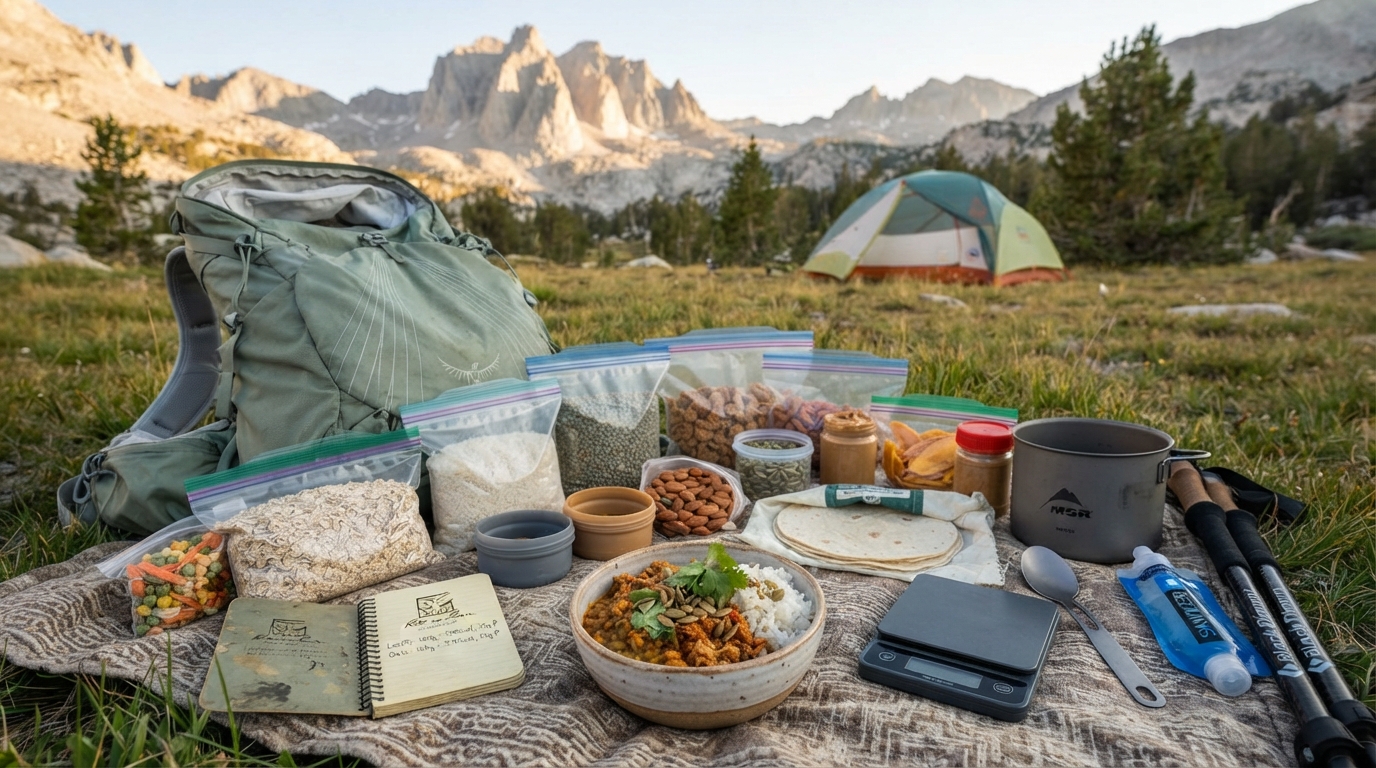
🎒 Pre-Pack Meals at Home
One of the easiest ways to simplify vegan backpacking is to assemble meals before leaving.
Use separate bags for:
DAY 1 BREAKFAST
DAY 1 LUNCH
DAY 1 DINNER
and continue through the trip.
Write the following directly on each package:
- Water amount
- Preparation method
- Soaking or cooking time
- Optional seasonings
This turns meal preparation into a simple routine.
After a long day on the trail, you won’t need to measure ingredients or decide what to cook.
🧪 Test Every Meal Before Your Trip
This step is easy to skip and can save you from a disappointing dinner.
Make the meal at home first.
Check:
- Does it taste good?
- Does the texture work?
- Does it rehydrate properly?
- Is the portion sufficient?
- Does it require too much water?
- Does it take too long?
- Is it easy to clean up afterward?
If you dislike the meal at home, don’t expect exhaustion and a beautiful campsite to magically make it better. 😄
📋 Example 3-Day Vegan Menu
| Day | Breakfast | Lunch | Dinner |
|---|---|---|---|
| Day 1 | Peanut butter banana oats | Bean tortilla | Coconut curry TVP rice |
| Day 2 | Apple cinnamon protein oats | Peanut noodle meal | Lentil tomato pasta |
| Day 3 | Cocoa peanut oatmeal | Refried bean wrap | Instant potato lentil bowl |
Snacks for the trip
Rotate:
- Nuts
- Trail mix
- Peanut butter
- Roasted chickpeas
- Dried fruit
- Vegan protein bars
- Crackers
- Seeds
This creates variety without requiring dozens of different ingredients.
🌱 Final Thoughts
Planning vegan backpacking meals without refrigeration is mostly about changing the format of the food, not sacrificing variety.
Start with shelf-stable ingredients. Build meals around carbohydrates, plant-based protein, fats, and flavor. Use dehydrated beans, lentils, TVP, nuts, seeds, nut butters, dried fruit, instant grains, pasta, and other foods that travel well.
Then make the system easier by portioning everything at home.
The goal isn’t to create complicated gourmet meals in the wilderness.
It’s to create food that is safe, lightweight, nutritious, satisfying, easy to prepare, and enjoyable enough that you’re actually excited to eat it after a long day of hiking. 🥾🌱✨
A little preparation can turn a backpack full of dry ingredients into three days of surprisingly good vegan trail food.