Protein Powder vs Real Trail Food: Which Gives Backpackers More Protein per Ounce?
Why Backpackers Need A Different Protein Comparison
At home, protein foods are often compared by grams per serving, but backpackers have another constraint: every serving has to ride in the pack. A food can look impressive at 20 grams of protein per serving and still be inefficient if that serving weighs several ounces, while a dry powder may deliver similar protein for much less carried weight. 🥾 That makes protein per ounce a more useful trail metric than protein per serving alone.
Protein density still cannot answer the entire menu question because backpacking food must also provide enough calories, fit your appetite, survive the trip, and be easy to prepare. Nuts and peanut butter are not the strongest options for protein per ounce, yet they can be excellent for calorie density and require almost no preparation. The better question is which combination gives useful protein, calories, and practicality for the ounces you carry?
Metric #1: Protein Per Serving
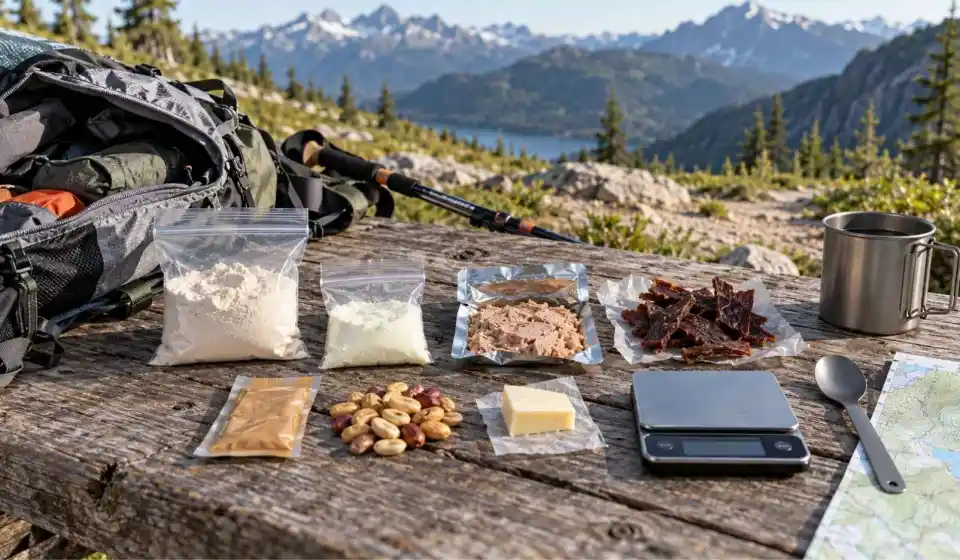
Serving-level protein is a useful starting point because it shows what a normal portion contributes before pack-weight math begins. In these representative labels, whey provides 24 grams of protein per 31 grams, a 2.6-ounce tuna pouch provides 17 grams, jerky about 10 grams per ounce, nonfat dry milk 8 grams per 23 grams, peanut butter 7 grams per 33 grams, peanuts 7 grams per 28 grams, and a small cheese 4 grams per 20 grams.
These are representative label examples, not universal nutrition values, because brands and formulations differ. The table converts each example with protein grams ÷ serving weight in grams × 28.35, using the same formula for calories per ounce. 📊 Recalculate from the exact package you plan to carry.
| Food example | Protein | Calories | Weight | Protein/oz | Calories/oz |
|---|---|---|---|---|---|
| Whey powder | 24 g | 116 | 31 g | 21.9 g | 106 |
| Nonfat dry milk | 8 g | 80 | 23 g | 9.9 g | 99 |
| Tuna pouch | 17 g | 70 | 74 g | 6.5 g | 27 |
| Beef jerky | 10 g | 80 | 28 g | 10.1 g | 81 |
| Peanut butter | 7 g | 190 | 33 g | 6.0 g | 163 |
| Peanuts | 7 g | 160 | 28 g | 7.1 g | 162 |
| Small cheese | 4 g | 70 | 20 g | 5.7 g | 99 |
Metric #2: Protein Per Ounce
Once weight is standardized, whey becomes the clear protein-density leader in this sample at about 21.9 grams of protein per ounce. Jerky follows at roughly 10.1 grams and nonfat dry milk at about 9.9, while peanuts, tuna, peanut butter, and the cheese example fall between roughly 5.7 and 7.1 grams per ounce. Dry powders and dried foods benefit because removing water concentrates nutrients into less carried weight.
Tuna shows why serving-level numbers can mislead a backpacker, because 17 grams of protein sounds strong until its 74-gram ready-to-eat weight is included. It still contributes substantial protein, but its moisture makes it much less weight-efficient than whey, while jerky sits between those extremes. 📦 Nutrition labels also describe net food weight, so wrappers, pouches, bottles, and repackaging add some extra carried weight not shown in the table.
Metric #3: Calories Per Ounce
The ranking changes when you ask how much energy each ounce contributes, so protein density and calorie density should be tracked separately. Peanut butter works out to about 163 calories per ounce and peanuts about 162, compared with roughly 106 for whey, 99 for dry milk, 99 for the cheese example, 81 for jerky, and only 27 for tuna.
That is why peanut butter should not be dismissed as a poor trail protein simply because whey provides far more protein per ounce. Peanut butter and nuts can do more of the menu’s calorie work, while whey can raise protein without many additional ounces, so they solve different packing problems. ⚖️ Replacing too much calorie-dense food with lean protein can force you to add those missing calories elsewhere.
Metric #4: Water And Preparation
Water matters because dry foods let you carry concentrated solids and add treated water later, while a ready-to-eat tuna pouch carries moisture from the trailhead. Whey can mix into water or oatmeal, powdered milk can enrich breakfast, and jerky needs no cooking, while tuna is also ready to eat but carries more water weight. That difference is a pack-out issue rather than evidence that one food is nutritionally “better.”
Practicality can also defeat perfect spreadsheet math after a long hiking day. Protein powder may require thorough mixing, jerky takes more chewing, peanut butter can be messy, and cheese storage depends on the specific product, temperature, trip length, and manufacturer instructions. 🏕️ Do not assume a food is shelf-stable simply because hikers commonly carry it; check the package and conditions of your trip.
Whole Food Vs Powder Is Not A Simple Winner
Whey wins this sample on protein per ounce, but that does not make it the universal best backpacking protein. Whole foods can provide fats, carbohydrates, sodium, texture, variety, and the satisfaction of eating a meal, while powder is better treated as a compact ingredient that fills a specific gap. A tortilla with peanut butter, crackers with tuna, jerky during the day, powdered milk in oats, or cheese with a dry carbohydrate can each earn its place differently.
The opposite mistake is rejecting powder simply because it is a supplement rather than conventional trail food. If you already tolerate and enjoy it, a dry powder can increase menu protein without many extra ounces, and no claim about superior muscle recovery is needed to justify that math. 🌲 Powder excels at concentrated protein, while whole foods often perform more jobs at once.
Build A Mixed Protein System
A practical menu can spread protein across breakfast, snacks, lunch, and dinner instead of relying on one source. Breakfast might use powdered milk or whey in oats, daytime food could include jerky, nuts, or peanut butter, lunch could use tuna when its extra weight is worth the convenience, and dinner could use a protein-containing ingredient or freeze-dried meal selected from its current label. This also reduces flavor fatigue on multi-day trips.
Start with your food-weight and calorie plan, then check whether the menu contains the protein amount you intend to eat without sacrificing too much energy density. If your protein target needs to account for a medical condition, individualized health concern, or specialized training situation, consult a qualified healthcare professional rather than treating general backpacking calculations as personalized nutrition advice. The Camp Kitchen Lab approach is simple: use transparent label math so every ounce has a clear job.
How To Compare Any Trail Protein Yourself
At the store, write down three numbers from the label: protein grams, calories, and serving weight in grams. Convert protein and calories to a one-ounce basis, then note water, cooking, packaging, cleanup, cost, storage requirements, and whether you would willingly eat the food repeatedly. 🔢 That small worksheet tells you more about trail usefulness than “high protein” marketing alone.
Pair the calculation with a Trail Food Macros Cheat Sheet, Calories Per Ounce: 125+ Foods, How Much Food Weight Per Day?, and a high-protein menu template. One column may favor whey, another peanut butter, another jerky, while convenience may make tuna worth carrying despite its water weight, so there is no need to force one winner across every category. The strongest question is: Which mix gives me the protein, calories, convenience, and variety I want for the least unnecessary pack weight?