How to Plan Backpacking Meals for a Group With Different Dietary Preferences
Introduction 🥾🍲
Planning food for one backpacker is already a balancing act.
Planning for six people who all eat differently can feel like a completely different challenge.
One person is vegetarian. Another avoids gluten. Someone else cannot eat dairy. One hiker wants high-protein meals, while another simply wants familiar comfort food. Then there may be allergies that require much more careful planning than ordinary food preferences.
The solution isn’t to create a completely separate menu for every person.
Instead, build a shared meal system where the basic ingredients overlap, dietary restrictions are identified early, and only the parts that truly need to be different are separated.
This can save pack weight, reduce cooking time, simplify shopping, and make group meals much less stressful. 🏕️
1. Start With a Dietary Checklist
Before buying anything, ask every person in the group for their requirements.
Don’t rely on assumptions.
Create a simple list containing:
- Allergies
- Intolerances
- Vegetarian or vegan requirements
- Gluten-free requirements
- Religious or cultural food restrictions
- Foods someone refuses to eat
- Preferred protein sources
- Foods they cannot tolerate during strenuous activity
- Medical dietary requirements, if voluntarily shared
There is an important distinction between a preference and an allergy.
If someone reports a food allergy, treat it as a safety issue rather than simply a dislike.
Ask what precautions they normally use and follow their established requirements. If cross-contact is a concern, shared utensils, cookware, packaging, and preparation surfaces may need additional planning.
2. Separate “Must Avoid” From “Would Prefer”
Not every dietary difference needs a separate meal.
Create three categories:
Must avoid 🚫
Examples:
- Specific allergens
- Gluten for someone who medically needs to avoid it
- Animal products for a strict vegan
- Other foods that a person cannot safely consume
Strong preference
Examples:
- Doesn’t like spicy food
- Prefers savory breakfasts
- Doesn’t enjoy certain textures
Nice to have
Examples:
- Favorite snack
- Preferred flavor
- Favorite dessert
This helps you prioritize the issues that actually affect meal design.
3. Build a Common Base
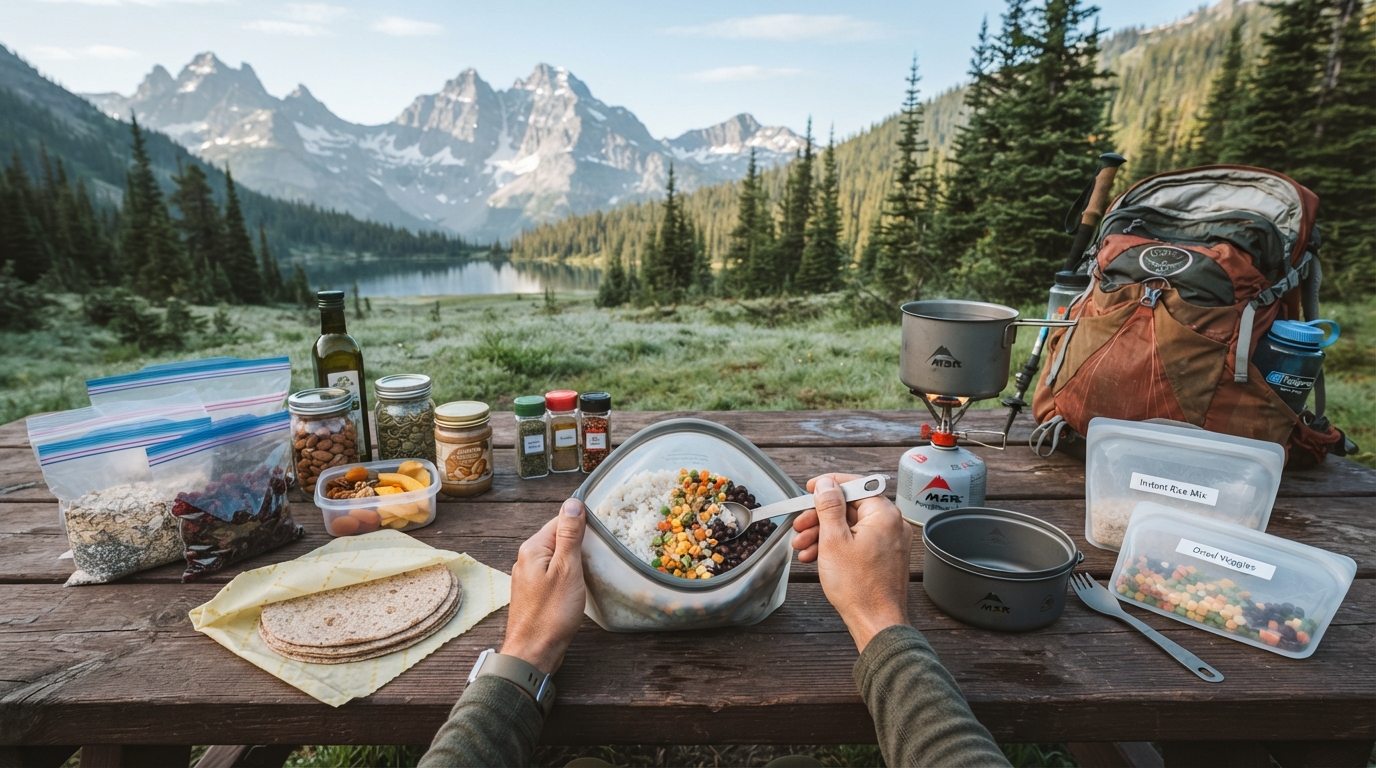
The easiest group menus often start with ingredients that everyone can eat.
For example, a dinner might use:
Base: rice
Protein: beans
Vegetables: dried vegetables
Flavor: spices
Then individual hikers can customize their portions.
One person might add cheese.
Another might add a plant-based protein.
Someone else might add a separate sauce.
The main meal stays shared.
Think “base + add-ons”
This approach works particularly well for:
- Rice bowls
- Oatmeal
- Couscous meals
- Tortilla wraps
- Noodle bowls
- Trail mixes
- Snack boxes
It prevents you from carrying six completely different dinners.
4. Choose Meals That Are Naturally Flexible 🌱
Some meals are much easier to adapt than others.
Flexible breakfast
Oats
Everyone starts with the same oats.
Then customize with:
- Nut butter
- Seeds
- Dried fruit
- Powdered milk
- Plant-based milk powder
- Cinnamon
- Brown sugar
Flexible dinner
Rice + vegetables + protein
Possible additions include:
- Beans
- Lentils
- Dehydrated meat
- Shelf-stable protein
- Nuts or seeds
- Olive oil
- Seasonings
Flexible lunch
Tortilla or crackers + spread + protein
Keep the ingredients separate so each person can assemble a combination that works for them.
5. Don’t Assume “Vegetarian” Means “Vegan”
This is an easy mistake.
A vegetarian may eat:
- Eggs
- Dairy
- Cheese
- Yogurt
A vegan diet excludes animal-derived foods.
However, individual definitions and practices can vary, so ask the person directly rather than guessing.
For group planning, write down the exact requirement.
For example:
Alex: vegetarian, eats dairy and eggs
Sam: vegan
That’s much clearer than writing:
Alex: no meat
6. Treat Allergies Differently From Preferences ⚠️
Food allergies deserve additional attention.
If someone has an allergy, ask them what foods and ingredients they need to avoid and what precautions they normally follow.
Read ingredient labels carefully.
Don’t assume that a product is safe because it sounds simple.
For example, a flavored snack mix may contain an allergen even when the main ingredients seem appropriate.
Cross-contact can also matter.
Depending on the allergy, sharing:
- Utensils
- Cooking pots
- Spoons
- Cutting surfaces
- Food containers
may create a problem.
If the person has a serious allergy, follow their established safety plan and consider discussing the group’s food-preparation procedures before the trip.
7. Create One Shared Grocery List 🛒
Instead of shopping separately for every person, organize the list by food category.
Breakfast
- Oats
- Dried fruit
- Seeds
- Nut butter
- Milk powder or suitable alternative
Lunch
- Tortillas
- Crackers
- Nut or seed butter
- Shelf-stable protein
- Dried vegetables
Dinner
- Rice
- Beans
- Lentils
- Dehydrated vegetables
- Seasonings
- Olive oil
Snacks
- Unsalted nuts
- Dried fruit
- Bars
- Roasted chickpeas
- Whole-grain snacks
Then mark which ingredients are suitable for each person.
This makes substitutions much easier.
8. Use a Meal Matrix
A simple table can prevent mistakes.
| Meal | Shared Base | Vegetarian | Vegan | Gluten-Free |
|---|---|---|---|---|
| Breakfast | Oats | ✓ | ✓ with suitable toppings | Use certified GF oats if required |
| Lunch | Tortillas | ✓ | ✓ | Use GF tortillas/crackers |
| Dinner | Rice + vegetables | ✓ | ✓ | ✓ if ingredients are GF |
| Snack | Nuts + fruit | ✓ | ✓ | ✓ if labels are suitable |
This isn’t a substitute for checking labels.
It is simply a planning tool.
If allergies are involved, use the actual product ingredients and the person’s established requirements.
9. Pack Add-Ons Separately
You don’t need to make every person eat exactly the same meal.
Pack small additions separately.
For example:
Shared dinner: rice + vegetables + beans
Add-ons:
- Cheese
- Meat
- Hot sauce
- Nutritional yeast
- Seeds
- Olive oil
- Different seasonings
This creates variety without adding an entirely new meal.
Keep the add-ons small
Remember that every additional ingredient has to be carried.
A group meal with ten separate toppings can become unnecessarily heavy.
Choose a few versatile options instead.
10. Calculate Portions Before You Pack 🧮
Group meals can go wrong in two opposite ways:
Not enough food
or
Way too much food.
Start by estimating the number of people and days.
For example:
6 people × 4 dinners = 24 dinner portions
Then determine the amount of each ingredient needed per portion.
Don’t forget that hiking appetites can vary significantly.
Someone doing long, demanding days may need more food than someone doing shorter mileage.
It can be useful to give individual hikers some control over their snack supply while coordinating shared meals centrally.
11. Don’t Make One Person Carry All the Food
Group food should generally be distributed according to the group’s overall plan rather than simply handing one person the entire food bag.
Separate food into categories:
- Breakfast
- Lunch
- Dinner
- Snacks
- Emergency food
Then divide the load among the group.
A lightweight food bag or dedicated food container can make organization easier.
If the route has food-storage requirements, such as bear-resistant containers, follow the rules for the area you’re hiking in.
12. Plan Around the Cooking Method
A meal that works beautifully at home may be annoying on the trail.
Ask:
Do we have a stove?
How much fuel are we carrying?
Can the meal be cold-soaked?
How many pots do we have?
Can everyone eat from the same pot?
For a mixed-diet group, meals requiring separate pots can create extra weight and cleanup.
One-pot meals with separate add-ons are often easier.
13. Don’t Forget Breakfast and Snacks
Dinner tends to receive most of the attention, but dietary differences can become even more obvious during snacks.
One person may eat dairy-based protein bars.
Another may need gluten-free snacks.
Another may avoid nuts.
Create a personal snack list for each hiker.
Example
Hiker A: nuts + dried fruit + bars
Hiker B: nut-free bars + dried fruit
Hiker C: vegan snacks + roasted chickpeas
Hiker D: gluten-free crackers + seeds
This keeps individual preferences from complicating every shared meal.
14. Build a Backup Food Plan
Unexpected situations happen.
Someone may drop a meal.
A stove may malfunction.
A hiker may discover they are hungrier than expected.
A meal may simply be unappealing after a long day.
Pack a small amount of backup food that fits the group’s dietary requirements.
Good options might include:
- Dried fruit
- Suitable energy bars
- Nuts or seeds
- Nut or seed butter
- Crackers
- Shelf-stable snacks
Make sure the backup food is actually compatible with the relevant restrictions.
15. Keep Food Labels Until the Trip Is Over
This is especially useful when allergies or strict dietary restrictions are involved.
If you repackage food into bags, consider keeping the original packaging or photographing ingredient labels before leaving.
This makes it easier to check:
- Ingredients
- Allergen information
- Serving sizes
- Preparation instructions
Label repackaged food clearly.
For example:
DAY 2 DINNER — VEGAN — GLUTEN-FREE
This simple system can prevent confusion when everyone is tired and hungry.
16. Example: A Four-Day Mixed-Diet Menu 🏕️
Imagine a group containing:
- Two omnivores
- One vegetarian
- One vegan
- One gluten-free hiker
Instead of creating five separate menus, build shared meals.
Breakfast
Day 1: Oats + dried fruit + seeds
Day 2: Nut butter + banana tortilla or GF wrap
Day 3: Overnight oats + berries
Day 4: Oats + nuts + cinnamon
Use appropriate gluten-free ingredients where required.
Lunch
Day 1: Crackers + hummus + dried vegetables
Day 2: Wraps with customizable fillings
Day 3: Nut butter + dried fruit wraps
Day 4: Snack-style lunch with nuts, fruit, crackers, and suitable protein
Dinner
Day 1: Rice + beans + vegetables + optional meat add-on
Day 2: Noodles + vegetables + separate protein options
Day 3: Couscous or suitable grain + lentils + vegetables
Day 4: Rice bowls with remaining ingredients
The important idea is not the exact menu.
It’s the system.
The Best Group Menu Is Usually a Modular Menu 🧩
Think of your backpacking meals like building blocks.
Block 1: Base
Rice, oats, tortillas, crackers, noodles, or another suitable grain.
Block 2: Protein
Beans, lentils, nuts, seeds, meat, fish, or another suitable option.
Block 3: Fruit or vegetables
Fresh foods for short trips or dehydrated/shelf-stable options for longer trips.
Block 4: Flavor
Spices, sauces, oils, herbs, or seasoning blends.
Block 5: Personal add-ons
Cheese, meat, plant-based protein, preferred seasonings, or other individual options.
This system lets the group share most of the menu while still respecting individual dietary requirements.
Final Thoughts 🌟
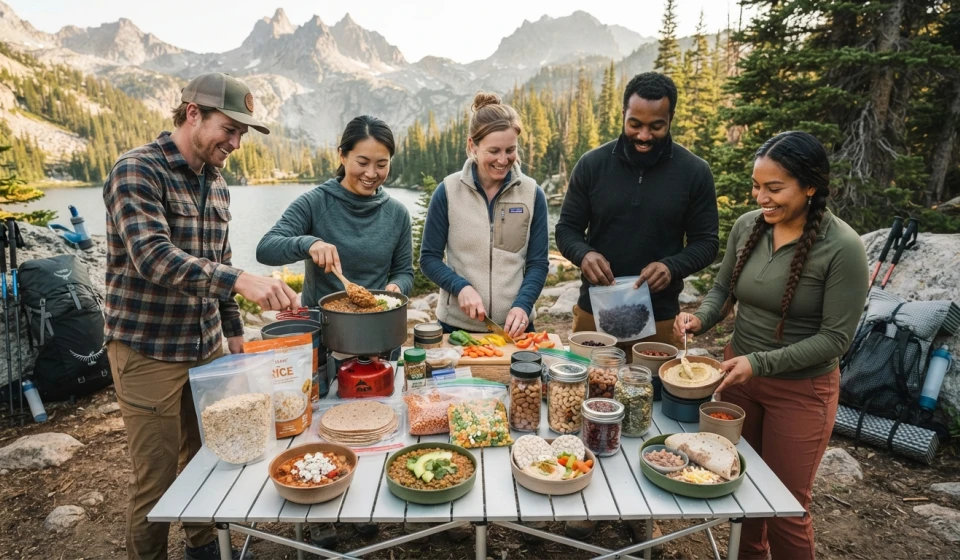
Planning backpacking meals for a group with different dietary preferences doesn’t have to mean packing a separate kitchen for every person.
The easiest approach is to identify true dietary requirements first, then build flexible meals around shared ingredients.
Use modular meals. Keep add-ons separate. Read labels carefully. Treat allergies as safety concerns rather than ordinary preferences. Calculate portions before the trip, distribute the food weight among the group, and keep a backup snack supply.
Most importantly, talk about dietary needs before everyone arrives at the trailhead.
A few minutes of planning at home can prevent a lot of confusion when you’re tired, hungry, and several miles from the nearest grocery store. 🥾🌲
One shared base, a few smart substitutions, and clearly labeled personal options can turn a complicated group menu into a simple trail-food system.