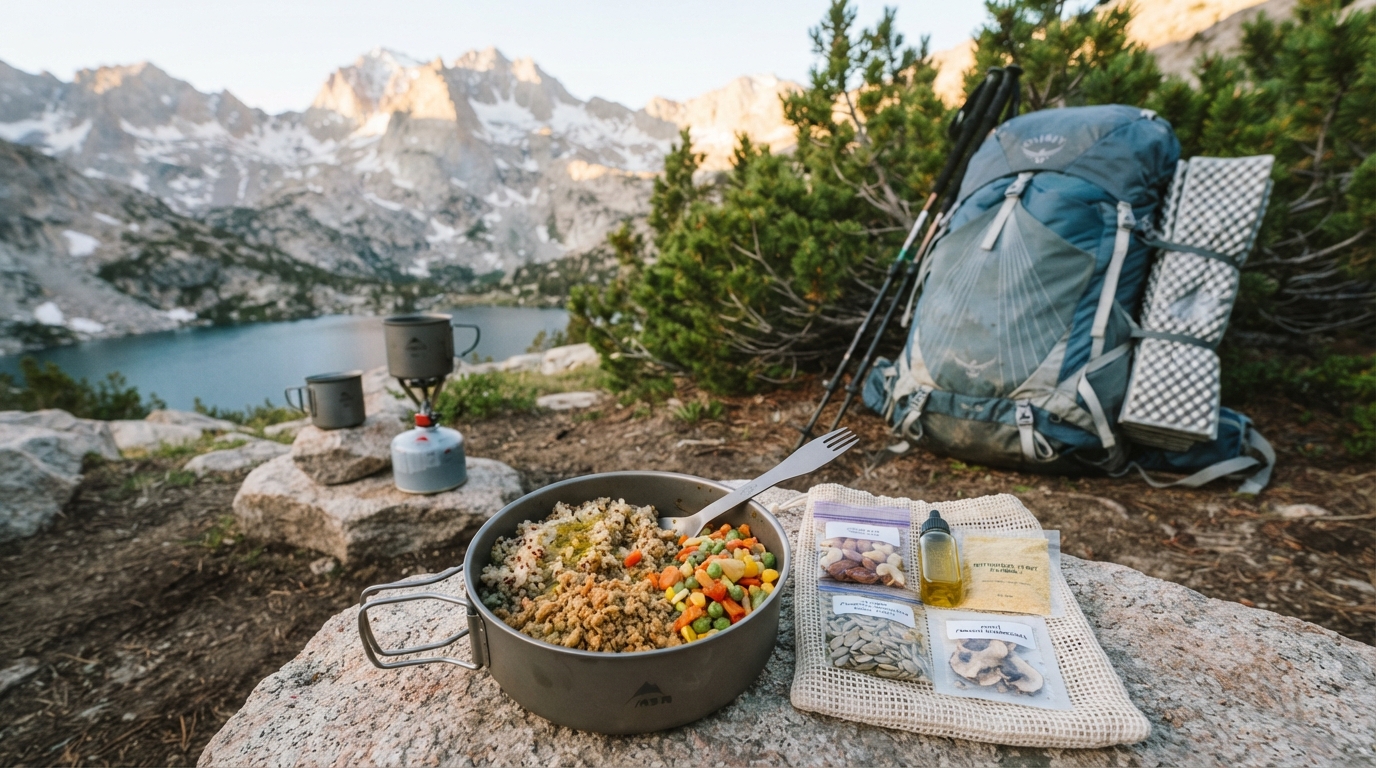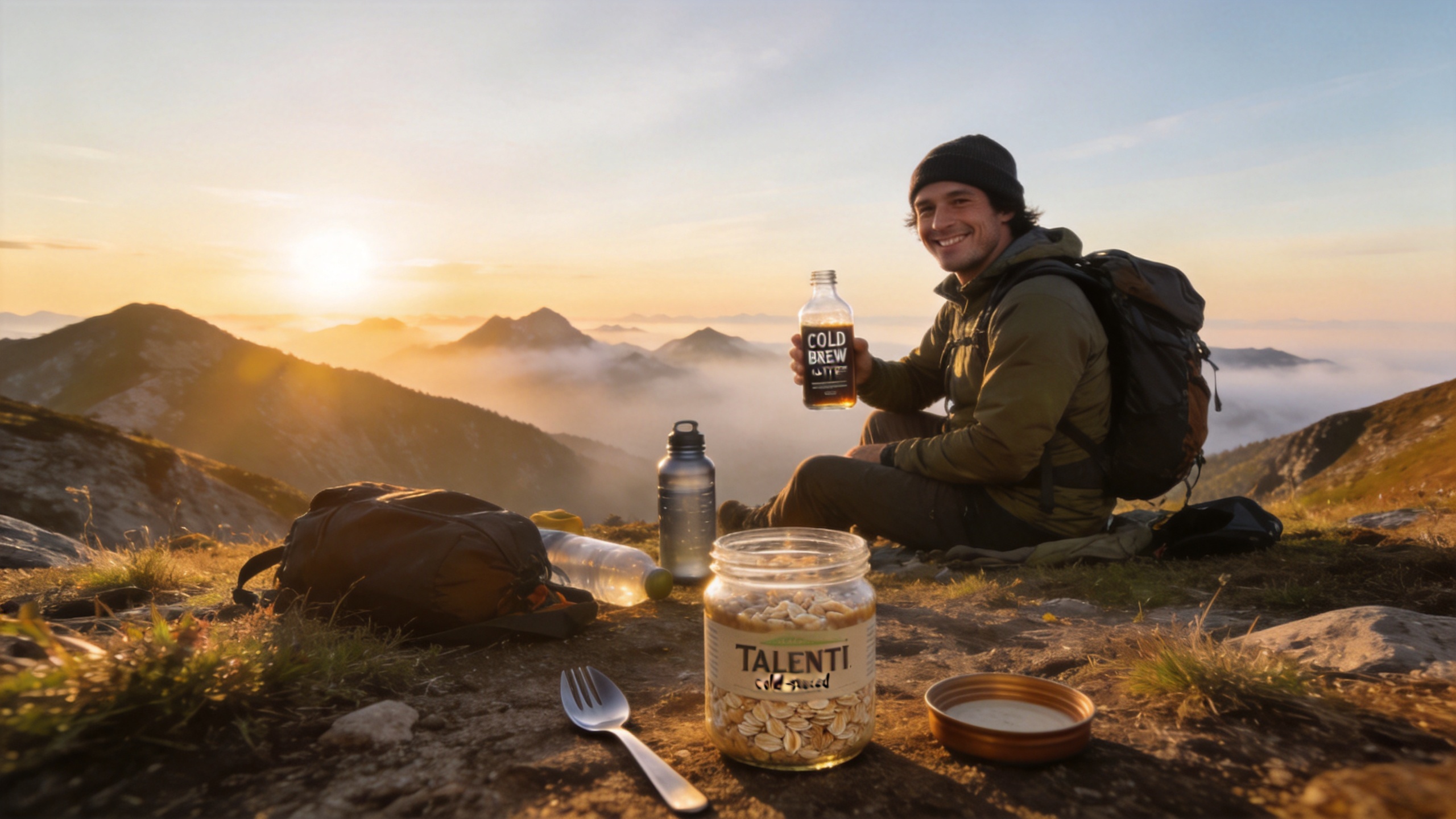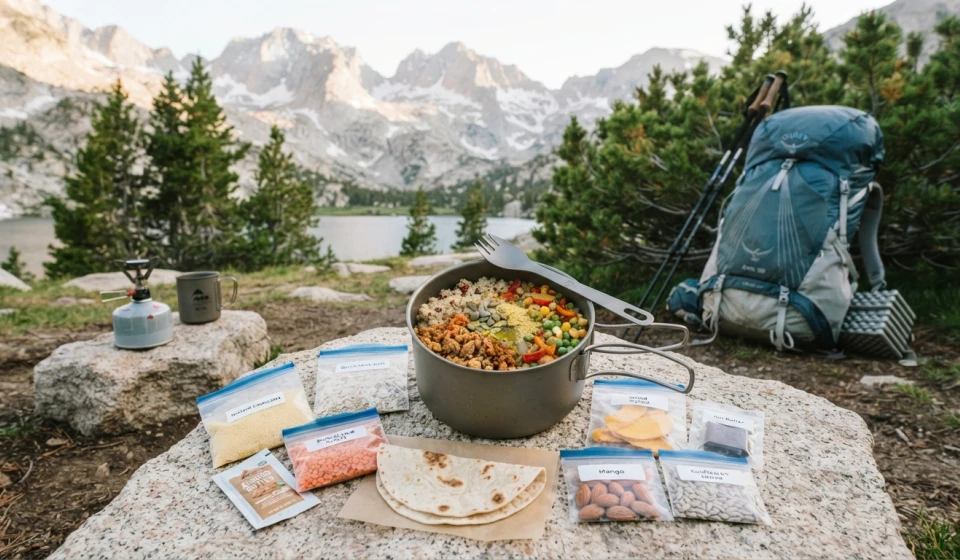
How to Build a Vegetarian Backpacking Menu From Shelf-Stable Foods 🥾🌱
Introduction
A vegetarian backpacking menu doesn’t have to mean carrying fresh vegetables, heavy cans, or bulky refrigerated foods.
With the right combination of dry grains, legumes, dehydrated vegetables, nuts, seeds, dairy products, and shelf-stable packaged foods, you can build meals that are practical for the trail without relying on meat.
The trick is to plan for more than just nutrition.
A good backpacking menu also needs to be:
- Lightweight
- Shelf-stable
- Easy to prepare
- Calorie-dense enough for your trip
- Satisfying after a long hiking day
- Reasonably simple to pack and clean up
Think of your menu as a small food system rather than a collection of random snacks. 🌲
1. Start With Your Trip, Not the Recipes
Before choosing food, determine what the trip requires.
Consider:
Trip length: How many breakfasts, lunches, dinners, and snacks do you need?
Cooking setup: Will you boil water only, or can you actually cook?
Resupply: Can you purchase food along the route?
Weather: Will temperatures affect food texture, melting, or storage?
Water availability: How much water can you reasonably use for cooking?
Food restrictions: Are you vegetarian, lacto-vegetarian, or following another dietary pattern?
Pack weight: How much food weight are you comfortable carrying?
These details influence which shelf-stable ingredients make sense.
2. Build Your Menu Around Four Components 🍚
A simple way to construct vegetarian backpacking meals is:
Carbohydrate + Protein + Fat + Flavor
You can then add vegetables or fruit where practical.
Carbohydrate
Useful shelf-stable choices include:
- Instant rice
- Couscous
- Quick-cooking pasta
- Instant potatoes
- Oats
- Noodles
- Tortillas
- Crackers
Protein
Depending on your diet, consider:
- TVP
- Dried soy products
- Dehydrated lentils
- Dehydrated beans
- Peanut butter
- Nuts and seeds
- Powdered milk
- Shelf-stable cheese
- Powdered egg products
Fat
Fat is particularly useful in backpacking because it provides approximately 9 calories per gram.
Options include:
- Olive oil
- Peanut butter
- Nut butter
- Nuts
- Seeds
- Cheese
Flavor
Don’t underestimate this category.
Useful lightweight flavor ingredients include:
- Bouillon
- Curry powder
- Chili flakes
- Garlic powder
- Onion powder
- Soy sauce packets
- Nutritional yeast
- Taco seasoning
- Lemon powder
A nutritionally adequate meal that tastes terrible is still a disappointing trail meal.
3. Choose Foods That Pack Well
Shelf-stable doesn’t automatically mean backpacking-friendly.
A can of beans may be shelf-stable, but the can adds substantial packaging weight.
Instead, consider dehydrated or freeze-dried versions.
For example:
At home: Cooked beans in a can
On the trail: Dehydrated beans or refried bean powder
The same basic ingredient can serve a similar purpose while requiring less pack space and weight.
Look at the entire package, not just the food itself.
4. Don’t Forget Protein 🌱
Vegetarian backpacking meals can provide plenty of protein, but you need to plan for it.
A bowl of plain rice with dehydrated vegetables may be filling, but it isn’t necessarily a high-protein meal.
Add a concentrated protein source.
For example:
Rice + vegetables + TVP + peanut sauce
is more nutritionally substantial than:
Rice + vegetables
Similarly:
Instant potatoes + dehydrated lentils + olive oil
can provide a more complete meal structure than potatoes alone.
Check the nutrition labels of packaged ingredients so you know how much protein you’re actually packing.
5. Use Calorie-Dense Foods Strategically 🔥
Backpacking increases the importance of food weight.
Foods containing more fat can provide more calories per gram than foods that are mostly carbohydrate or protein.
This makes ingredients such as olive oil, nuts, seeds, and nut butter particularly useful.
For example, adding a measured portion of olive oil to a rice-and-bean dinner can substantially increase its energy content without adding much weight.
Don’t pour oil into a bag and guess.
Measure it at home and package the amount needed for each meal.
6. Build a Simple Vegetarian Breakfast
Breakfast doesn’t need to be complicated.
Option: Peanut Butter Oatmeal
Pack:
- Quick oats
- Powdered milk, if desired
- Peanut butter powder or nut butter
- Chia seeds
- Dried banana or raisins
- Cinnamon
At camp, add hot water and allow the oats to soften.
The oats provide carbohydrates, while the peanut butter, milk powder, and seeds can contribute protein and fat.
Another option: Breakfast Couscous
Combine:
- Couscous
- Powdered milk
- Dried fruit
- Nuts
- Cinnamon
- Small amount of brown sugar
Add hot water and allow it to hydrate.
This can be a useful alternative if you’re tired of oatmeal every morning.
7. Make Lunch Simple 🥜
Lunch is often better when it requires little or no cooking.
Try building lunch around:
Tortilla + Peanut Butter
Add:
- Peanut butter
- Dried fruit
- Seeds
Or try:
Hummus-Style Wrap
Use shelf-stable powdered hummus mix with:
- Tortilla
- Dehydrated vegetables
- Seasoning
- Olive oil
Prepare the hummus according to the package instructions.
Shelf-stable tortillas can also be useful because they don’t require refrigeration before opening, depending on the product.
Always follow package storage instructions.
8. Build Satisfying Vegetarian Dinners 🍲
Dinner is where you can make the menu feel more substantial.
Rice and Lentil Curry
Pack:
- Instant rice
- Dehydrated lentils
- Dehydrated vegetables
- Curry powder
- Coconut milk powder
- Salt
Rehydrate according to the ingredients’ requirements.
Add a measured amount of oil if you need additional calories.
TVP Taco Bowl
Pack:
- Instant rice
- TVP
- Dehydrated corn
- Dehydrated peppers
- Taco seasoning
- Cheese powder or nutritional yeast
- Olive oil
Add hot water and allow the ingredients to rehydrate.
Loaded Instant Potatoes
Combine:
- Instant mashed potatoes
- Dehydrated lentils
- Dehydrated vegetables
- Cheese or powdered cheese
- Seasoning
- Olive oil
The result is fast, warm, and comforting after a long day.
9. Add Snacks That Actually Contribute Nutrition 🥜
Snacks shouldn’t be an afterthought.
Useful vegetarian backpacking snacks include:
- Nuts
- Trail mix
- Nut butter
- Seeds
- Dried fruit
- Energy bars
- Crackers
- Pretzels
- Roasted chickpeas
- Peanut butter packets
Choose based on your calorie requirements and food preferences.
If you’re hiking many hours each day, snacks can provide a substantial portion of your total energy intake.
10. Think About Fiber, Too
Vegetarian diets can naturally contain a lot of fiber because they often include legumes, grains, nuts, seeds, fruits, and vegetables.
That’s generally useful as part of a balanced diet.
But there is a backpacking-specific consideration:
Don’t dramatically increase your fiber intake on the trail.
If you’re not accustomed to large amounts of beans, lentils, chia, or high-fiber foods, suddenly eating huge portions may cause gas, bloating, or gastrointestinal discomfort.
Test your menu before the trip.
Your digestive system should be part of your gear-testing process. 😄
11. Create a Daily Food Spreadsheet 📊
A simple table can prevent accidental underpacking.
| Meal | Food | Calories | Protein | Weight |
|---|---|---|---|---|
| Breakfast | Peanut butter oats | — | — | — |
| Snack | Trail mix | — | — | — |
| Lunch | Hummus tortilla | — | — | — |
| Snack | Nut butter + crackers | — | — | — |
| Dinner | TVP rice bowl | — | — | — |
| Daily total | — | — | — |
Fill in the actual numbers from the products you’re buying.
This lets you see whether the menu provides enough food before you leave home.
It also makes scaling easier.
If your trip changes from three days to five days, you can multiply the individual meal components instead of rebuilding the entire menu.
12. Consider Calories Per Ounce
Backpacking food is a balance between nutrition and weight.
For example, fresh vegetables contain valuable nutrients but also contain a lot of water.
Dehydrating vegetables removes much of that water and makes them much more practical for backpacking.
Similarly, nuts, seeds, oils, and nut butters can provide substantial calories in relatively small amounts.
You don’t need every ingredient to have the highest possible calorie density.
Instead, balance:
nutrition + calories + protein + weight + taste
That combination produces a more practical menu.
13. Package Meals Before You Leave 🥡
Pre-portioning your meals can make camp cooking much easier.
For each dinner, place the dry ingredients into a labeled bag.
Write on the package:
- Meal name
- Water amount
- Cooking or soaking instructions
- Approximate rehydration time
- Any ingredients that must be added separately
For example:
TVP Taco Bowl
Water: follow tested recipe amount
Rest: until ingredients are fully hydrated
Add: olive oil after rehydration
This prevents you from having to remember complicated recipes when you’re tired.
14. Test the Menu at Home
Never assume a recipe will work on the trail simply because all the ingredients look compatible.
Test it.
Make the exact meal using:
- The same ingredients
- The same portions
- The same cooking method
- Approximately the same water amount
Then ask:
Is it filling?
Is the flavor good?
Does it rehydrate properly?
Is the portion large enough?
Is it too salty?
Does it require too much fuel?
Would I actually want to eat this after hiking all day?
If the answer is no, change it before packing five identical dinners.
15. A Sample One-Day Vegetarian Menu 🌲
Here’s a simple example structure:
Breakfast
Peanut butter oatmeal with dried fruit
Morning Snack
Trail mix
Lunch
Peanut butter tortilla with dried fruit and seeds
Afternoon Snack
Crackers with nut butter
Dinner
TVP, rice, and vegetable bowl with olive oil
Evening Snack
Dark chocolate and nuts
The exact calories, protein, and weight depend entirely on the brands and portion sizes you select.
That’s why you should calculate the actual nutrition information from your chosen products rather than relying on generic estimates.
Final Thoughts
Building a vegetarian backpacking menu from shelf-stable foods is much easier when you stop thinking in terms of “What vegetarian food can I bring?” and start thinking in terms of “What does each meal need to accomplish?” 🥾
Choose a reliable carbohydrate base. Add a concentrated protein source. Include an appropriate amount of calorie-dense fat. Add vegetables and seasonings for variety. Then calculate the actual calories, protein, and weight using the products you plan to carry.
Most importantly, test everything before your trip.
A successful trail menu isn’t necessarily complicated or gourmet.
It’s food that is lightweight, shelf-stable, easy to prepare, satisfying after a long day, and realistic for the conditions you’ll actually encounter.
With a little planning, vegetarian backpacking can be both practical and genuinely enjoyable. 🌱🏕️