How to Replace Meat in Backpacking Meals Without Losing Protein or Calories 🥾🌱
Introduction
Going meat-free on a backpacking trip doesn’t mean settling for tiny meals or living on plain oatmeal.
The real challenge is replacing what meat contributes to a trail menu: concentrated protein, calories, convenience, and relatively easy storage.
That means simply removing the chicken, beef, or tuna from a meal isn’t enough. You need a replacement that fits the realities of backpacking: light weight, shelf stability, easy preparation, and enough nutrition to support long days on the trail.
Fortunately, there are plenty of practical options.
With the right combination of legumes, soy foods, dairy or egg products, nuts, seeds, grains, and dehydrated ingredients, you can build vegetarian or vegan backpacking meals that remain satisfying and nutritionally substantial. 🥜🌱
Start With Protein, Not Just a “Meat Substitute”
When planning a backpacking meal, don’t ask only:
“What can replace the meat?”
Instead ask:
“What combination will replace the protein, calories, and function that the meat provided?”
For example, replacing chicken with a small amount of vegetables may preserve the meal’s flavor but won’t provide an equivalent amount of protein or energy.
Think of your meal as several building blocks:
Protein + carbohydrate + fat + flavor + hydration
That makes it easier to create meals that actually work on the trail.
Best Shelf-Stable Protein Options 🫘
1. Textured Vegetable Protein
Textured vegetable protein, often made from soy flour, can be especially useful for backpacking.
It is:
- Lightweight
- Dry
- Shelf-stable
- Easy to rehydrate
- Relatively protein-dense
TVP works particularly well in chili, taco-style fillings, pasta sauces, and rice bowls.
Season it aggressively because plain TVP can taste fairly neutral.
2. Soy Curls or Similar Dried Soy Products
Dried soy-based products can provide substantial protein while adding a meatier texture to meals.
They can work in:
- Stir-fries
- Curry
- Noodle bowls
- Rice dishes
- Wrap fillings
Check the package instructions because different products have different preparation requirements.
3. Lentils and Beans
Dehydrated or freeze-dried legumes can be useful backpacking ingredients.
They’re especially good in:
- Chili
- Lentil curry
- Bean-and-rice bowls
- Soup
- Burrito-style meals
Beans and lentils provide both protein and carbohydrates, along with dietary fiber.
The tradeoff is that whole legumes generally aren’t as calorie-dense as fats, so pairing them with olive oil, nuts, seeds, or another energy-dense ingredient can make the meal more suitable for backpacking.
4. Powdered Milk or Dairy Ingredients 🥛
For hikers who consume dairy, powdered milk can add protein and calories without carrying refrigerated milk.
It can be mixed into:
- Oatmeal
- Mashed potatoes
- Pasta sauces
- Soups
- Hot cereal
Some powdered dairy products are more protein-focused than others, so check the nutrition label rather than assuming all milk powders provide the same amount.
5. Powdered Egg
For hikers who eat eggs, shelf-stable powdered egg products can be useful in appropriate meals.
They can work in:
- Breakfast scrambles
- Rice bowls
- Savory oatmeal
- Dehydrated casseroles
Follow the product’s preparation and food-safety instructions carefully.
Don’t Forget Calories 🔥
Protein gets a lot of attention, but backpackers also need enough energy.
This is where some meat replacements can create a problem.
For example, a very lean protein source may provide plenty of protein while contributing relatively few calories.
Backpacking meals often benefit from adding energy-dense ingredients such as:
🥜 Peanut or other nut butter
🫒 Olive oil
🌻 Sunflower seeds
🥥 Coconut-based ingredients
🌰 Nuts
🧀 Hard or shelf-stable cheese where appropriate
Fat provides about 9 calories per gram, compared with approximately 4 calories per gram for protein and carbohydrate.
That makes fats an efficient way to increase the energy content of a meal without adding a large amount of food weight.
Build a Simple Backpacking Meal Formula
A useful starting formula is:
1. Choose a carbohydrate base
Examples:
- Instant rice
- Couscous
- Quick-cooking pasta
- Instant potatoes
- Noodles
- Oats
2. Add a concentrated protein
Examples:
- TVP
- Dehydrated lentils
- Soy-based dried products
- Powdered milk
- Powdered egg
3. Add a calorie booster
Examples:
- Olive oil
- Nut butter
- Nuts
- Seeds
- Cheese
4. Add vegetables and flavor
Try:
- Dehydrated vegetables
- Freeze-dried vegetables
- Dried mushrooms
- Bouillon
- Curry powder
- Chili
- Garlic
- Onion
- Nutritional yeast
This modular approach makes it much easier to adjust meals for your calorie and protein needs.
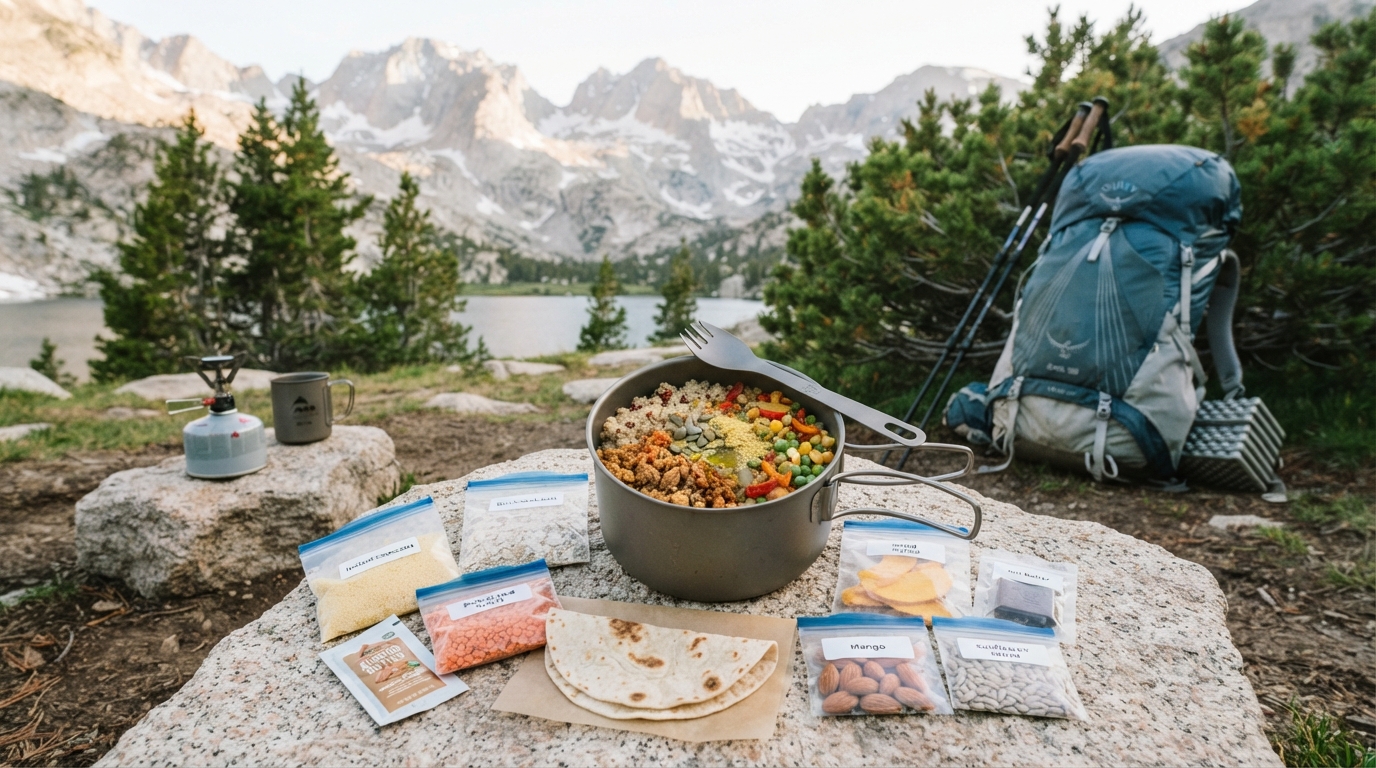
Example: Replace Chicken in a Rice Bowl 🍚
Suppose your usual trail meal contains chicken, rice, vegetables, and sauce.
Instead of simply removing the chicken, rebuild the meal:
Base: Instant rice
Protein: TVP or dehydrated soy pieces
Vegetables: Dehydrated peppers and carrots
Calories: Olive oil
Flavor: Peanut sauce, soy sauce powder, garlic, and chili
Now the meal still has the structure of a complete dinner.
The important part is that you’re replacing the function of the meat rather than just its physical presence.
Example: Meatless Backpacking Chili 🌶️
A simple meat-free chili can combine:
- Instant rice
- Dehydrated beans
- TVP
- Tomato powder
- Dried onions
- Chili powder
- Cumin
- Olive oil
The beans and TVP provide protein.
Rice provides carbohydrates.
Olive oil increases energy density.
Spices and tomato powder provide flavor without requiring fresh ingredients.
Example: High-Protein Breakfast
You don’t have to save protein for dinner.
Try combining:
- Instant oats
- Powdered milk or another suitable protein ingredient
- Peanut butter
- Chia or ground flaxseed
- Dried fruit
The oats and fruit provide carbohydrates, while the milk powder, peanut butter, and seeds contribute protein and fat.
This can be particularly useful when you’re trying to distribute protein across several meals rather than consuming most of it at dinner.
Check the Numbers Before You Pack 📊
Backpacking is not the time to discover that your “high-protein” dinner contains far less protein than expected.
Check the nutrition labels of your ingredients.
For each meal, record:
| Ingredient | Weight | Calories | Protein |
|---|---|---|---|
| Carb base | — | — | — |
| Protein source | — | — | — |
| Fat source | — | — | — |
| Vegetables | — | — | — |
| Seasonings | — | — | — |
| Total | — | — | — |
Then multiply the meal totals by the number of days you’ll be eating it.
This is much more reliable than estimating from memory.
Think About Calories Per Ounce ⚖️
For backpacking, nutrition isn’t the only consideration.
Food weight matters.
Two meals can contain the same number of calories while having very different weights.
Ingredients containing more fat tend to provide more calories per gram because fat contains about 9 calories per gram.
That is why a vegetarian backpacking menu shouldn’t consist entirely of low-calorie vegetables, fresh fruit, and very lean protein sources.
Those foods can be nutritious, but they may not provide enough energy for their weight.
Instead, combine nutritious ingredients with appropriately energy-dense foods.
Watch Fiber Before a Big Hiking Day
Beans, lentils, seeds, and whole grains can provide useful fiber.
But suddenly eating very large amounts of fiber on a strenuous trip may cause bloating or gastrointestinal discomfort, particularly if your usual diet is relatively low in fiber.
If you’re introducing more legumes or other high-fiber foods, test them during training hikes first.
Your backpacking menu should be tested before the trip, not experimented with for the first time halfway through a long trail day.
Test Your Meals at Home First 🏕️
This is one of the easiest ways to avoid a disappointing trail dinner.
Before packing several days of a new meal:
- Make one serving at home.
- Weigh the ingredients.
- Record calories and protein.
- Dehydrate ingredients if necessary.
- Rehydrate the meal using your planned method.
- Taste it.
- Adjust the seasoning.
- Test the portion size.
Pay attention to how much water the meal actually needs.
A recipe that looks perfect on paper can become watery, crunchy, bland, or overly salty after rehydration.
Don’t Forget Sodium and Hydration
Backpacking food can become surprisingly salty because dehydrated meals, bouillon, seasoning mixes, soy sauce products, and packaged foods may contain substantial sodium.
Read nutrition labels and consider your overall menu.
At the same time, don’t assume that eliminating sodium is automatically appropriate during every backpacking situation. Sweat losses vary with the individual, climate, duration, and intensity of activity.
Your hydration and electrolyte strategy should be appropriate for your conditions and personal needs.
Final Thoughts 🌲
Replacing meat in a backpacking menu is less about finding one perfect substitute and more about rebuilding the nutritional role that meat was playing in your meals.
Choose a concentrated protein source such as TVP, dried soy products, legumes, powdered dairy, or powdered egg depending on your diet. Add a carbohydrate base for trail fuel, then use calorie-dense ingredients such as nuts, seeds, nut butter, or oil to keep the meal energy-rich without making your pack unnecessarily heavy.
Most importantly, calculate and test your meals before your trip.
A meat-free backpacking menu can be lightweight, practical, satisfying, and protein-rich. 🥾🌱
You don’t have to remove meat and simply hope the rest of the meal makes up the difference.
Build the meal intentionally, check the numbers, test the recipe, and pack food that is designed for the trail rather than adapted at the last minute.