Why Thru-Hikers Are Ditching Canister Stoves for Alcohol
On the Pacific Crest Trail, a quiet revolution is simmering. More thru-hikers are ditching the ubiquitous isobutane canister stove and reaching for a tiny metal bottle of denatured alcohol instead. What was once a niche choice for the ultralight purist is now a mainstream conversation, sparking heated debates on trail forums and in gear shops. This shift isn’t just about saving grams—it’s a fundamental rethinking of what “efficiency” means on a five-month journey.
The Ultralight Equation: Where Every Gram Counts
The first domino to fall is weight. A standard canister stove system—stove head, fuel canister (full or partially full), and pot—averages between 12 and 18 ounces (340–510 g). An alcohol stove setup, by contrast, weighs in at 3 to 6 ounces (85–170 g). For a thru-hiker carrying a base weight under ten pounds, this difference is transformative. “I dropped nearly half a pound off my cook kit, and it didn’t cost me anything,” says Andrea “Sparky” Martinez, who completed the Arizona Trail in 2023. “The fuel bottle doubles as a water bottle, and the stove itself is just a soda can. It’s almost absurd how simple it is.”
But it’s not just the starting weight. Canisters create a hidden burden: you must carry a canister until it’s empty, then pack out the deadweight. Alcohol fuel is consumed entirely—no leftover metal. The psychological effect is real; many hikers report feeling unencumbered by a system that vanishes as they use it.
The Anatomy of an Alcohol Stove
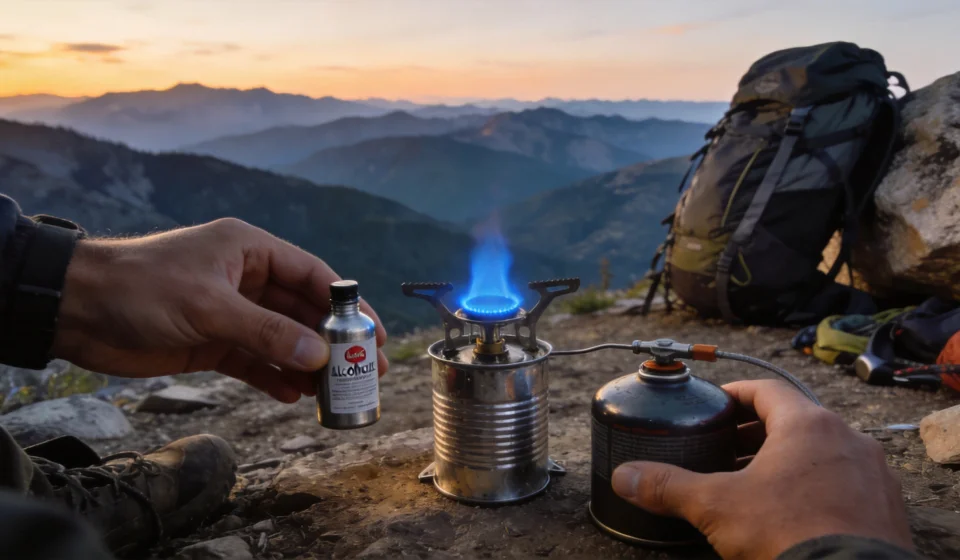
Alcohol stoves fall into two main categories: pressurized (like the Trangia) and non-pressurized (like the Fancy Feast or “cat can” style). The non-pressurized versions are DIY staples, often crafted from a single aluminum soda can. They work by vaporizing liquid fuel (usually denatured alcohol) in a small chamber, creating a steady, clean-burning flame. No valves, no gaskets, no moving parts. The resulting system is almost indestructible—a huge advantage when you’re dropping your pack on rocks for the hundredth time.
“I’ve had a canister stove fail on me near Mount Whitney—the valve froze. I don’t carry a backup. With my alcohol stove, the only thing that can ‘fail’ is fuel exhaustion, and that’s on me.”
— Mike “Rocket” Chen, Triple Crown aspirant (via r/Ultralight)
Pros: Why Alcohol Is Winning Hearts (and Pots)
The advantages go beyond the scale. Here’s a breakdown of what drives the shift:
- Infinite fuel availability. Denatured alcohol is sold at every hardware store, many gas stations, and most small-town grocery stores along popular trails. Canisters are a gamble—some resupply points run out of the specific size, and you’re stuck carrying a heavy tank a hundred extra miles.
- Silent operation. No jet-like roar. For hikers who cherish the sound of wind and birds, the near-silent simmer of an alcohol stove is a sensory upgrade.
- No stove failure due to cold or altitude. Canister stoves suffer from vapor pressure drop in sub-freezing temperatures and high altitudes. Alcohol burns consistently in all conditions—just shake the bottle to check fuel level.
- Ultimate simplicity. There’s nothing to break. You can repair a dented cat-can stove with a rock. Canister stoves require o-rings, valves, and often a brand-specific tool.
Cons: The Other Side of the Flame
Of course, no system is perfect. The criticisms are valid and often loud:
- Lower energy efficiency. Alcohol has about 50% less BTUs per gram than isobutane. You’ll need twice the fuel mass to boil the same water. For short trips this barely matters; for a 5-month thru-hike, the total fuel weight difference can be as little as 4–6 ounces when amortized over the entire journey—but you’re carrying that fuel in liquid form, which feels heavier to pack.
- Slower boil times. Expect 6–10 minutes for two cups of water, versus 3–4 minutes on a canister stove. On a rainy morning in Washington, those extra minutes feel like hours.
- Inherent safety concerns. Spilled alcohol is flammable. A tipped pot can send burning fuel across a tent vestibule. While experienced users manage this with wind screens and stable pot stands, the risk is non-zero. Many national parks (like Yosemite and Sequoia) ban alcohol stoves during peak fire season—a serious logistical hurdle for thru-hikers on the PCT or CDT.
Voices from the Trail: The Forum Factor
The debate rages on r/Ultralight, r/PacificCrestTrail, and the Whiteblaze forums. A recent thread titled “Switched to alcohol stove—regretting it” collected 147 comments in 24 hours. Common themes: cold mornings (alcohol takes longer to prime), difficulty finding >95% ethanol (hardware stores often sell methanol blends that soot your pot), and the constant need to check fuel levels. Yet the same thread had a top-voted reply: “I’ve done three thrus with a cat can stove. Zero regrets. You just have to be deliberate about fuel management.”
Reddit user u/LegendOfThePCT, a veteran of two full PCT hikes and one CDT, shared this balanced take:
“Alcohol is for people who love to tinker and are comfortable with a slightly slower pace. Canisters are for people who want to set it and forget it. Both are valid. But if you’re trying to break 100 days on the AT, alcohol will slow you down. If you’re going for the experience, not the record, alcohol might set you free.”
Making the Switch: Practical Advice for Thru-Hikers
If you’re considering the transition, start small. Here’s a step-by-step guide based on community wisdom:
- Test your system at home. Boil water repeatedly, measure fuel consumption, and learn how wind affects your flame. A windscreen (homemade from a foil pie plate) is non-negotiable.
- Choose your fuel wisely. Denatured alcohol (also called methylated spirits) is the standard. Avoid isopropyl—it burns dirty and can leave residue in your lungs.
- Master the “no-cook” crossover. Many hikers combine an alcohol stove with cold-soaking (e.g., ramen, couscous, instant mashed potatoes). If the weather is bad or you’re exhausted, you have the option to skip cooking entirely—further saving fuel and time.
- Learn the alcohol stove etiquette. Never refill a hot stove. Always have a small “spill proof” container. Use a designated fuel bottle that’s clearly labeled—and never store it with your food (trust me, you don’t want alcohol leaking on your trail mix).
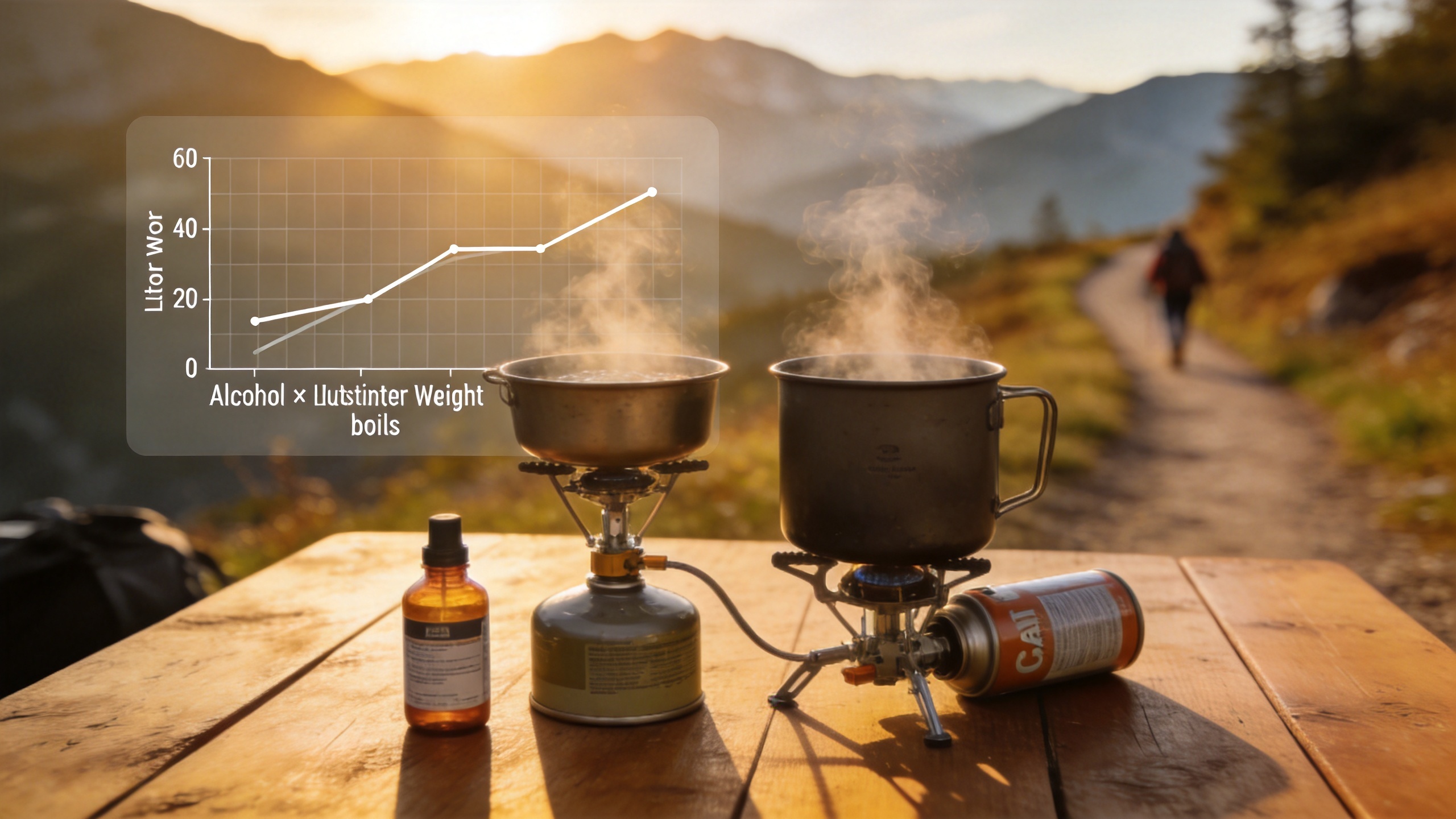
Alcohol vs. Canister: A Side-by-Side Comparison
| Factor | Alcohol Stove | Canister Stove |
|---|---|---|
| Total system weight (stove + pot + fuel for 5 days) | ~7 oz (200 g) | ~14 oz (400 g) |
| Boil time for 2 cups | 7–10 min | 3–5 min |
| Fuel availability on trail | Almost every town (hardware stores, gas stations) | Variable—specialty outdoor stores or limited gas stations |
| Cold weather performance | Excellent (consistent flame) | Poor below 20°F unless using special canister blends |
| Safety risk | Spills = fire hazard | Canister explosion risk (rare) + frostbite from leaking gas |
| Cost per week of fuel | $3–5 | $8–12 |
| Environmental waste | Zero (fuel container reused, stove can be recycled at end of life) | One empty canister per week (non-recyclable in most curbside programs) |
Note: These numbers are averages from community surveys (Whiteblaze and r/Ultralight 2024 user poll). Actual results vary with cooking habits.
The Bigger Picture: A Shift in Mindset
The move from canister to alcohol isn’t just about gear—it’s a symptom of a larger ultralight philosophy: subtract, don’t add. Thru-hikers are increasingly valuing resilience, repairability, and autonomy over convenience. A canister stove is a black box; if it breaks, you’re walking to the next town hoping to find a replacement. An alcohol stove is a tool you can fix with a sewing pin and a piece of duct tape. That independence resonates deeply with hikers who are already carrying their entire lives on their backs.
But the trend also forces a trade-off: you give up speed and convenience for weight and peace of mind. As hiker “Sparky” put it, “I now spend an extra two minutes per boil. But I also stopped worrying about whether the next town will have the right canister. That’s a trade I’ll take every time.”
Conclusion: The Flame That Fits Your Hike
Alcohol stoves are not for everyone. If you hike fast, in cold wet conditions, or in fire-restricted areas, a canister stove might remain your best friend. But for the growing number of long-distance hikers who prize simplicity over speed, the alcohol stove offers a lightweight, low-waste, and deeply satisfying way to cook. The trend isn’t a fad—it’s a reflection of a community questioning every gram, every choice, and every part of the journey. And that’s a conversation worth having at every campsite.