Caffeine Timing for Long Hiking Days: Start Early, Save It for Later, or Use It by Feel?
Caffeine planning becomes surprisingly complicated when a hike lasts eight, ten, or even fourteen hours, because a cup of coffee at breakfast is no longer the only possible source. ☕ Caffeinated gels, chews, drink mixes, chocolate, coffee, tea, and tablets can all enter the same food bag, sometimes without the hiker realizing how much overlap exists. The useful question is therefore not simply “Should I use caffeine?” but “Where does caffeine fit within the entire trail-day plan?”
There is no universal timing strategy that works for every hiker, because caffeine sensitivity, normal daily habits, sleep schedule, body size, medications, health conditions, and personal preference can all change the experience. Some hikers prefer caffeine early, others deliberately save it for later, and others make the decision based on how they feel during the day. 🥾 A better trail-planning system compares these approaches instead of pretending one timeline is automatically superior.
Why Caffeine Timing Changes On An 8–14-Hour Trail Day
A short morning hike may end before caffeine timing becomes important, but an all-day hike creates several distinct periods: breakfast, morning miles, midday food stops, afternoon fatigue, evening hiking, and possibly darkness. Caffeine consumed early can still be present in the body hours later because caffeine is not eliminated immediately, and individual clearance rates can vary substantially. ⏱️ That means every caffeinated product should be considered part of a day-long inventory, not as an isolated snack.
The second complication is that tiredness late in a long hiking day is not automatically a caffeine problem, because inadequate food, insufficient fluids, heat, poor sleep, pacing, altitude, or simple accumulated physical effort may also contribute. Caffeine can affect alertness, but it does not replace carbohydrate, calories, water, electrolytes, rest, or appropriate pacing. That distinction prevents a fueling strategy from becoming “feel tired, add caffeine” without first considering what else may be happening.
Model 1: Caffeine Included From The Beginning
The early-and-steady model begins with a hiker’s normal morning caffeine routine and then treats later caffeinated foods as part of the same planned inventory. ☕ Someone who ordinarily drinks coffee with breakfast might prefer not to make a major routine change immediately before a long trail day, particularly if suddenly skipping normal caffeine tends to leave them uncomfortable. The planning advantage is predictability because the hiker can identify caffeine sources before leaving home.
The potential weakness is that an early start can consume part of the day’s caffeine inventory before the physically or mentally difficult portion of the hike arrives. A caffeinated breakfast drink followed by caffeinated gels, chews, and drink mix can also create accidental stacking if each item is considered separately rather than together. 📋 The early model therefore works best as a tracking system, not permission to continually add another caffeinated product whenever the previous one feels less noticeable.
Model 2: Morning Caffeine Followed By A Long Gap
A second strategy keeps ordinary morning coffee or tea but deliberately makes most of the middle of the hike caffeine-free. The hiker can use normal foods, non-caffeinated gels, water, electrolytes, and other planned trail fuel while reserving caffeinated products for a later decision point. 🎒 This separates routine caffeine from trail-specific caffeine without requiring someone to eliminate a familiar morning habit.
From a pack-planning perspective, this model makes product labeling especially important because caffeinated and non-caffeinated versions of similar gels or drink mixes can look almost identical. Separating them into different bags or clearly identifying them before the hike reduces the chance of using the caffeinated option unintentionally. The goal is not to claim that a long caffeine gap produces better hiking performance, but to create a clearer inventory and timing structure.
Model 3: Caffeine Reserved For Later
Some hikers prefer to reserve trail caffeine for the later portion of a long day, particularly when the route continues into the evening or concentration becomes increasingly important. 🌄 Under this model, breakfast and earlier trail foods may be caffeine-free, while one or more caffeinated options remain untouched until a predetermined later section. The attraction is simple: the hiker knows those products have not already been consumed earlier.
However, “save it for later” has an important tradeoff when later also means close to bedtime, because caffeine consumed in the evening can interfere with sleep in caffeine-sensitive people. Caffeine commonly remains in the body for several hours, and the rate at which people metabolize it varies considerably. 🌙 A late-day strategy therefore needs to consider tomorrow’s recovery and tonight’s sleep, not merely the final miles of today’s route.
Scheduled Vs By-Feel Planning
Scheduled planning means deciding in advance where caffeinated products could appear, such as a particular trail section, meal window, or late-day checkpoint. The schedule does not have to dictate consumption; instead, it can act like a map that prevents random additions throughout the day. 🗺️ This is similar to laying out food before a hike so you know roughly what resources are available without forcing yourself to eat every item at an exact minute.
By-feel planning offers more flexibility because the hiker chooses based on actual conditions, but it requires better awareness of what has already been consumed. Feeling tired at hour nine does not tell you whether a caffeinated gel taken at hour seven is still relevant, nor does it reveal caffeine hidden in chocolate or a drink mix. A hybrid system often makes practical sense: track everything in advance, but retain flexibility about whether a planned caffeinated item is actually used.
Coffee, Gels, Chews And Chocolate All Count
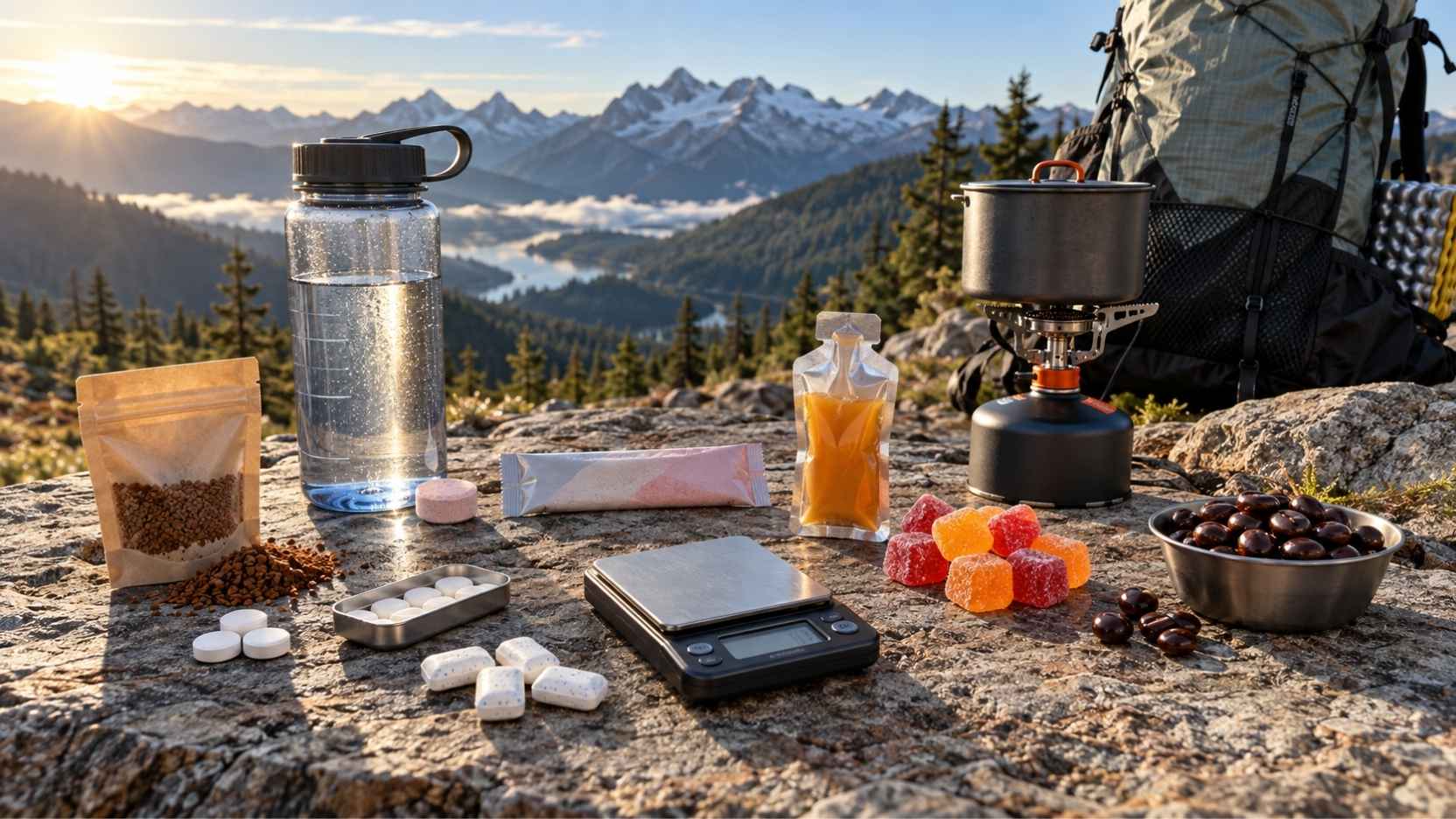
One of the easiest caffeine-planning mistakes is treating different food categories as though their caffeine exists in separate buckets. Coffee at breakfast, a caffeinated energy gel, caffeinated gum, an energy chew, chocolate-covered coffee beans, and caffeinated electrolyte drink mix all contribute caffeine to the same day’s intake. ⚖️ Product labels matter because two foods that look almost identical may contain very different amounts or no caffeine at all.
This is why a caffeine inventory can be more useful than simply counting “servings,” since serving sizes and concentrations vary widely across products. Write down each caffeinated item you packed and note the amount stated on its label rather than estimating from packaging size or product category. That same inventory can also identify non-caffeinated alternatives, which gives the hiker more control over whether a snack adds carbohydrate alone or carbohydrate plus caffeine.
A Trail Caffeine Timeline Worksheet
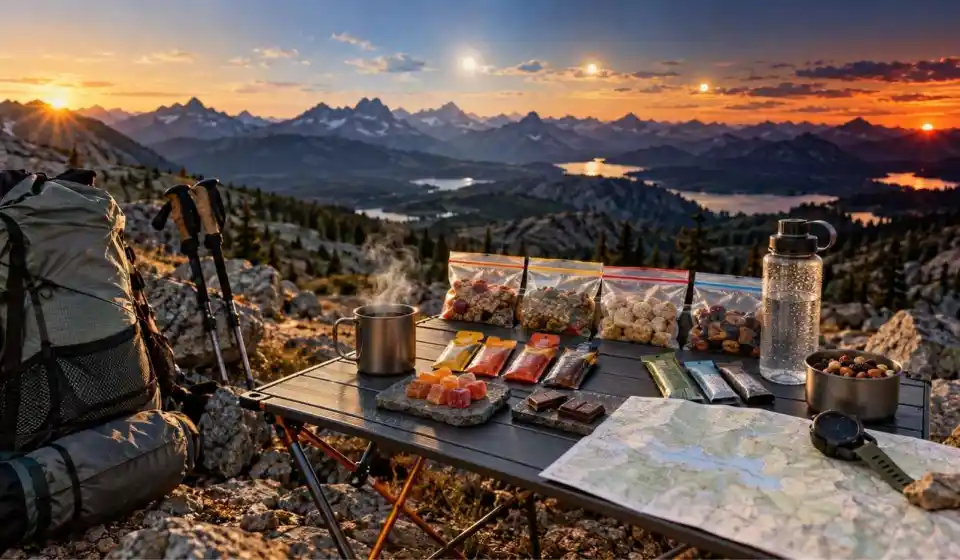
A simple worksheet can divide a long hike into planning blocks without recommending how much caffeine anyone should consume. 📝 Useful columns include time or trail section, planned food, caffeine source, label-listed caffeine amount, previous caffeine consumed, expected finish time, and expected bedtime. Another notes column can record weather, darkness, appetite, stomach comfort, or whether the caffeinated option was actually used.
For example, the timeline might include breakfast, miles 1–5, first snack, midday meal, afternoon section, evening food, sunset, and projected finish. The worksheet should also mark caffeine-free products so the hiker can easily choose between similar foods rather than automatically reaching for the caffeinated version. This turns caffeine planning into the same kind of inventory-management problem used for water, food, stove fuel, and battery power.
How Caffeine Fits A 60–90-Minute Food Schedule
Some hikers organize trail food into repeating eating windows, such as checking their food intake roughly every 60–90 minutes rather than waiting until they become extremely hungry. 🍌 Caffeine does not need to appear in every food window simply because carbohydrates or calories do, because caffeine and food solve different planning problems. A snack schedule can therefore continue normally while caffeinated products occupy only selected slots or remain optional.
This separation also prevents a common conceptual mistake: assuming every energy gel is primarily a caffeine product. Many gels are designed mainly to provide carbohydrate, while some versions add caffeine and others do not, so reading the label becomes essential. Your fueling schedule can remain consistent even when your caffeine strategy changes, which makes it easier to test one variable at a time on familiar training hikes.
What Changes When The Hike Continues After Sunset
Darkness creates a different planning environment because navigation, footing, temperature, and concentration can become more demanding while the hiker is already carrying many hours of accumulated fatigue. 🌙 Headlamp batteries, route familiarity, weather, turnaround decisions, food availability, and remaining distance deserve attention alongside caffeine. Caffeine should never become the justification for continuing when safety conditions suggest that stopping, turning around, or changing plans is the better decision.
Late caffeine also creates a direct conflict between alertness now and sleep later, especially on an overnight backpacking trip where recovery matters the following morning. A hiker finishing at 9 p.m. and going directly to sleep faces a different timing problem from someone finishing a sunrise-to-sunset day and remaining awake for several more hours. The important variable is therefore not simply “How late is it?” but “How close is this to the sleep period I am trying to protect?”
When Individual Caffeine Questions Need Professional Guidance
General trail-planning articles can explain timing models and inventory, but they cannot determine whether caffeine is appropriate for every individual. People who are pregnant, particularly sensitive to caffeine, taking medications that may interact with stimulants, or managing heart rhythm, blood pressure, anxiety, sleep, or other health concerns may need individualized guidance. 🩺 Questions about personal caffeine limits or symptoms are better directed to a qualified healthcare professional.
Even without a known health condition, symptoms such as pronounced palpitations, severe jitteriness, dizziness, unusual chest discomfort, or feeling significantly unwell should not be treated as signs that a different caffeine timing trick is needed. More caffeine is not a substitute for evaluating a potentially important symptom or making a conservative trail decision. Camp Kitchen Lab’s useful role is therefore planning food and pack logistics, not prescribing stimulant use.
The Best Model Is The One You Can Track
Early-and-steady, delayed-use, and later-reserved caffeine strategies each solve a slightly different trail-planning problem. The first prioritizes routine and predictability, the second creates separation between morning caffeine and later options, and the third preserves caffeinated products for a later section of the route. 🥾 None needs to become a rigid rule, because real trail conditions rarely follow a perfect spreadsheet.
The most transferable lesson is surprisingly simple: count caffeine across the whole food bag instead of product by product. Once coffee, gels, chews, chocolate, gum, tablets, and drink mixes appear on the same inventory, accidental overlap becomes easier to spot and caffeine-free substitutions become easier to plan. That turns caffeine timing from guesswork into another manageable piece of an all-day fueling strategy.