Trail Coffee That Actually Counts as Food: Building a Calorie-Dense Caffeinated Breakfast
Trail coffee often earns a permanent place in a backpack even though plain black coffee contributes almost nothing toward a hiker’s daily calorie target. ☕ The useful idea is to separate caffeine from fuel: coffee supplies flavor and caffeine, while powdered milk, oats, sugar, nut butter, or breakfast powder provide most of the food energy. Once those ingredients enter the cup, coffee can become part of breakfast instead of remaining a nearly calorie-free ritual.
That does not mean every cup should become a thick liquid meal, because calorie density, appetite, water access, cleanup, and preference still matter. 🎒 A combined coffee breakfast can work well for hikers who want a fast morning or prefer drinking something substantial before eating solid food later. The goal is to ask how efficiently the ingredients around coffee can contribute to the morning food plan.
Coffee Provides Caffeine; Breakfast Provides The Energy
Plain brewed coffee has only a trivial amount of food energy, so drinking more does not meaningfully solve a backpacking calorie problem. Caffeine and calories are separate variables, and confusing them can make a hot drink feel more nutritionally substantial than it really is. ⚡ If breakfast needs hundreds of calories, those calories must come from food added to the coffee or eaten beside it.
This matters on long hiking days because breakfast, snacks, lunch, and dinner all contribute toward the day’s food plan. Water can make a drink look large without adding calories, so the useful calculation is calories per ounce of dry ingredients before water is added. If water is collected at camp, the hiker can carry a compact dry mixture and rehydrate it only when needed.
Start With Coffee And Powdered Whole Milk
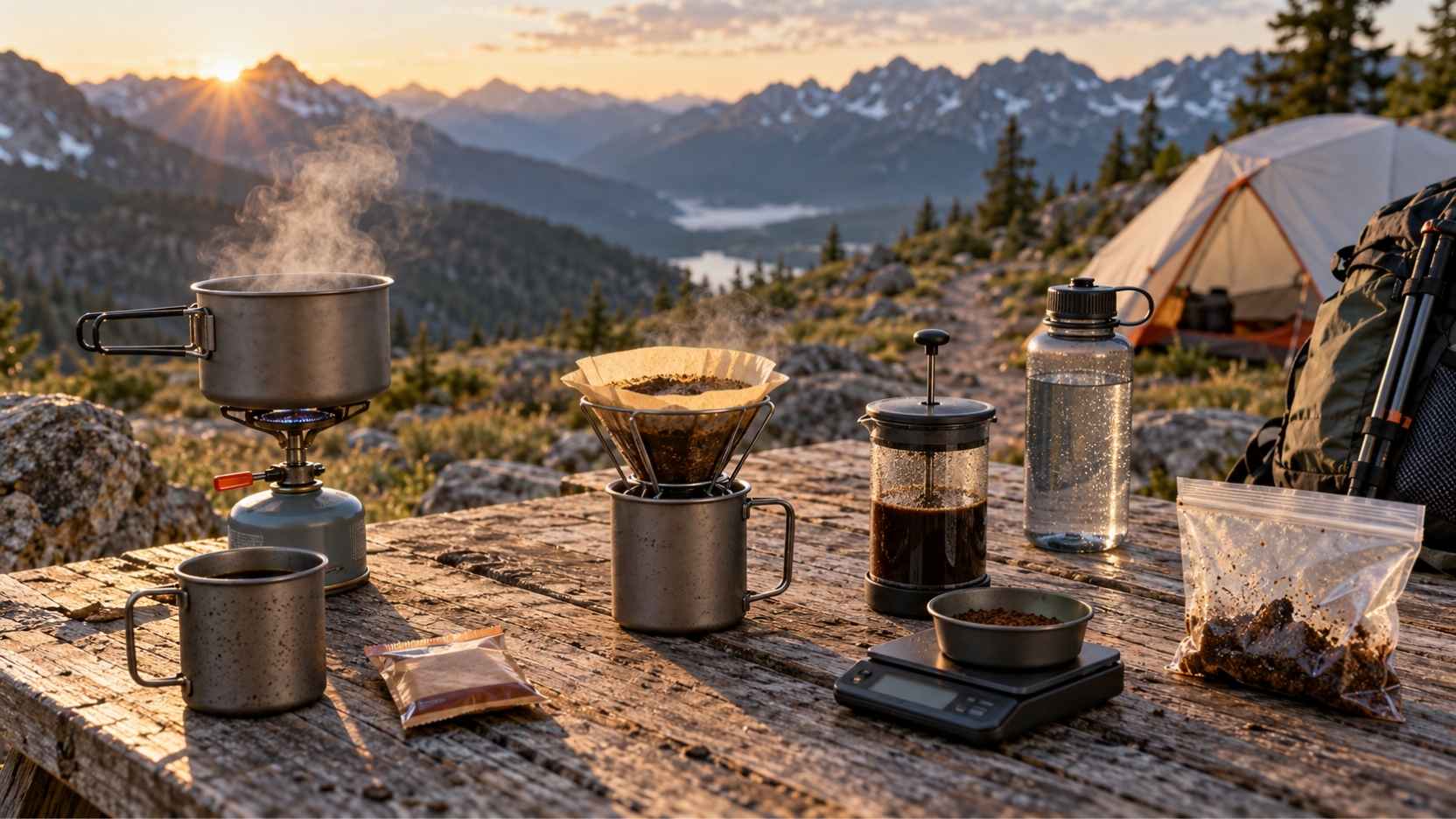
Instant coffee or instant espresso is an easy base because it weighs little per serving, dissolves quickly, and creates no wet grounds to pack out. ☕ Its weight is usually tiny beside the ingredients supplying breakfast calories, so choosing what goes around the coffee matters more nutritionally than choosing the coffee style. Strong coffee flavor can also make milk, oats, or breakfast powder taste more intentional.
Powdered whole milk is a useful upgrade because removing most of the water makes it far more weight-efficient than liquid milk. Depending on the brand, whole-milk powder commonly provides roughly 140 to 160 calories per ounce, with fat, carbohydrate, and protein contributing to the total. 🥛 It can also be reused in oatmeal, mashed potatoes, cocoa, cereal, or some dehydrated dinners.
Add Oats, Breakfast Powder Or Nut Butter
Dry rolled or quick oats provide roughly 105 to 110 calories per ounce, while also contributing carbohydrate, some protein, and fiber. 🌾 Finely ground oats blend more easily into coffee than large flakes, although they create a thicker drink. Commercial breakfast powders can be convenient too, but their calorie density varies enough that the package label is more useful than assumptions.
Nut butter changes the calculation more dramatically because peanut and almond butter are commonly around 165 to 180 calories per ounce, largely because fat contains about nine calories per gram. 🥜 Chocolate-hazelnut spread can also be calorie-dense, often around 150 to 160 calories per ounce, while adding sweetness and a mocha-like flavor. These ingredients do not dissolve as cleanly as sugar, so higher calorie density can mean more stirring and cleanup.
Calories Per Ounce Of Common Coffee Add-Ins
For backpacking purposes, compare the weight of dry or concentrated ingredients before water is added. Exact numbers vary by brand and recipe, so these are planning ranges rather than universal values and should be replaced with the labels of the foods actually packed. 📊 The general pattern is that ingredients containing more fat often deliver more calories per ounce.
| Add-in | Approximate calories per ounce | Main trail role |
|---|---|---|
| Powdered whole milk | 140–160 | Creaminess, fat, carbohydrate, protein |
| Rolled or quick oats | 105–110 | Carbohydrate, texture, some protein and fiber |
| Peanut or almond butter | 165–180 | High-calorie fat plus some protein |
| Chocolate-hazelnut spread | 150–160 | Fat, carbohydrate, sweetness |
| Sugar | About 110 | Easy-mixing carbohydrate |
| Breakfast powder | Roughly 100–150 | Depends heavily on formula |
| Cocoa powder | Roughly 60–70 | Flavor, usually used in small amounts |
A higher number does not automatically make an ingredient better because taste, texture, packaging, digestion, and willingness to finish the meal still matter. A breakfast that looks excellent on a spreadsheet but becomes too thick or greasy is not efficient in practice. The better target is good calorie density combined with a preparation the hiker will reliably consume.
Hot Versus Cold Preparation
A hot coffee breakfast works naturally when the morning routine already includes boiling water, and warmth helps powdered milk, sugar, and breakfast powder dissolve. 🔥 The cost is stove fuel, setup time, and cleanup, especially if oats or nut butter turn a simple coffee cup into a sticky breakfast container. For hikers who already cook breakfast, that extra effort may be minor.
Cold preparation removes the stove requirement and can work with instant coffee, milk powder, sugar, and finely ground oats when shaken thoroughly. ❄️ Nut butter and chocolate spreads are harder to mix in cold water and can cling to narrow bottles. A cold version therefore works best when the recipe favors easy mixing rather than maximum possible calorie density.
Three Lightweight Coffee Breakfast Configurations
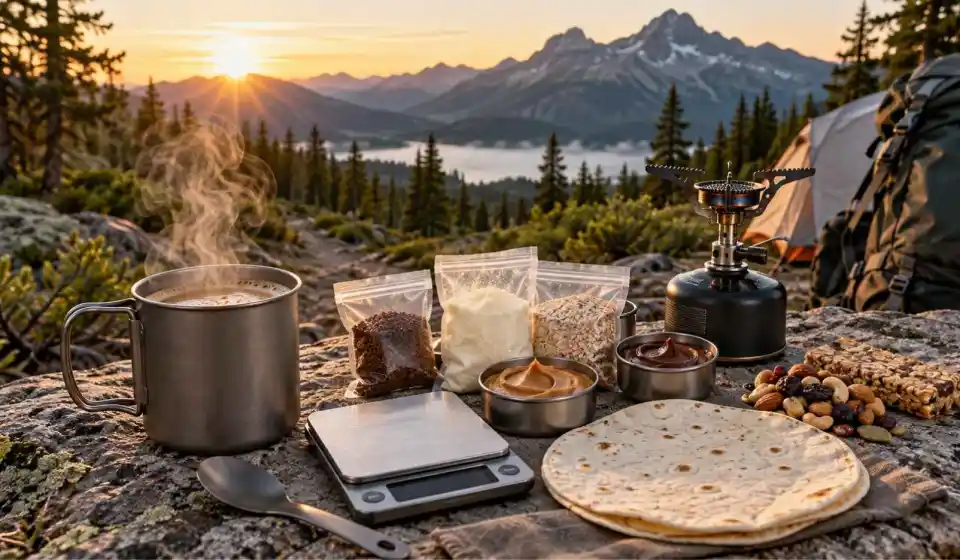
A light version might use instant coffee, powdered whole milk, sugar, and finely ground oats for a drink that remains easy to sip. A richer version could add peanut butter, while a sweeter option could combine instant espresso, milk powder, and chocolate-hazelnut spread. ☕ Calculate each recipe from the actual package labels because different products and portions can produce very different calorie totals.
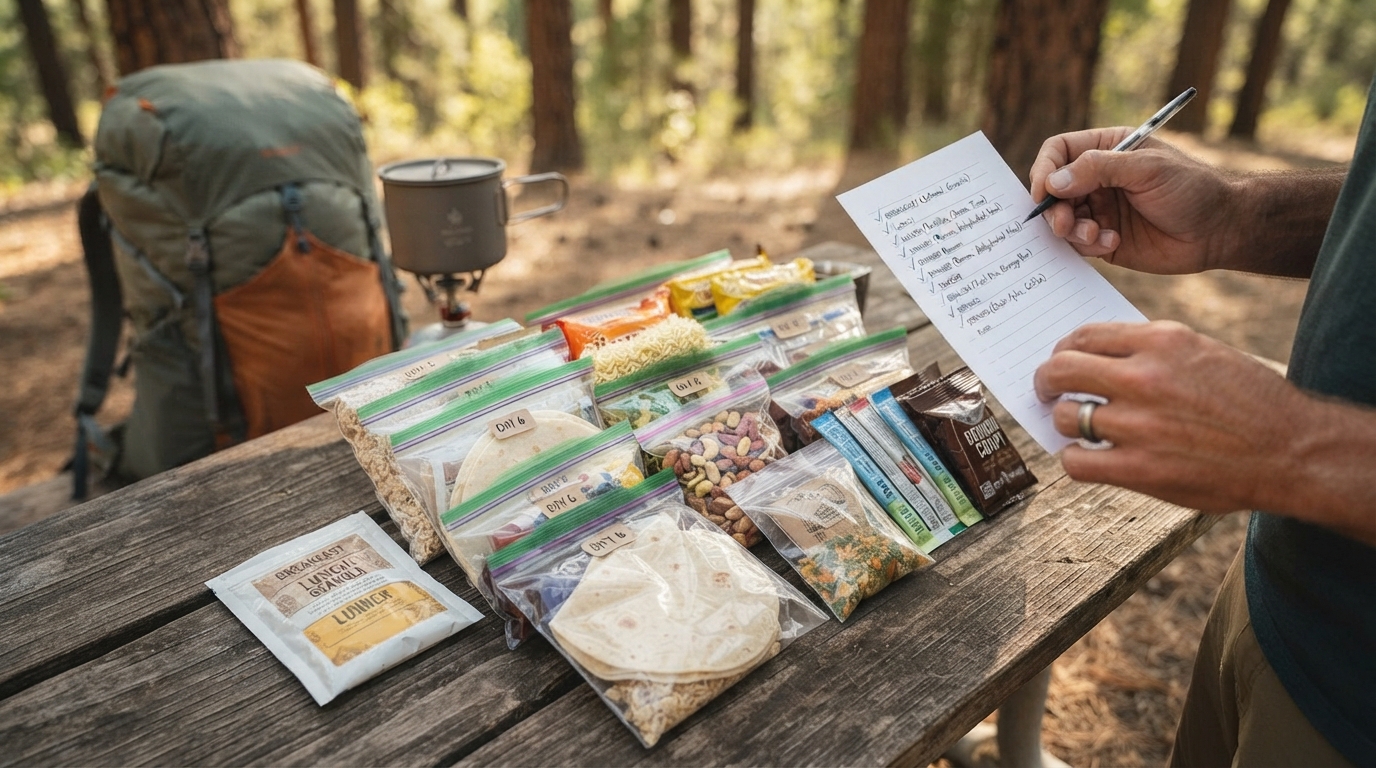
Another strategy is to keep the coffee relatively normal and eat a tortilla, bar, nuts, or nut butter packet beside it. That approach can match or exceed the calorie density of a thick drink while preserving the familiar experience of drinking coffee rather than turning it into breakfast porridge. The real comparison is combined breakfast drink versus coffee plus separate solid food, not “coffee versus no breakfast.”
Make The Ingredients Work Beyond Breakfast
Multi-use ingredients improve menu flexibility because powdered milk can appear in oatmeal, mashed potatoes, cocoa, or dinner, while nut butter can move into tortillas, crackers, noodles, or snacks. 🍽️ Oats can become breakfast or part of a no-cook mixture, and chocolate powder can shift between coffee and an evening drink. Reusing ingredients does not reduce required calories, but it can simplify the food bag and reduce separate specialty items.
For a three-morning trip, pack three coffee portions plus shared quantities of milk powder, oats, sugar, and one calorie-dense spread. 🧮 Morning one might be coffee with milk and oats, morning two could add nut butter, and morning three could use chocolate-hazelnut spread. Add calories from the actual labels, total the dry weight, and divide total breakfast calories by total breakfast ounces to check the system’s density.
When A Coffee Breakfast Becomes Too Heavy
A drink stops being especially weight-efficient when large amounts of lower-density powders are added simply to make the cup bigger. ⚖️ Heavy portions of oats or bulky breakfast mix can create a thick drink that still delivers fewer calories per ounce than nuts, nut butter, or some bars. If the mixture also requires a large container, extra cleanup, or inconvenient amounts of water, its practical advantage can disappear.
Water matters because one liter weighs roughly one kilogram, so carrying a large prepared drink is very different from mixing it beside a reliable water source. The efficient version is usually a compact dry mix that becomes breakfast when water is available, not a giant bottle hauled from the trailhead. 🎒 The Camp Kitchen Lab lesson is simple: coffee provides the caffeine, but the surrounding food ingredients determine whether the cup actually counts toward the backpacker’s calorie plan.