The Hidden Cost of Trail Coffee: Water, Stove Fuel, Time and Wet Grounds
A packet of coffee may weigh almost nothing, which makes morning coffee seem like an insignificant part of a backpacking load until you count everything required to turn those grounds or crystals into a hot drink. ☕ Water, stove fuel, brewing equipment, preparation time, cleanup, and waste can all become part of the real cost of making coffee while backpacking. A fair comparison between brewing methods therefore needs to examine the entire coffee system rather than simply placing dry coffee on a scale.
That distinction becomes especially important for hikers comparing traditional brewing with ultralight coffee options such as instant packets. A pour-over may produce the cup you prefer, while instant coffee can eliminate a brewer, filter, wet grounds, and part of the cleanup routine, and neither choice is automatically wrong. 🎒 What matters is whether the additional weight and work provide enough value for the particular trip you are planning.
Every Cup Has More Than Coffee In It
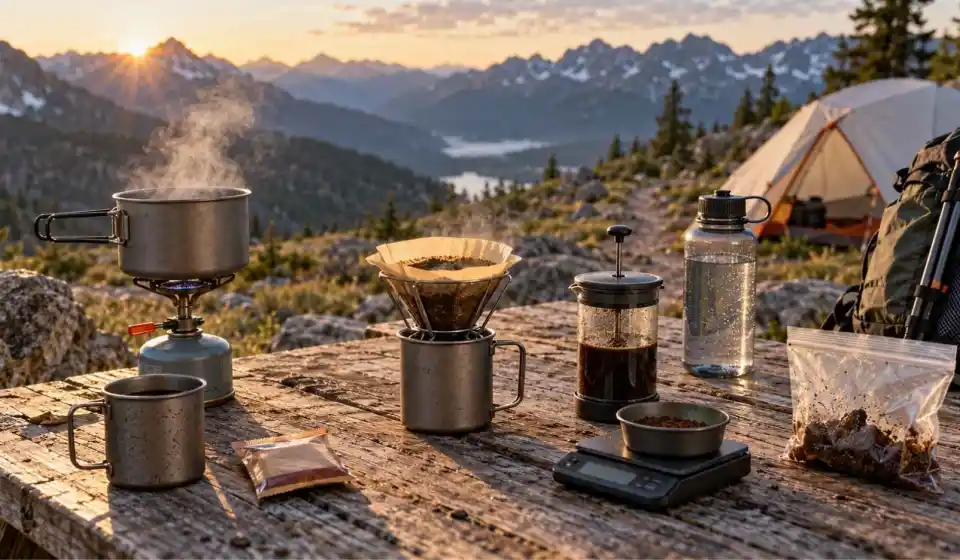
The dry coffee is only one component of a backpacking coffee setup, because you may also carry a brewer, filters, cup, stove, fuel canister, pot, spoon, storage bag, and another bag for packing out used materials. Some of those items may already be part of your cooking kit, so they should not automatically be charged entirely to coffee, but coffee-specific equipment still deserves to be counted. A dedicated dripper weighing only a few ounces can look insignificant until it is combined with filters, extra fuel, and several mornings of grounds.
The same principle applies to consumables because every cup requires some combination of coffee and water, while many methods also create waste that remains in your pack afterward. 🧪 Instead of asking, “How many grams does my coffee weigh?” ask, “What additional things must I carry or use because I decided to make this cup?” That question turns coffee into a measurable camp system and makes comparisons between instant, cowboy coffee, pour-over, and press-style brewing much more useful.
Water For Drinking Is Not The Same As Water For Cleanup
Suppose you plan to drink 300 milliliters of coffee in the morning; those 300 milliliters are easy to count because they eventually become part of the beverage. The hidden problem appears when a brewing method also needs water for rinsing a cup, washing a brewer, cleaning a press, or removing grounds stuck to equipment. 💧 Cleanup water is still water that must come from somewhere, even when it is not consumed.
On a campsite beside a reliable water source, that additional requirement may have almost no effect on carried pack weight because you can collect water immediately before breakfast. On a dry stretch, however, every extra milliliter may need to be carried from the previous source, which means a messy coffee method becomes more expensive in practical terms. This is why drinking-water volume and preparation-water volume should be recorded separately when comparing backpacking coffee systems.
Coffee Also Uses Stove Fuel
Heating more water generally requires more energy, so a coffee routine that adds a separate morning boil can increase fuel use compared with a trip where the stove is used only for dinner. 🔥 The exact fuel requirement cannot responsibly be reduced to one universal number because stove design, pot size, starting water temperature, wind, altitude, flame setting, fuel type, and desired final temperature all affect efficiency. The most useful number is therefore one measured with your own stove-and-pot combination under conditions similar to your trips.
Coffee can sometimes share an existing boil, which changes the calculation considerably; for example, a hiker already heating water for oatmeal might heat enough for breakfast and coffee during the same stove session. A separate coffee-only boil, by contrast, adds another ignition, warm-up period, and quantity of water that must be heated. ⛺ Over one morning this difference may be small, but across a week of breakfasts it becomes part of the total fuel budget that belongs in your food-and-cooking calculation.
Morning Minutes Are Part Of The Cost
The fastest backpacking coffee method is usually difficult to beat conceptually: add instant coffee to water, stir, and drink. A pour-over introduces more steps because you must prepare the filter and grounds, heat water, control the pour, wait for extraction, dispose of the wet filter and grounds, and clean or dry the brewer. ⏱️ An AeroPress-style method has its own assembly, pressing, and cleanup process, while cowboy coffee removes the dedicated brewer but still leaves grounds that must be managed.
Those few minutes can matter differently depending on the trip, which is why morning-time cost is situational rather than universally good or bad. A camper enjoying a slow weekend breakfast may consider ten minutes of coffee preparation part of the experience, while someone trying to leave camp before sunrise for a high-mileage day may view the same routine as unnecessary friction. Your backpacking morning routine therefore deserves the same planning attention as food preparation, water collection, packing, and breaking camp.
Wet Grounds Become Pack Weight Again
Coffee grounds illustrate a fascinating backpacking weight problem: you begin the morning with dry grounds, add hot water, and finish with grounds that retain some of that water. ☕ The used grounds are therefore heavier than the dry coffee you originally carried, at least until enough moisture evaporates. If those grounds remain sealed inside a waste bag, much of that retained moisture may stay with you instead of conveniently disappearing.
Used coffee grounds should not simply be scattered around camp because “natural” does not mean they belong in the local ecosystem, and responsible backcountry practice generally means packing out food waste and following the rules of the land manager responsible for the area. A filter full of wet coffee grounds can also be messy, particularly if it leaks into the trash bag or food storage system. 🗑️ Instant coffee effectively removes this particular waste stream because the soluble coffee becomes part of the drink rather than leaving a pile of wet organic material to pack out.
Cold Weather Changes The Coffee System
Cold mornings expose another weakness in some brewing methods because water begins losing heat as soon as it leaves the pot, and an open brewing process creates more opportunity for cooling before the coffee reaches your cup. ❄️ A pour-over places hot water through coffee and an exposed filter before the finished drink accumulates below, while wind and cold equipment can increase heat loss. That does not mean pour-over coffee cannot work in cold conditions, but it means thermal efficiency becomes another part of the system.
Wind also affects stove efficiency because moving air can pull heat away from the pot, potentially lengthening heating time and increasing fuel consumption. Appropriate windscreens can help with some stove systems, but they must be used according to the stove manufacturer’s safety instructions because enclosing certain canister stoves incorrectly can create dangerous overheating. In colder conditions, keeping the process simple and minimizing unnecessary heating or exposed brewing steps can therefore have practical fuel and time advantages without making any claim that one type of coffee is nutritionally superior.
Calculate The Full Cost Per Cup
A useful Camp Kitchen Lab test begins with six measurements: coffee or consumable weight, coffee-specific equipment weight, water heated, estimated fuel used, preparation time, and waste produced. ⚖️ Weigh the dry coffee before brewing, time the process from the moment you begin preparing it until the equipment is ready to pack again, and weigh the wet waste if the method produces grounds or filters. Repeat the test several times because one unusually fast boil or messy brew can distort a single trial.
Equipment weight should then be divided according to how often it is used, because a dedicated brewer carried for five mornings is different from a pot that already serves breakfast and dinner. Fuel is best estimated through controlled testing of your own cooking system rather than assuming that another hiker’s stove consumption will match yours. The result is not one perfect “coffee score,” but a full-cost profile that makes the tradeoffs visible instead of hiding them behind the tiny dry weight of the coffee itself.
Instant Vs Cowboy Vs Pour-Over Vs Press
For high-mileage mornings, instant coffee has an obvious logistical advantage because there is almost no dedicated brewing equipment and virtually no coffee-ground cleanup. 🥾 Cowboy coffee can reduce equipment too, but grounds remain inside the pot or cup and still need responsible disposal, which adds another step before camp is packed. Pour-over systems add filters and a brewer but may appeal to hikers who value the brewing ritual and flavor enough to accept the extra work.
Press-style systems can similarly deliver a coffee experience closer to what some people prefer at home, but they introduce equipment weight and cleaning considerations that instant coffee avoids. None of those differences proves that instant is the “best backpacking coffee,” because optimization depends on what the hiker actually values. Ultralight efficiency, flavor preference, morning speed, waste management, and camp enjoyment are different priorities, and one coffee method cannot maximize all of them simultaneously.
Match The Coffee System To The Trip
On a fast overnight trip or a route built around long daily mileage, the simplest answer may be instant coffee combined with water that was already being heated for breakfast. ☕ On a relaxed weekend trip, carrying a small pour-over setup may be perfectly rational if morning coffee is part of the experience rather than simply a caffeine-delivery task. A group camp changes the equation again because one brewing system may serve several people, spreading the equipment weight across multiple cups.
A coffee-focused trip may even justify equipment that would look unnecessary on a strict ultralight spreadsheet, just as someone interested in camp cooking might intentionally carry a frying pan or more elaborate dinner ingredients. The key is recognizing the trade rather than pretending it does not exist: you are exchanging weight, fuel, water, time, and cleanup for a coffee experience you value. That is a far more useful way to think about backpacking coffee than declaring one brewing method universally superior.
The Real Ultralight Question
Ultralight thinking works best when it examines systems rather than obsessing over the weight of individual objects. 🎒 A 10-gram coffee packet that requires almost nothing else may create a very different morning routine from 10 grams of grounds that need a brewer, filter, extra handling, and waste storage. Once those secondary costs become visible, the true comparison is no longer simply coffee versus coffee—it is one complete morning system versus another.
That does not mean every backpacker should abandon freshly brewed coffee for instant packets, because saving a few ounces or minutes has little value if the ritual is one of your favorite parts of being outdoors. Instead, measure what your coffee actually costs in grams, water, fuel, minutes, and trash, then decide whether those costs fit the trip ahead. ☕ Sometimes instant wins decisively; sometimes the slow cup beside the tent is exactly what the additional weight was carried for.