Vertical Diet Principles for Backpackers: What Actually Transfers to the Trail?
The Vertical Diet was created for strength and performance-focused athletes, but some of its broader ideas sound surprisingly relevant to hikers: eat enough total energy, cover important nutrients, and choose foods that work well for the individual. 🥾 The problem is that a diet designed around a refrigerator, kitchen, and high-calorie athletic routine changes dramatically when every meal must survive inside a backpack. A food can be nutritionally excellent at home yet become inconvenient on trail because it contains too much water, requires refrigeration, takes too long to cook, or delivers too few calories for its weight.
That makes the most useful question much narrower than whether backpackers should “follow the Vertical Diet.” Instead, hikers can examine its organizing principles and ask which ones remain useful after adding calorie density, food weight, shelf stability, water availability, and trip duration to the equation. 🎒 The result is not a Vertical Diet backpacking menu, but a practical trail-food framework built from principles that can survive outside the gym.
What the Vertical Diet is actually trying to organize
The Vertical Diet is commonly associated with strength athlete Stan Efferding and emphasizes adequate calories, nutrient-dense foods, digestibility, and a relatively simple group of staple foods. Rather than forcing everyone into one universal calorie intake or macro ratio, the broader concept is that intake should reflect the person’s energy demands and goals. 🍚 Foods frequently associated with the approach include white rice, red meat, eggs, dairy, fruits, vegetables, and other foods selected to provide energy and micronutrients.
That does not mean every person needs those exact foods, nor does it mean the framework offers something completely different from basic sports-nutrition principles. Much of its practical appeal comes from organizing familiar nutrition concepts into a repeatable eating structure instead of requiring endless food variety. For backpackers, that organizational mindset may be more useful than copying its original food list literally.
Principle 1: Set total energy needs before choosing foods
One of the strongest ideas that transfers to backpacking is starting with energy requirements rather than individual snack choices. A hiker can pack foods that look nutritious and still finish the day far below the amount of food planned for the mileage, terrain, body size, pace, and duration involved. 🔥 Building a trail menu therefore works better when total calories are estimated first and individual foods are selected afterward.
No single calorie equation predicts every hiker perfectly because environmental temperature, elevation gain, pack weight, training status, walking speed, and individual metabolism all influence energy expenditure. That means calorie estimates should function as a starting range that can be adjusted from experience, especially on longer trips where a small daily planning error becomes larger over several days. For someone with medical or highly individualized nutrition requirements, those adjustments should be discussed with a qualified healthcare professional.
Principle 2: Match macros to the activity rather than a fixed ratio
Backpacking does not require every hiker to follow one rigid carbohydrate, protein, and fat percentage. Carbohydrate provides about 4 calories per gram, protein also provides about 4 calories per gram, and fat provides about 9 calories per gram, which makes fat especially useful when trying to raise calorie density. 🥜 That arithmetic alone explains why nuts, nut butters, oils, seeds, cheese, and other higher-fat foods appear frequently in lightweight backpacking menus.
However, the answer is not simply to maximize fat because different macronutrients serve different practical roles in a hiking menu. Carbohydrate-rich foods such as tortillas, dried fruit, crackers, oats, couscous, rice, and potato flakes can provide convenient trail energy, while protein-containing foods help round out meals and total daily intake. Instead of forcing something like a 50/30/20 split onto every trip, backpackers can build macros around activity demands, food tolerance, meal timing, and weight constraints.
Principle 3: Build a varied nutritional foundation
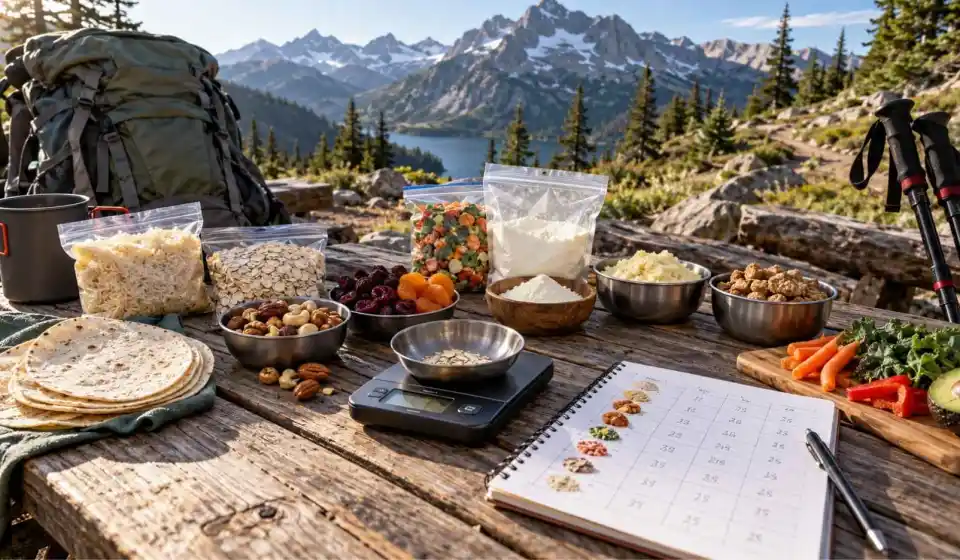
Another useful Vertical Diet principle is that calories are not the only number worth tracking. A backpacker could technically reach a high calorie target almost entirely through oil, candy, or other extremely calorie-dense foods, yet that would create a poorly balanced menu with very limited variety. 🥕 Adding dried fruit, vegetables, whole grains, legumes, nuts, seeds, powdered foods, and other practical ingredients can broaden the nutrient profile without turning trail meals into complicated recipes.
The important trail adaptation is accepting that nutritional variety may look different from variety at home. Fresh spinach, melon, yogurt, and large amounts of fresh vegetables may fit comfortably into a normal kitchen diet but become difficult to transport for several days. Backpackers can instead look for lighter versions of familiar food groups, such as dehydrated vegetables, dried fruit, powdered milk, instant beans, oats, nuts, and shelf-stable grain products.
Why backpacking changes the equation: Calories per ounce
At home, people usually judge food through calories, macros, cost, convenience, and taste, but backpackers have another major metric: how many calories are being carried per ounce. 🎒 Water-heavy foods such as fresh fruit, cooked rice, boiled potatoes, canned foods, and many prepared meals can contain useful nutrients while still being surprisingly inefficient in a food bag. The longer the trip becomes, the more important that difference can become because every low-density meal must be carried mile after mile.
This creates a tension that does not exist in most strength-focused diets because traditional athletic meal planning rarely penalizes a person for keeping cooked rice or fresh vegetables in a refrigerator. Trail menus instead reward dehydration, compact packaging, dry ingredients, and calorie-dense additions because water can often be collected later rather than transported inside the food. A backpacker’s version of nutritional planning therefore needs both nutrient density and physical calorie density.
Foods that work at home but become inefficient in a backpack
Imagine a typical home meal built around cooked rice, lean meat, vegetables, fruit, and a drink. Nutritionally, that meal may be perfectly reasonable, but carrying several servings of cooked rice, refrigerated meat, juicy fruit, and fresh vegetables for three or four days would introduce substantial water weight and food-safety problems. 🥩 The trail version must preserve the useful nutritional idea while changing the physical form of the ingredients.
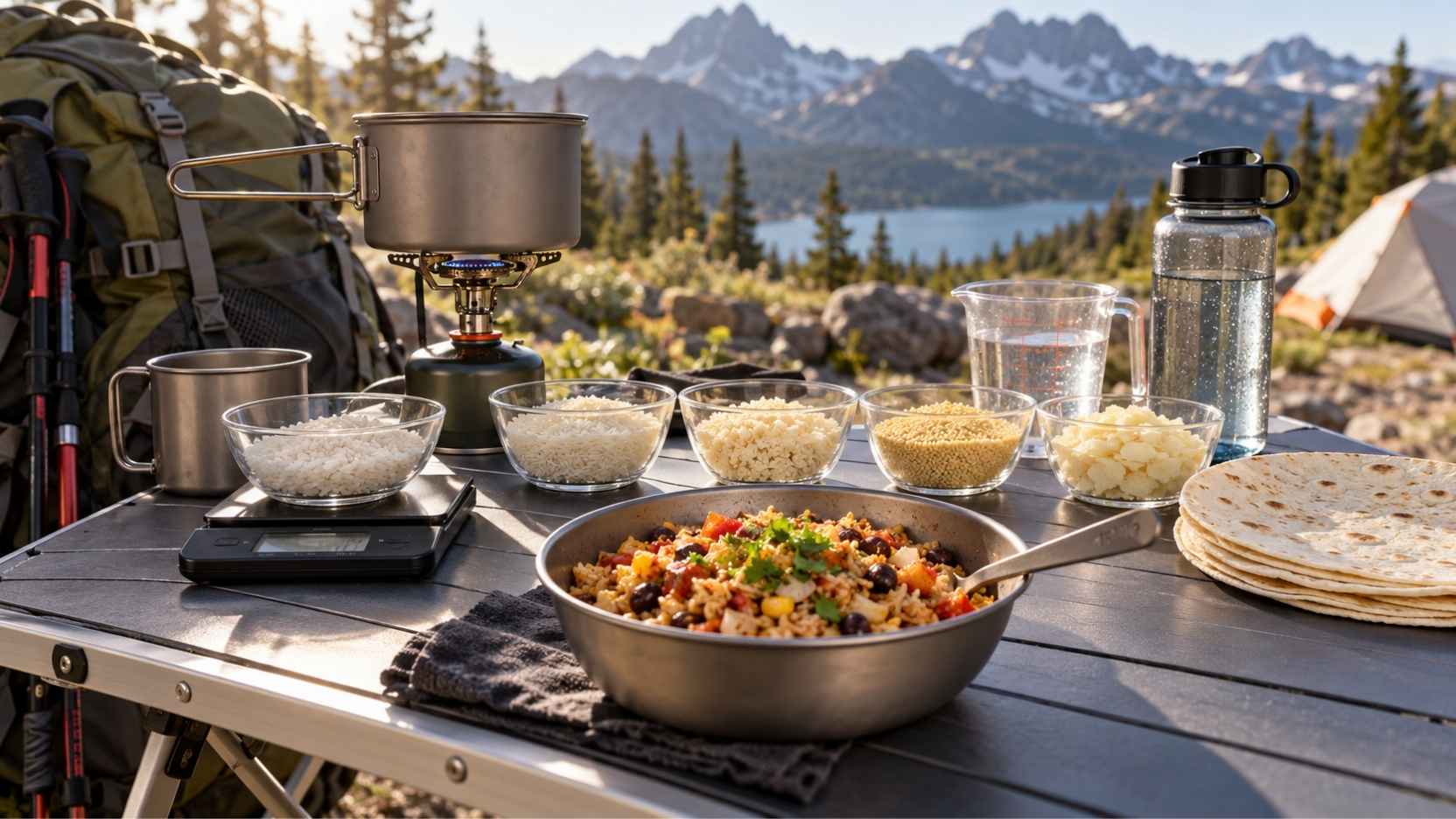
Dry rice or couscous can replace pre-cooked grains, dehydrated meat or shelf-stable protein can replace refrigerated portions where appropriate, and dried fruit can replace heavier fresh fruit for part of the trip. Dehydrated vegetables can add texture and variety to evening meals without transporting nearly as much water from the trailhead. The lesson is simple: copy the nutritional role of the food, not necessarily the original food itself.
A trail-adapted example using ordinary backpacking foods
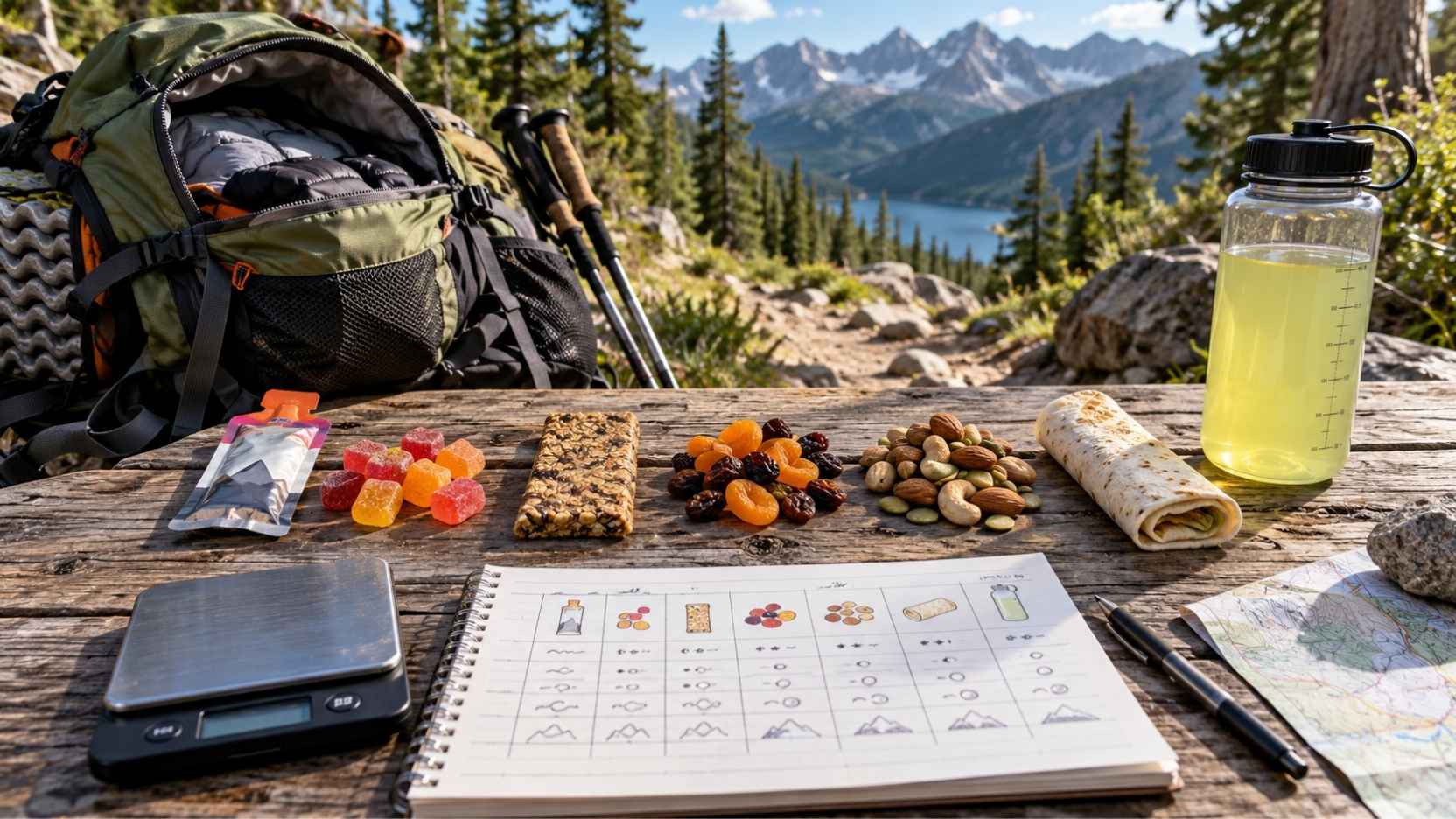
A simple breakfast might combine instant oats, powdered milk, dried fruit, nuts, and a measured amount of nut butter or seeds. 🥣 Lunch could use tortillas with a shelf-stable filling plus dried fruit or another compact side, while snacks might include nuts, crackers, bars, pretzels, or other foods selected around the hiker’s calorie target. Dinner could combine couscous, instant rice, potato flakes, or noodles with dehydrated vegetables and an appropriate protein source.
None of these foods are mandatory, and this is exactly where the transferable Vertical Diet idea becomes useful. Instead of asking whether a particular branded diet permits trail mix, tortillas, powdered milk, or instant potatoes, the backpacker asks whether the day’s menu delivers enough total calories, suitable macronutrients, reasonable variety, manageable weight, and foods they will actually eat. That question produces a far more practical menu than simply copying meals designed for a strength athlete at home.
What not to copy literally from a strength-athlete diet
The biggest mistake would be treating foods commonly associated with the Vertical Diet as a required shopping list for backpacking. Large portions of fresh meat, refrigerated dairy products, cooked rice, fresh vegetables, and other kitchen-friendly ingredients may become heavy, perishable, bulky, or difficult to prepare once refrigeration disappears. 🏕️ Backpackers should preserve the principle of meeting nutritional needs while changing the food format to suit the environment.
It is also unnecessary to imitate the calorie intake of bodybuilders, powerlifters, or professional athletes simply because they use a particular dietary framework. Backpacking energy needs depend on the individual trip, and eating significantly more or less than another athlete tells you very little about what your own food bag should contain. Trail planning works better when the activity determines the menu instead of the diet label determining the activity.
How to move from principles into a complete trail menu
Start by estimating the trip’s daily calorie requirement, then decide how many breakfasts, lunches, dinners, and snacks need to fit inside that number. Next, check whether the menu contains workable sources of carbohydrate, protein, and fat while comparing calorie density, cooking fuel, water requirements, packaging weight, food safety, and how appealing the food will still seem after several days. 📋 That turns broad nutrition ideas into numbers and decisions that can actually be tested before leaving home.
Finally, weigh the complete food bag rather than evaluating every ingredient in isolation. A menu containing a few lower-calorie-density foods can still be reasonable when the overall food weight meets your goals, just as an extremely lightweight menu can fail if you dislike the food enough to leave much of it uneaten. The most useful principle that transfers from the Vertical Diet is therefore structured planning around individual needs, not blind loyalty to a particular collection of foods.
The trail version is a framework, not a diet
For backpackers, the Vertical Diet is most useful when stripped down to three ideas: establish energy needs, build appropriate macros, and maintain a varied nutritional foundation using foods that work for the individual. Backpacking then adds its own unavoidable filters—calories per ounce, water weight, shelf life, cooking requirements, packaging, and trip duration. 🧭 Those extra constraints change what a sensible food choice looks like even when the underlying nutrition goal remains the same.
That is why the best trail translation is not “eat like a strength athlete while backpacking.” It is to borrow the organizational logic, run every food through a backpacking practicality test, and then build the final menu from ordinary trail foods that satisfy both sides of the equation. Once those principles are clear, the natural next steps are calculating calorie needs, comparing macro strategies, measuring calorie density, and turning those numbers into complete backpacking menu templates.