Energy Gel Fatigue Is Real: Why Your Trail Fuel Plan Needs More Than One Texture
Energy gels solve a real trail problem: they are compact, easy to portion, quick to open, and can deliver carbohydrate without requiring cooking or much chewing. But a backpacking menu built almost entirely around gels can look much better on a spreadsheet than it feels several hours into a long hiking day, especially when every eating break delivers another packet of nearly the same sweet, sticky texture. 🍯 A mathematically efficient trail menu still has to be a menu you are willing to keep eating.
That is where texture becomes a legitimate pack-out variable alongside calories, weight, cost, preparation, and portability. Backpackers may be on their feet far longer than someone completing a shorter endurance event, which means repeating one food format hour after hour can become increasingly unappealing even when the calorie math remains perfect. The practical solution is not to ban gels—it is to build multiple food formats into the same calorie plan so your trail food changes from soft to chewy, crunchy, dry, savory, or drinkable throughout the day.
Why A One-Food Trail Plan Looks Better On Paper Than In Your Pocket
A single-food strategy is attractive because it makes planning easy: choose one calorie-dense food, calculate how many servings you need, multiply the total weight, and place everything into your food bag. From an efficiency perspective, twenty similar packets can look wonderfully organized, and there is little uncertainty about portion size or calorie totals. 📊 The problem is that spreadsheet simplicity and eating satisfaction are two different measurements.
Real hiking introduces variables that do not appear in a calorie column, including temperature, thirst, appetite, flavor preference, food texture, break length, and how many times you have already eaten the same thing that day. A gel that sounds convenient during breakfast planning may feel much less appealing after you have already eaten several sweet, sticky foods on the trail. A better menu therefore asks two questions at once: Does this food fit the calorie target, and will I realistically want to eat it when the time comes?
Gel Fatigue Vs Actual Calorie Requirements
“Gel fatigue” does not need to be treated as a medical condition to be useful as a planning concept. It can simply describe the point where a hiker becomes tired of repeatedly eating the same sweet flavor and soft texture, making another packet less attractive even though the planned calories are still sitting in the food bag. 🥾 That distinction matters because the goal is not to diagnose nausea, stomach problems, or any other symptom—it is to improve menu compliance.
Suppose a hiker carefully packs enough food to meet a planned daily calorie target but repeatedly skips one item because it becomes unpleasant after hours of repetition. The theoretical calorie total has not changed, but the practical menu has failed because some of those calories are no longer appealing enough to eat. This is why food variety can be treated as part of fueling logistics, just like portion size, package weight, water availability, or cooking requirements.
Seven Trail-Fuel Formats Compared
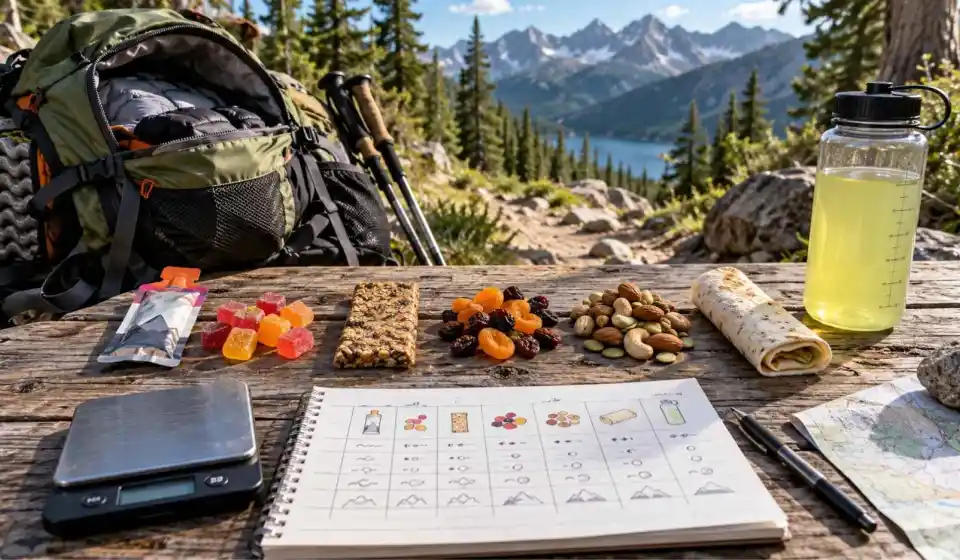
Gels are only one format available to hikers, and each alternative changes the eating experience in a different way. Chews and gummies still provide a sweet portable option but require more chewing; bars are denser and slower to eat; dried fruit adds chewiness and recognizable whole-food texture; nuts provide crunch and high calorie density; tortillas create a bread-like base for sweet or savory fillings; and drink mixes allow some calories to be consumed without eating another solid snack. 🍌 The important difference is not simply what the food contains, but how the hiker interacts with it.
Each format also creates different logistical trade-offs. A gel is compact but produces a sticky wrapper, dried fruit can be easy to portion but may compress together, nuts are calorie-dense but provide a very different macronutrient profile from carbohydrate-heavy foods, tortillas take more space but can anchor a substantial snack, and drink calories depend on available water and bottle capacity. Rather than searching for one perfect option, backpackers can combine several imperfect formats that work well together.
Liquid Calories Vs Foods You Chew
Drinkable calories occupy an interesting position because they change both texture and eating behavior. A carbohydrate-containing drink mix can provide flavor and calories while a hiker is already drinking water, eliminating another bar or gel from one particular break. 🥤 However, liquid calories should still be counted in the same food calculation rather than treated as invisible extras simply because they are dissolved in a bottle.
Solid foods create different practical advantages because chewing can make a trail break feel more like eating an actual meal or snack. A tortilla wrap, handful of dried fruit, crackers, nuts, or bar offers a physical eating experience that a flavored drink cannot reproduce, while liquids can provide variety when another solid food sounds unappealing. The useful strategy is format rotation, not an argument that liquids are universally better or worse than foods you chew.
Sweet-Food Fatigue On Long Hiking Days
Many convenient trail products cluster around similar sweet flavor profiles: gels, gummies, dried fruit, cookies, cereal bars, candy, sweetened drink powders, and chocolate can easily dominate a food bag without the hiker noticing during packing. Individually, each item may sound appealing, but collectively they can create a menu where nearly every eating opportunity tastes like dessert. 🍬 After several hours, a salty tortilla snack or handful of seasoned nuts may feel dramatically different even if it is not nutritionally exotic.
This is why flavor variety and texture variety often work together. A soft sweet gel followed later by chewy dried fruit, then a crunchy savory snack, and later a tortilla creates a much broader eating experience than five different flavors of the same gel. Changing format can make a menu feel more varied even when the overall ingredients and calorie totals remain relatively simple.
How To Rotate Texture Without Destroying Your Calorie Math
Variety does not require abandoning calorie planning. Imagine a demonstration schedule where one eating period uses a bar, the next dried fruit, another a gel, another a tortilla-based snack, and another a measured portion of drink calories; the specific sequence is not a prescription, but it shows how different formats can occupy similar places within a larger calorie budget. 🔄 The important step is to calculate the calories and weight of each item first, then arrange them according to texture and flavor.
For example, replacing a 100-calorie gel with a 100-calorie portion of another food may preserve the calorie total while changing pack weight because the alternative may contain more water, fiber, fat, or bulky ingredients. Conversely, substituting a calorie-dense nut mixture for a lower-density snack may reduce weight while substantially changing the macronutrient balance. Every substitution should therefore be checked by both calories and ounces, rather than assuming equal calories automatically mean equal backpacking efficiency.
Calculate Variety By Calories Per Ounce
Your calorie-per-ounce database becomes especially useful here because it gives variety a measurable framework. Instead of separating foods into “efficient” and “inefficient,” hikers can compare gels, bars, dried fruit, nuts, tortillas, and other snacks according to how many calories each contributes for every ounce carried. ⚖️ A lower-density food can still earn a place in the menu when it contributes enough practical value, but the weight cost becomes visible rather than accidental.
This approach also prevents one low-density preference from quietly dominating the entire food bag. Carrying one heavier fresh or bulky item may be perfectly reasonable, while carrying five different low-density foods could add noticeable weight over a multi-day trip. The goal is to create a portfolio of trail foods, where highly calorie-dense foods help offset items chosen primarily for texture, flavor, convenience, or menu variety.
Build A Fuel Rotation Column Into Your Menu
A simple backpacking menu spreadsheet can include columns for food, serving weight, calories, calories per ounce, carbohydrate, fat, protein, flavor, and one additional category: texture or format. Foods might be labeled gel, chewy, crunchy, soft, bread-like, dried, or liquid, making repetitive patterns immediately visible before the trip begins. 📝 If nearly every entry says “sweet and soft,” the menu may deserve another look even if its calorie-density average is excellent.
The same column also makes pack-out design easier because variety can be planned deliberately rather than achieved by randomly adding extra snacks. A hiker might select two highly efficient calorie-dense foods, two carbohydrate-focused options, one savory item, one liquid format, and one familiar comfort food, then calculate whether the combined weight still fits the trip target. That turns food variety from an afterthought into a measurable planning tool.
A Sample Texture-Rotation Demonstration
Consider a hypothetical hiking day that begins with a bar, later switches to dried fruit, then uses a gel, follows with a tortilla snack, and later includes calories from a drink mix. The sequence does not claim that hikers should eat every hour or that those exact foods are appropriate for every person; actual needs differ with body size, effort, trip length, weather, overall diet, and many other factors. 🥾 Its purpose is simply to demonstrate how five eating opportunities can use five noticeably different formats.
The same principle could be rearranged countless ways: gel followed by nuts, chewy candy followed by a cracker-based snack, dried fruit followed by a tortilla, or a bar followed later by a drink. Someone who dislikes gels could omit them completely, while someone who loves them could keep several and simply separate them with other textures. The planning objective is not perfect diversity—it is avoiding unnecessary repetition that makes packed food increasingly unattractive.
The Best Trail Fuel Is The Food You Will Actually Eat
Calorie density remains one of the most powerful tools for controlling backpacking food weight, but it should not become the only rule in the food bag. An extremely efficient menu that a hiker repeatedly ignores on the trail is less useful than a slightly heavier menu whose calories are actually consumed as planned. 🎒 This is why trail fueling strategy and menu design should be connected rather than treated as separate subjects.
Gels can still be excellent tools because they are compact, measured, and convenient, but they do not need to carry the entire menu. Mix them with chewy foods, crunchy foods, familiar snacks, tortillas, dried fruit, nuts, bars, or drink calories according to personal preference and the logistics of the trip. The practical Camp Kitchen Lab rule is simple: calculate calories per ounce, then calculate whether you have enough variety to keep wanting those calories after hours on the trail.