White Rice Is Easy Calories—But Is It Actually Good Backpacking Food?
White rice seems almost perfectly designed for a high-calorie eating plan because it is mostly carbohydrate, inexpensive, easy to portion, and capable of absorbing whatever flavors surround it. 🍚 Those qualities explain why rice appears so often in conversations about gaining weight, strength training, endurance eating, and other situations where consuming enough calories matters. Backpacking changes the equation, however, because food must be judged not only by calories but also by dry weight, cooking water, stove fuel, preparation time, storage, and the number of days it must ride in your pack.
That distinction makes white rice a surprisingly interesting trail-food experiment rather than an automatic winner or loser. A bowl of cooked rice may look heavy and relatively low in calorie density because much of its final weight is water, while the dry rice you actually carry is dramatically more concentrated. 🎒 For backpackers, the correct question is therefore not simply, “How many calories are in rice?” but “How many calories am I carrying before I add water at camp?”
Why White Rice Appears So Often In High-Calorie Diets
Dry white rice is primarily a carbohydrate food, with only modest amounts of protein and very little fat compared with foods such as nuts, cheese, or peanut butter. Because rice has a neutral flavor and can be eaten alongside many other foods, large portions can be easier for some people to incorporate than strongly flavored or extremely high-fiber staples. 🍚 That is a personal food-preference advantage, though, not proof that white rice is universally easier to digest or superior for athletic performance.
This is where bodybuilding logic cannot automatically be transferred to backpacking. Someone eating several thousand calories at home does not need to carry the day’s meals over a mountain pass, calculate stove fuel, ration water, or worry about whether dinner requires twenty minutes of simmering. On the trail, a calorie that requires extra carried weight or substantial cooking fuel has a different logistical cost, even though the calorie itself provides the same amount of energy.
How Many Calories Are In An Ounce Of Dry Rice?
Uncooked white rice contains roughly 360 to 370 calories per 100 grams, depending on the variety and nutrition database used, so using approximately 365 calories makes a practical planning estimate. That equals about 103 calories per ounce of dry rice, putting rice in a respectable but not exceptionally high calorie-density range for backpacking food. 📊 It easily beats water-heavy fresh foods, but it remains far below pure fats because fat provides approximately nine calories per gram while carbohydrate provides about four.
The numbers also make portion planning straightforward: approximately 4.8 ounces of dry rice provides 500 calories, 7.2 ounces provides 750 calories, and 9.7 ounces provides about 1,000 calories. Those figures represent rice alone before sauces, oil, meat, vegetables, or other ingredients are added, so a complete meal does not necessarily require that much rice. Carrying nearly ten ounces of dry rice for a single 1,000-calorie dinner would also create an enormous cooked portion, which demonstrates why calorie-dense additions can be useful.
Dry Weight Changes The Backpacking Equation
Cooked rice contains far fewer calories per ounce than dry rice because the grains absorb a large amount of water during cooking. 💧 That does not mean calories disappeared; it simply means water increased the final weight without adding calories. Backpackers should therefore calculate food efficiency from the dry product being carried, not from a nutrition entry describing prepared rice unless they intend to carry the rice already cooked.
This principle applies far beyond rice and is one of the most useful concepts in lightweight meal planning. Dehydrated potatoes, couscous, pasta, dried beans, powdered foods, and freeze-dried ingredients all gain weight when water is restored, but hikers often collect that water near camp instead of carrying it inside the food for the entire day. When reliable water is available, removing water before the trip and adding it back later can substantially improve carried-food efficiency.
White Rice Vs Instant Rice
Regular dry white rice and plain instant rice can have broadly similar calorie density because both products are predominantly dried carbohydrate. The meaningful difference is preparation: conventional rice usually needs considerably more cooking time, while instant rice has been precooked and dried so it can rehydrate quickly. 🔥 For backpackers using small canister stoves, alcohol stoves, or carefully rationed fuel, those extra minutes can matter across several dinners.
Instant rice therefore may win even when its calories per ounce are almost identical to ordinary rice because stove fuel is also pack weight. Shorter cooking can reduce fuel consumption, simplify cleanup, and make dinner easier when hikers are tired, cold, or trying to conserve a limited fuel supply. Regular rice remains practical when fuel is abundant, cooking time is unimportant, or a hiker uses a system designed around longer simmering, but it should not be judged by food weight alone.
Rice Vs Tortillas Vs Couscous Vs Potato Flakes
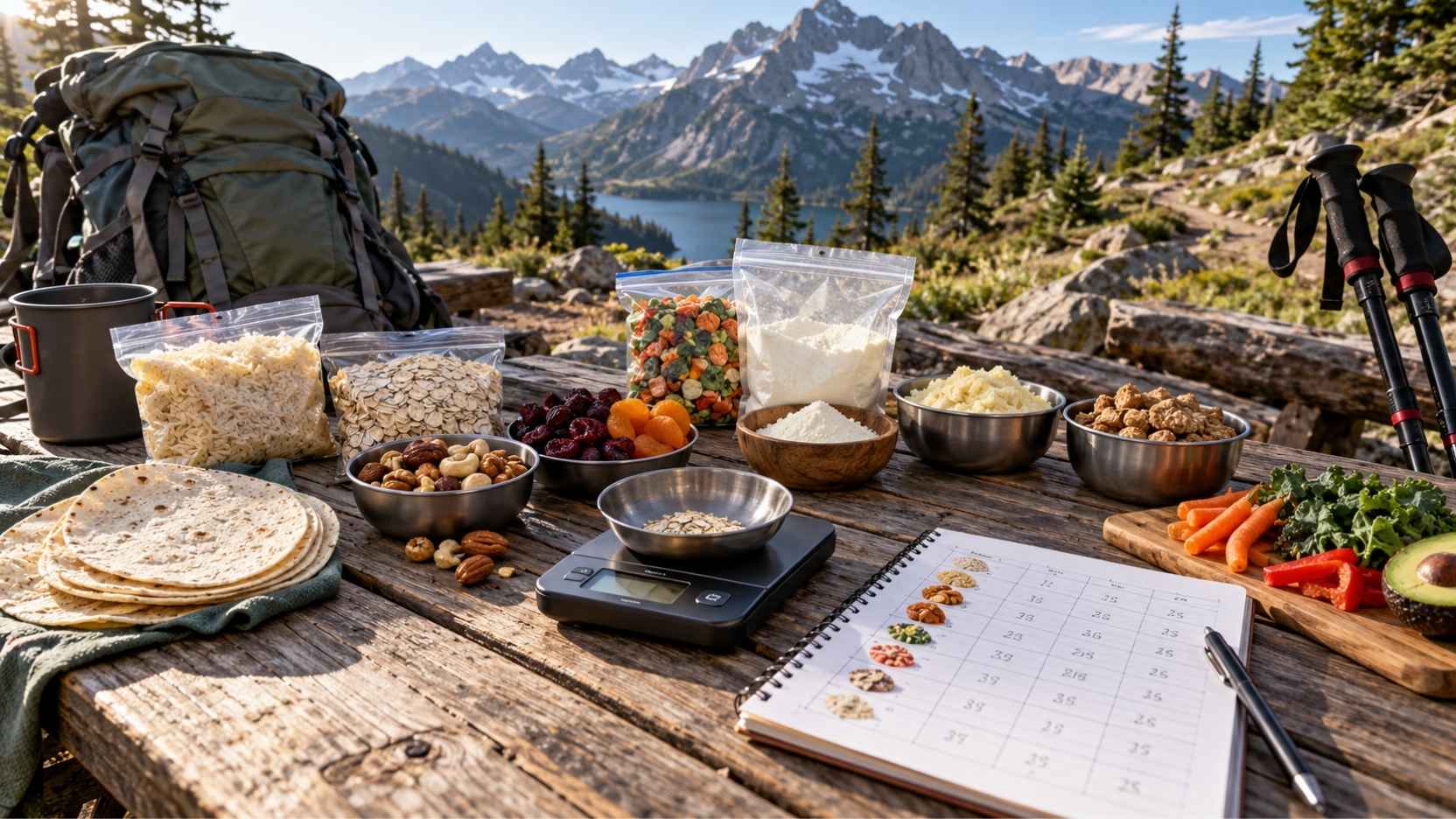
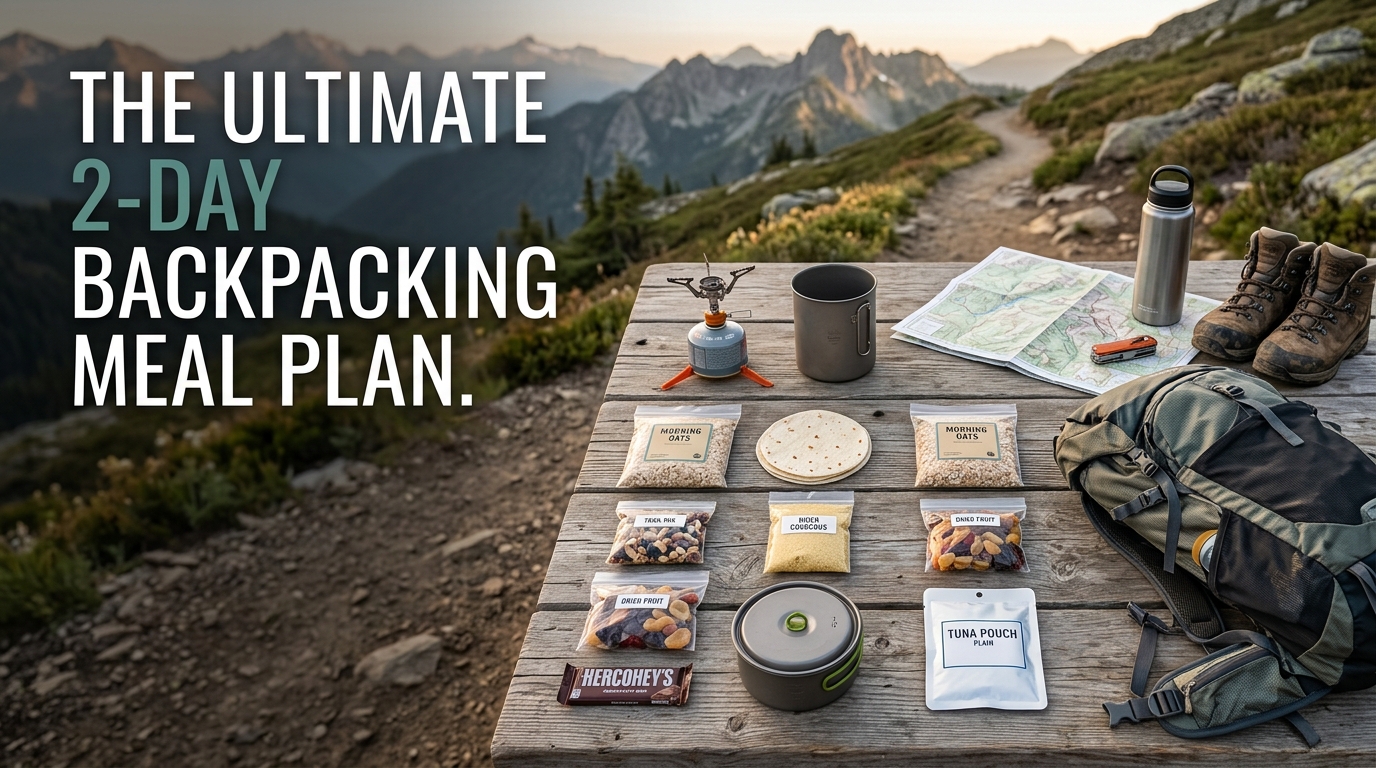
Dry couscous generally lands in a calorie-density range similar to or slightly above dry white rice and has a major trail advantage because many varieties hydrate quickly. Potato flakes also cluster near roughly 100 calories per ounce before additions, making them broadly comparable to rice by dry food weight while offering a completely different texture and flavor. 🥔 Tortillas vary more because recipes differ in fat content, but they offer one advantage neither rice nor dry flakes can match: they can be eaten immediately without water, cookware, or stove fuel.
That comparison demonstrates why there is no universal winner when choosing a trail carbohydrate. Rice may offer excellent cost and menu flexibility, couscous may reduce cooking time, potato flakes may provide savory variety, and tortillas may eliminate cooking altogether. A useful food database should therefore compare not only calories per ounce, but also preparation time, water requirements, fuel demand, packability, shelf stability, mess, and how willingly the hiker will actually eat the food.
What Does Rice Cost Per 1,000 Calories?
White rice is often one of the least expensive dry staple foods in a supermarket, which makes it attractive when designing large backpacking menus on a budget. 💰 Exact prices vary too much by country, store, package size, brand, and rice variety to assign one meaningful universal cost, so hikers can calculate their own figure instead. Divide the package price by the package’s total calories and multiply the result by 1,000 to find the approximate cost per 1,000 calories.
That same calculation can be applied to tortillas, couscous, potato flakes, oatmeal, nuts, dried fruit, bars, and every other candidate in a trail pantry. Looking at cost this way prevents inexpensive-looking packages from being automatically labeled economical when they contain relatively few total calories. For a Camp Kitchen Lab database, cost per 1,000 calories becomes especially useful when paired with calories per ounce because it shows both financial efficiency and pack-weight efficiency.
Where Rice Fits Best In A Trail Menu
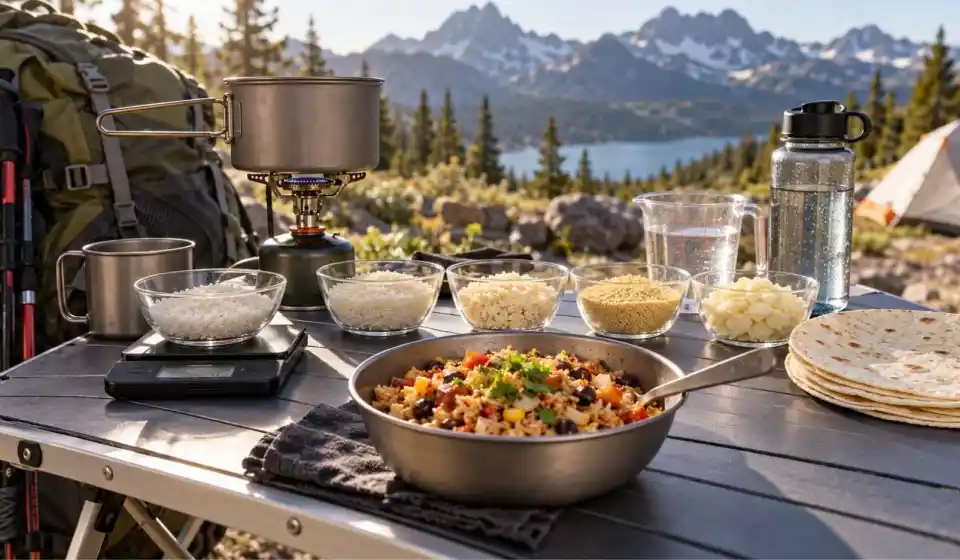
Rice works particularly well as a dinner base because it can carry flavors from dehydrated vegetables, powdered sauces, spices, tuna packets, dried meat, beans, lentils, or other trail ingredients. 🍛 Plain rice contributes mostly carbohydrate calories, so building a complete meal usually means pairing it with foods that contribute additional protein, fat, flavor, texture, or micronutrients. The goal does not have to be creating a nutritionally perfect bowl; it is creating a meal that fits the day’s overall food plan and that the hiker will still want to eat.
Fat can also change the weight equation dramatically because oils and other high-fat ingredients contain far more calories per gram than rice. Adding an appropriate amount of olive oil, powdered cheese, nuts, seeds, or another calorie-dense ingredient can raise a meal’s calories without requiring an enormous portion of cooked rice. 🥄 Backpackers should still consider storage, packaging, individual preference, and dietary needs rather than assuming that simply adding as much fat as possible creates the best meal.
Rice Should Not Become Every Dinner
One danger with inexpensive staples is designing a mathematically efficient food bag that becomes psychologically boring after several days. Eating rice every evening with only minor seasoning changes can make a menu feel repetitive, especially when breakfasts and lunches are already built around the same handful of lightweight ingredients. 🌄 Rotating rice with couscous, noodles, tortillas, potato flakes, oats, or other carbohydrate bases can improve variety without abandoning calorie-density goals.
Different textures can be just as valuable as different flavors when constructing a longer trail menu. A soft rice bowl tonight, mashed potatoes tomorrow, a tortilla-based dinner the next evening, and couscous later in the trip may feel considerably more varied even if their basic macronutrient roles are similar. Menu compliance matters in practical backpacking, because food that looks perfect on a spreadsheet provides little value if it repeatedly comes home uneaten.
What About Cooking Water?
Rice requires water, but water requirements need to be interpreted carefully because the water added at camp may not need to be carried for the entire day’s hike. 🚰 On routes with dependable water sources, a hiker can transport dry rice and obtain cooking water near camp, preserving the advantage of carrying the food in concentrated form. On dry routes where every liter must be hauled from a distant source, however, that advantage becomes smaller because the cooking water itself becomes part of the backpack’s load.
Water availability should therefore be part of food planning rather than treated as a separate issue. A no-cook tortilla meal may be more attractive on a dry section even when the tortilla’s calorie density is not dramatically better, while quick-hydrating instant rice may work extremely well beside a reliable campsite water source. The same food can be efficient on one route and inconvenient on another simply because the water logistics changed.
The Bottom Line: Rice Is A Tool, Not A Performance Food
White rice earns a legitimate place in backpacking food systems because dry rice provides roughly 100 calories per ounce, stores compactly, is usually inexpensive, accepts countless seasonings, and can become the carbohydrate foundation for many trail dinners. 🍚 Its weaknesses are equally clear: conventional rice takes time and fuel to cook, needs water, provides relatively little fat, and can become monotonous when used repeatedly. Instant rice addresses much of the cooking problem while retaining nearly the same basic calorie-density logic.
The useful conclusion is not that hikers should eat more rice or eliminate it from their packs. Instead, evaluate it alongside food weight, calories required per day, water availability, stove system, fuel carried, cost, meal variety, trip length, and personal preference, then decide whether it solves a specific problem in your menu. 🎒 For a weekend backpacker rice may simply be an inexpensive dinner, while on a longer route it becomes one component in a carefully calculated system rather than a special endurance food.