The Ultimate 2-Day Backpacking Meal Plan With a Complete Food Weight Checklist 🥾🍲
Introduction
Planning backpacking meals is about more than choosing food that tastes good. Every item adds weight to your pack, and you need enough calories to stay energized throughout the hike without carrying unnecessary extras.
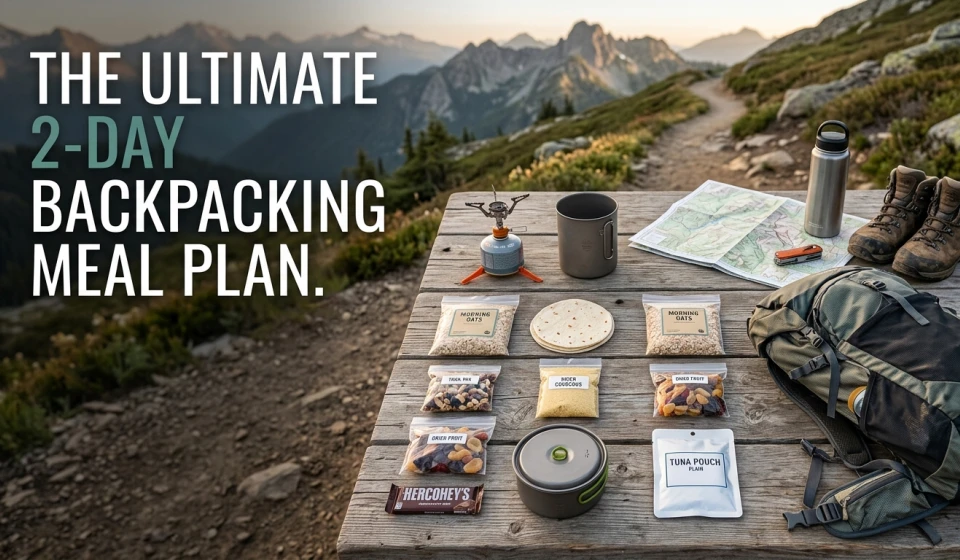
This 2-day backpacking meal plan balances calories, portability, simple preparation, and food weight. It includes breakfast, lunch, dinner, snacks, a shopping list, estimated costs, and a printable packing checklist.
Whether you’re a first-time backpacker or an experienced hiker looking to simplify your food system, this guide will help you plan meals before hitting the trail.
🏕️ Planning Assumptions
This plan is designed for one adult on a two-day, one-night backpacking trip.
- Activity level: Moderate hiking, with individual energy needs varying by body size, terrain, pace, weather, and pack weight.
- Cooking method: One small backpacking stove with a pot and access to a safe water source, plus water treatment.
- Food storage: Dry, shelf-stable foods in sealed bags, protected from moisture and animals. Follow local food-storage rules, including bear-canister requirements where applicable.
- Menu style: Simple meals with minimal preparation and limited cleanup.
- Portions: General planning estimates, not personalized nutrition advice.
The calorie and cost figures below are approximate. Brands, serving sizes, local prices, and preparation methods will affect the totals.
🍽️ The Complete 2-Day Menu
Day 1: Start Strong
| Meal | Menu | Estimated calories |
|---|---|---|
| Breakfast | Instant oatmeal, powdered milk, raisins, peanut butter | 550 |
| Lunch | Tortillas, peanut butter, and honey | 500 |
| Snack | Trail mix with nuts, dried fruit, and chocolate | 300 |
| Dinner | Instant couscous, olive oil, dried vegetables, and tuna pouch | 650 |
| Evening snack | Dark chocolate | 150 |
| Day 1 total | 2,150 kcal |
Why it works: Oatmeal provides carbohydrates and fiber, peanut butter adds energy and fat, and the tuna helps supply protein. Couscous cooks quickly with hot water, making dinner easier after a long hiking day.
Day 2: Keep Moving
| Meal | Menu | Estimated calories |
|---|---|---|
| Breakfast | Instant oatmeal, powdered milk, peanut butter | 550 |
| Lunch | Tortillas with hard cheese and shelf-stable salami | 550 |
| Snack | Trail mix | 300 |
| Afternoon snack | Energy bar | 200 |
| Day 2 total | 1,600 kcal |
Why it works: Day 2 uses foods that can be eaten while hiking or during short breaks, reducing the need to stop and cook.
These totals are examples, not universal calorie targets. Many backpackers need more energy during strenuous or prolonged activity. Add food if your planned route, body size, weather, or personal appetite calls for it.
⚖️ Food Weight Checklist
The following estimates cover food for one person for the full trip. Weights are approximate and refer to the food as packed, excluding most reusable cooking equipment.
| Food item | Packed quantity | Estimated weight |
|---|---|---|
| Instant oatmeal | 2 servings | 80 g |
| Powdered milk | 2 portions | 30 g |
| Raisins or dried fruit | 2 portions | 40 g |
| Peanut butter | 3 tbsp total | 48 g |
| Tortillas | 4 small tortillas | 160 g |
| Honey | 1 small portion | 20 g |
| Trail mix | 2 portions | 100 g |
| Couscous, dry | 1 portion | 75 g |
| Olive oil | 1 small leakproof portion | 15 g |
| Dried vegetables | 1 portion | 15 g |
| Tuna pouch | 1 pouch | 70 g |
| Dark chocolate | 1 portion | 25 g |
| Hard cheese | 1 portion | 30 g |
| Shelf-stable salami | 1 portion | 40 g |
| Energy bar | 1 bar | 50 g |
| Estimated total | 798 g |
Important: This is an illustrative menu and weight estimate, not a verified product-specific packing list. Check the actual labels and weigh your own portions. Tortilla sizes, tuna packaging, and snack choices can change the total substantially.
The total is about 0.8 kg of food per person for two days, or approximately 400 g per day. That is a relatively compact food load, so check whether the calories are sufficient for your trip before relying on this amount. Do not reduce food weight at the expense of adequate energy.
🛒 Shopping List
Buy the following for one person:
- Instant oatmeal
- Powdered milk
- Raisins or other dried fruit
- Peanut butter
- Tortillas
- Honey
- Trail mix
- Couscous
- Olive oil
- Dried vegetables
- Tuna pouch
- Dark chocolate
- Hard cheese
- Shelf-stable salami
- Energy bar
💰 Estimated Food Cost
A rough planning budget is US$15–25 per person if buying typical retail packages, but local prices and package sizes vary significantly. You may spend less if you already have pantry staples, or more if you buy specialty backpacking foods.
For a more accurate estimate, price the full packages at your local store, then calculate the cost of the portions you will actually use. Do not confuse the cost of the entire shopping basket with the cost of food consumed on the trip.
🎒 Printable Food Pack-Out Checklist
{@body const checklist = [“Day 1 breakfast packed”,”Day 1 lunch packed”,”Day 1 dinner packed”,”Day 1 snacks packed”,”Day 2 breakfast packed”,”Day 2 lunch packed”,”Day 2 snacks packed”,”All portions labeled by meal”,”Food sealed in moisture-resistant bags”,”Any perishable foods safely chilled and stored”,”Water treatment packed”,”Stove, fuel, and lighter checked”,”Pot and eating utensil packed”,”Required animal-resistant food storage packed”,”Extra food included for a suitable contingency”]}
{@body const [checked, setChecked] = DIL.useState([])}
<text color=”secondary” size=”sm”>{checked.length} of {checklist.length} items checked</text>
{#each checklist as item}
<checkbox key={item} checked={checked.includes(item)} onChange={(v) => setChecked(old => v ? […old, item] : old.filter(x => x !== item))}>{item}</checkbox>
{/each}
<text color=”secondary” size=”sm”>Tip: Use this checklist before leaving home. Keep food organized by meal so you can find what you need without unpacking your entire bag.</text>
Practical Tips for a Better Meal Plan
- Test meals at home. Make sure you enjoy the food and know how much water and cooking time it requires.
- Repackage thoughtfully. Remove unnecessary cardboard and bulky outer packaging, but retain cooking instructions and essential safety information when needed.
- Plan water separately. The food weight above does not include drinking or cooking water. Water can add substantial weight, so plan reliable sources and treatment.
- Store food safely. Follow local wildlife guidance and campsite rules. In hot weather, avoid carrying cheese or meat unless you can keep it at a safe temperature; choose suitable shelf-stable alternatives when needed.
- Bring enough food. A compact menu is useful only if it supplies enough energy. Include a reasonable contingency for delays, unexpected exertion, or a longer-than-planned hike.
- Pack out waste. Carry out wrappers, food scraps, and used packaging according to local rules.
Final Thoughts 🌲
A successful two-day backpacking meal plan should be easy to prepare, satisfying to eat, and light enough to carry without compromising your energy needs. This menu gives you a practical starting point, with a complete food list and a checklist to make packing more organized.
Before your next trip, adjust portions to your appetite, compare actual product weights and prices, and check your route’s water and food-storage requirements. The best backpacking menu is not necessarily the lightest one. It is the one that helps you hike safely, eat well, and enjoy the journey.