Rice vs Potatoes vs Pasta for Backpacking: Which Gives You More Calories For The Weight?
When backpackers compare dinner staples, rice, potatoes, and pasta seem almost interchangeable because all three are inexpensive, carbohydrate-heavy foods that can form the base of a filling meal. 🍚🥔🍝 Once pack weight enters the equation, however, the comparison changes because hikers are not really carrying cooked bowls of food—they are carrying dry ingredients plus whatever stove fuel and water strategy the meal requires. For anyone searching for the best carbs for backpacking, calories per ounce are important, but they are only the beginning of the decision.
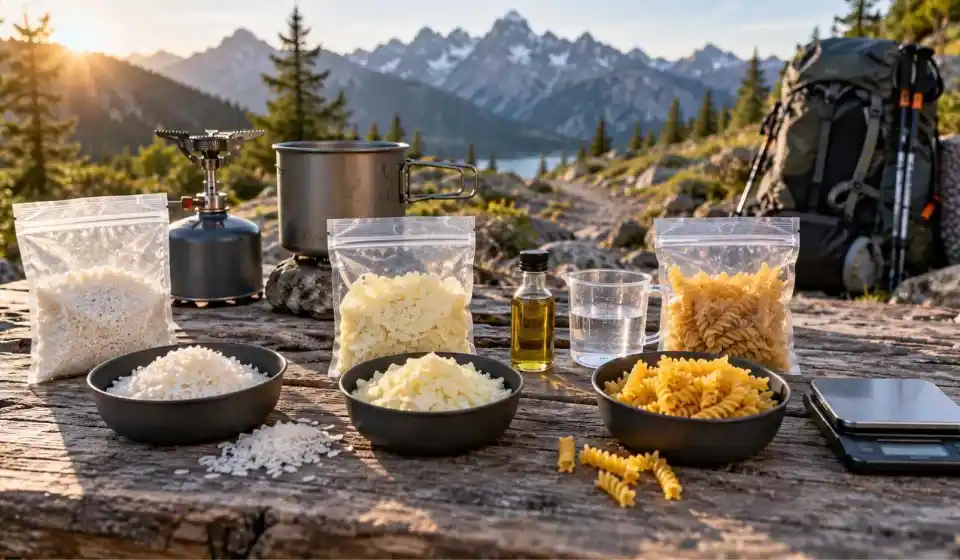
The fairest comparison is therefore instant rice versus dehydrated potato flakes versus dry pasta, because each has already had most of its water removed before entering the backpack. In common grocery-store versions, all three land surprisingly close to roughly 100 calories per dry ounce, meaning there is no enormous calorie-density winner before toppings are added. 🎒 The more meaningful differences appear in cooking time, protein, packability, fuel demand, resupply convenience, and what you add to the finished meal.
Why Carbohydrate Staples Dominate Backpacking Dinners
Carbohydrate staples work well in trail dinners because they provide a large amount of food energy while remaining inexpensive, familiar, easy to season, and widely available. Rice, pasta, and dried potatoes can also be combined with ingredients such as dehydrated vegetables, powdered cheese, spices, tuna packets, beans, or oil without forcing you to redesign the whole meal. 🏕️ That flexibility makes them especially useful when building several days of dinners from a limited grocery selection.
They also solve a practical backpacking problem: much of their cooking water can be collected after reaching camp rather than carried inside the food all day. Removing water before a trip dramatically changes the weight equation, which is why dehydrated potato flakes make far more sense for long-distance packing than whole boiled potatoes. In calorie-density terms, the backpacking version of a food can matter almost as much as the food itself.
The Fair Way To Compare Trail Carbohydrates
Using typical unprepared nutrition values, dry instant white rice commonly supplies around 100–105 calories per ounce, roughly 22–23 grams of carbohydrate, and about 2 grams of protein. Dehydrated potato flakes are often around 100 calories per ounce, with approximately 22–23 grams of carbohydrate and roughly 2 grams of protein, while traditional dry pasta frequently falls around 100–105 calories per ounce with roughly 20–22 grams of carbohydrate. 📊 Pasta generally provides somewhat more protein, commonly around 3–4 grams per dry ounce, although exact numbers depend on whether it is wheat, lentil, chickpea, rice, corn, or another type.
| Trail staple | Approx. calories/oz dry | Main advantage | Main limitation |
|---|---|---|---|
| Instant rice | 100–105 | Fast, versatile, easy resupply | Needs measured water |
| Potato flakes | Around 100 | Very fast hydration, compact | Soft texture, easy to overwater |
| Dry pasta | 100–105 | Familiar, more protein in many versions | Traditional pasta can use more stove fuel |
Those numbers reveal the first important lesson: choosing pasta instead of rice will not suddenly cut pounds from your food bag, because their dry calorie densities are relatively similar. What matters more is how efficiently you can prepare each food under your specific conditions, including pot size, stove type, ambient temperature, wind, elevation, and whether your cooking method requires sustained simmering. 🔥 For stove users, preparation time can become part of food weight because additional cooking may require carrying additional fuel.
Instant Rice: The Middle-Ground Trail Staple
Instant rice is attractive because the rice has already been cooked and dehydrated commercially, allowing it to rehydrate much faster than ordinary uncooked rice. A common trail method is to bring the required water to a boil, stir in the rice, remove or reduce the heat, and let the food finish hydrating inside an insulated or covered pot. 🍚 Compared with simmering conventional rice from scratch, that can substantially simplify camp cooking and reduce the amount of time your stove remains active.
Its neutral flavor is another strength because the same base can become Mexican-style rice, curry rice, cheesy rice, bean-and-rice bowls, or a simple vegetable dinner depending on your seasonings. The downside is that rice can feel repetitive during longer trips, and poorly measured water can leave instant rice either soupy or unpleasantly dry. For backpackers wanting low cooking demand without giving up a recognizable dinner texture, instant rice is one of the strongest all-around options.
Dehydrated Potatoes: The Fastest Transformation
Potato flakes demonstrate just how powerful dehydration can be because fresh potatoes contain substantial water while dry flakes eliminate most of that carried moisture. 🥔 Add hot water later and the flakes rapidly become mashed potatoes, often with little or no simmering required, which can make them especially attractive when stove-fuel conservation matters. Their dry calorie density is not dramatically greater than instant rice, but their minimal cooking requirement can make the complete food-and-fuel system more efficient.
Packability is another advantage because flakes conform easily to a lightweight bag and leave fewer awkward empty spaces than rigid foods. Their biggest weakness is texture variety, since several nights of mashed potatoes may become less appealing than meals containing rice grains or pasta shapes, and excessive water can turn them thin very quickly. Adding seasonings, dehydrated vegetables, powdered dairy ingredients, or another trail-stable component can make potatoes function better as a complete dinner rather than just a plain starch.
Pasta: Similar Calories, Different Cooking Economics
Dry pasta often appears extremely efficient because it is shelf-stable, inexpensive, calorie-dense compared with fresh foods, and readily available almost anywhere groceries are sold. 🍝 Standard wheat pasta also tends to provide more protein per ounce than plain white rice or potato flakes, although backpackers should still evaluate an entire day’s menu rather than expecting one dinner ingredient to supply everything. Gluten-free pasta can work as well, but its nutrition, texture, breakage resistance, and cooking time depend heavily on whether it is made from rice, corn, legumes, or another ingredient.
Traditional pasta’s main backpacking disadvantage is cooking time because many varieties are designed to boil for several minutes, potentially increasing fuel use compared with foods that merely need rehydration. Smaller shapes, angel-hair pasta, quick-cooking varieties, or carefully planned boil-and-soak methods can reduce that difference, but hikers should test their exact product before relying on it in the field. The best pasta for backpacking is therefore not necessarily the one with the highest calories—it may be the one that reaches an acceptable texture with the least complicated cooking routine.
Which One Wins By Metric?
For lowest carried food weight, there is effectively a near tie because common dry versions of rice, potato flakes, and pasta cluster around the same general 100-calorie-per-ounce neighborhood. For lowest cooking demand, potato flakes usually have the clearest advantage, followed closely by many instant-rice products, while traditional dry pasta generally requires more heat or soaking time. 🏆 For protein, ordinary wheat pasta usually has an advantage over plain white instant rice and potato flakes, although legume-based products can change the comparison substantially.
For cost, do not rely on assumptions because package size and local prices can completely rearrange the ranking; divide the package price by its total package calories and multiply by 1,000 to calculate cost per 1,000 calories. Rice and pasta are typically easy to find during ordinary grocery resupplies, while instant potato flakes are also widespread but may have fewer package-size choices depending on the store. For pack volume, flakes compress conveniently, rice packs densely, and some pasta shapes trap more air, making shape almost as important as ingredient when space is tight.
The Fat-Booster Effect Changes The Contest
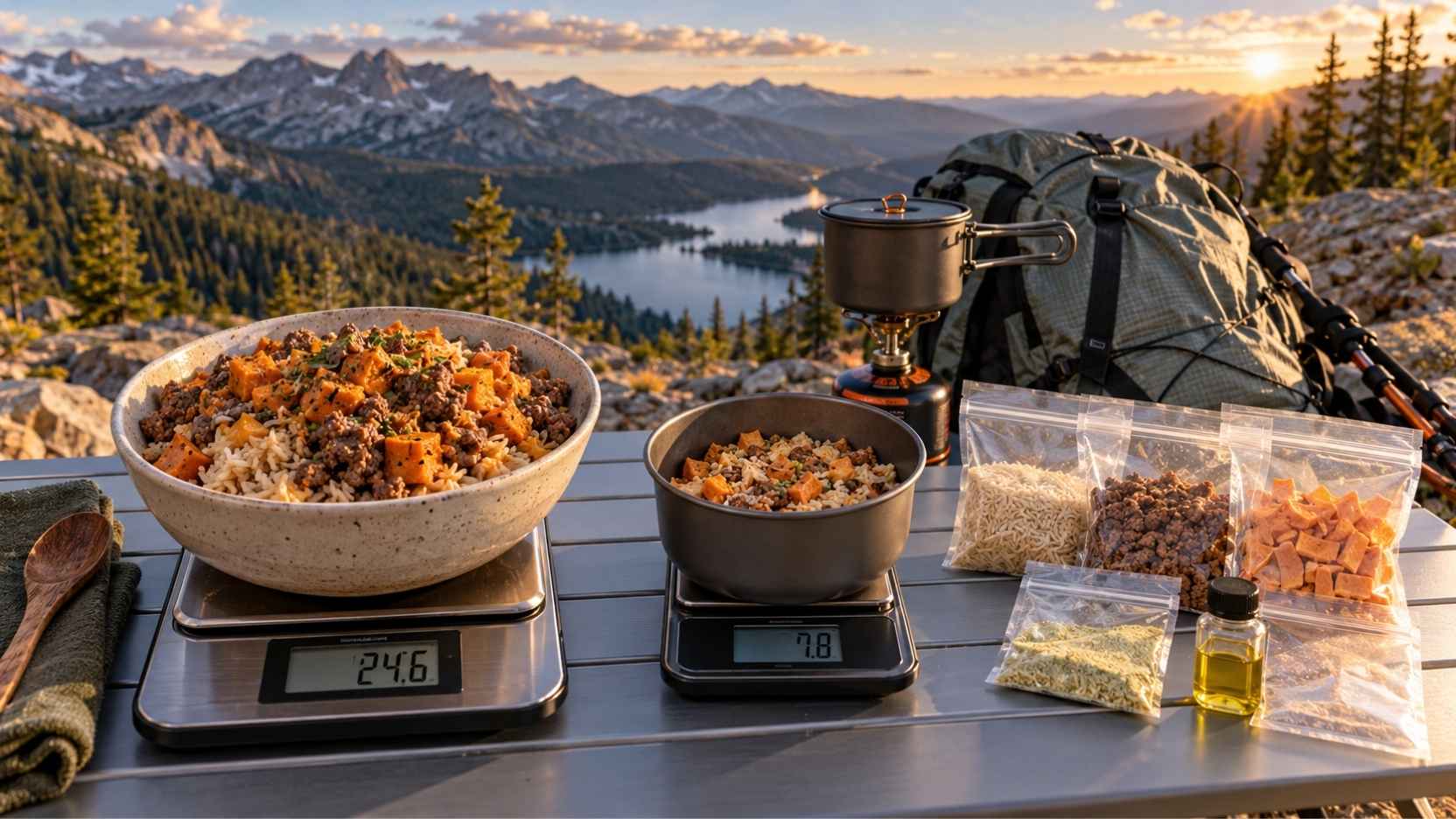
The easiest way to push any of these meals beyond their roughly 100-calorie-per-ounce baseline is to add a calorie-dense fat because dietary fat contains about 9 calories per gram, compared with about 4 calories per gram for carbohydrate and protein. 🫒 A tablespoon of oil supplies roughly 120 calories while weighing only around half an ounce, so adding it to approximately four ounces of a 100-calorie-per-ounce starch can move the combined dry-food-plus-oil meal toward roughly 115–120 calories per ounce. The precise result depends on the starting food and actual amount of oil used, but the principle remains the same.
That means arguments over a few calories per ounce between plain rice and plain pasta may matter less than the meal configuration built around them. Oil, nut or seed butter, powdered cheese, nuts, or other calorie-dense additions can substantially change the final calculation, although hikers must also consider taste, packaging reliability, shelf stability, and cleanup. A lightweight meal is therefore designed as a system rather than chosen from a single nutrition label.
Stove Fuel Can Quietly Change The Winner
Food weight is easy to measure because you can place a meal on a kitchen scale, but stove-fuel weight is less obvious and depends heavily on real-world conditions. Cold weather, wind, poor windscreens, high water volumes, inefficient cookware, and long simmer times can all increase fuel consumption, meaning a food requiring longer cooking can indirectly add weight elsewhere in your pack. ⛺ This is why a laboratory-style comparison should evaluate both calories per ounce and the energy required to turn dry ingredients into dinner.
For a weekend trip, differences in stove fuel may be small enough that meal preference matters more than optimization. Across a longer itinerary containing many cooked dinners, however, consistently choosing foods that need only boiling water and passive rehydration may reduce the amount of fuel you need to start with or purchase at resupply points. Testing meals at home provides much better information than assuming the manufacturer’s kitchen directions exactly match how you will cook outdoors.
So Which Is The Best Carb For Backpacking?
Choose instant rice when you want versatility, easy grocery-store resupply, a grain-like texture, and relatively low cooking demand. Choose dehydrated potatoes when rapid rehydration, compact packing, and minimal stove time matter most, and choose pasta when you prefer its texture, want somewhat more protein from many conventional versions, or simply know you will enjoy eating it night after night. 🥾 None wins every category because their dry calorie densities are much closer than their very different appearances suggest.
That is the bigger lesson behind rice vs pasta for backpacking and nearly every other calorie-per-ounce trail-food comparison: optimize the whole meal rather than chasing one number. A food that saves five calories per ounce but requires more fuel, occupies awkward pack space, or becomes something you no longer want to eat after three days may not be the practical winner. 🎒 Calories per ounce should narrow your choices; trip length, preparation time, water availability, cost, taste, and cooking system should make the final decision.