The Future of Ultralight Stoves: Trends and Innovations
The Next Frontier in Ultralight Stoves: Where Efficiency Meets Ecology
When you’re four days into a backcountry traverse and your base weight is measured in grams, your stove is more than a piece of gear — it’s a lifeline. The ultralight stove market has quietly undergone a revolution over the past decade, and the next wave of innovation promises to blur the lines between weight, power, and planetary stewardship. This isn’t just about boiling water faster; it’s about rethinking the entire combustion chain in the smallest possible package.
Current Trends: The Materials Race and the Rise of Integrated Systems
We’re living in a golden era of stove design, driven by two primary forces: material science and user experience optimization. Titanium has become the default metal for burner heads and pot supports due to its excellent strength-to-weight ratio and corrosion resistance, but the frontier is now moving to composite alloys and ceramic coatings that shave off the last fractions of a gram while improving heat transfer.
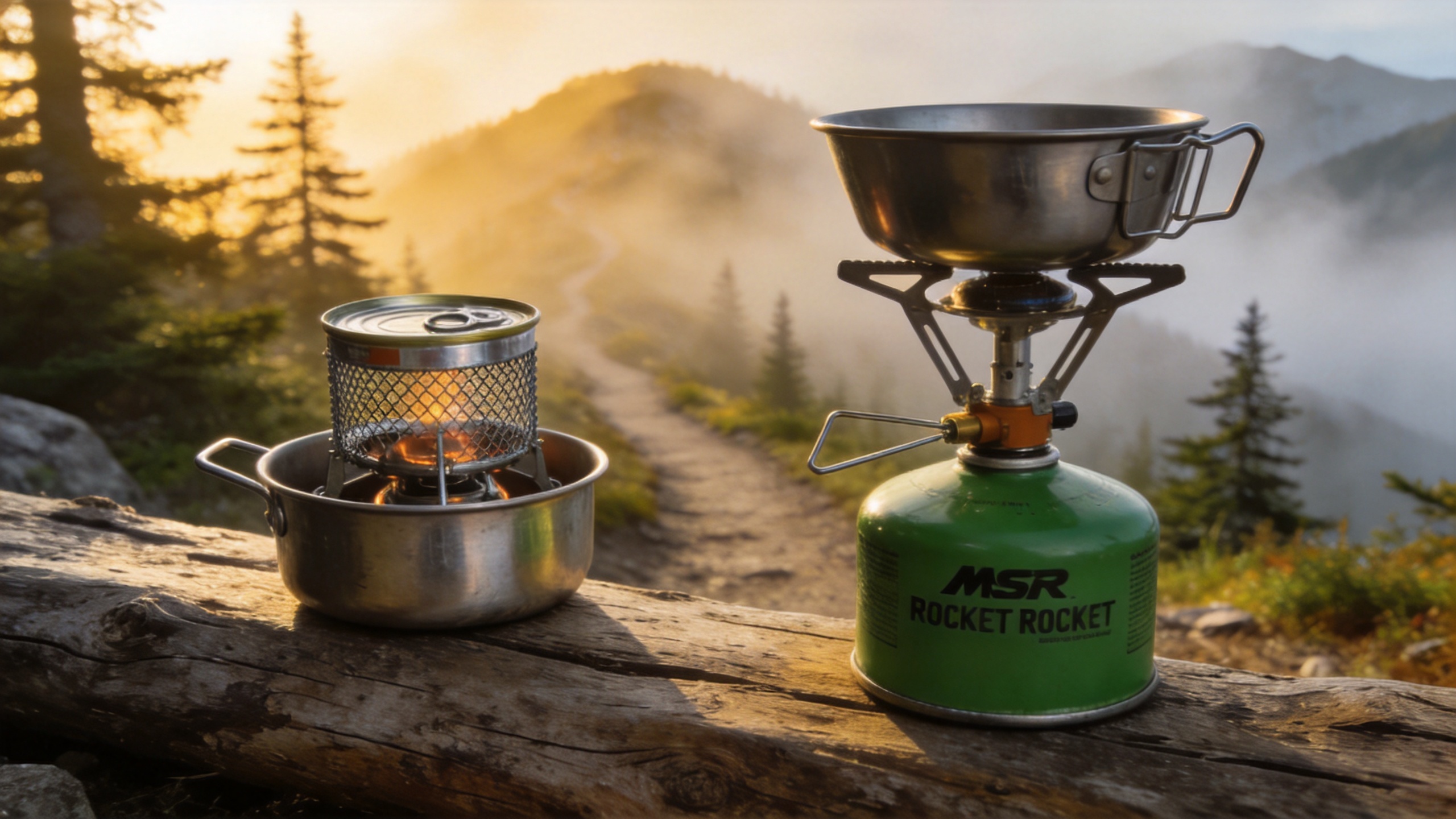
One of the most visible trends is the dominance of integrated canister systems — think Jetboil, MSR Reactor, and Soto WindMaster. These systems mate a proprietary pot with a tight-fitting burner head and a heat exchanger ring (often called a “flux ring”). The result? Boil times of 2–2.5 minutes for 0.5 liters, even in moderate wind. The market has bifurcated: on one side, die-hard gram-counters use separate components (a tiny screw-on burner + thin titanium pot); on the other, hikers who value convenience and efficiency choose integrated solutions that weigh only marginally more.
“The real breakthrough in integrated stoves isn’t the burner — it’s the heat exchanger. A well-designed flux ring can capture up to 40% more heat than a bare pot, which means you carry less fuel for the same number of meals.” — Gear engineer, MSR product development (2023 interview).
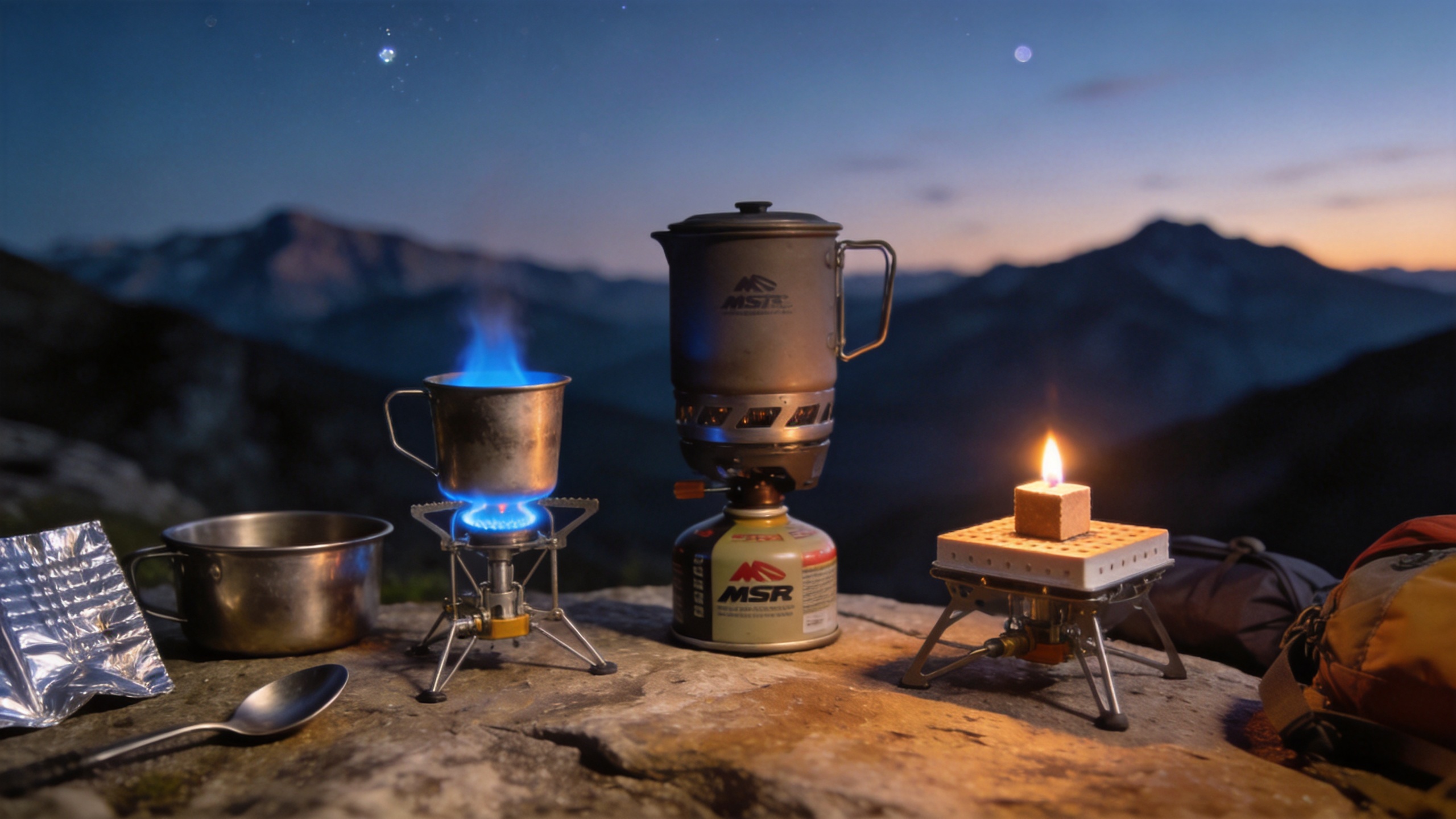
Meanwhile, alcohol stoves — those simple, silent, open-flame designs beloved by ultra-ultralighters — have evolved from beer-can hacks to precision-engineered titanium and brass burners. Brands like Trangia, Vargo, and Evernew now offer pressurization systems and adjustable dampers that let you simmer or boil with surprising control. Yet alcohol stoves remain niche because of their lower heat output, longer boil times, and regulatory restrictions (see below).
Material Innovations You Should Know About
If you’re shopping for a new stove today, look beyond the weight spec. The real game-changers are hidden in the materials:
- Ceramic matrix composites for burner heads — used in experimental prototypes, these withstand higher temperatures and reduce fuel waste by producing a more complete burn.
- Piezo igniters with micro-turbines — some new designs incorporate a tiny vortex to improve spark reliability in wet conditions.
- Graphene-infused heat exchangers — still in R&D, but early tests show 15–20% faster heat transfer compared to aluminum fins.
- Biodegradable fuel bottles — not for the stove itself, but one company is testing plant-based plastics for isobutane canisters to reduce landfill impact.
Predictions: The Next Generation of Ultralight Stoves
Stove evolution rarely happens in leaps; it’s a series of iterative refinements. But three areas are ripe for breakthrough in the next five years.
1. Alcohol Stoves Go High-Efficiency
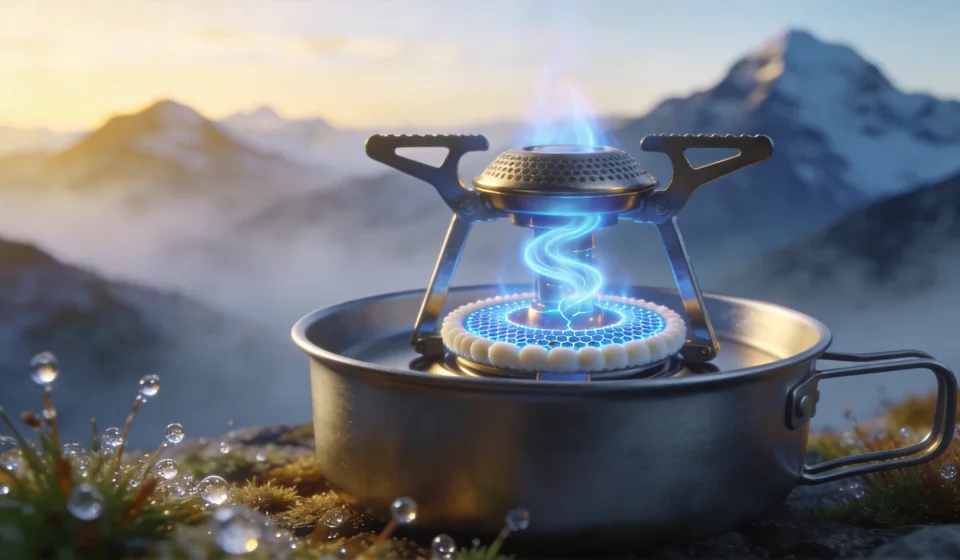
Alcohol has the worst energy density of common backpacking fuels (roughly 24 MJ/L vs. 34 MJ/L for isobutane), but its advantages — no moving parts, nearly silent operation, and the ability to carry exactly the fuel you need in a plastic bottle — keep it alive. The upcoming innovation is hybrid alcohol/catalytic combustion. Imagine a burner that pre-vaporizes the alcohol through a catalytic mesh, producing a blue, sootless flame that burns 30% more efficiently than traditional open flames. Prototypes from a small Oregon workshop have already achieved sub-3-minute boils for 0.5 L using only 15 mL of denatured alcohol, which would put it on par with many canister stoves. The trade-off: weight, as the catalytic mesh adds 10–15 grams.
2. Hybrid Systems: The Best of Two Worlds
We’re starting to see modular stoves that can switch between fuel sources. Dual-fuel burners that accept both butane/propane canisters and liquid fuel (white gas) are common in mountaineering, but they’re heavy. The ultralight twist is a single burner head that can be swapped between a pressurized canister adapter and a small alcohol burner. For example, the Soto WindMaster 4Runner already has a separate alcohol burner accessory that clips onto the same stove legs. The next step is a truly integrated hybrid where the same burner employs a dual-nozzle design — one for gas, one for liquid — enabling you to pack only one stove for trips that span varied fuel availability.
3. Smart Stoves: The IoT Backpacking Era
Yes, it sounds gimmicky, but smart stoves with embedded temperature sensors and Bluetooth connectivity are already in field testing. The Primus SmartBurn concept (still unreleased) uses a permanent thermocouple to monitor flame temperature and adjust air intake dynamically, preventing that yellow, inefficient flame you see in gusty conditions. The data is relayed to your phone or a smartwatch, telling you exactly how much fuel remains and when to reorder. For section-hikers and thrus, this could save the anxiety of running out of fuel halfway through a stretch without a resupply. Critics argue it adds complexity and battery drain, but the early adopter community is enthusiastic.
| Stove Type | Boil Time (0.5L) | Fuel Efficiency | Weight (burner+pot) | Regulatory Risk |
|---|---|---|---|---|
| Advanced Alcohol (catalytic) | 2 min 45 s | High | 120 g | Low (alcohol widely legal) |
| Hybrid Gas/Alcohol | 2 min 15 s (gas) | Very High | 140 g | Moderate (gas canisters) |
| Smart Canister Stove | 2 min 30 s | Very High | 155 g | Moderate (lithium battery) |
| Traditional Canister (baseline) | 3 min 00 s | Low | 130 g | Moderate |
Regulations, Fire Bans, and Environmental Realities
No discussion of ultralight stoves is complete without addressing the elephant in the campsite: fire restrictions. In the American West, seasonal fire bans on open flames often extend to alcohol and wood-burning stoves. Meanwhile, isobutane canisters — which produce a contained flame — are routinely exempted, creating a clear regulatory advantage for gas stoves.
But environmental concerns cut both ways. Canister waste is a growing issue: billions of non-recyclable butane/propane canisters end up in landfills each year. Several states (California, Oregon, Colorado) are drafting legislation requiring manufacturers to accept spent canisters for recycling or reuse. The Canister Recycle Program launched by MSR and Jetboil is a start, but less than 10% of canisters are currently returned. In response, we’re seeing reusable canisters that can be refilled at home or in outdoor shops — think of them as the camp-stove equivalent of reusable coffee pods. The GSI Outdoors refillable canister is already on the market, though it requires a special valve and adds about 50 g to your kit.
Alcohol stoves face a different environmental paradox: denatured alcohol is a renewable biofuel (from corn or cane), and you can carry exactly the volume you need, eliminating single-use containers. However, burning alcohol produces acetaldehyde and other volatile organic compounds (VOCs) that contribute to ground-level ozone. California’s Air Resources Board is studying potential restrictions on alcohol stove use in high-smog areas, which could create a patchwork of local bans.
Practical Regulatory Advice for Hikers
Before you buy your next stove, consider these actionable steps:
- Check local fire bans monthly — In summer, many national forests ban all stoves without an on/off valve. Isobutane canisters are typically allowed; alcohol stoves are not.
- Buy a canister stove with a piezoelectric igniter — It eliminates the need for a lighter or matches, which are often restricted as “open flame” in fire-prone zones.
- If you prefer alcohol, invest in a windscreen — Stabilizing the flame reduces fuel waste and lowers VOC emissions, making you a better environmental steward.
- Use refillable canisters when possible — They cut waste and save money over the long run.
“The future isn’t about one fuel source winning — it’s about adaptability. The most responsible hiker will carry a stove that works within the rules of the specific ecosystem they’re visiting, which means having options.” — Sarah Marquardt, Leave No Trace educator.
Operational Recommendations for the Discerning Ultralighter
Here’s how you can future-proof your stove system right now:
- Invest in modularity
- Buy a stove whose burner head can be swapped or detached from the pot support. This allows you to later add a hybrid fuel adapter or a smart sensor without buying a whole new system.
- Prioritize wind resistance over raw boil time
- A stove that loses 50% of its heat in a 10-mph breeze is useless. Look for integrated windscreen designs or aftermarket titanium shields (e.g., Toaks Titanium Windscreen).
- Weight isn’t everything — consider fuel logistics
- A 100-gram stove that forces you to carry 200 grams of extra fuel because it’s inefficient is heavier than a 150-gram stove that burns cleanly. Always compute your system weight (stove + pot + average fuel per day × trip days).
- Join the citizen science movement
- Several gear blogs run community boil tests. Submit your own data to help refine fuel efficiency charts — it’s a direct way to influence manufacturers.
The Bigger Picture: Stoves as a Lens on Outdoor Ethics
As ultralight backpacking grows, every gram we carry is a choice about resource consumption. The next stove you buy will likely be in your pack for 5–10 years, so pick one that aligns with your values as much as your weight goals. The trends point toward personalization — stoves that adapt to your trip, not the other way around. Whether it’s a catalytic alcohol burner that purrs like a kitten or a smart canister system that texts you when your fuel runs low, the future is about efficiency without compromise. And that’s a fire worth tending.
Final thought: The best stove is the one you use safely and consistently. Innovation will keep pushing boundaries, but the real measure of a great stove remains the same — it gets you a hot meal at the end of a long day, without leaving a trace.