The $10 Trail Food Challenge: How Cheap Can a High-Calorie Vegan Backpacking Menu Get?
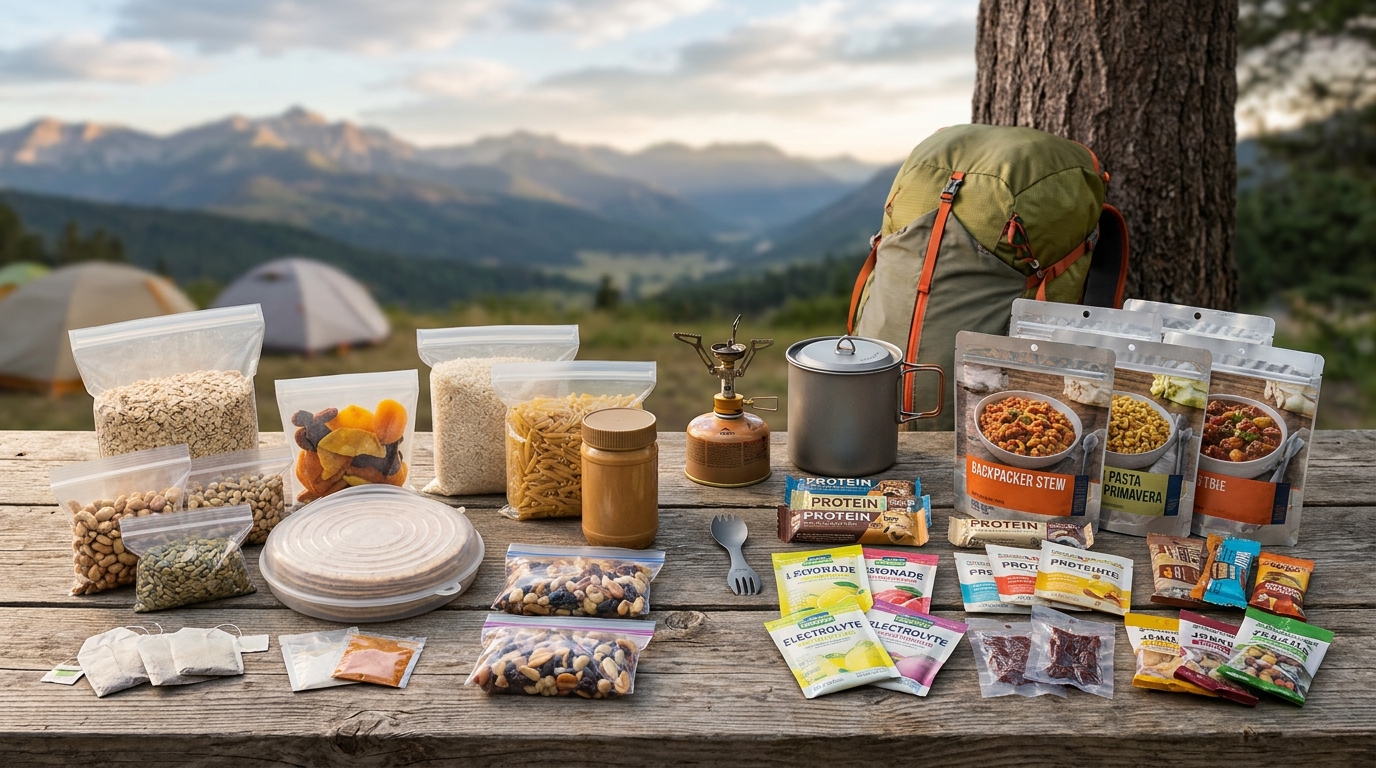
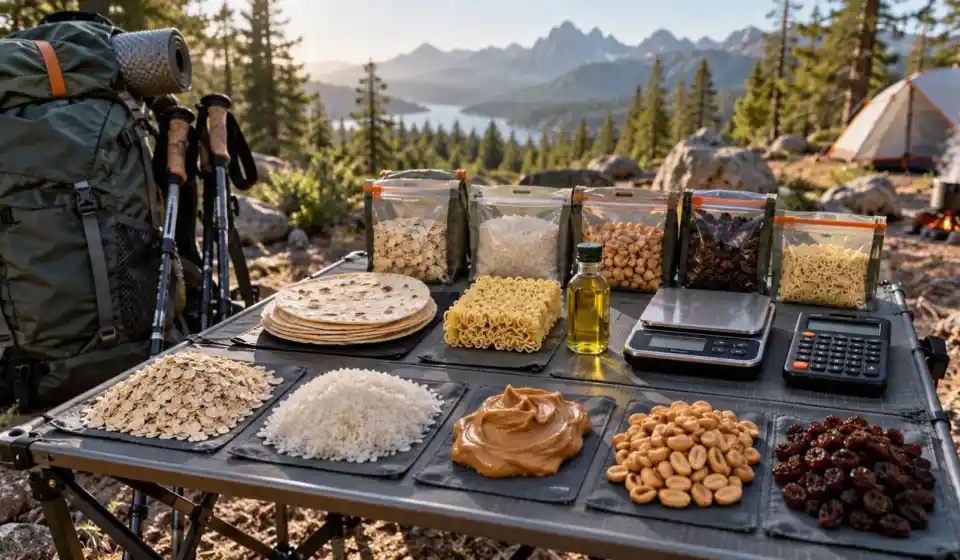
Could you really build a high-calorie vegan backpacking menu for $10 a day, or is that the kind of old trail claim that disappears the moment you enter a modern grocery store? 🥾 The surprising answer is that $10 can still buy a remarkable number of calories when the menu is built around ordinary foods such as oats, rice, peanut butter, peanuts, tortillas, raisins, ramen, and oil. The harder question is whether those cheap calories also create a meal plan that is lightweight, practical, reasonably varied, and something you actually want to eat after hiking all day.
That distinction matters because “cheap backpacking food” is usually measured incorrectly by comparing package prices instead of the amount of usable trail energy those packages contain. A $2 item is not automatically cheaper food than a $5 item if the larger package contains several times as many calories, and a cheap calorie source may still be inconvenient if it requires excessive cooking or carries too much water. 💰 For Camp Kitchen Lab, the more useful experiment is therefore cost per 1,000 calories combined with calories per ounce, protein per dollar, preparation needs, and availability.
Why price per package tells hikers almost nothing
Imagine comparing a small pouch of specialty trail food with a large jar of peanut butter simply by looking at the price tag, because the two package prices tell you almost nothing about how many meals or calories you are actually buying. Peanut butter may cost more at checkout but contain thousands of calories, while a small convenience product can disappear during a single meal. 🎒 Backpackers need a unit that allows completely different foods and package sizes to compete on equal terms.
There is another distinction that can make budget menu calculations look misleading: checkout cost is different from daily portion cost. You may have to spend $30 or $40 buying full containers of oats, peanut butter, raisins, peanuts, tortillas, and oil, even though the exact portions packed for one hiking day cost only several dollars. A “$10 trail menu” should therefore mean approximately $10 worth of food consumed that day, not that a hiker can necessarily walk into a grocery store with one ten-dollar bill and purchase every ingredient.
The better metric: cost per 1,000 calories
The basic calculation is surprisingly simple: package price ÷ total package calories × 1,000 = cost per 1,000 calories. 🧮 If a $4 package contains 4,000 calories, those calories cost roughly $1 per 1,000, while a $4 product containing only 1,000 calories costs four times as much on an energy basis. This metric does not tell you whether the food is nutritious, delicious, lightweight, or convenient, but it gives budget hikers a useful starting point.
Using representative October 2026 grocery prices and typical nutrition-label values, dry white rice can fall around $0.45 per 1,000 calories, peanut butter around $0.60, oats around $0.95, and dry-roasted peanuts around $1.00. Tortillas may land closer to roughly $1.25, olive oil around $1.50, basic vegan ramen around $2, and raisins above $2 depending on package size and retailer. 📊 These figures are snapshots rather than permanent prices, which is why hikers should rerun the calculation using the package sitting in front of them.
The budget staples worth testing
The strongest budget candidates are not necessarily glamorous trail foods because rice, oats, peanut butter, peanuts, tortillas, and inexpensive noodles have something specialty products often lack: massive grocery-store volume and relatively low ingredient costs. Rice and oats provide extremely inexpensive carbohydrate, while peanuts and peanut butter simultaneously improve calories per ounce and protein per dollar. 🥜 Oil occupies another category entirely because it provides almost pure fat and exceptionally high calorie density but contributes essentially no protein.
A simplified shopping comparison might look like this, remembering that exact brands and formulations change the numbers. Couscous, raisins, cereal, ramen, and tortillas can still be useful despite sometimes costing more per 1,000 calories because convenience, flavor, fast preparation, and availability have value too. The purpose is not to identify one winner but to understand what job each food performs inside the menu.
| Food | Approx. cost/1,000 kcal | Approx. kcal/oz | Budget role |
|---|---|---|---|
| Dry white rice | $0.45 | 100 | Cheapest calorie base |
| Peanut butter | $0.60 | 165–170 | Dense calories + protein |
| Oats | $0.95 | 105 | Cheap breakfast base |
| Peanuts | $1.00 | 160+ | Snack + protein |
| Tortillas | $1.25 | 80–90 | No-cook meal carrier |
| Olive oil | $1.50 | 240+ | Maximum calorie density |
| Basic vegan ramen | ~$2.00 | 120–130 | Fast hot meal |
| Raisins | $2.50+ | ~85 | Ready-to-eat carbohydrate |
Cheap does not necessarily mean lightweight
Rice demonstrates the problem perfectly because its calories can be exceptionally cheap while its calorie density remains only moderate compared with peanut butter, nuts, or oil. 🍚 A menu built almost entirely around dry grains might win the grocery-budget competition yet require more ounces for the same number of calories and additional stove fuel or soaking time to become edible. Backpacking optimization therefore needs at least two axes: dollars per calorie and calories per ounce.
Fat-rich foods move in the opposite direction because peanuts, peanut butter, and oils generally provide many more calories for each ounce carried, although relying too heavily on them can create an unappealing and poorly balanced menu. Dried fruit is convenient and requires no preparation but can cost more per calorie than basic grain staples, while tortillas trade some calorie density for excellent trail convenience. ⚖️ The cheapest menu and the lightest menu are therefore not automatically the same menu.
Building a low-cost 3,000-calorie day
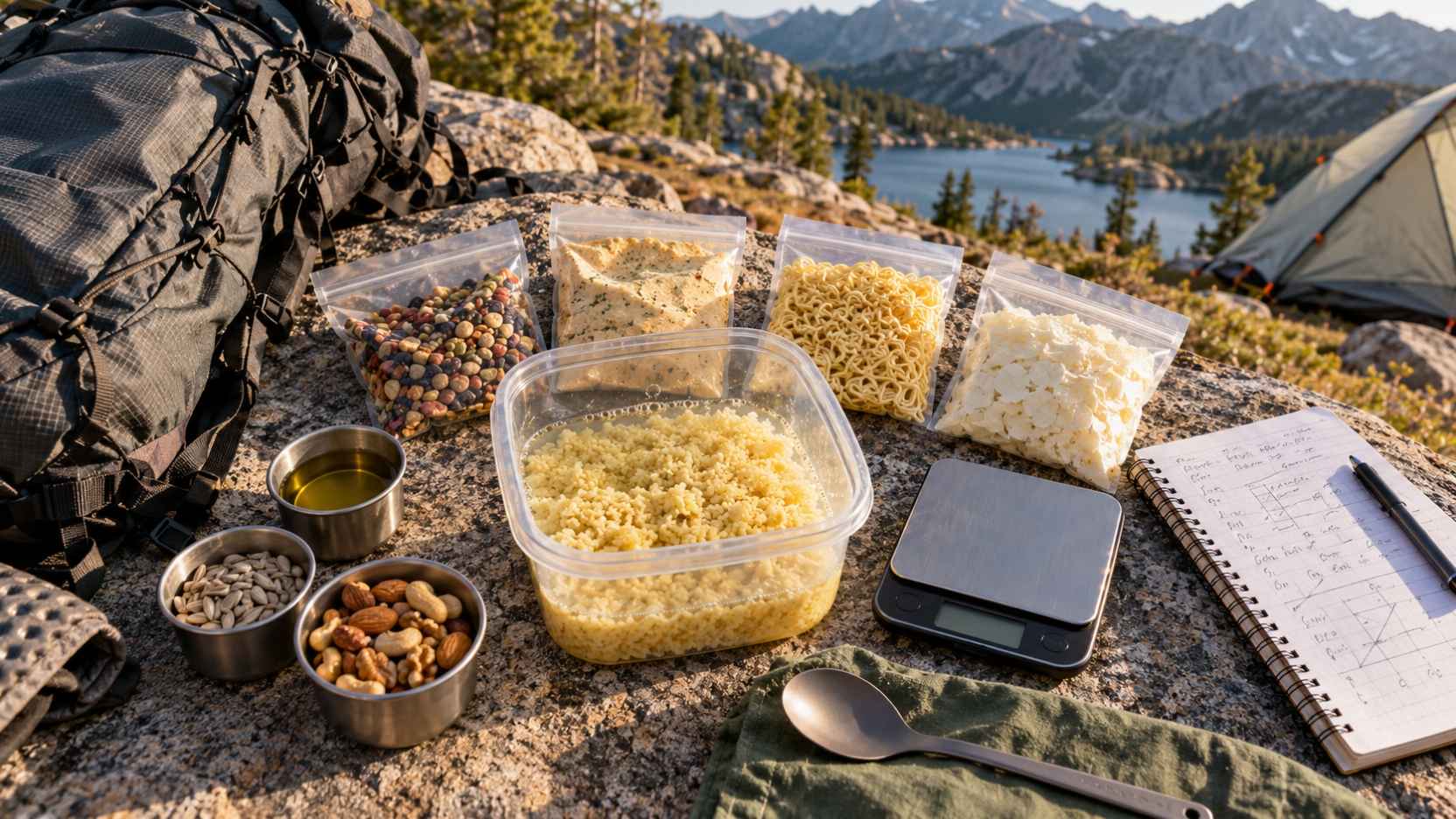
Consider an experimental day containing roughly four ounces of oats, four ounces of peanut butter, three ounces of peanuts, several ounces of raisins, two large tortillas, one inexpensive vegan ramen packet, and approximately one ounce of oil distributed through meals. Depending on the exact labels, those portions can approach 3,000 calories while weighing around a pound and a half of food, producing an overall density near the 120-calorie-per-ounce neighborhood. 🥾 Using the price assumptions in this experiment, the portion cost can remain well below $10 and potentially below $5 before spices, drink mixes, supplements, fuel, or other extras are counted.
That does not mean everyone should copy the menu because calorie needs, appetite, protein targets, food tolerances, hiking intensity, body size, climate, and trip duration differ considerably. It also demonstrates why an old claim such as “$10 for 5,000 calories” should never be treated as a permanent grocery-price fact merely because someone achieved it years ago. The repeatable lesson is the calculation method, not one exact dollar amount.
What about a higher-calorie long hiking day?
Increasing the menu toward 4,000 or 4,500 calories changes the optimization problem because simply adding more oats, rice, or raisins also adds noticeable food weight. One inexpensive strategy is to increase portions of peanuts and peanut butter while adding a controlled amount of oil to meals that already taste good with it, raising calorie density without multiplying pack weight as quickly. 🔥 Tortillas and inexpensive noodles can then provide variety so that the food bag does not become one enormous container of peanut butter.
A mathematical 4,500-calorie budget menu can still fall below the original $10 challenge under favorable store-brand pricing, but that number should be treated as a cost experiment rather than a nutritional prescription. Eating very large quantities of one or two ingredients just because they score well on a spreadsheet can produce an unpleasant menu and may crowd out variety. Trail-food planning works better when cost efficiency establishes the foundation and taste, nutrition, digestion, and practicality determine the final mix.
The hidden third constraint: availability
A spectacular spreadsheet bargain is useless when the food cannot be found in the town where you are resupplying. 🛒 Oats, peanut butter, tortillas, peanuts, raisins, rice, and common noodles have an important advantage over many purpose-built backpacking products because they are often available in supermarkets, discount stores, convenience-oriented groceries, and small-town food sections. Availability becomes especially important on longer routes where the hiker cannot rely on stocking the exact same specialty product every week.
This is also where ordinary grocery food can outperform an optimized online shopping list, even when the online product appears slightly cheaper or lighter. A thru-hiker may reasonably pay a little more for a food that can be replaced consistently along the route rather than designing a system around something available only through one retailer. 📍 Resupply reliability is therefore an economic variable, because difficult-to-find food can create shipping costs, extra travel, wasted time, or expensive substitutions.
Where specialty vegan foods lose the cost contest
Vegan branding itself does not make food expensive, because rice, oats, peanuts, raisins, many tortillas, and numerous other ordinary staples are plant-based without being sold as premium trail products. 🌱 Costs often rise when the shopper moves into specialty protein noodles, premium freeze-dried meals, functional snack bars, individual serving packets, or products marketed specifically toward athletes and outdoor consumers. Those foods may offer genuine advantages in convenience, flavor, ingredient profile, preparation, or protein content, but they should not automatically be expected to win a calories-per-dollar comparison.
The cheapest strategy is usually to start with naturally plant-based grocery staples and use specialty products strategically instead of making them the entire menu. A premium vegan meal might be worthwhile as the dinner you genuinely look forward to after a difficult day, while inexpensive oats, peanut butter, tortillas, nuts, or rice carry the bulk of the daily calorie budget. 💡 Budget backpacking works best when expensive convenience is purchased where convenience matters most, rather than everywhere.
So can the $10 trail food challenge still work?
Yes—the underlying idea remains surprisingly plausible, because ordinary grocery foods can still deliver thousands of vegan calories for less than $10 in portion cost when they are purchased economically. The catch is that minimizing cost alone produces strange results, such as loading heavily on rice because it is cheap or adding large amounts of oil because it is extraordinarily calorie-dense. 🎯 A practical trail menu must balance cost, pack weight, preparation, protein, variety, availability, and the probability that you will actually eat the food.
That makes cost per 1,000 calories one of the most useful numbers to add to a backpacker’s shopping spreadsheet alongside calories per ounce. Recalculate it whenever prices change, compare products using their actual nutrition labels, and remember that spending slightly more can sometimes create a lighter, easier, or much more enjoyable food bag. The real achievement is not proving that a human can survive on the cheapest possible calories—it is learning where every trail-food dollar produces the most useful result. 🏕️