A $50 vs. $150 Backpacking Food Budget: What Changes on a 5-Day Trip? 🏕️
Introduction
Can you eat well on a five-day backpacking trip without spending $150 on trail food? Absolutely. But the difference between a $50 food budget and a $150 budget is not simply cheap food versus good food.
Your budget affects how much you rely on bulk ingredients, how much food you prepare yourself, how many ready-to-eat snacks you carry, and whether you choose convenient freeze-dried dinners or build meals from grocery-store staples.
This comparison uses two sample menus for one adult on a five-day trip in the United States, with the same basic goal: enough food for breakfast, lunch, dinner, and snacks every day.
The menus use illustrative U.S. dollar costs rather than guaranteed current store prices. Actual totals vary by location, brand, package size, and sales. The figures represent the estimated value of the portions packed, not necessarily the amount you would pay at checkout if you had to buy every package from scratch.
1. Keep the Comparison Fair
Before comparing the budgets, set the same planning assumptions.
- Trip length: Five days, four nights.
- Hiker: One adult.
- Daily food target: Approximately 2,500–3,000 calories as an initial planning range, adjusted for body size, hiking distance, elevation gain, and appetite.
- Meals: Breakfast, lunch, dinner, and snacks every day.
- Cooking: A small backpacking stove is available for hot meals.
- Food safety: Ingredients are shelf-stable or packed and handled according to their storage requirements.
- Extra food: Both budgets should include a modest reserve where possible.
REI notes that backpackers commonly need around 2,500–4,500 calories per day, depending on the person and the trip. That means 2,500–3,000 calories is a starting point, not a universal target. https://www.rei.com/learn/expert-advice/planning-menu.html
The goal is to compare two realistic approaches, not to claim that every hiker needs the same number of calories.
2. The $50 Menu: Bulk Staples and DIY Meals 💵
Budget target: $50 total, or $10 per day.
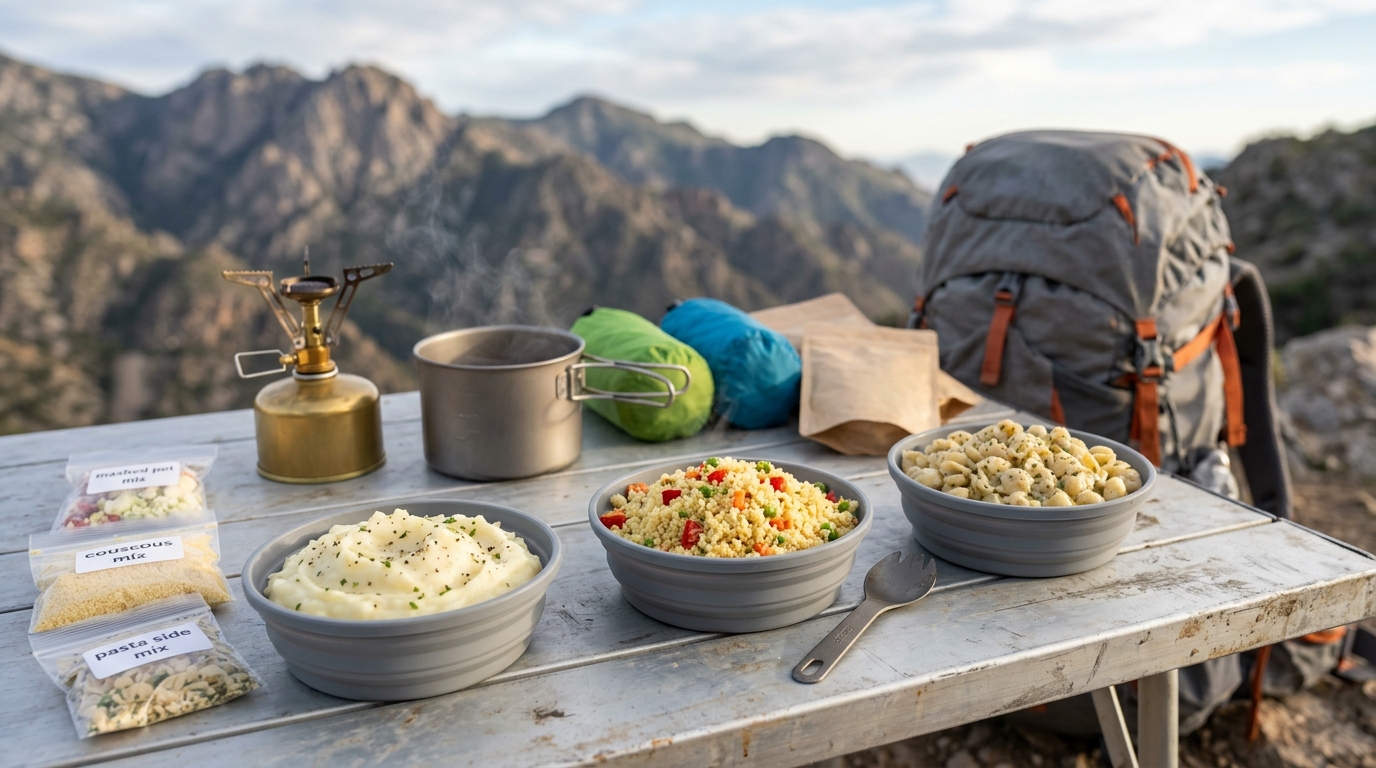
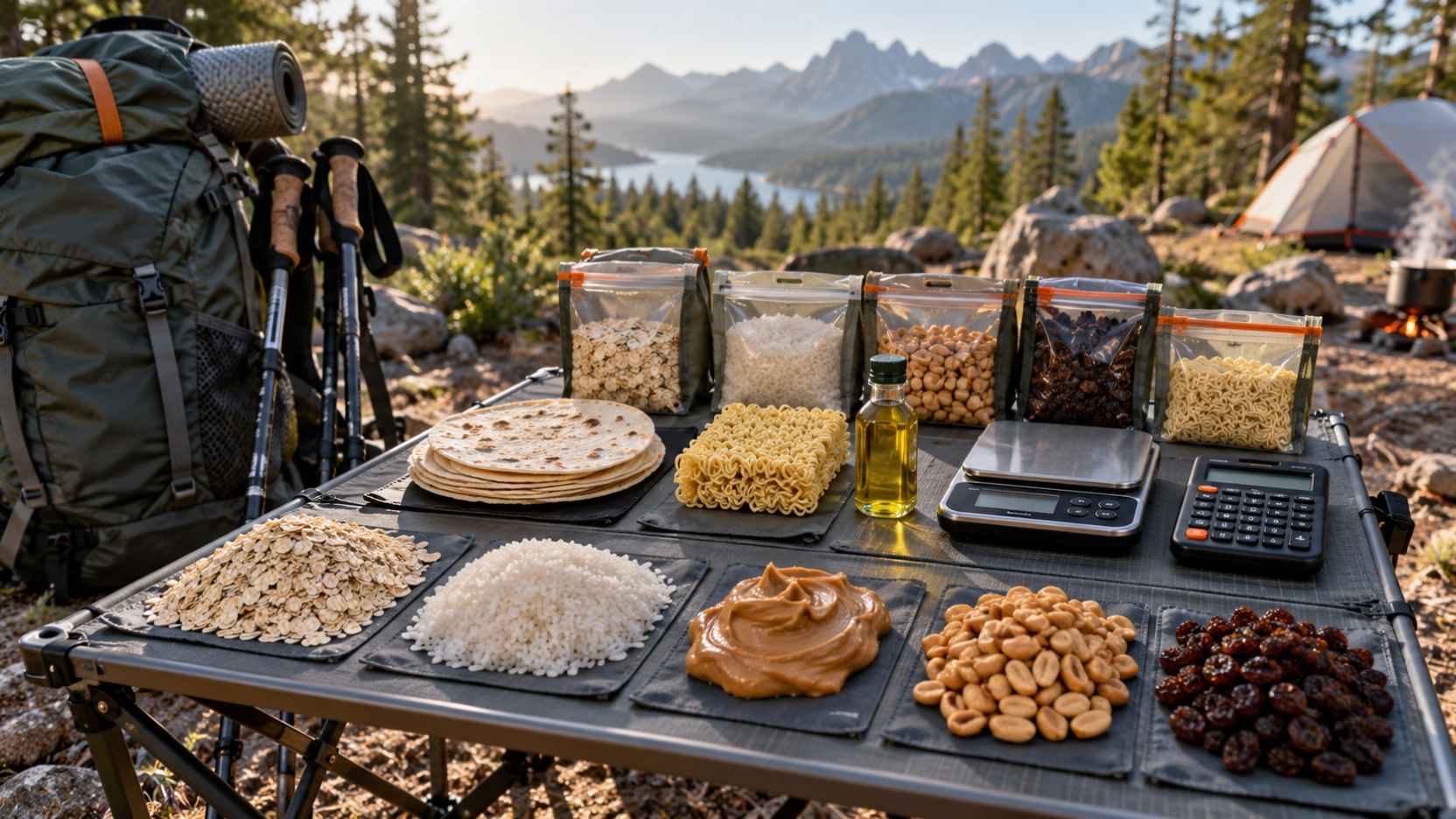
This approach relies on inexpensive staples such as oats, peanut butter, tortillas, instant rice, pasta, instant potatoes, trail mix, and powdered drink mixes. You portion the ingredients at home and create your own meals instead of purchasing a commercial backpacking dinner for every night.
Sample five-day menu
| Day | Breakfast | Lunch | Dinner | Snacks |
|---|---|---|---|---|
| 1 | Oatmeal, raisins, peanut butter | Peanut butter tortillas | Rice, beans, taco seasoning, olive oil | Trail mix and a chocolate treat |
| 2 | Oatmeal and dried fruit | Tortillas with hard cheese and shelf-stable protein | Pasta with powdered sauce and olive oil | Peanuts, crackers, dried fruit |
| 3 | Oats, powdered milk, peanut butter | Peanut butter tortillas and trail mix | Instant potatoes with cheese and dried beans | Granola bars and chocolate |
| 4 | Oatmeal with raisins | Crackers, hard cheese, and nuts | Rice with dehydrated vegetables and beans | Peanut butter crackers and dried fruit |
| 5 | Oatmeal and peanut butter | Tortillas with remaining shelf-stable fillings | Pasta or potatoes with remaining ingredients | Trail mix and a final snack |
This is a menu framework rather than a measured nutrition plan. Portion sizes must be calculated from the actual products to confirm that the daily calorie target is met.
Itemized $50 food budget
| Food category | Estimated cost allocated to trip |
|---|---|
| Oats, raisins, and powdered milk | $7.00 |
| Peanut butter and tortillas | $7.00 |
| Rice, pasta, and instant potatoes | $6.00 |
| Beans and other shelf-stable protein | $8.00 |
| Trail mix, peanuts, and dried fruit | $10.00 |
| Cheese, crackers, and bars | $7.00 |
| Seasonings, drink mix, and small extras | $5.00 |
| Total | $50.00 |
These are example allocations for planning, not a verified live-price shopping receipt. To make the plan work at this budget, buy larger packages when economical, use only the amount needed for the trip, and save the remaining ingredients for future meals.
What you gain and give up
The main advantage is cost control. Oats, peanut butter, pasta, rice, and similar pantry staples can provide many servings for relatively little money.
You also get flexibility. If you prefer more peanut butter and fewer crackers, you can change the portions without buying a completely different meal.
The trade-off is preparation. You need to measure ingredients, portion bags, label meals, and bring the seasonings or extra ingredients that make simple staples taste good. Repeating oatmeal and peanut butter may also feel monotonous by the fourth or fifth day.
Best for: Budget-conscious hikers, beginners building a reusable trail-food pantry, and people willing to prepare meals at home.
3. The $150 Menu: More Convenience and Variety 🌟
Budget target: $150 total, or $30 per day.
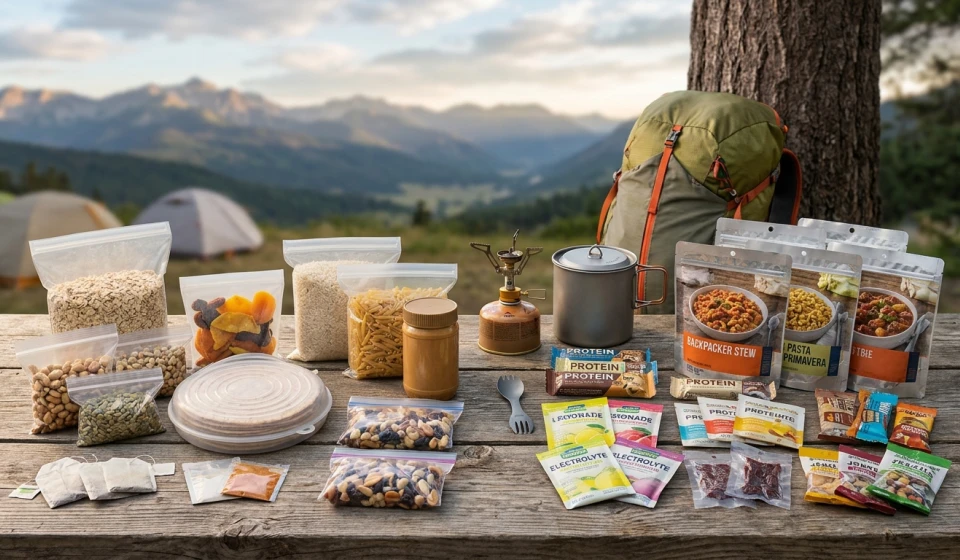
A larger budget gives you more room for commercial freeze-dried dinners, individually packaged snacks, flavored drink mixes, and a wider selection of protein sources. You can still use inexpensive staples; the difference is that you have more options when convenience and variety matter.
Sample five-day menu
| Day | Breakfast | Lunch | Dinner | Snacks |
|---|---|---|---|---|
| 1 | Granola with powdered milk | Tuna tortilla wraps | Commercial freeze-dried chicken dinner | Energy bar, nuts, dried fruit |
| 2 | Flavored instant oatmeal | Crackers, cheese, and salami | Freeze-dried pasta meal | Trail mix, chocolate, electrolyte drink |
| 3 | Granola and dried berries | Chicken tortilla wrap | Freeze-dried rice or curry meal | Protein bar, nuts, dried fruit |
| 4 | Instant oatmeal with nut butter | Crackers, cheese, and tuna | Commercial freeze-dried chili or bean meal | Energy chews, trail mix, chocolate |
| 5 | Granola with powdered milk | Tortilla with shelf-stable protein | Freeze-dried dinner or a favorite prepared meal | Bars, nuts, and remaining snacks |
Choose products with serving sizes and calorie counts that fit your needs. A commercial meal labeled as two servings may not provide enough food for one hungry hiker if you eat only half the package.
Itemized $150 food budget
| Food category | Estimated cost allocated to trip |
|---|---|
| Granola, oatmeal, powdered milk, and breakfast extras | $18.00 |
| Tortillas, crackers, and lunch accompaniments | $15.00 |
| Tuna, chicken, cheese, and other protein | $22.00 |
| Five commercial freeze-dried dinners | $60.00 |
| Trail mix, nuts, and dried fruit | $15.00 |
| Energy bars and chocolate | $12.00 |
| Drink mixes, electrolytes, and small extras | $8.00 |
| Total | $150.00 |
These figures are illustrative budget allocations, not current price quotations. The five dinners are budgeted at an average of $12 each; actual prices vary by brand, meal size, and retailer. You can also mix homemade dinners with commercial meals to reduce costs.
What changes with the larger budget?
Convenience: Commercial dinners usually require little more than adding water and waiting. That can be welcome after a demanding day.
Variety: You can carry different flavors, textures, and snack types instead of relying heavily on the same pantry staples.
Packaging: Individual packets make portioning easy, but they can generate more packaging waste. Repackaging food at home can reduce bulk, provided you label ingredients and preserve safe storage.
Planning effort: The menu may take less preparation, although you still need to check calories, serving sizes, cooking instructions, and dietary needs.
Best for: Hikers who value convenience, want more variety, or have limited time to prepare food before leaving.
4. Does Spending More Mean Better Nutrition?
Not automatically.
A $50 menu can provide adequate energy and a useful mix of nutrients when portions are planned carefully. A $150 menu can also fall short if it relies on small portions or snacks that do not meet the hiker’s needs.
The important factors include:
- Total calories: Does the full day’s food meet your energy needs?
- Protein: Are you including suitable sources such as beans, nuts, cheese, tuna, or chicken?
- Dietary variety: Are you eating more than one type of food throughout the trip?
- Fat and carbohydrates: Are you carrying enough energy-dense foods to support long days?
- Personal tolerance: Will you actually want to eat the food when you are tired or your appetite changes?
For backpacking, calories per ounce can also help compare options. REI suggests aiming for roughly 100–125 calories per ounce as a useful starting point for calorie-dense menus, while emphasizing that individual needs vary. https://www.rei.com/learn/expert-advice/meal-planning-for-ultralight-backpacking.html
Olive oil, nut butter, nuts, and other energy-dense foods can improve calorie density in either budget. Price alone does not tell you how nutritious, filling, or lightweight a meal will be.
5. What About Food Weight and Waste?
A larger budget does not automatically produce a lighter food bag.
Some commercial freeze-dried meals are lightweight because much of their water has been removed. However, packaging and the specific ingredients still contribute to carried weight. Homemade meals can also be lightweight when you use dry ingredients and plan portions carefully.
For either budget:
- Weigh the packed food rather than relying on package size.
- Separate meals into labeled portions.
- Check how much water each dinner requires.
- Include enough stove fuel for the actual cooking method.
- Follow food-storage rules for meat, cheese, and other perishable ingredients.
- Pack out wrappers and food waste according to local regulations.
Do not remove original packaging if doing so would make important preparation, allergen, or safety information unavailable. Keep the relevant information with the repackaged food.
6. Which Budget Is Right for Your Trip?
Choose the $50 approach if you enjoy DIY meal planning, have time to prepare ingredients, and want to build a pantry that serves multiple trips.
Choose the $150 approach if convenience and variety are priorities, or if you know that ready-to-prepare meals make it easier for you to eat enough after a long hike.
A middle-ground strategy is often practical: use oats, tortillas, peanut butter, and homemade lunches, then spend extra on one or two commercial dinners for the hardest hiking days.
That way, you reserve convenience for when you need it most rather than paying premium prices for every meal.
Final Thoughts 🏕️
A five-day backpacking food plan does not need to be expensive to be satisfying. A carefully portioned $50 menu can work for some hikers, while a $150 menu can buy more convenience, variety, and ready-to-prepare options.
The fairest comparison is not just the total price. It is how well each menu meets your calorie needs, how much food weight you carry, how easy meals are to prepare, and whether you enjoy eating them.
Plan the calories first, compare the cost second, and choose convenience where it genuinely improves your trip. Whatever your budget, test your meals at home and adjust portions before heading into the backcountry.