The Cold-Soak Calorie Booster System: How to Raise Cal/Oz Without Rebuilding the Whole Meal
Cold-soak meal planning often becomes an unnecessary hunt for a magical recipe that is lightweight, calorie-dense, inexpensive, delicious, easy to rehydrate, and something you could happily eat for several days. 🥣 A better approach is to start with a cold-soak meal you already tolerate—beans, couscous, hummus-style mix, ramen, or another suitable dehydrated base—and improve its calorie density by adding a carefully chosen booster. Instead of replacing the entire meal whenever the calories per ounce look disappointing, you change one variable.
This creates what we can call the Cold-Soak Calorie Booster System, a mathematical method for increasing calories per ounce while leaving most of the original meal intact. The system separates three problems that backpackers often accidentally combine: obtaining enough calories, creating enjoyable flavor, and creating satisfying texture. 🎒 Once those jobs are separated, one ingredient can boost calories while different ingredients handle crunch, saltiness, spice, or variety.
Stop Searching For The Mythical Perfect Cold-Soak Meal
A cold-soak base does not need to be extraordinarily calorie-dense by itself to become useful inside a lightweight backpacking menu. Its main job can simply be providing carbohydrates, protein, bulk, flavor, or a familiar meal structure while another ingredient supplies concentrated calories. This means a moderately dense bean or couscous meal should not automatically be rejected because nuts or energy bars produce a better calories-per-ounce number.
Think of the process like modifying a backpack rather than buying an entirely new pack because one pocket is inconvenient. 🛠️ If the base tastes good and rehydrates properly, keeping it and changing a small component may be easier than searching through dozens of recipes hoping to find a perfect replacement. The important question becomes how much of the right booster changes the final average enough to matter?
Step 1: Choose A Rehydratable Base
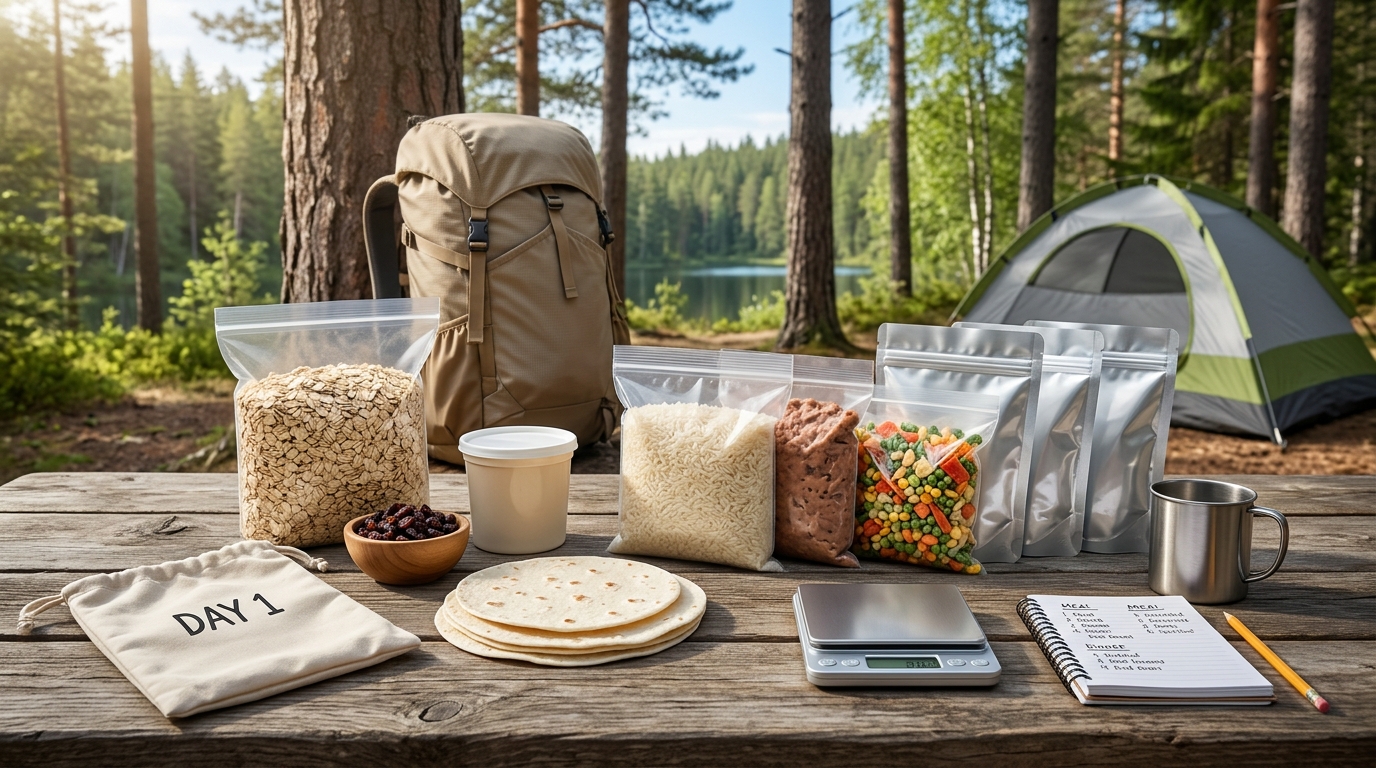
Begin with a food that is appropriate for cold soaking and that you would genuinely want to eat on the trail, because calorie density is useless when the meal keeps returning home uneaten. Common possibilities include precooked-and-dehydrated beans, instant couscous, instant hummus mixes, ramen, instant potato products, or other foods specifically suitable for rehydration. 🥔 The exact choice matters less than knowing its dry weight and calories.
Remember that cold soaking adds water but does not perform the same cooking process as boiling food, so not every dry ingredient belongs in a cold-soak jar. Raw dried beans, for example, should not simply be soaked and treated like ready-to-eat dehydrated beans; backpackers should begin with products that have already been properly cooked or processed for safe preparation. Food safety and rehydration instructions still outrank pack-weight optimization.
Step 2: Calculate The Starting Calories Per Ounce
The first calculation is simple: divide the total calories in the dry ingredients by their total carried weight in ounces. If a three-ounce dry meal contains 300 calories, for example, its starting calorie density is 300 ÷ 3 = 100 calories per ounce. 📊 That number becomes your baseline before adding anything.
For backpacking menu calculations, measure the ingredients you actually carry rather than the finished weight after adding water collected on the trail. Water added at camp can make the prepared meal dramatically heavier without adding calories, but that water was not necessarily transported inside your food bag for the entire day. If you must carry the soaking water over distance, however, that water still affects your real pack weight even though it does not change the dry ingredient’s mathematical calorie density.
Step 3: Choose The Right Calorie Booster
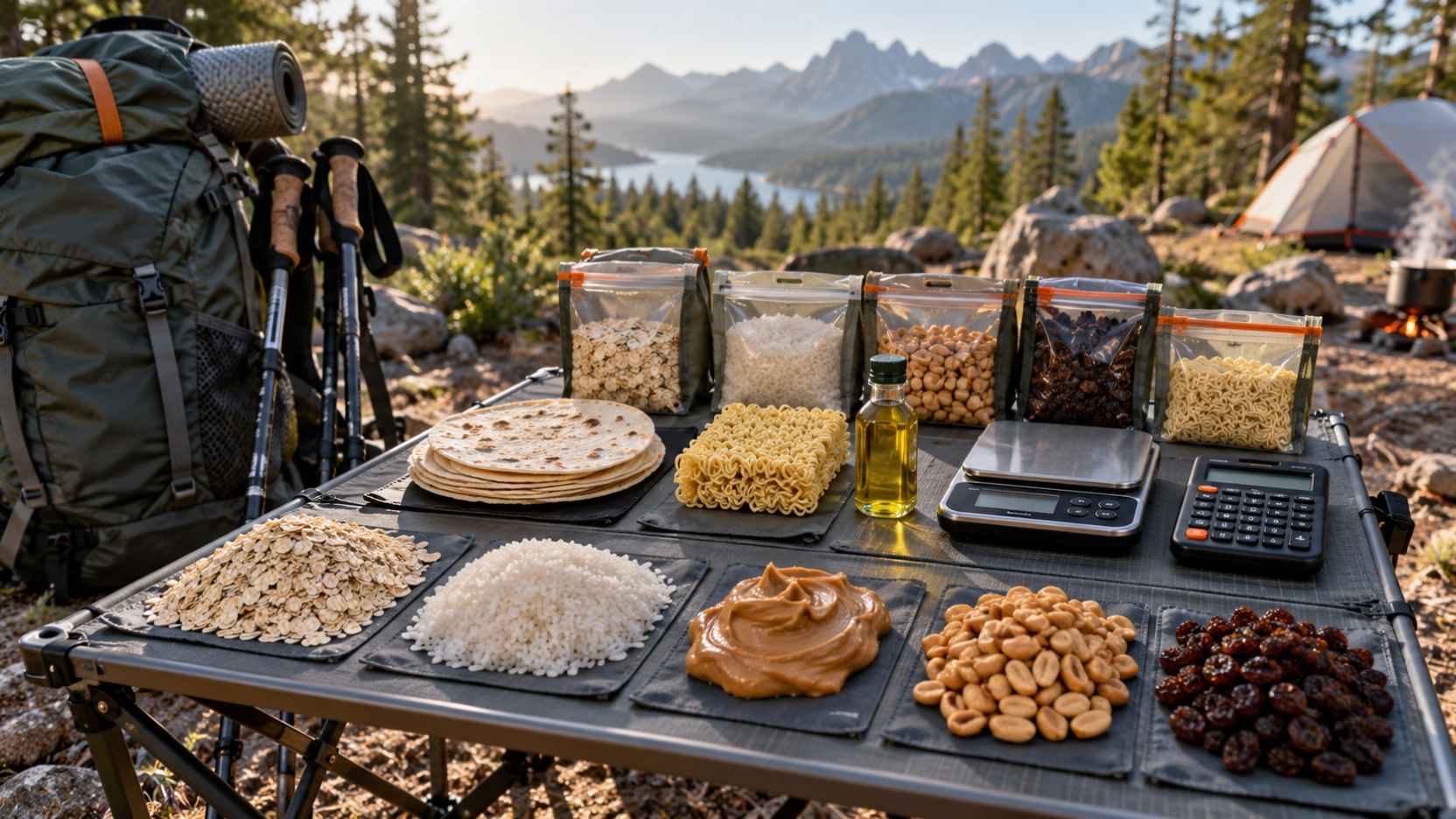
Fat is mathematically powerful because dietary fat provides roughly nine calories per gram, compared with about four calories per gram for carbohydrate or protein. Pure cooking oil therefore comes in around 250 to 255 calories per ounce, making relatively small amounts capable of moving a meal’s average noticeably upward. 🫒 Seeds, nuts, nut butters, coconut products, and other dense ingredients can also work, although their precise calorie density varies by product.
The highest-density booster is not automatically the best choice because taste, texture, packaging, leakage risk, cost, and how much of an ingredient you enjoy eating still matter. Sunflower seeds may add crunch that oil cannot provide, while oil can increase calorie density more efficiently than a much larger quantity of seeds. A useful system therefore lets you choose the booster according to the particular problem you are trying to solve.
Step 4: Calculate The New Weighted Cal/Oz
You cannot simply average the calorie densities of two foods unless you use equal weights, so the correct calculation needs to account for how many ounces of each ingredient are present. The reusable equation is new cal/oz = total calories from base and booster ÷ total ounces from base and booster. 🧮 For example, three ounces of a 100-calorie-per-ounce base contains 300 calories, while half an ounce of a 255-calorie-per-ounce oil contributes about 128 additional calories.
Together, that example meal contains approximately 428 calories weighing 3.5 ounces, producing about 122 calories per ounce instead of the original 100. Nothing about the underlying bean, couscous, or other base had to change; only half an ounce of another ingredient shifted the entire meal average. This is the central advantage of the booster system: small amounts of highly concentrated food can change the mathematics of a much larger meal.
Step 5: Handle Texture And Flavor Separately
Once the calorie target is handled, stop asking every ingredient to perform the same job. 🌶️ Oil may solve calorie density, but dry herbs, spices, salt, chili flakes, nutritional yeast, crispy toppings, seeds, or another shelf-stable ingredient can handle flavor and texture. Separating those decisions makes it easier to adjust a meal without accidentally adding several ounces simply because you wanted more crunch.
This distinction also helps prevent a common menu-design mistake where hikers repeatedly add low-density toppings and wonder why the meal keeps getting heavier without becoming much more calorie-dense. A tablespoon of seasoning may dramatically improve enjoyment while contributing relatively little energy, and that is perfectly acceptable when flavor is its intended job. The calorie booster and flavor booster do not have to be the same ingredient.
Example: Beans Before And After A Booster
Imagine a precooked dehydrated bean mixture that, according to your measured portion and package information, works out to approximately 100 calories per ounce and weighs three ounces. That gives you 300 calories before additions, which may be acceptable nutritionally but below a personal target such as 120 or 125 calories per ounce. 🫘 Add half an ounce of oil at roughly 255 calories per ounce and the meal rises to approximately 428 calories at 3.5 ounces.
The new density is about 122 calories per ounce, meaning you increased the meal by roughly 22 calories per ounce without replacing the beans. You could then add seasoning for flavor and perhaps a smaller amount of seeds or crunchy vegetables for texture rather than relying on those foods to supply all the extra calories. The result is still recognizably your bean meal, only with a different calorie-to-weight ratio.
Example: Couscous And The Limits Of Lower-Density Boosters
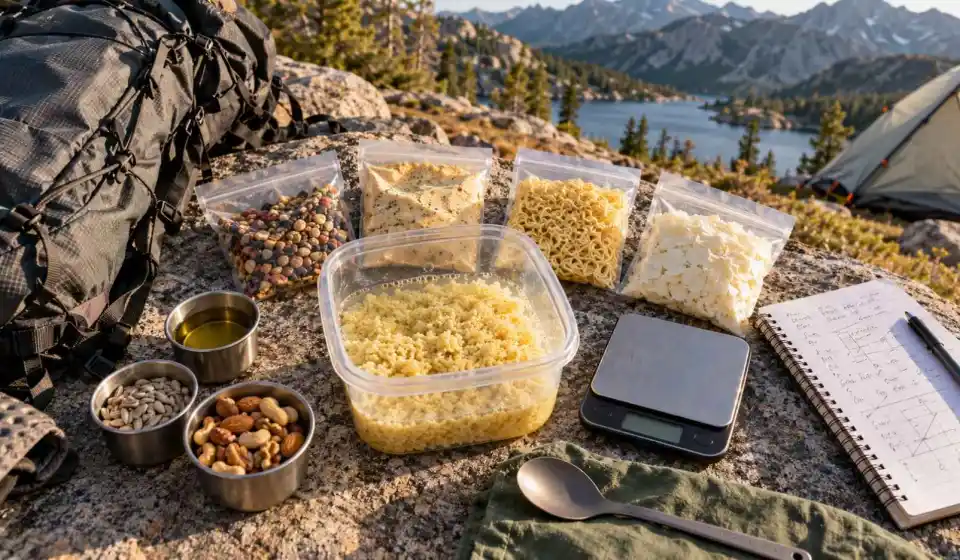
Suppose a three-ounce instant couscous mixture comes to roughly 105 calories per ounce in your particular recipe, giving you about 315 calories. If you add one ounce of sunflower seeds at approximately 165 calories per ounce, the four-ounce meal contains roughly 480 calories. 🌻 The resulting density is about 120 calories per ounce, a useful improvement with added crunch.
However, this example demonstrates why the density of the booster matters: reaching much higher numbers using seeds alone becomes increasingly inefficient because the booster itself is only around 165 calories per ounce. To reach 135 calories per ounce from the same hypothetical couscous using only a 165-calorie-per-ounce booster would require roughly three ounces of that booster. A small amount of oil combined with fewer seeds may therefore achieve a high-density target more efficiently while preserving the texture benefit.
Example: Hummus-Style And Ramen Meals
Consider a three-ounce dry hummus-style meal already averaging around 120 calories per ounce, or roughly 360 calories total. Adding about 0.4 ounce of oil contributes approximately another 102 calories, creating roughly 462 calories at 3.4 ounces. 🫓 The final meal lands near 136 calories per ounce, showing that bases starting closer to the target require surprisingly modest adjustments.
A ramen-based meal beginning around 125 calories per ounce needs even less help to cross 135, depending on the noodles and toppings being used. 🍜 In a simplified example, three ounces at 125 calories per ounce plus a quarter-ounce of 255-calorie-per-ounce oil comes to roughly 135 calories per ounce overall. The important lesson is not that everyone should add oil to ramen, but that the required booster quantity depends heavily on where the base starts.
How Much Booster Gets You To 120, 135 Or 150 Cal/Oz?
You can calculate the required booster directly instead of adding ingredients repeatedly and checking the result through trial and error. For a base weighing W, with density B, a booster with density D, and a desired target T, the required booster weight is W × (T − B) ÷ (D − T). 🔢 This formula works whenever the booster has a calorie density greater than the target you are trying to reach.
Using a three-ounce, 100-calorie-per-ounce base with oil at approximately 255 calories per ounce, reaching 120 calories per ounce requires roughly 0.44 ounce of oil, reaching 135 requires about 0.88 ounce, and reaching 150 requires approximately 1.43 ounces. Those numbers reveal something important: increasingly aggressive calorie-density targets can require rapidly increasing amounts of booster. A mathematical target can therefore become impractical because of taste or portion size long before it becomes mathematically impossible.
Build Your Own Cold-Soak Booster System
Start by weighing the complete dry base you actually intend to pack, then calculate its calories per ounce from the nutrition information for those ingredients. Choose a realistic target such as 120, 135, or another figure that fits your larger menu rather than assuming every meal must reach the same density. 🎯 Next, choose a booster, calculate how much is required, and ask whether that amount still creates a meal you would willingly eat.
Finally, test the completed meal at home with the same water quantity, soaking time, container, seasoning, and ingredient proportions you plan to use outside. A spreadsheet can tell you that a meal reaches 140 calories per ounce, but it cannot tell you whether the result becomes unpleasantly oily, too salty, excessively thick, or difficult to finish. Calorie density should guide meal design, not replace actual meal testing.
The Real Advantage Is The System, Not One Recipe
A collection of ten cold-soak recipes gives you ten predetermined answers, while a booster system lets you modify nearly any suitable base according to your target weight and calorie needs. 🔄 Beans can become more calorie-dense, couscous can gain both oil and crunch, hummus-style meals can be adjusted by fractions of an ounce, and ramen can be tuned without completely redesigning dinner. That makes the method especially useful when changing ingredients because of price, availability, dietary preference, or simple flavor fatigue.
The larger Camp Kitchen Lab lesson is that calories per ounce is a weighted average you can engineer, not a fixed property of the entire recipe. You do not need every ingredient to be ultralight, and you do not need to abandon a meal simply because its starting number looks mediocre. Once you know the starting density, booster density, desired target, and carried weight, you can calculate exactly how much adjustment the meal needs and decide whether the result makes practical sense.