Are Sugary Snacks Bad for Climbers? The Truth About Dates, Gummies, and Carbs
Ask climbers what to eat during a long session and you may hear completely opposite advice: one person reaches for dates or a banana, another packs gummies, and someone else insists that added sugar should always be avoided. 🍌 The disagreement gets confusing because people often use the words “sugar,” “carbohydrate,” “junk food,” and “energy” as though they mean exactly the same thing. Understanding sugar for climbing energy becomes much easier once you separate the carbohydrate number on a label from the overall nutritional quality of the food.
Carbohydrates are one of the body’s major energy-providing nutrients, and sugars are simply one type of carbohydrate rather than a completely separate fuel category. That does not mean eating unlimited candy is a smart climbing strategy, nor does it mean that naturally occurring sugar in fruit deserves an automatic health halo in every situation. 🧗 The useful question is what the snack contains, how much you are eating, what the climbing session demands, and what the rest of your diet already provides.
Why Climbers Disagree About Sugar
Part of the disagreement comes from discussing two different goals without realizing it: fueling activity and building a nutritionally balanced everyday diet. A compact source of carbohydrate may be convenient during a long day at the crag, while the same food would not necessarily be the most nutrient-dense choice for an ordinary desk-side snack. 🍬 A climber saying that gummies are useful and another saying that fruit provides more nutrition can therefore both be describing legitimate advantages without proving that one food is universally superior.
Another problem is that “sugary” describes foods with radically different nutritional profiles, from dates containing fiber and micronutrients to candy whose calories may come primarily from refined carbohydrates. A chocolate bar adds substantial fat, a banana carries plenty of water, and a sports chew is deliberately compact and easy to portion, so comparing them solely by grams of sugar hides important differences. Instead of asking whether a snack contains sugar, examine total carbohydrate, added sugar, fiber, calories, serving size, fat, protein, portability, and ingredients.
Natural Sugar Vs. Added Sugar: What Is Actually Different?
Naturally occurring sugars are present in foods such as fruit and milk, while added sugars are introduced during manufacturing or preparation through ingredients such as sugar, syrups, honey, or concentrates used as sweeteners. 🍇 A date therefore contains a large amount of naturally occurring sugar even though a plain date does not need table sugar added to make it sweet. Gummies, sweetened granola bars, cookies, and many chocolates can contain added sugar, although the precise amount depends on the product.
The source still matters because whole foods can bring other components along with their carbohydrate, including fiber, water, vitamins, minerals, or plant compounds. However, “natural” does not mean calorie-free or carbohydrate-free: several dates can provide a considerable amount of carbohydrate because dried fruit has had much of its water removed. 🔍 For climbers comparing snacks, Total Carbohydrate tells you more about the overall carbohydrate quantity, while Added Sugars helps explain how much sugar was introduced during processing.
Dates, Bananas, Gummies, And Granola Bars Compared
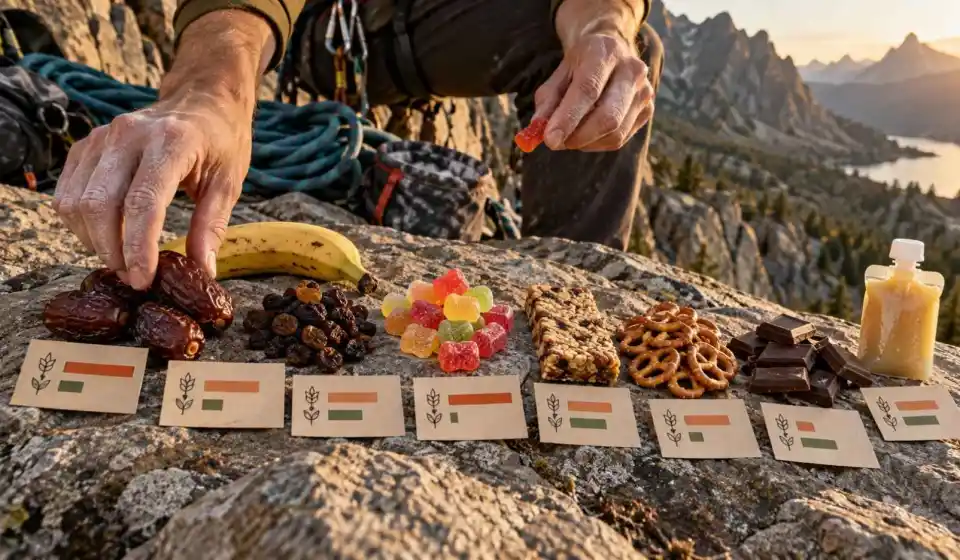
Consider dates and bananas first: both contain naturally occurring sugars, but their physical characteristics make them very different pack foods. Dried dates are compact and carbohydrate-dense because relatively little water remains, whereas a fresh banana is heavier for the same amount of energy because much of its weight is water. 🍌 Bananas can also bruise inside a climbing bag, while dates are comparatively easy to portion and carry.
Gummies move farther toward the convenience end of the spectrum because they can provide concentrated carbohydrate with almost no fiber, while granola bars vary so dramatically that the name alone tells you surprisingly little. One granola bar might contain oats, nuts, and several grams of fiber, while another may resemble a cookie nutritionally and provide much more added sugar and fat. The lesson is simple: compare labels rather than judging foods by category names.
10 Common Climbing Snacks: A Practical Comparison
The numbers below are approximate typical values, not fixed nutrition facts, because fruit size and packaged-food recipes vary by brand and product. They are most useful as comparison ranges showing why two snacks that both taste sweet can behave very differently in a climbing bag. 📊 Always use the package’s Nutrition Facts panel when you need precise values for the exact food you are carrying.
| Climbing snack | Example serving | Calories | Carbohydrate | Fiber | Sugar pattern |
|---|---|---|---|---|---|
| Medjool dates | 2 large dates | ~130 | ~36 g | ~3 g | Mostly naturally occurring |
| Banana | 1 medium | ~105 | ~27 g | ~3 g | Naturally occurring |
| Raisins | 1/4 cup | ~120 | ~32 g | ~2 g | Mostly naturally occurring |
| Gummy candy | 1 oz | ~90–110 | ~22–26 g | ~0 g | Usually largely added |
| Sports chews | 1 serving | ~90–120 | ~22–30 g | ~0 g | Usually largely added |
| Granola bar | 1 bar | ~100–200 | ~17–30 g | ~1–4 g | Highly variable |
| Applesauce pouch | 1 pouch | ~60–100 | ~15–25 g | ~1–3 g | Depends on product |
| Pretzels | 1 oz | ~110 | ~22–24 g | ~1 g | Usually very little sugar |
| Fig-style bar | 1 serving | ~180–220 | ~35–45 g | ~2–4 g | Natural + added may occur |
| Chocolate | 1 oz | ~140–170 | ~14–18 g | ~1–3 g | Usually contains added sugar |
Notice that carbohydrate and sugar are not interchangeable numbers: pretzels can contain plenty of carbohydrate despite tasting salty and containing relatively little sugar. Likewise, chocolate may taste sweeter but provide fewer carbohydrate grams per ounce than expected because a significant portion of its calories can come from fat. 🧪 This is why reading only the sugar line can give climbers an incomplete picture of what they are actually packing.
Does Every Climbing Session Require Extra Carbs?
No universal snack rule fits every climbing session because a relaxed hour at an indoor gym is different from several hours of continuous climbing, hiking between routes, carrying gear, and spending an entire day outside. Someone who ate a substantial meal shortly before climbing may also have very different snack needs from someone arriving several hours after their last meal. ⏱️ Duration, intensity, total workload, body size, previous meals, appetite, and personal tolerance all influence how much food feels useful.
This is where discussions about sugar can become unnecessarily extreme, because eating a gummy during activity does not automatically mean a climber has an unhealthy diet, while packing fruit does not automatically mean the entire day’s nutrition is balanced. Snacks should be viewed within the whole-day eating pattern, not judged as isolated moral choices. A short session may require nothing more than normal meals and hydration, whereas a long climbing day creates more opportunities for portable food to become practically useful.
Why Fiber Can Be Helpful — And Sometimes Inconvenient
Fruit, dried fruit, oats, and some bars provide fiber, which contributes to the nutritional value of an everyday diet and can make foods more filling. Dates, bananas, and certain granola bars therefore offer something gummies generally do not, making them useful beyond their carbohydrate content. 🌾 But the fact that fiber is beneficial overall does not mean the highest-fiber snack is automatically the best choice at every moment during climbing.
Large amounts of fiber can feel heavy or uncomfortable for some people when eaten immediately before or during demanding physical activity, particularly if they are not accustomed to it. Individual digestion varies substantially, so climbers often learn through experience whether fruit, bars, sandwiches, chews, or another snack sits comfortably during activity. The useful comparison is therefore not “fiber good, gummies bad,” but whether the food fits both your broader nutrition needs and the situation in which you plan to eat it.
How To Choose Between Fruit And Packaged Snacks
Fruit works particularly well when you value familiar ingredients, fiber, and foods that contribute to ordinary daily nutrition rather than serving only as activity fuel. 🍎 Bananas and oranges can be inexpensive, while dates and raisins offer more compact options because drying removes much of the original water. Their drawbacks include bruising, peels, stickiness, bulk, or shorter storage life depending on the fruit.
Packaged snacks can win on portability, predictable portions, storage, durability, and convenience, especially when food must survive at the bottom of a climbing pack. Gummies and sports chews are exceptionally compact, pretzels provide a non-sweet carbohydrate option, and bars can combine carbohydrates with varying amounts of fat, protein, and fiber. Rather than choosing one category forever, climbers can match the food to the outing and use nutrition labels to understand exactly what tradeoff they are making.
What To Look For On The Nutrition Label
Start with Serving Size, because every number underneath it depends on how much food the manufacturer defines as one serving. Then examine Total Carbohydrate, followed by dietary fiber and total and added sugars, rather than jumping directly to the word “sugar.” 🔎 A package containing two servings can easily double the calories and carbohydrate you thought you were eating if you consume the whole package.
Next, consider fat and protein because both change the overall nutritional profile and calorie density of the snack, even though they are not substitutes for carbohydrate. Sodium may also be worth comparing when looking at pretzels, salted bars, and other savory packaged foods, particularly because quantities vary enormously between products. The goal is not to find a mathematically perfect snack but to understand what the food actually provides instead of relying on marketing words such as natural, energy, clean, or healthy.
A Better Way To Build A Climbing Snack Bag
Instead of making the bag entirely sweet or entirely “whole food,” consider giving yourself different textures and flavors for a longer outing. 🧗 A simple mix might include dates or raisins for compact dried fruit, pretzels for something salty, a banana or other fresh fruit for early in the day, and a durable bar or packaged carbohydrate snack for backup. This approach creates options without requiring you to claim that any individual item is nutritionally perfect.
More importantly, build the snack bag around the specific climbing day rather than copying what an ultrarunner, professional climber, or person on social media eats. Indoor bouldering after dinner, a half-day sport-climbing session, and an all-day multipitch outing create completely different food-storage and eating opportunities. 🎒 Matching portion size and food type to the trip is more useful than following a universal rule that either glorifies or demonizes sugar.
The Truth About Sugar For Climbing Energy
Sugary snacks are not automatically “bad for climbers,” but that does not make unlimited added sugar desirable or make every sweet snack nutritionally equivalent. Dates, bananas, raisins, gummies, chocolate, and granola bars differ in carbohydrate concentration, fiber, fat, water content, portability, cost, and ingredient composition, and those differences become visible when you actually compare their labels. 🍫 The right choice depends partly on whether you need an ordinary nutritious snack, an extremely portable carbohydrate source, or something that simply survives a long climbing day.
The most useful habit is therefore not avoiding everything containing sugar but learning to distinguish total carbohydrate from total sugar, naturally occurring sugar from added sugar, and immediate convenience from overall diet quality. A gummy can be convenient without becoming a health food, while a date can be nutrient-containing without becoming unlimited free food simply because its sugar occurs naturally. Once climbers understand those distinctions, the argument becomes less about whether sugar is “good” or “bad” and more about choosing foods deliberately for the situation in front of them. 🧠