You Packed 3,000 Calories but Ate Only Half: The Uneaten Trail Food Problem
You carefully calculate your backpacking menu, total everything up, and leave the trailhead carrying what looks like a perfectly planned 3,000 calories of food for the day. 🎒 Then you return with an unopened bar, half a bag of trail mix, untouched nut butter, and the dinner you were too tired to prepare, meaning the calories recorded on your spreadsheet were very different from the calories you actually ate. This is one of the most overlooked hiking food planning mistakes, because hikers often measure what enters the backpack without measuring what comes back out.
Learning how to plan backpacking food calories therefore requires more than choosing a calorie target and buying enough food to reach it. Your food plan has two separate numbers—calories packed and calories consumed—and the difference between them can reveal problems with portions, flavor variety, preparation, packaging, timing, or simply your personal appetite on the trail. 🥾 Instead of treating leftovers as random waste, you can turn them into data that makes every future backpacking menu more realistic.
Why Packing Enough Calories Is Only Half The Equation
There is no single daily calorie number that works for every backpacker because energy needs vary with body size, hiking intensity, elevation gain, temperature, pack weight, trip duration, pace, and other individual factors. A carefully calculated estimate is still valuable for planning, but it remains an estimate rather than a guarantee of exactly how hungry you will feel at breakfast, lunch, or mile fifteen. This distinction is especially important when a food-planning formula produces a precise-looking number that may create a false sense of certainty.
Imagine that your menu contains enough servings to total 3,000 calories, but you actually eat only 1,900 because several snacks are unappealing and dinner feels like too much work. 🍫 Your spreadsheet still says “3,000 calories,” yet the trail experience tells a different story because planned calories are inventory while eaten calories represent actual intake. That does not automatically mean you should pack only 1,900 calories next time, but it does mean you have useful evidence worth investigating.
Build A Backpacking Food Inventory Audit
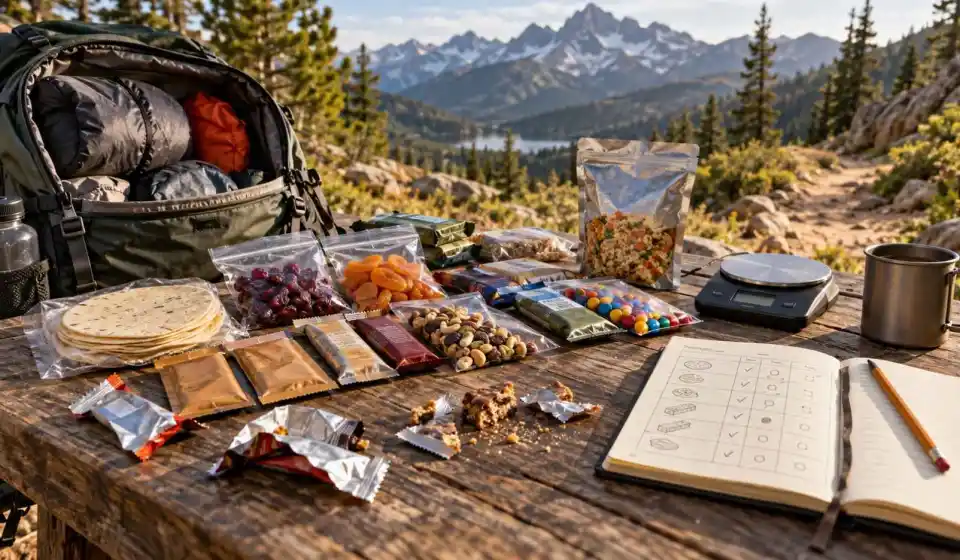
A simple backpacking food inventory starts before the trip by recording what you actually put into your food bag rather than relying on vague descriptions such as “some snacks” or “a big lunch.” For each food, record the number of servings packed, approximate calories per serving, total food weight, and when you expect to eat it, such as breakfast, hiking snack, lunch, dinner, or emergency reserve. 📝 You do not need laboratory precision; the goal is consistency that allows you to compare what you planned with what happened.
After the trip, repeat the inventory before eating or putting away the leftovers and record how much of each item remains. From there, estimate packed calories, consumed calories, remaining calories, and leftover food weight, while also adding a short note explaining why something was not eaten when you remember the reason. After several trips, this basic trail food tracking system becomes far more valuable than trying to reconstruct your appetite from memory weeks later.
Four Reasons Backpacking Food Comes Home Uneaten
The first common reason is straightforward: you packed foods that looked practical at home but were not especially appealing after several hours of hiking. A peanut-butter packet may provide concentrated calories, for example, but that advantage becomes irrelevant when you consistently avoid eating it because you dislike swallowing thick nut butter while moving. 🥜 Backpacking food needs to work in the real environment where it will be eaten, not merely perform well in a calories-per-ounce comparison.
The other major problems are preparation effort, menu repetition, and inconvenient packaging, all of which can suppress how much food actually gets eaten. A meal requiring cooking, measuring water, waiting, stirring, and cleaning may seem perfectly reasonable at home but become less attractive when you reach camp exhausted, while five similar sweet bars can become increasingly unappealing by the third afternoon. Packaging matters too: foods buried deep in the pack, difficult to open with cold fingers, messy to portion, or awkward to eat while walking often lose to whatever snack is easiest to grab.
A Sample 3,000-Calorie Pack-Out And Its Leftovers
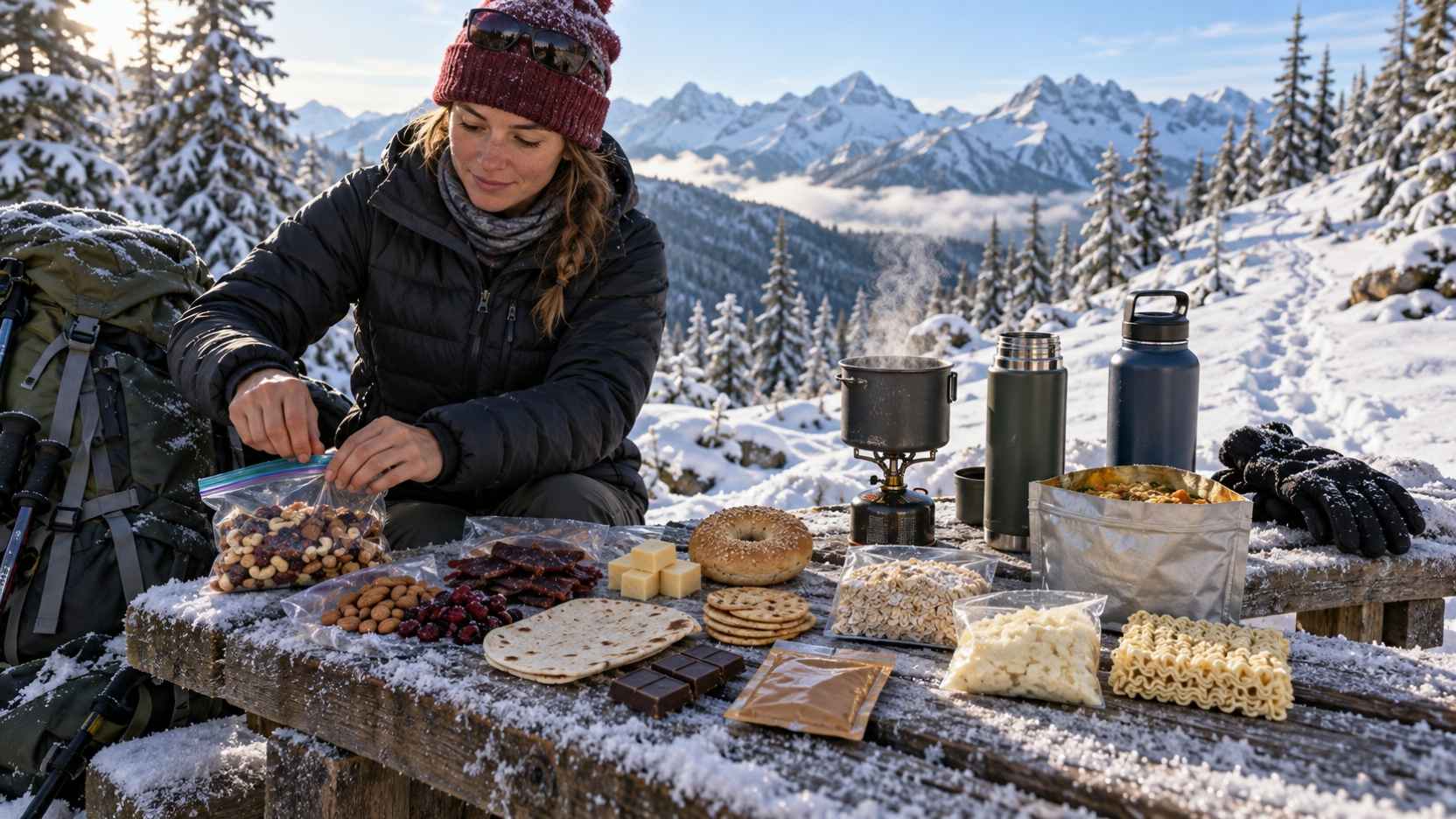
Consider a hypothetical hiker who packs approximately 3,000 calories consisting of breakfast, tortillas with filling, trail mix, dried fruit, two energy bars, candy, nut butter, and a dehydrated dinner. By the end of the day, the hiker has eaten breakfast and lunch, most of the trail mix, one bar, some dried fruit, and dinner but returns with the second bar, most of the candy, and the nut butter. 🍬 If those leftovers represented roughly 800 calories, the important planning number is not merely “3,000 calories packed” but approximately 2,200 calories consumed and 800 calories carried without being used.
That hypothetical does not prove that 2,200 calories is the correct target for the next hike, because appetite and energy demand can change dramatically between routes and days. Instead, the useful question is why those particular 800 calories survived: perhaps the hiker brought too many sweet foods, packed snacks in portions that were too large, or simply had less appetite than expected on that outing. The leftover calories become diagnostic evidence rather than an automatic instruction to slash the next menu by exactly the same amount.
Find The Foods You Consistently Leave Behind
One unfinished snack after one hike tells you very little, but the same food returning home after three or four trips deserves attention. 📊 Your Trail Food Audit should therefore look for repeated patterns such as “always leave half the trail mix,” “never want the second protein bar,” “eat every salty snack,” or “skip cooked lunch whenever the weather is hot.” Patterns are more useful than isolated observations because they help separate a one-off circumstance from an actual menu problem.
You can also compare foods by time of day, because your breakfast appetite may differ significantly from what you want after six hours of walking. Maybe you consistently underestimate afternoon hunger but overestimate dinner appetite, or perhaps you finish crunchy savory snacks while returning with sweet foods despite initially believing you loved them. These observations give you a personalized hiking-food profile that generic online meal plans cannot create for you.
Improve Portions Without Cutting Too Aggressively
The next trip should usually involve small adjustments rather than dramatic calorie cuts, especially when the previous hike differed in mileage, weather, elevation, or intensity. If you repeatedly bring home half of a 500-calorie trail-mix bag, you might reduce the portion slightly rather than removing the food completely, while an untouched snack could be replaced with something you have repeatedly eaten successfully. 🔄 This approach lets your menu evolve from actual behavior instead of forcing your appetite to match a spreadsheet.
Portion size also matters because oversized packages encourage overpacking even when the underlying food is appropriate. Repacking foods into realistic trail-sized servings can make the total menu easier to understand and can prevent “just in case” quantities from quietly accumulating into hundreds of unused calories. Keep a reasonable buffer for unexpected delays or greater-than-expected hunger, but distinguish that deliberate reserve from food that routinely comes home because you never wanted it.
Use Variety Strategically Instead Of Packing Everything
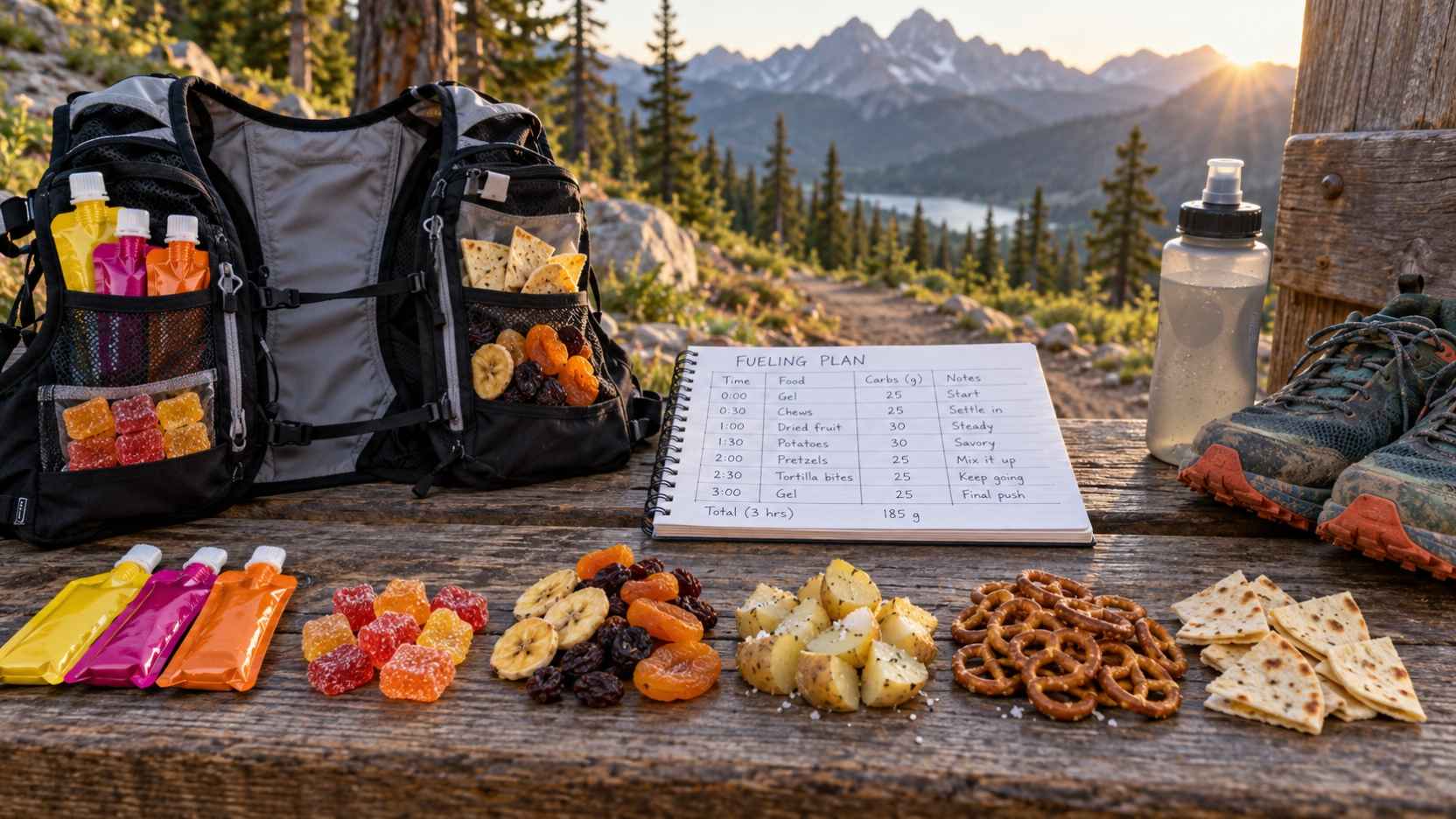
Variety can make trail food more appealing, but unlimited variety creates another problem: every extra choice adds ounces to the backpack. A more efficient approach is to include different flavor and texture categories—perhaps something salty, something sweet, something crunchy, something soft, and a meal that feels more substantial—without packing multiple full servings of each category. 🥨 This helps reduce flavor fatigue while preventing the food bag from becoming a miniature convenience store.
Backup foods should also be foods you genuinely enjoy rather than items selected solely because they seem responsible or nutritionally impressive. If you reliably eat tortillas but repeatedly return with dense bars, a tortilla-based option may serve you better despite another food looking superior on paper for protein, convenience, or calorie density. The goal is not to design the theoretically perfect menu but to create a menu you will actually consume under trail conditions.
Create Your Own Trail Food Audit Worksheet
A useful Trail Food Audit can be remarkably simple: create columns for food item, quantity packed, calories packed, food weight, quantity eaten, calories eaten, remaining calories, leftover weight, and notes. Add a final note such as “too sweet,” “portion too large,” “hard to prepare,” “wanted something salty,” “easy to eat while walking,” or “would pack again,” because qualitative information explains the numbers. 📋 Completing this worksheet immediately after every trip gives you a growing personal database instead of relying on broad assumptions about backpacking appetite.
After several outings, calculate your typical difference between calories packed and calories eaten, but interpret that number alongside trip conditions rather than using it as a rigid formula. A relaxed overnight trip cannot automatically predict food needs for a longer route with greater climbing, colder weather, or substantially more walking, so context should remain attached to every audit. Your records become most useful when they show not only how much you ate but also what kind of trip produced that eating pattern.
Plan Calories From Evidence Instead Of Guesswork
The strongest method for how to plan backpacking food calories combines estimated energy needs with actual experience from previous trips. Start with a reasonable calorie plan for the route, organize foods into realistic portions, include foods you know you willingly eat, and then measure what comes home instead of assuming every packed calorie served its purpose. 🏕️ Over time, this process can help you reduce unnecessary weight while still maintaining enough food flexibility for changing appetite and trail conditions.
Ultimately, uneaten backpacking food is not just leftover food—it is feedback. Every unopened bar, untouched packet, oversized dinner, or completely demolished snack tells you something about your preferences, meal timing, preparation tolerance, and real trail appetite. Treat your food bag like a small experiment, and each trip can make the next menu lighter, simpler, more appealing, and far better matched to the person actually carrying it.