Tired of Sweet Trail Snacks? How to Build a Sweet-and-Savory Fuel Rotation for Long Runs
Long trail runs can make even a favorite gel, chew, or sweet bar feel repetitive after several hours. 🏃♂️ That does not mean sweet foods stop working as fuel, but variety can become useful when appetite and preference change. A planned mix of sweet and savory trail running snacks gives runners more choices without losing track of carbohydrate intake.
There is no perfect rotation for everyone because pace, weather, terrain, duration, tolerance, and preference all matter. Think of your food as a small menu of interchangeable options that provide similar carbohydrate amounts while offering different tastes and textures. 🎒 This turns food variety into a repeatable system rather than a random collection of snacks.
Why sweet foods can become less appealing during long trail runs
Sweet fatigue during running is often described as reaching a point when another gel, gummy, or sugary drink sounds less appealing than something salty, plain, or savory. Repetition is an obvious factor because eating similar flavors every 30 to 45 minutes can become monotonous even when those foods are convenient. 🍬 One runner may happily use sweet foods all day, while another starts wanting potatoes, crackers, rice, or tortillas much earlier.
That preference shift should not be treated as proof that the body suddenly “needs” savory food. A salted potato can feel refreshing because it changes flavor, texture, temperature, and chewing experience, but those qualities do not automatically make it better fuel than a sweet option. The practical lesson is that if food boredom makes you skip planned eating, adding variety may help you stay closer to the plan.
Flavor fatigue is different from inadequate carbohydrate planning
Switching from sweet to savory can solve a taste problem while accidentally creating a fueling problem if the replacement contains much less carbohydrate. A gel might provide roughly 20 to 25 grams of carbohydrate, while a few crackers or a bite of cheese could provide far less depending on the portion. 📊 If you swap foods based only on flavor, your long run snack rotation can look varied while delivering less carbohydrate than expected.
Many endurance-fueling approaches organize intake by carbohydrate per hour, with roughly 30 to 60 grams per hour commonly used for prolonged exercise and higher amounts sometimes practiced for longer events. These are general ranges, not a personal prescription, and tolerance should be developed during training. Know approximately how much carbohydrate each snack contributes before calling two foods interchangeable.
How to build a sweet-and-savory snack rotation
A simple method is to create “carbohydrate blocks” containing similar amounts, such as about 20 to 30 grams per block. One block could be a gel, another a measured serving of dried fruit, and another a small salted potato paired with pretzels if the potato alone does not reach the same amount. 🥔 This lets you change flavor without abandoning the carbohydrate math behind your plan.
You do not need to force a strict sweet-savory-sweet-savory sequence either, because the best pattern is the one you will actually follow. Some runners may prefer two sweet choices followed by one savory option, while others may use mostly neutral foods with a few sweeter choices for convenience. Smaller portions can also increase variety, although extra packaging, preparation, mess, and carrying space should remain part of the decision.
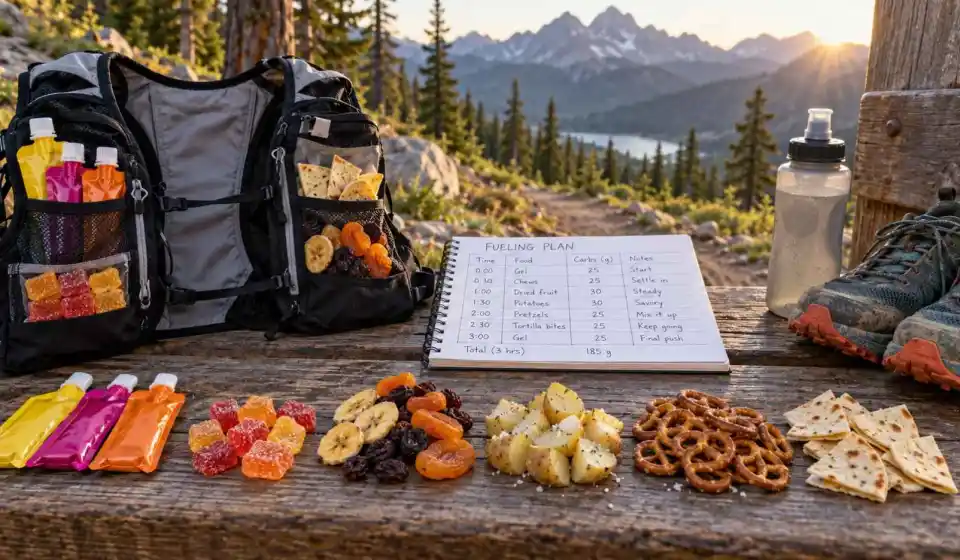
Sample snack rotation for a four-hour trail run
Imagine a runner targeting about 45 grams of carbohydrate per hour during a four-hour outing, for roughly 180 grams total. This is an example, not a universal recommendation, because needs and tolerance vary. ⛰️ The plan below divides that total into eight eating opportunities of roughly 22 to 23 grams each.
At 30 minutes the runner uses a sweet option, at 60 minutes a savory one, and then continues alternating through the run. The exact foods are less important than matching the portions closely enough that each swap supplies a similar carbohydrate amount. This means a runner can replace a gel with potato and pretzels, for example, but should recalculate the serving rather than assuming every snack is nutritionally equivalent.
| Time | Flavor | Example food | Approx. carbohydrate |
|---|---|---|---|
| 0:30 | Sweet | Gel | 22 g |
| 1:00 | Savory | Salted potato + pretzels | 23 g |
| 1:30 | Sweet | Dried fruit | 22 g |
| 2:00 | Savory | Tortilla-based snack | 23 g |
| 2:30 | Sweet | Chews | 22 g |
| 3:00 | Savory | Potato + pretzels | 23 g |
| 3:30 | Sweet | Gel or dried fruit | 22 g |
| 4:00 | Savory | Tortilla or potato snack | 23 g |
| Total | 180 g |
Carry backups without overcomplicating the plan
A practical rotation should include a backup because a food that sounds good at home may become unappealing two hours into a run. 🎽 Carry one dependable sweet food and one savory or neutral option you already tolerate. This gives you an alternative if a planned snack melts, leaks, becomes difficult to chew, or simply stops sounding appealing.
Real foods need more logistical thought than many packaged sports foods. Cooked potatoes, rice preparations, and sandwiches have food-safety limits, especially in warm conditions, while shelf-stable options usually travel better. For long outings, judge foods by carbohydrate, temperature, durability, packaging, mess, and ease of eating.
How to test your rotation during training
Training is where a snack rotation should be treated like an experiment rather than a promise. 📝 Test the foods, portions, timing, and packaging on ordinary long runs before relying on them in a race, and record what you actually ate rather than what you planned to eat. A system that leaves half your savory food untouched or causes you to avoid sweet options after two hours needs adjustment.
Change only one or two variables at a time so you can identify what improved the experience. Keep the carbohydrate total similar while changing the flavor order, or keep the same foods while reducing portion size and eating more frequently. After several comparable runs, patterns are more useful than one unusually good or bad session.
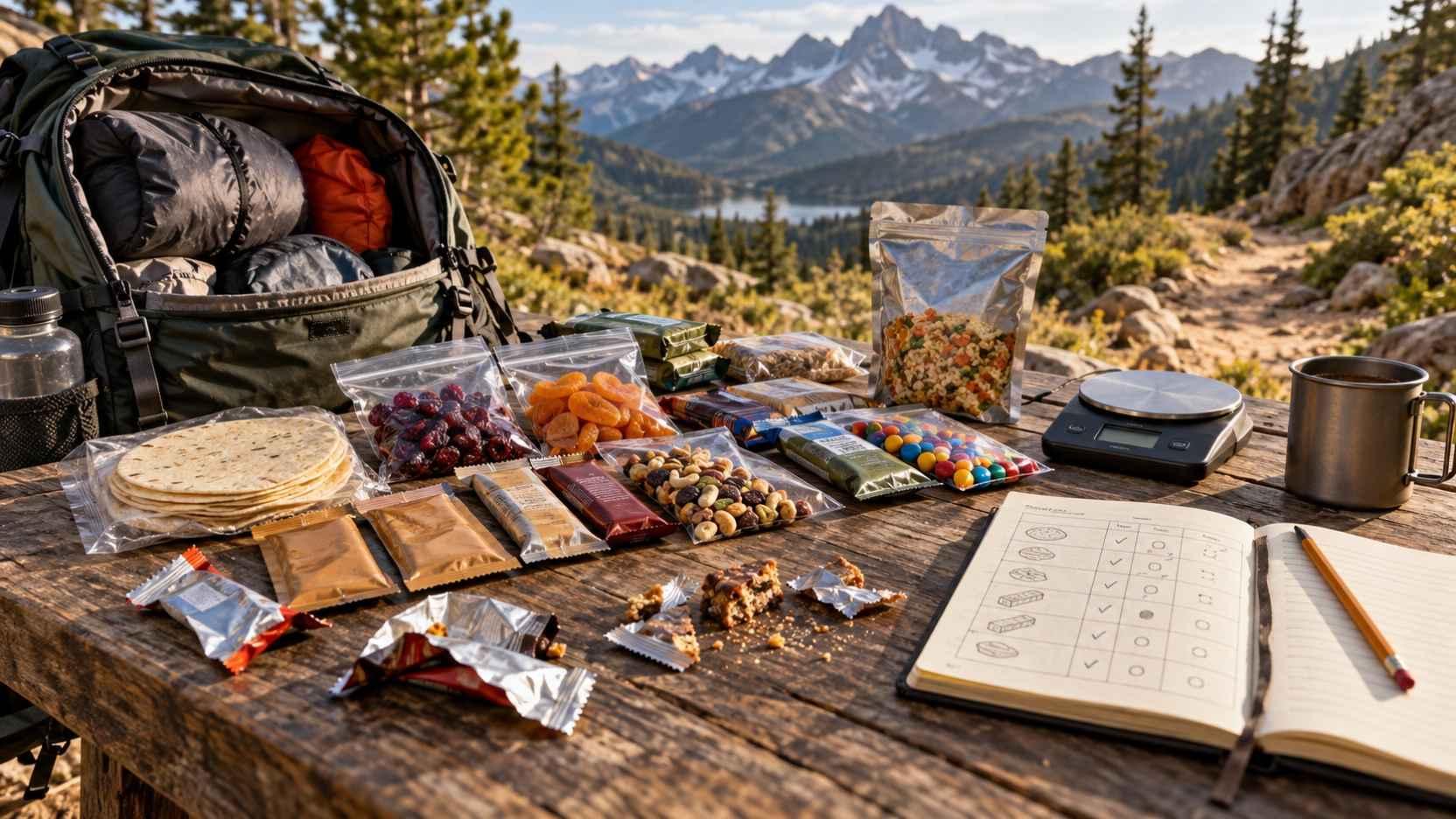
Sweet-and-savory rotation worksheet
| Time | Food | Flavor | Planned portion | Carb grams | Amount eaten | Taste rating | Easy to handle? | Food left |
|---|---|---|---|---|---|---|---|---|
Use the worksheet before and after each long run so that preference and fueling math stay visible in the same place. ✅ Over time, you may notice that sweet foods work well early but savory options become more appealing later, or that certain foods are consistently too bulky to finish. Those observations let you adjust the rotation based on your own behavior instead of copying somebody else’s ultra-running menu.
Build a rotation you can repeat
The purpose of sweet and savory trail running snacks is not to carry as many foods as possible. It is to create enough variety to keep following your fueling plan when one flavor or texture becomes less appealing. 🌲 Three dependable foods you consistently eat can be more useful than ten creative options that are awkward to carry.
Start with a carbohydrate target you have practiced, divide it into manageable blocks, and assign sweet, savory, and neutral foods to them. Test the plan, track leftovers, and adjust the sequence according to real training runs. This creates a practical system for long runs and ultras without assuming one rotation works for everyone.