Caffeine Per Gram: Are Coffee Packets, Tablets, or Energy Powders Lightest for Backpacking?
For ultralight backpackers, caffeine is an interesting weight problem because the caffeine itself may be tiny compared with the routine used to consume it. ☕ Coffee can involve packets, a mug, a stove, fuel, filters, and preparation time, while a tablet may require only a small container and water. That makes ultralight backpacking caffeine worth comparing by total carried weight rather than by habit alone.
The answer is not automatically “tablets win,” because hikers are not optimizing a single number in isolation. Coffee provides a familiar ritual, drink powders can combine flavor with caffeine, and mints can be convenient when stopping to prepare anything feels unnecessary. 🎒 A useful comparison should therefore consider caffeine content, packed serving weight, preparation, equipment, trash, cost, and dosing clarity.
Why Ultralight Backpackers Rethink Traditional Coffee
Traditional ground coffee can create several small weight costs that instant products avoid. Grounds need packaging, many brewing methods require a filter or brewer, and used grounds must be packed out, while hot preparation may consume fuel. For a stoveless hiker, those extras can become an entirely separate caffeine system.
Instant coffee removes most of that system because the powder dissolves directly in water and leaves no wet grounds. One outdoor instant coffee example lists a 3.1-gram packet with 120 milligrams of caffeine, or roughly 39 milligrams per gram of dry coffee before counting the wrapper. That is already light enough that some hikers may prefer keeping the coffee ritual rather than chasing another few grams. ☕
How To Calculate Caffeine Per Gram
The basic formula is simple: caffeine concentration = milligrams of caffeine ÷ grams of packed product. If a 3.1-gram serving contains 120 milligrams of caffeine, dividing 120 by 3.1 gives about 38.7 milligrams of caffeine per gram. 🧮 Using one formula prevents the common mistake of comparing “one packet,” “one tablet,” and “one mint” as though those serving units weigh the same.
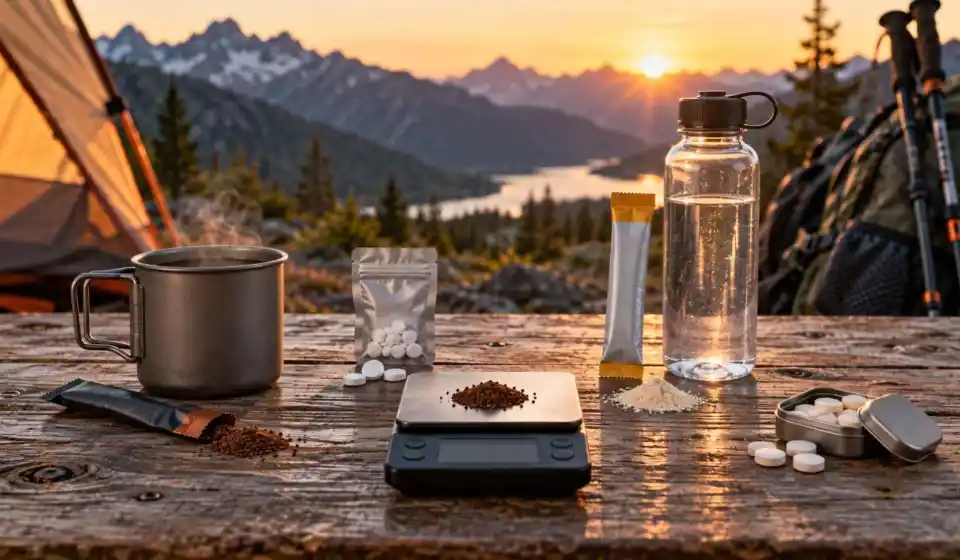
There is an important limitation, however, because many caffeine tablets state the caffeine dose but not the finished tablet’s total mass. A 100-milligram caffeine tablet weighs more than 100 milligrams because it also contains inactive ingredients, so using only the active-caffeine number would exaggerate its caffeine-per-gram ratio. For an accurate caffeine weight comparison, weigh the exact tablets, packets, or mints you will carry together with their trail packaging on a scale accurate to at least 0.1 gram.
Coffee Vs Tablets Vs Powdered Drinks Vs Mints
Representative labels show meaningful differences in dose even when total serving mass is not always published. An outdoor instant coffee example provides 120 milligrams per 3.1-gram packet, a regular-strength caffeine tablet provides 100 milligrams per tablet, one major energy-powder line provides 200 milligrams per packet, and a caffeinated mint example provides 40 milligrams per piece. ⚖️ Because comparable gross masses are not disclosed for every format, exact caffeine-per-gram rankings should be based on weighed products rather than invented numbers.
| Format | Representative caffeine | Preparation | Waste | Practical strength |
|---|---|---|---|---|
| Instant coffee packet | 120 mg | Mix with water | Wrapper | Coffee taste with very low weight |
| Caffeine tablet | 100 mg | Swallow with water | Minimal | Tiny, precise serving format |
| Energy powder packet | 200 mg | Mix with water | Stick wrapper | Flavor plus a larger labeled dose |
| Caffeinated mint | 40 mg | None | Container/wrapper | Small incremental servings |
This is why caffeine tablets vs coffee cannot be judged only by the dose printed on the label. Tablets are likely among the most space-efficient choices, but instant coffee is already only a few grams per serving, while powders and mints add ingredients that may increase weight but also add flavor or convenience. The better question is whether the difference is large enough to matter across the number of days you will actually be carrying it.
The Hidden Weight Of A Caffeine Routine
Product weight is only the first layer because caffeine can bring supporting gear with it. 🔥 Brewed coffee may require a brewer or filter, while instant coffee may need only a vessel you already carry and tablets virtually no dedicated preparation gear. The fairest calculation counts only equipment and consumables that exist specifically because of that caffeine choice.
Fuel also deserves careful treatment. If you are already heating water for breakfast, coffee’s extra fuel may be small, while a dedicated boil on an otherwise stoveless trip creates a larger penalty. Thinking in incremental weight prevents shared gear from being charged entirely to caffeine.
Compare Five Days, Not One Serving
A five-day comparison is more useful than placing one tablet beside one coffee packet. 🥾 Weigh five coffee packets plus any coffee-specific equipment or fuel, then repeat with tablets, powders, or enough mints to match your normal caffeine plan. This captures wrappers, containers, and small differences hidden by single-serving comparisons.
Record servings, caffeine per serving, product weight, packaging, dedicated equipment, extra fuel, total system weight, cost, and trash. Divide total caffeine by total system grams if you want a system-level density figure, but keep total grams visible because a dramatic percentage difference may equal only a handful of grams. 📊 The result may show that tablets are lighter while instant coffee is still light enough to justify the preference.
Lightweight Does Not Automatically Mean Better
Caffeine concentration is a packing metric, not a recommendation to consume more caffeine. The FDA says that for most adults, 400 milligrams per day is an amount not generally associated with negative effects, although sensitivity varies with the individual, health conditions, medications, and other factors. ⚠️ A 200-milligram powder serving therefore deserves attention to dose even if its packet is small and convenient.
Caffeine can also remain in the body for hours, which matters when sleep and recovery affect the next day’s hiking. CDC/NIOSH material describes an approximate caffeine half-life of five to six hours, so late-day caffeine can still be present around bedtime even though individual metabolism varies. A tiny tablet or strong powder is never a replacement for sleep, sufficient food, hydration, warmth, or making conservative decisions when fatigue affects safety.
Which Lightweight Caffeine Option Makes Sense?
For hikers focused almost entirely on minimum weight and compact dosing, tablets are difficult to beat in practical size. 💊 For hikers who value a warm morning drink, instant coffee remains one of the most lightweight caffeine options because a serving can weigh only a few grams without requiring a dedicated brewer. Energy powders suit people who genuinely want a flavored drink, while mints work well for hikers who prefer smaller servings without mixing anything.
That means backpacking coffee alternatives are better viewed as different tools than as a strict winner-and-loser list. A thru-hiker trimming repeated grams may make a different choice from a weekend backpacker who considers coffee part of the experience, while a cold-weather camper may value a hot drink for reasons unrelated to caffeine density. 🌄 The best ultralight choice is the one that removes weight you do not value without removing something you genuinely enjoy.
The Bottom Line On Ultralight Backpacking Caffeine
If the contest is purely compactness, caffeine tablets will often be the strongest candidate, but their exact caffeine-per-gram advantage should be measured when the finished tablet mass is not published. Instant coffee remains surprisingly competitive because a full serving can weigh only a few grams, while energy powders and mints exchange some concentration for flavor, convenience, or different serving sizes. The lightest format and the best backpacking choice therefore do not have to be the same thing. 🎒
The more useful Camp Kitchen Lab question is: How many grams does your complete five-day caffeine routine add, and what do those grams give you? Measure the products you actually carry, include wrappers and dedicated equipment, then compare weight with taste, preparation, cost, trash, and serving control. That turns a vague coffee-versus-pill argument into a repeatable Nutrient Density Analysis that connects naturally to broader backpacking fueling decisions.